



Previous image
Next image
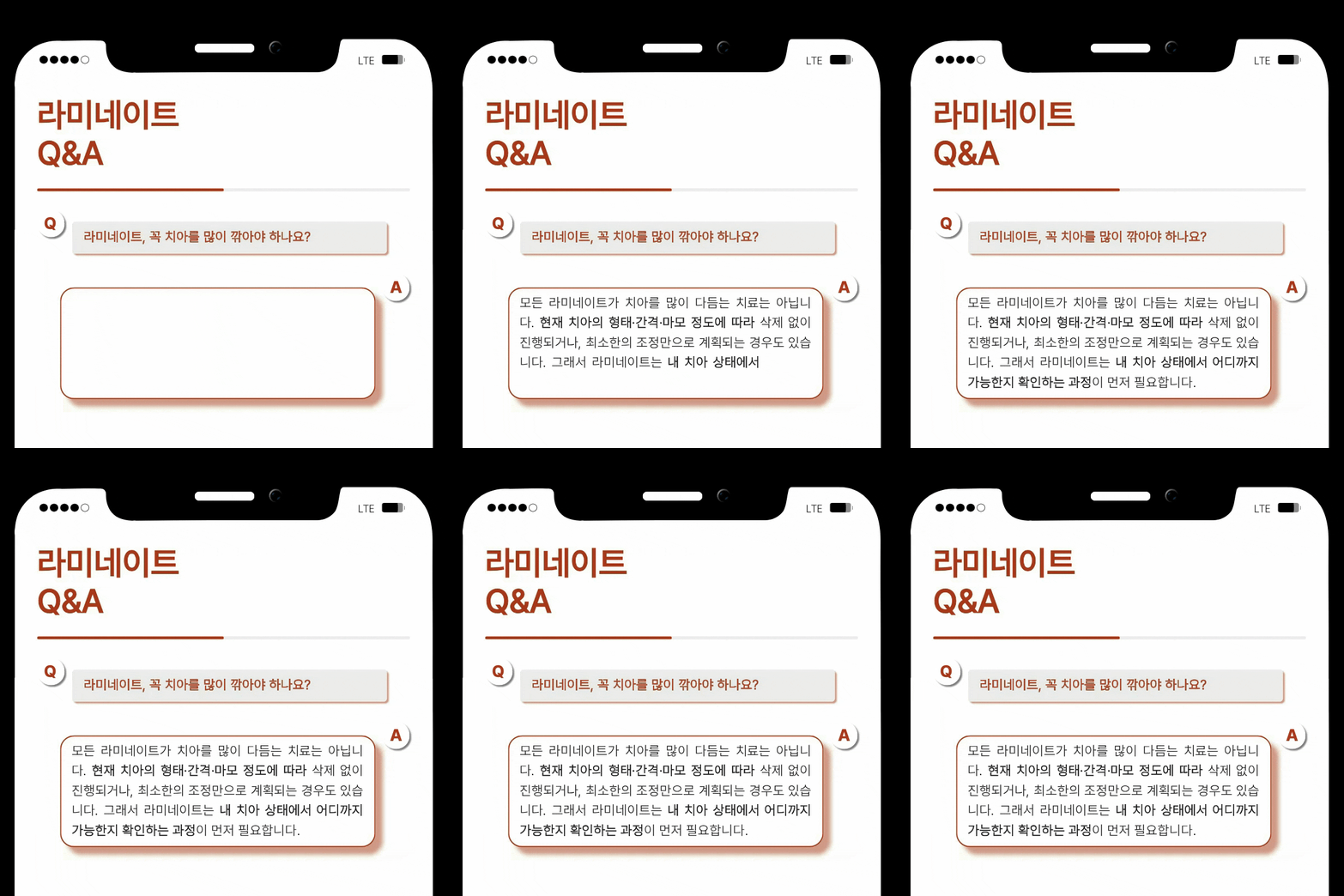
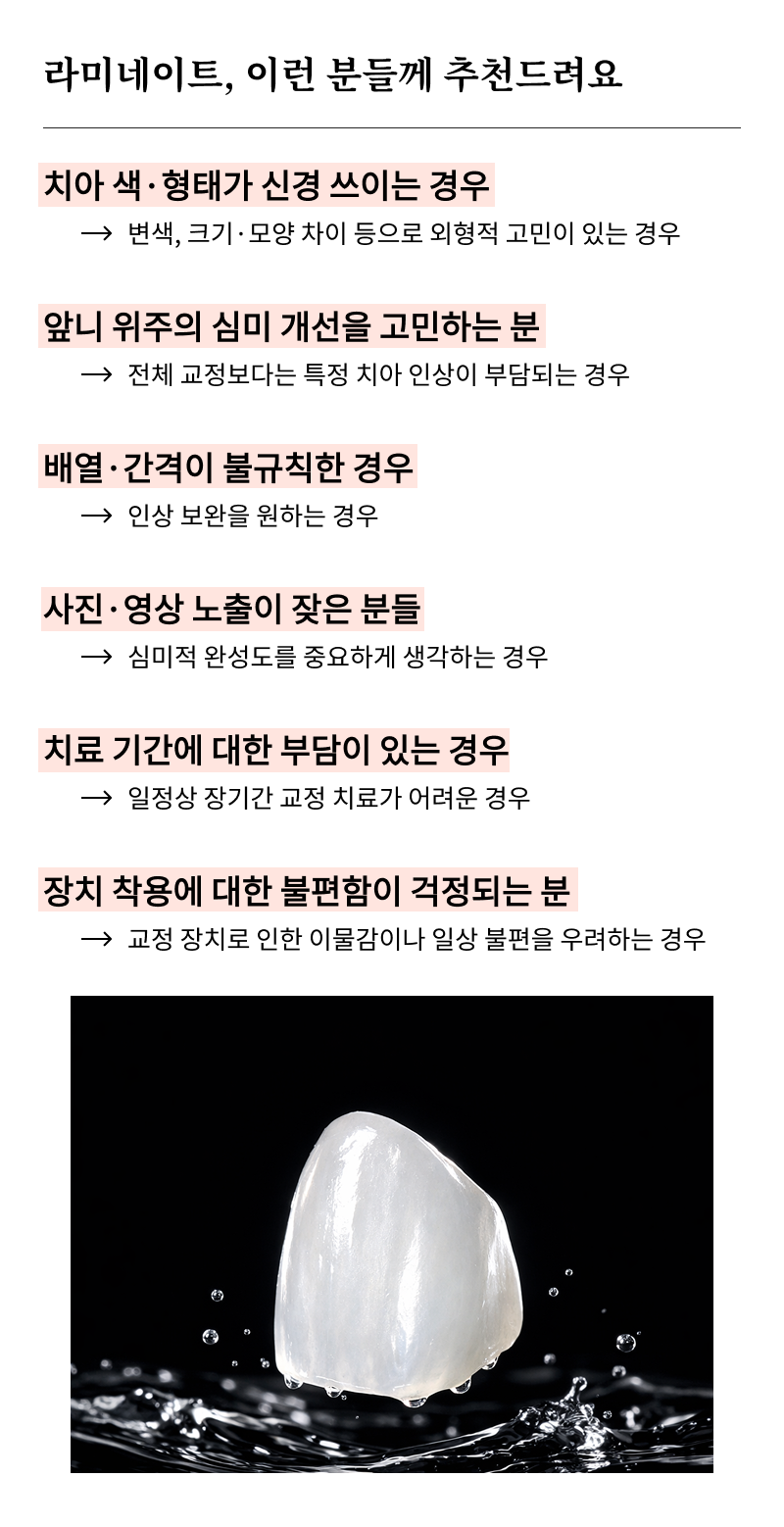
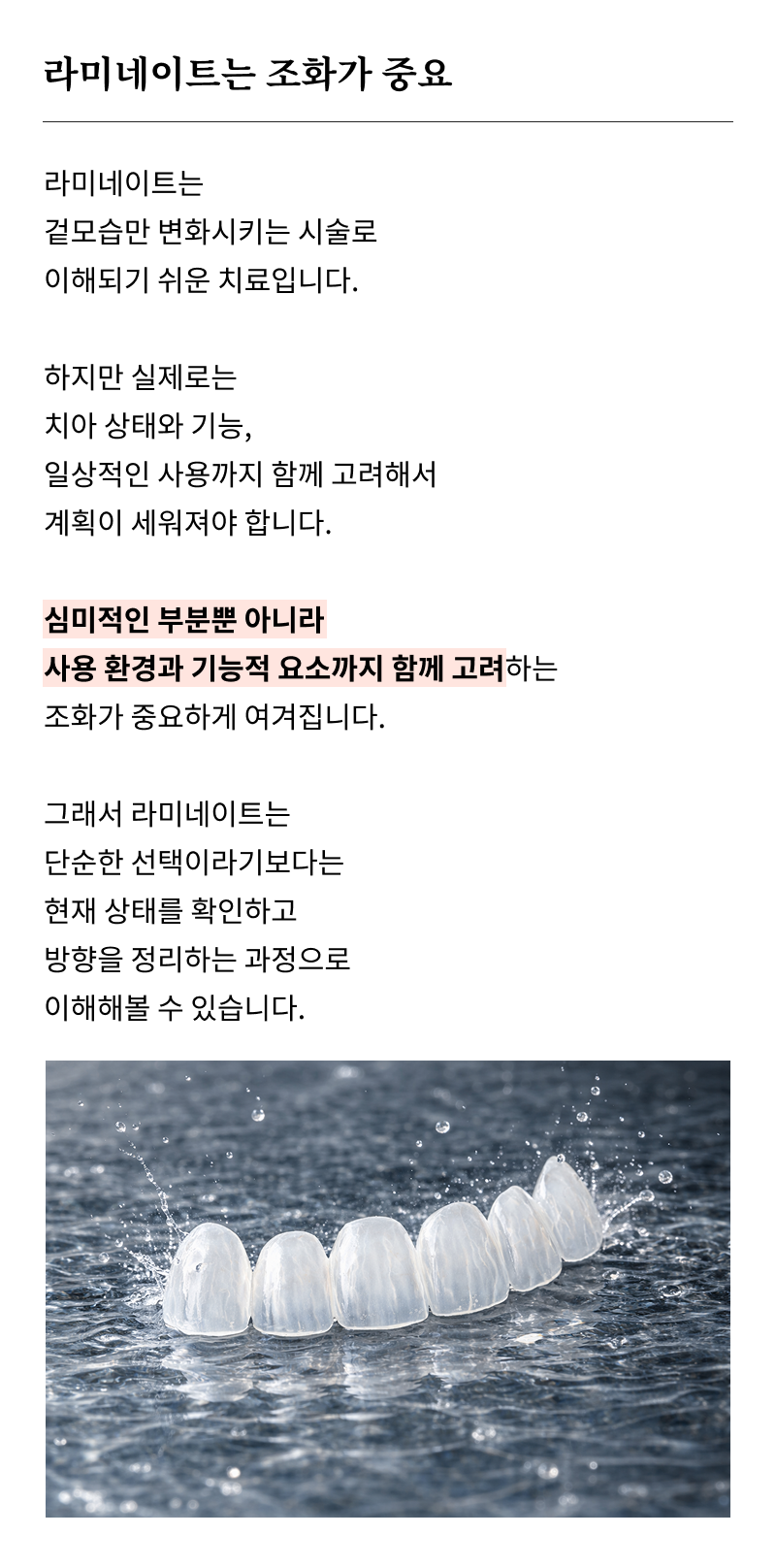
In everyday life, when speaking or smiling, the front part of the mouth is a major factor in determining first impressions. If you are deeply concerned about the shape or discoloration of your teeth, a prosthetic approach may be considered as an alternative. Front tooth laminate treatment is a method in which the enamel surface is finely prepared and then a precisely made porcelain prosthesis is attached. It is mainly performed to address aesthetic defects, and a detailed diagnosis based on each individual’s oral condition must come first. Rather than considering only the cosmetic aspect, it is essential to examine functional harmony and periodontal health at the same time.
- Oral conditions suitable for front tooth laminate application
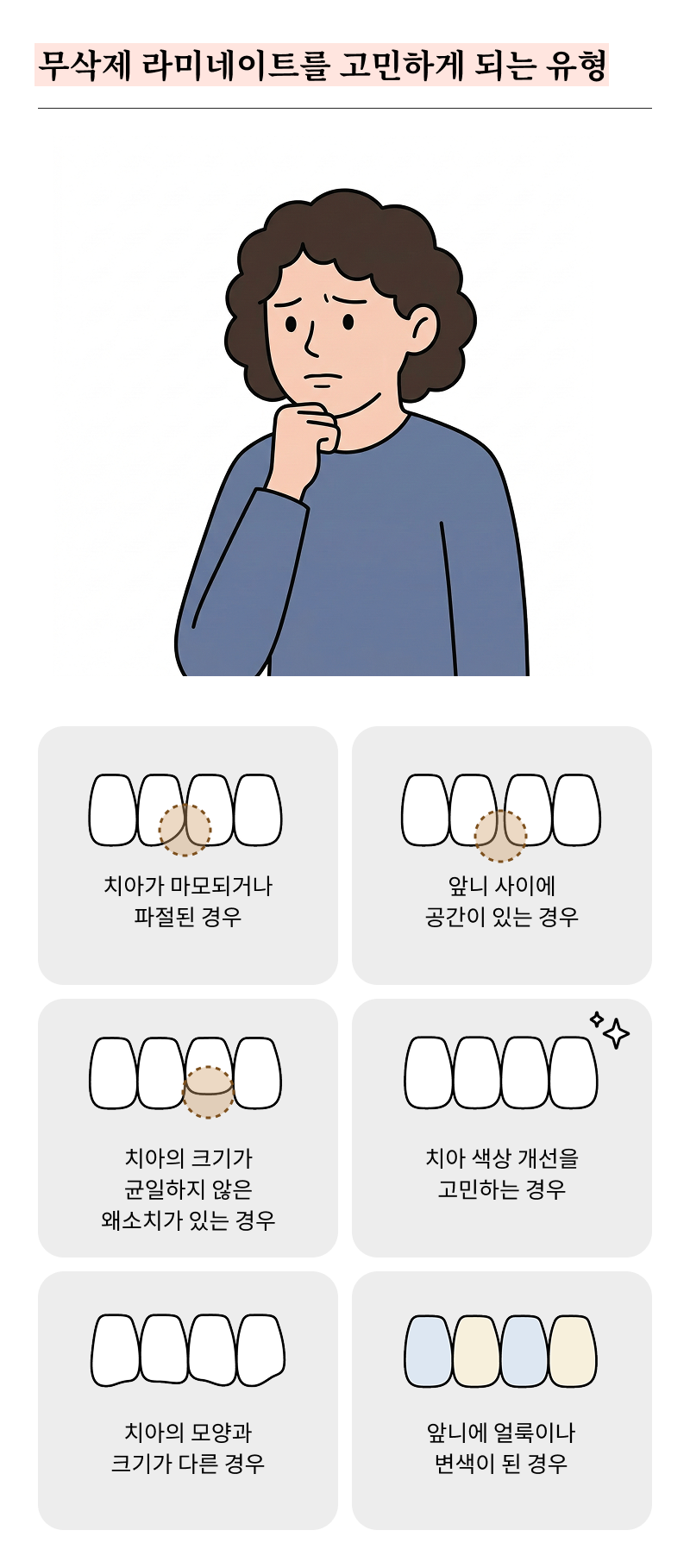
This method may be considered when there is an imbalance in the shape or size of the teeth. It is useful in cases such as congenitally small peg-shaped teeth or teeth that have become shorter due to wear at the tips. It can also be used as an alternative when the surface color has changed significantly and cannot be controlled with ordinary whitening. The procedure is smoother when enamel health is good and the degree of misalignment is not severe. Even when the spaces between teeth are slightly open, the prosthesis can be used to fill the gaps and restore aesthetics. However, if the spaces are too wide, the prosthesis may appear unnaturally broad, so proper proportioning is key.
- Key considerations in front tooth laminate treatment
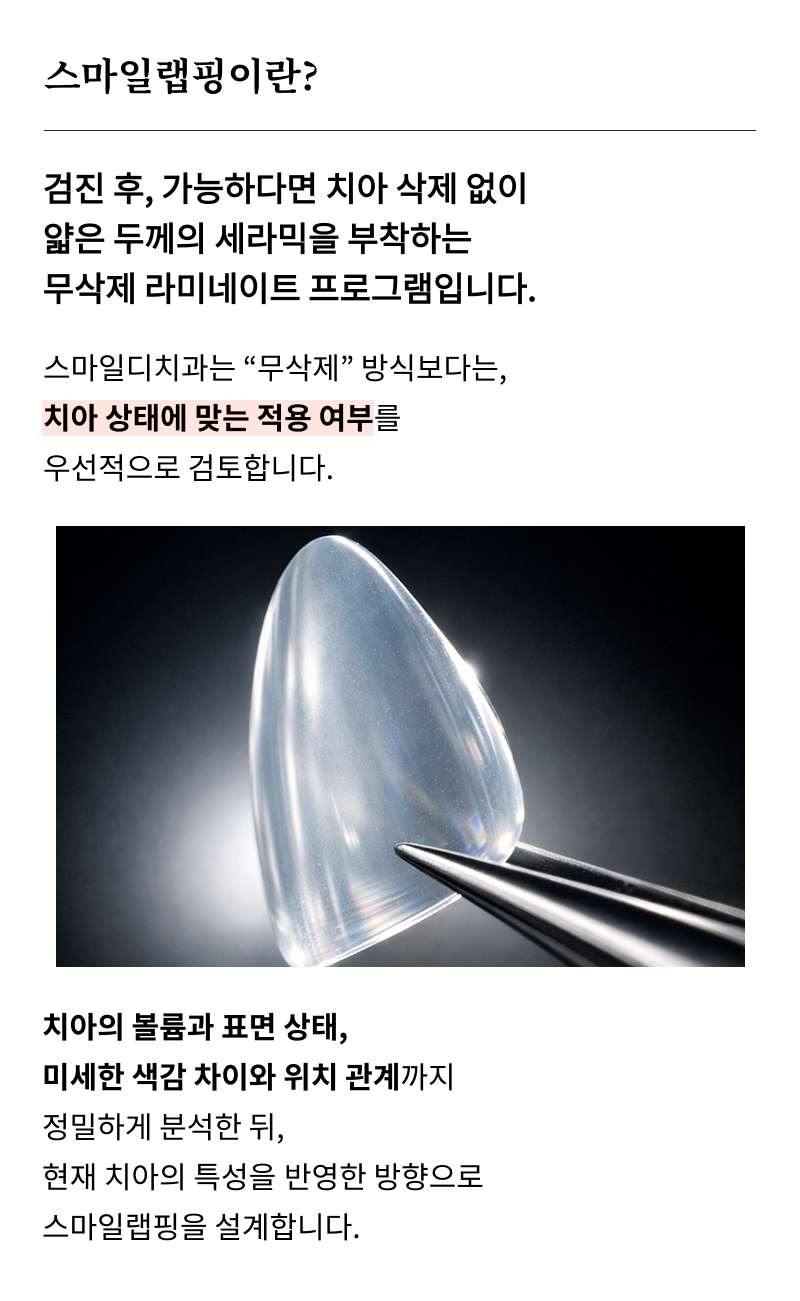
This process works by precisely bonding a thin porcelain sheet to the tooth surface. The ceramic material used has a light transmittance similar to natural tooth structure, so it tends to look less artificial to the naked eye. The amount of tooth reduction is usually determined between 0.3 mm and 0.7 mm, but the exact value changes depending on the individual structure and the position of the nerve. Because bonding technology that maximizes protein binding strength is used, securing long-term retention is the key issue. Since the ceramic sheet is thin, it is vulnerable to impact before attachment, but after bonding it becomes integrated with the tooth and gains added strength. However, the risk of fracture remains under vertical load or strong impact, so its functional limitations must be fully understood.

- Unsuitable cases where front tooth laminate treatment is difficult
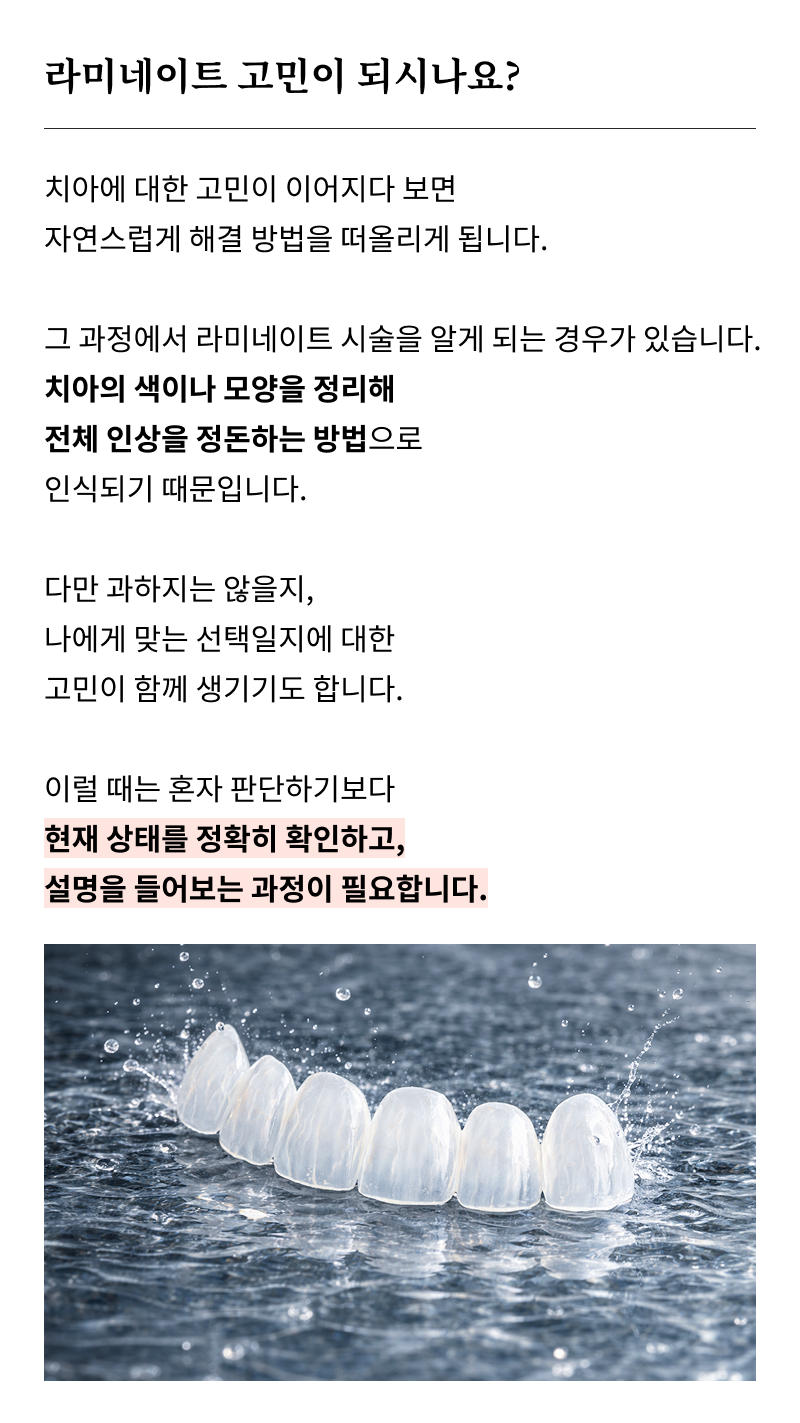
Severely crowded teeth or malocclusion in which the upper and lower bites fall outside the normal range make treatment difficult. In such cases, orthodontic treatment to move the alignment is generally performed first before the prosthesis is attached. If tooth decay is extensive and there is not enough remaining tooth structure, the support for the prosthesis becomes weak and application may be limited. When periodontal disease is in progress, inflammation may worsen or the prosthesis margin may become exposed, so preventive measures are required. In addition, habitual oral behaviors such as teeth grinding or clenching are physical factors that can drastically shorten the lifespan of the prosthesis. If the enamel layer is too thin and dentin is exposed, bonding strength is reduced, so a careful approach is necessary.
[ More about Smile:D ? ]
[ Way to Smile:D ? ]
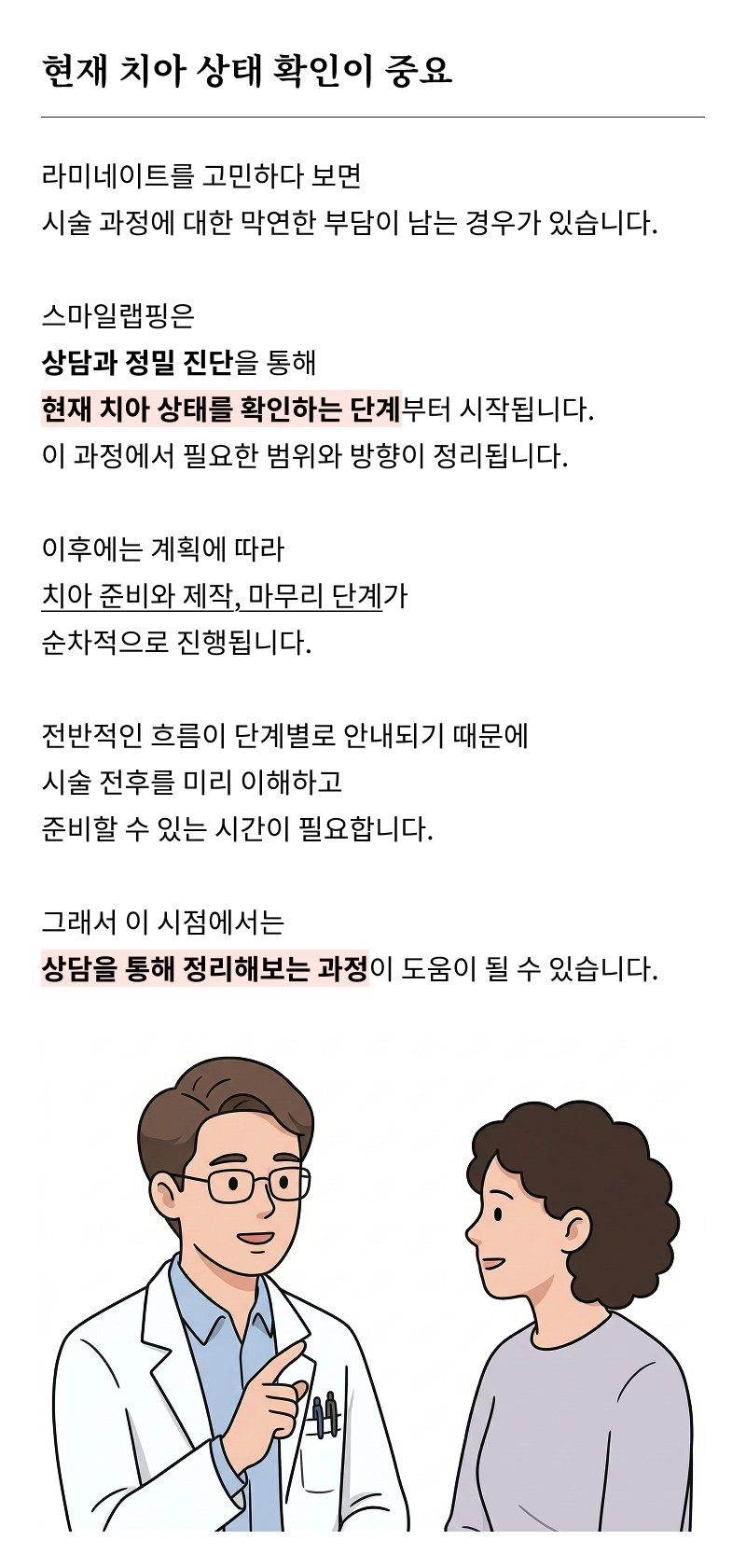
- How to maintain front tooth laminate treatment and extend its lifespan
After the procedure, special attention should be paid to maintaining oral hygiene so that the initial condition is preserved for a long time. Detailed brushing should be performed so that food debris does not remain at the boundary where the prosthesis meets the gums. Cutting or biting directly into chewy or hard foods is a major cause of prosthesis damage, so it is best to avoid doing so. Since ceramic materials are difficult to repair in part once fractured, the entire piece must usually be remade. After consuming drinks that cause staining, rinsing the mouth immediately helps prevent discoloration around the prosthesis and supports stable maintenance. Using dental floss together with interdental brushes to manage hygiene between adjacent surfaces is also a key to extending lifespan.
- Regular checkups and criteria for front tooth laminate treatment
A regular checkup every six months is recommended to confirm whether there is any detachment or minor damage to the prosthesis. Monitoring the gradual wear of the adhesive and the response of surrounding tissues is essential for long-term success. The average service life varies depending on the individual’s level of care, and is generally reported to be around 10 years. Aged prostheses may develop secondary decay inside or reduced bonding strength, and replacement is determined based on imaging findings. Through radiographic imaging and professional visual examination, the condition of the internal tooth structure is carefully assessed. Removing tartar through regular scaling is also an important step in protecting the gum health around the prosthesis.
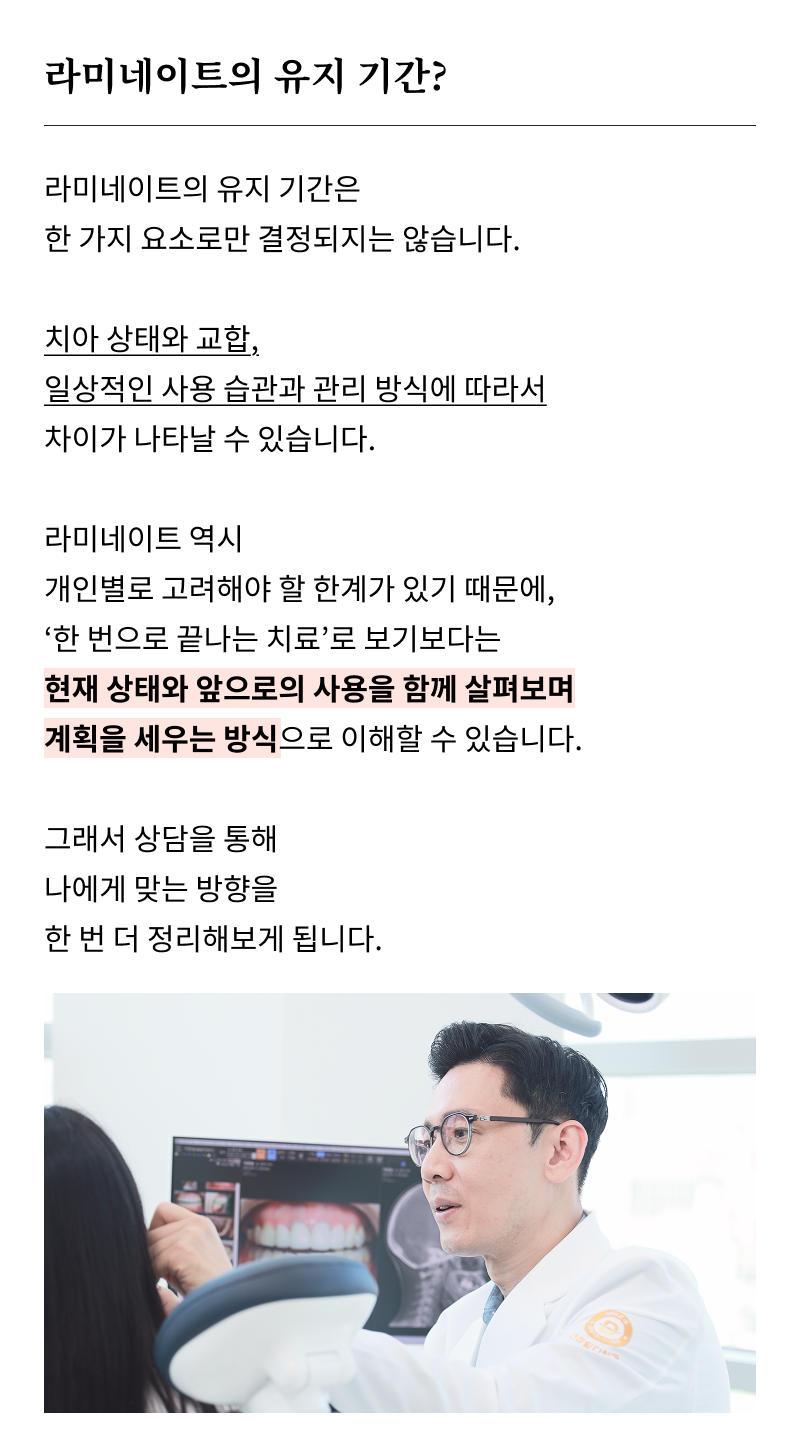
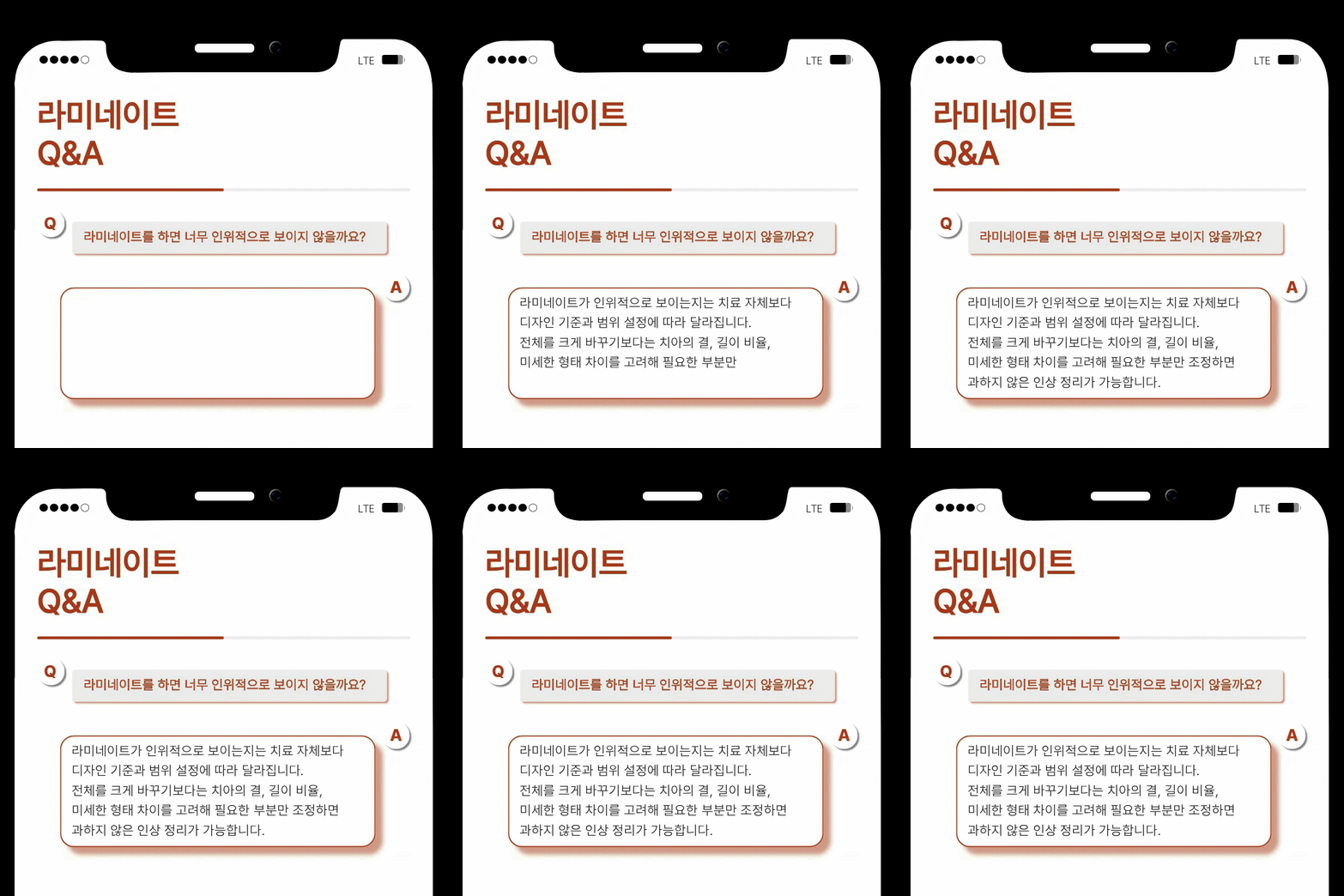
Oral prosthetic treatment is designed in detail according to the thickness of an individual’s enamel and the distribution of nerves. All medical procedures may involve side effects depending on individual differences, and there is a possibility of temporary tooth sensitivity or prosthesis detachment. Therefore, the process of deciding whether treatment is possible based on objective examination data and clinical judgment is more important than anything else. Since this is a process of attaching an artificial structure to the tooth, the plan must be established within a range that does not compromise the tooth’s original function. A clear treatment direction is ultimately determined after direct evaluation in a clinical setting equipped with precision diagnostic devices.







Previous image
Next image








Previous image
Next image