
Hello.
I am Oh Suhwan, the head doctor of Smile D Dental Clinic, located in front of Exit 6 of Sinsa Station.
When you’re considering invisible orthodontic treatment,
you eventually come back to this question.
👉 “Would lingual braces be better?”
👉 “Would Invisalign be more comfortable?”

Consultations often reveal that
people start with this question
using the wrong criteria.
It’s not uncommon for people to choose based only on what is “less visible”
and then later regret it because of discomfort.
So today,
✔ Who is suited for lingual braces
✔ Who is suited for Invisalign
👉 I’ll organize it clearly based on lifestyle.
Commonalities Between Lingual Braces and Invisalign
First, let’s clear up the most common misconception.
✔ Lingual braces → appliances attached to the inside of the teeth
✔ Invisalign → clear aligners worn over the teeth
👉 Both are indeed “invisible orthodontic” options.
In other words,
if the only criterion is
“I want orthodontic treatment that doesn’t show,”
both are possible.
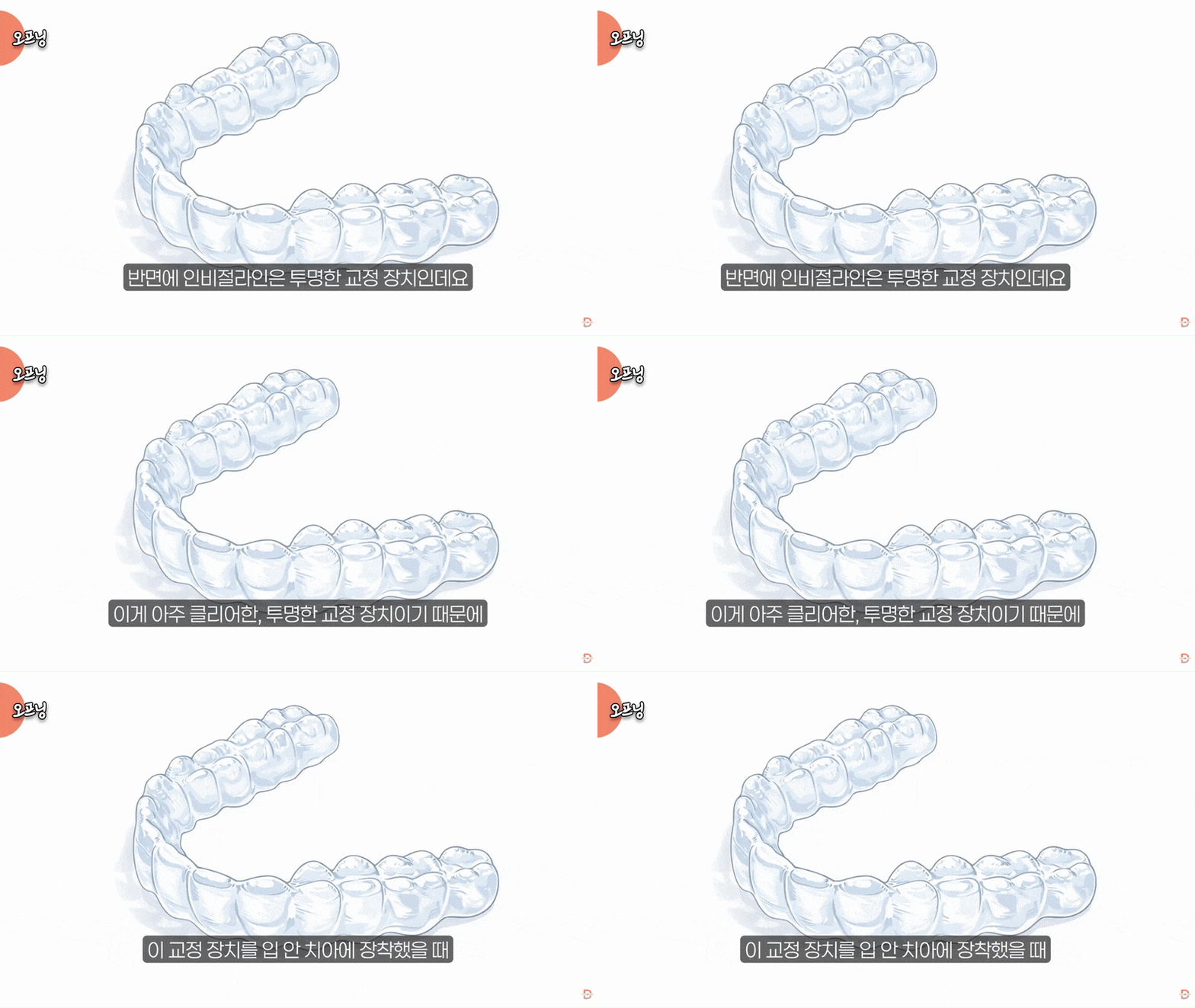
Q1. Is extraction-based orthodontic treatment possible with both?
To give the conclusion first,
👉 both can be used for extraction-based orthodontic treatment.
But there is an important difference.
✔ Lingual braces
→ Appliances are always attached
→ Force is delivered automatically (less affected by the patient)
✔ Invisalign
→ Must be worn for 20–22 hours a day
→ Wearing time = treatment result
👉 In other words, for extraction-based orthodontic treatment,
patient compliance is the key variable.
📌 Simply put
- If you can wear them consistently → Invisalign is possible
- If you’re not confident → lingual braces are more stable

Q2. Which hurts less?
This question comes up a lot.
But the conclusion is simple.
👉 “The type of pain is different.”
✔ Lingual braces
→ Foreign-body sensation against the tongue
→ Initial speech discomfort
✔ Invisalign
→ Pressure when changing aligners
→ The feeling of teeth being pressed
So the important criterion is not
“which hurts less,”
but rather
“which discomfort is less stressful for my life.”
[Introducing our clinic]
[Directions to our clinic]

Q3. Which one is less noticeable when speaking?
This is especially an important point for occupations that involve a lot of speaking in front of people,
such as flight attendants, instructors, and counselors.
✔ Lingual braces
→ Awkward speech at first
→ Tongue adaptation needed
✔ Invisalign
→ Almost no effect on speech
So among professions that involve a lot of speaking,
the selection rate for Invisalign is relatively high.
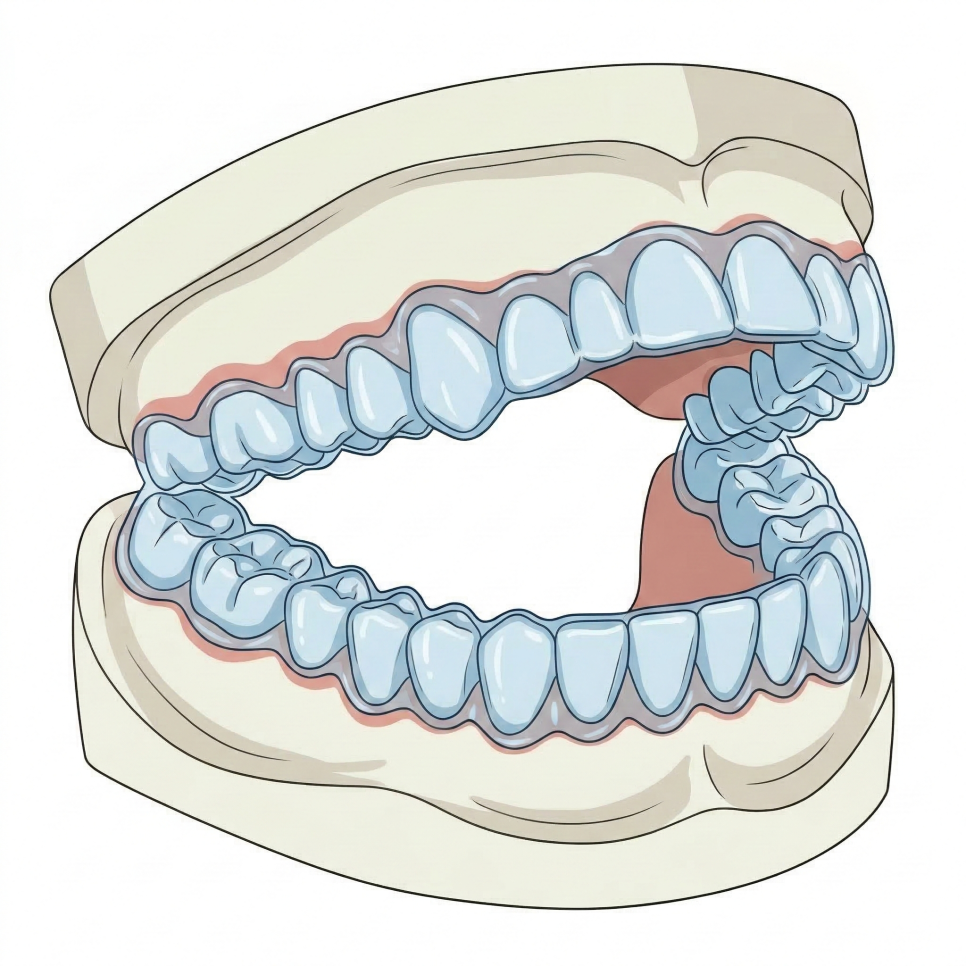
Q4. Then isn’t Invisalign better?
Many people think this way.
“It’s comfortable, invisible, and speech is fine...”
But the conclusion is:
It is not always better.
Because Invisalign is a form of self-managed orthodontic treatment,
✔ if you don’t wear it → treatment is delayed
✔ if you don’t have enough time → the effect is reduced
In other words, the key is not
“Is it a comfortable treatment?”
but rather
“Can I stick with it until the end?”

Q5. Why lingual braces are difficult
The reason lingual braces are considered difficult is clear.
✔ The inner structure of the teeth → more complex
✔ Working space → narrow
✔ Visibility → difficult to secure
So for lingual braces,
treatment depends more on diagnosis and design experience than on the appliance itself.
Q6. Which treatment is faster?
This question is also important.
The appliance does not determine the treatment period.
It is not the appliance, but your daily habits, that determine it.
✔ Lingual braces
→ Continuous force → predictable
✔ Invisalign
→ Varies depending on wearing time
In the end, how consistently you maintain it
determines the orthodontic treatment period.

Final Selection Guide (Key Summary)
👉 Lingual braces are for people who:
✔ are not confident about consistent management
✔ find it hard to keep to wearing times
✔ want a treatment plan with clear progress
👉 Invisalign is for people who:
✔ care about speech
✔ can manage treatment independently
✔ want to reduce the number of clinic visits
📌 Practical selection criteria
In actual consultations, people are often divided like this.
✔ If you have a job that requires standing in front of people a lot
→ choose Invisalign
✔ If you’re worried about the burden of management
→ choose lingual braces
The important thing is one.
It’s not “which is better,”
but “which is right for me.”

Today’s post explained general criteria,
and the correct choice can only be made after directly checking
the condition of your teeth, your bite, and your lifestyle patterns.
If you are considering invisible orthodontic treatment,
I recommend confirming the criteria that fit you best
through a consultation with a specialist.
Thank you for reading today.