Laminate,
Is it really the right choice for me?
I just want my front teeth to be a little straighter and brighter,
but orthodontic treatment takes too long...
Should I try laminate?

You’ve probably thought this at least once.
It’s also one of the most common things I hear during consultations.
But once you start looking into it,
phrases like “they shave down your teeth,”
“it gets too white,”
and “it’s hard to maintain later” start to worry you.
There are plenty of promotional reviews, but it’s hard to find the objective information you actually want.
Hello, I’m Oh Suhwan, the chief director of Smile D Dental Clinic.
As a certified specialist in orthodontics recognized by the Ministry of Health and Welfare,
based on the conversations I’ve had with patients over a long time in the clinic,
I’d like to organize the information you need to know not to recommend laminate,
but to make a careful decision.
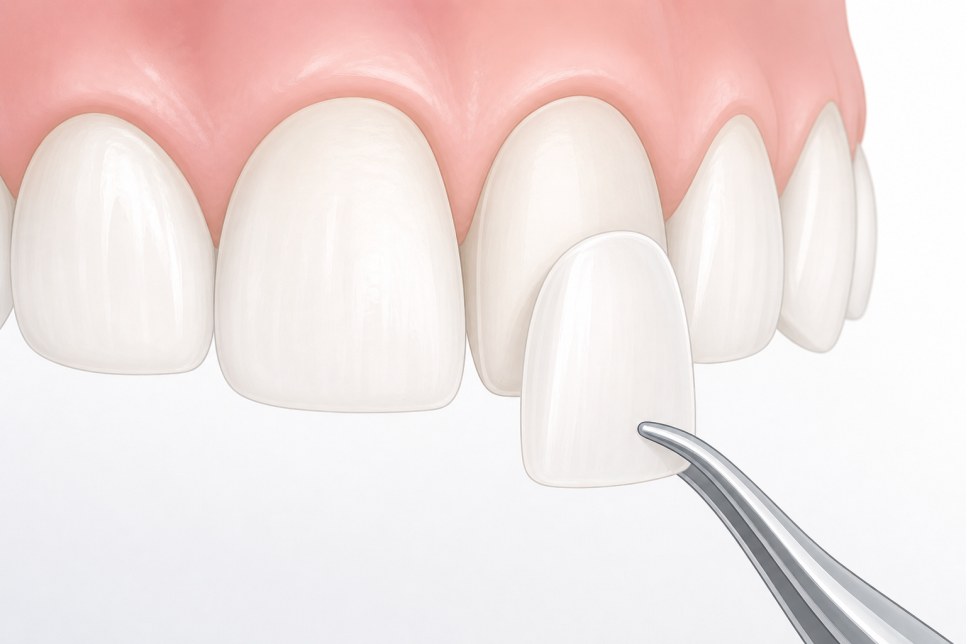
Three things to know first: laminate is a “design” treatment
Laminate is a procedure that attaches a thin porcelain piece (ceramic shell)
to the front surface of a tooth to change its color, shape, and size.
The key points you must understand before starting are:
that its purpose is aesthetic improvement rather than functional restoration,
that it is an irreversible procedure that removes part of the tooth,
and that the outcome depends greatly on the medical team’s sense of design and the quality of the lab work.
Laminate side effects: why do they happen?
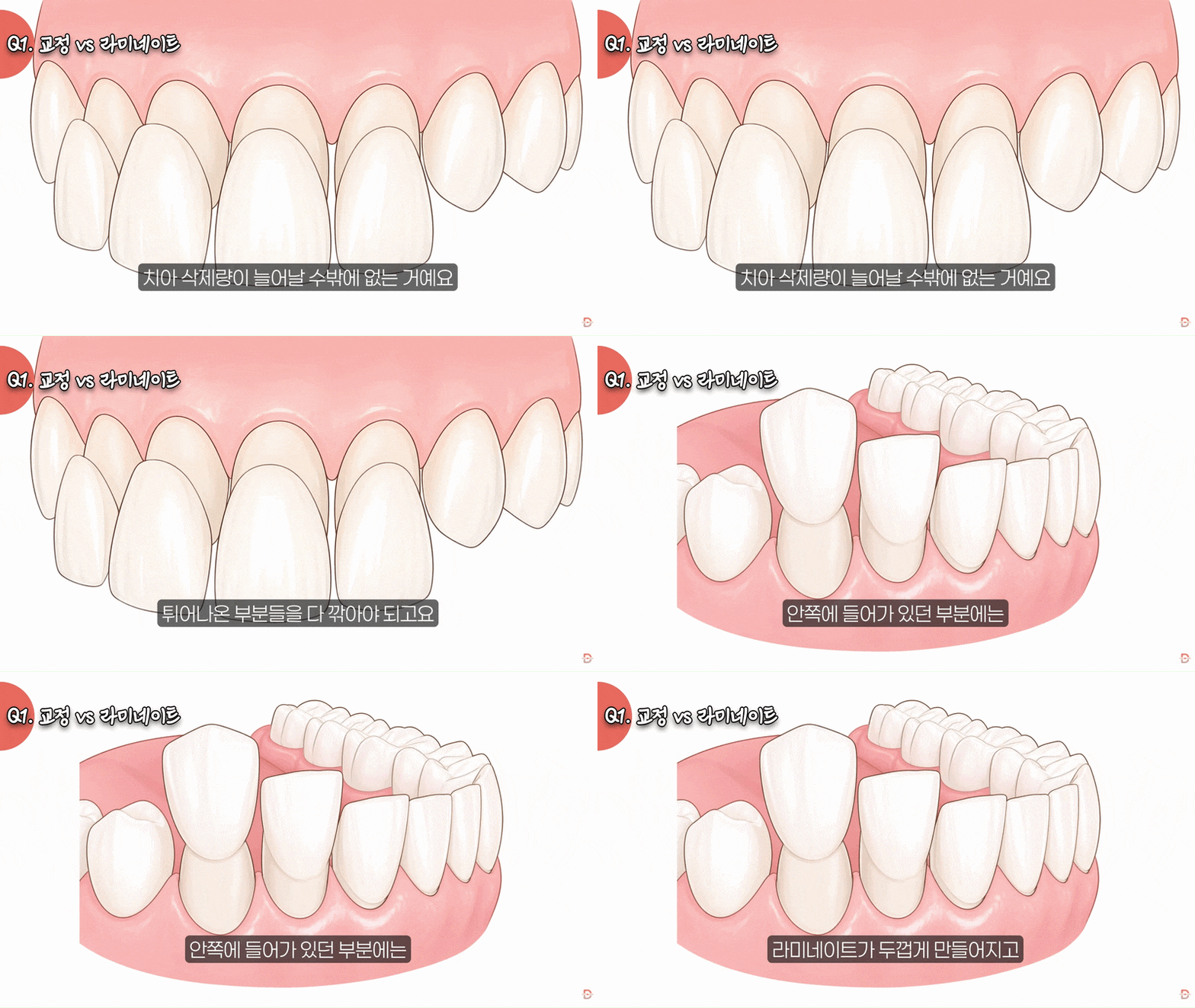
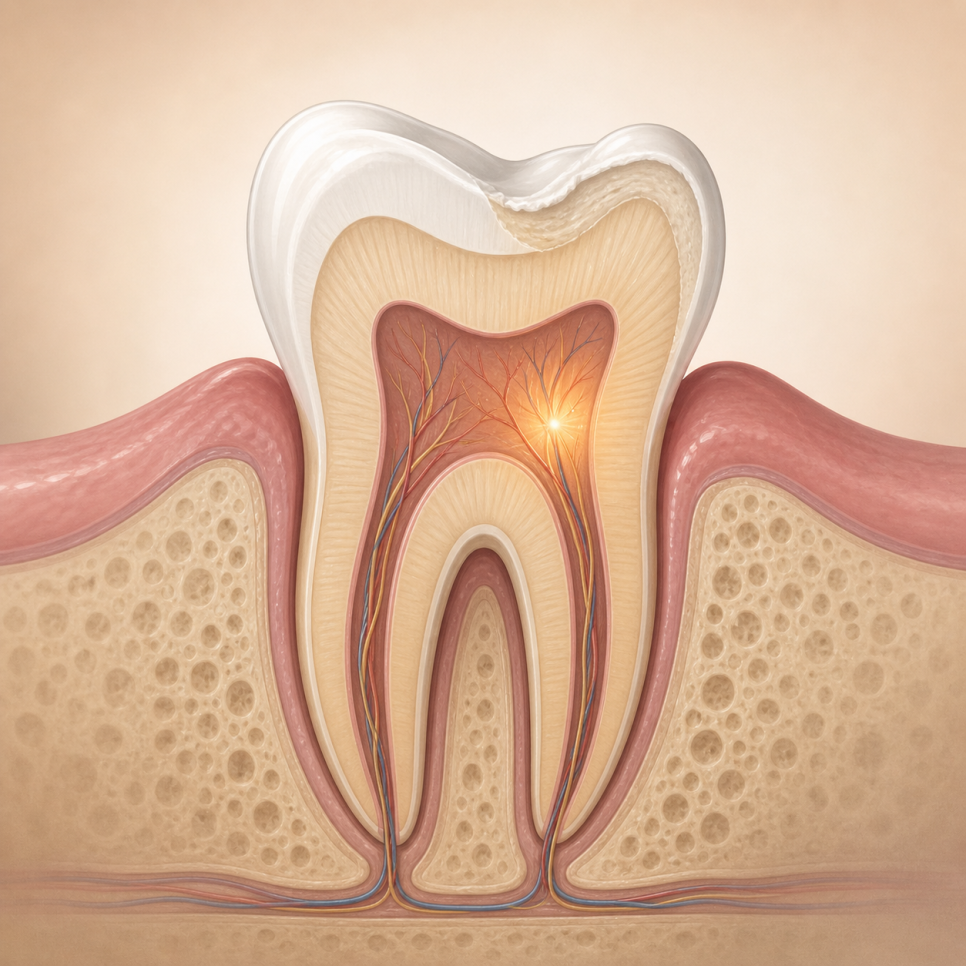
The most common cause of laminate side effects is “excessive tooth reduction.”
If more tooth structure is removed than necessary to achieve the desired result,
it often leads to sensitivity or increased nerve sensitivity afterward.
On the other hand, if too little is removed, the shell becomes too thick,
which can make the result look unnatural or increase the risk of detachment.
The second is dissatisfaction with the design.
Reviews saying “too white” or “looks too thick” are often from cases
where there was not enough communication with the medical team during the color selection or shape design stage.
If the procedure is carried out without a detailed discussion of the desired outcome,
a gap in expectations is inevitable.
The third is overlooking structural issues in the mouth.
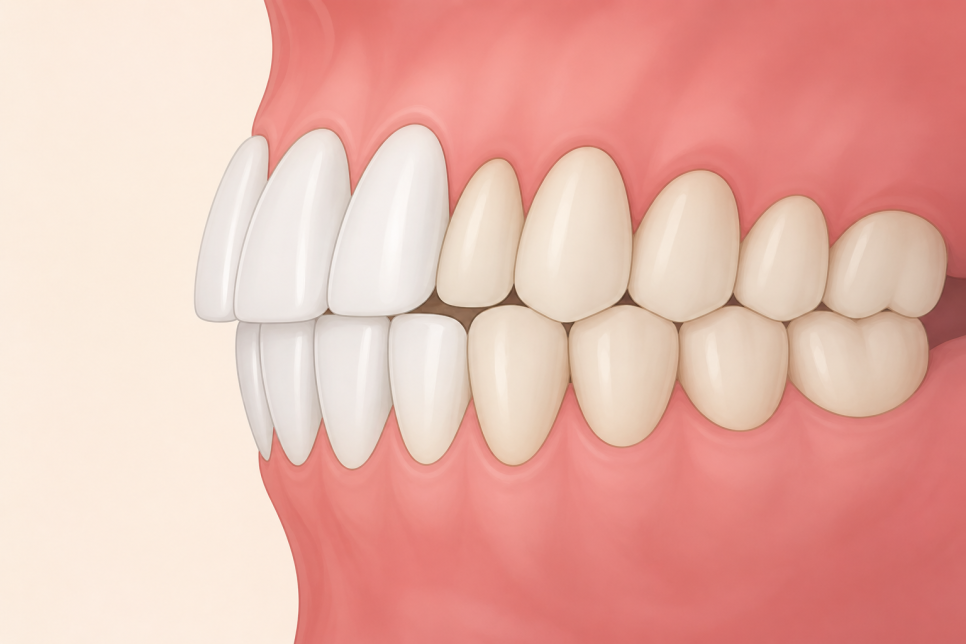
When the teeth are severely misaligned or there are problems with the bite (occlusion),
trying to solve everything with laminate alone often puts excessive force on the shells,
which can lead to fracture or detachment.
In such cases, orthodontic treatment should come first.
 Smile Wrapping
☎️ Smile D Dental Clinic: 0507-1449-2087
📍 13F, ICT Tower, 624 Gangnam-daero, Gangnam-gu, Seoul
Structural problems cannot be solved with laminate - when orthodontics should come first
There’s a phrase I often hear in the clinic.
“I don’t want orthodontic treatment because it takes too long,
so I want to finish everything at once with laminate.”
That feeling is completely understandable.
But if orthodontic treatment is needed before laminate,
changing the order is not a good choice.
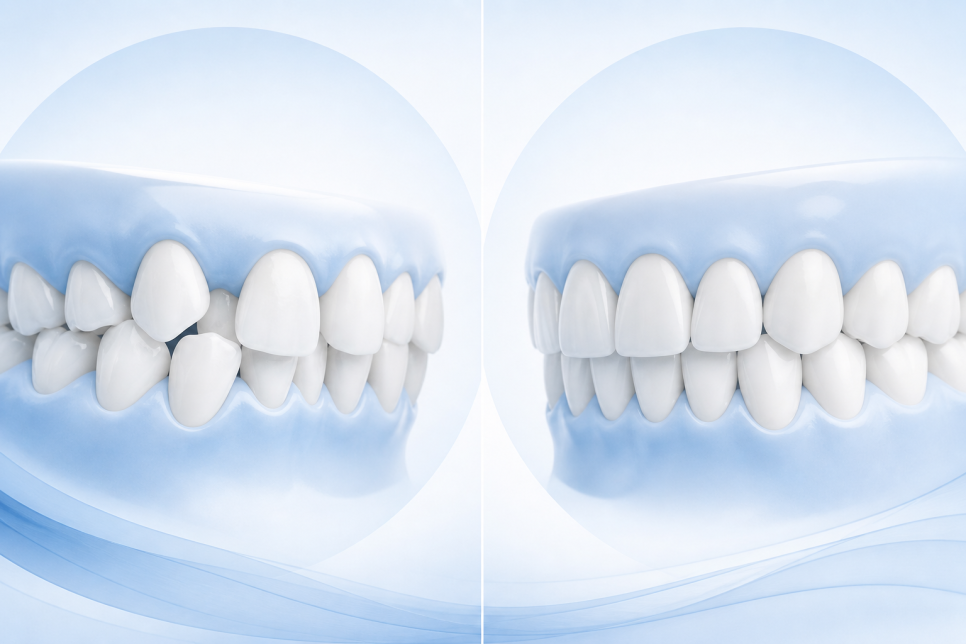
If there are crooked teeth or severe twisting,
if there are bite problems,
or if the spacing between teeth is unevenly too wide or too narrow,
it is much safer to first correct the structure with orthodontics
and then finish with laminate.
Design should be placed on top of structure for a result that lasts and looks natural.
No-prep laminate: when it is possible and its realistic limits
Many of you may have searched for “no-prep laminate reviews.”
It’s only natural to find the idea of not having to shave down teeth appealing.
There are cases where it is actually possible.
This applies when the teeth are originally small or thin,
so that even after the shell is attached,
the overall thickness stays within a natural range.
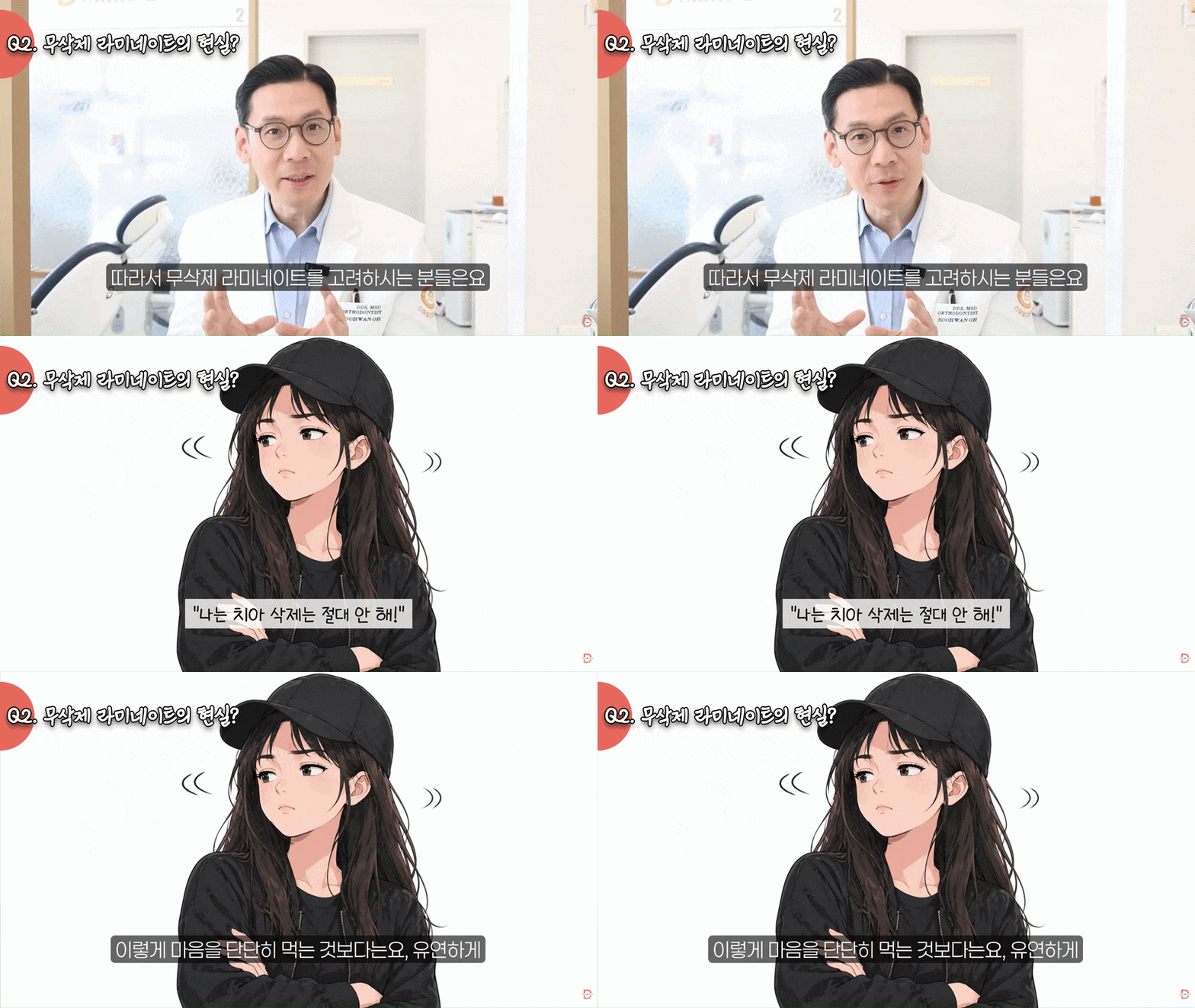
However, in most cases, if it is done without reduction,
the finished teeth may protrude forward or look too thick.
Rather than focusing on whether it is no-prep, the correct approach is to first determine how much reduction is appropriate for that tooth.
Criteria for creating a natural-looking laminate design
The most common complaint about front-tooth laminate results is
that they “look too artificial.”
There are three important criteria for a natural laminate design.
First, a shade that is slightly darker than the whites of the eyes looks more natural.
A color that is too bright can instead look unnatural and make the teeth stand out on their own.
Second, the tooth shape should be decided by considering the face shape, lip line, and gum height together.
The same design does not produce the same result for everyone.
Third, the surface texture matters.
A surface that retains the fine texture of natural teeth looks much more natural than one that is perfectly smooth.
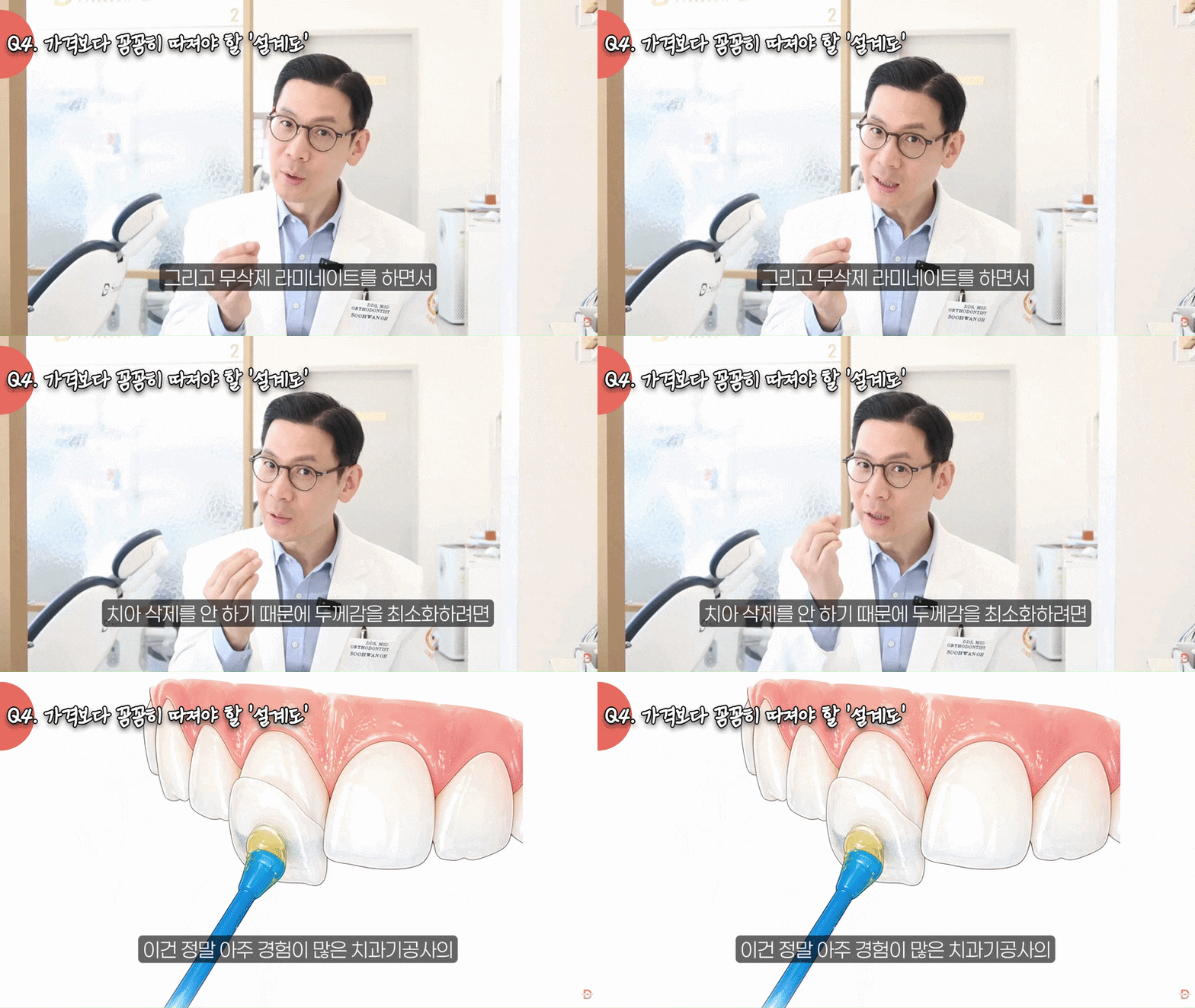
These three factors depend on the skill level of the dental lab and on how accurately the medical team
communicates information to the technician.
Laminate lifespan and care - how long can it be used, and how should it be maintained?
Laminate lifespan is generally known to be around 10 to 15 years,
but it varies depending on maintenance and lifestyle habits.
If you grind your teeth or frequently eat hard foods,
cracks can form in the veneer or it may come off sooner.

Regular dental checkups,
wearing a night occlusal stabilization appliance,
and proper oral hygiene can help extend its lifespan.
If the laminate comes off or is damaged,
it may need to be reattached or remade,
and since the tooth structure has already been reduced,
it is good to understand in advance that other options may be limited.
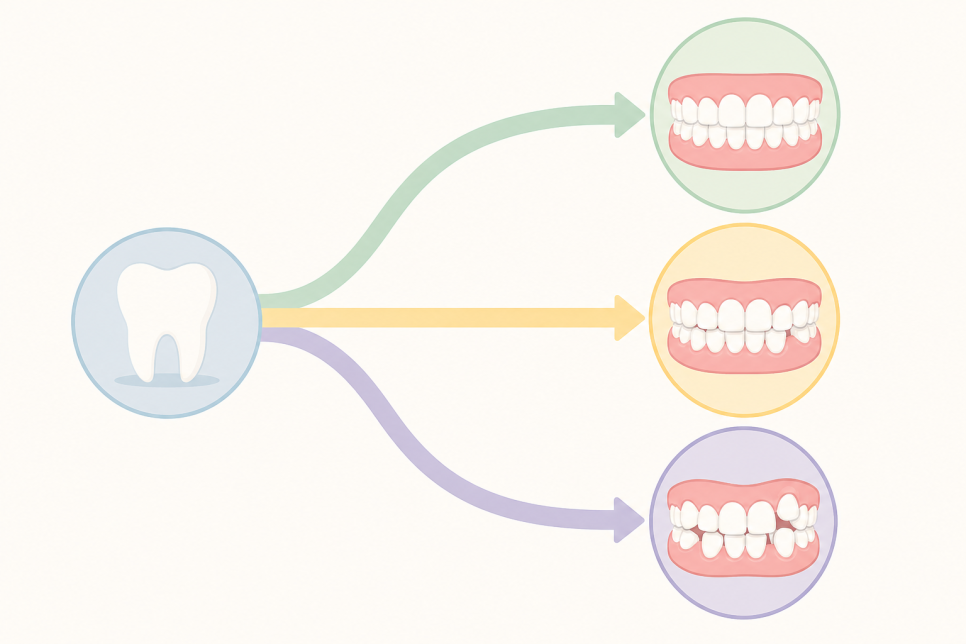
Which case applies to me? - 3 self-check points
These are cases where laminate is likely to be appropriate.
If tooth color is uneven or heavily stained,
if shape finishing is needed after orthodontic treatment,
or if the teeth are naturally small or have minor defects,
those cases may fit here.
If you want only aesthetic improvement without structural problems, laminate may be a good choice.
Additional checks are also needed before the procedure.
If the teeth are slightly crooked or the spacing between teeth is uneven,
if teeth that have previously received prosthetic treatment are included,
or if the gum condition is unstable,
it is best to first check whether laminate alone can solve the issue.
There are also cases where expert consultation comes first.
If there are bite problems,
if the twisting is severe enough to require tooth movement,
or if there are problems with the roots or gum health,
there may be treatments that should come before laminate.
In such cases, the starting point is to first understand the overall condition of the teeth,
rather than focusing on laminate itself.
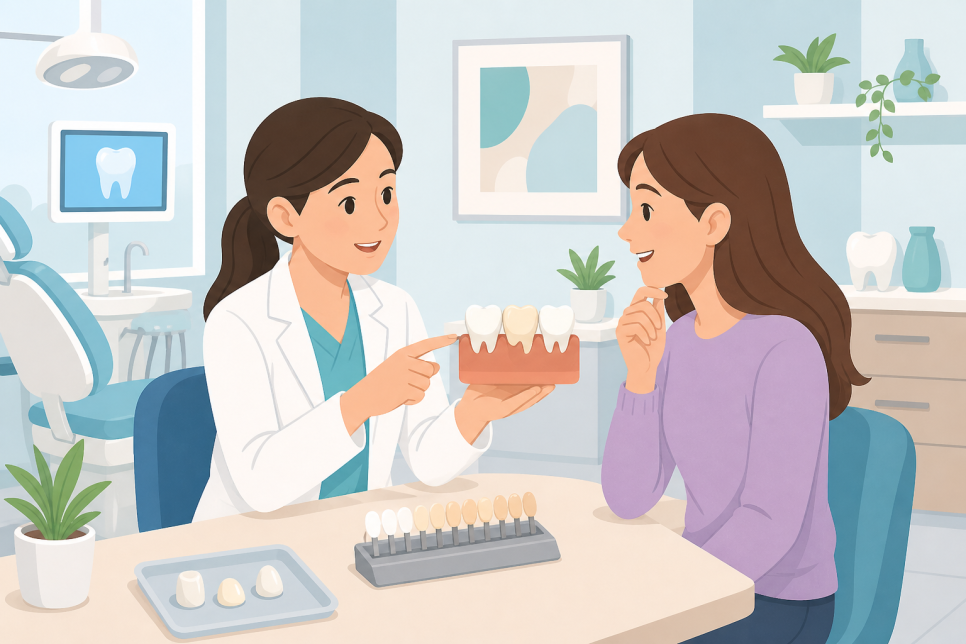 Are you likely to be satisfied? Or likely to regret it?
The common trait among people who are highly satisfied is that
they went through enough consultation before the procedure to decide on a specific design direction,
reviewed the expected result in the simulation stage,
and had no problems with bite or dental health.
On the other hand, people who regret it often
moved forward quickly after a short consultation,
chose based mainly on price,
or proceeded while overlooking structural issues.
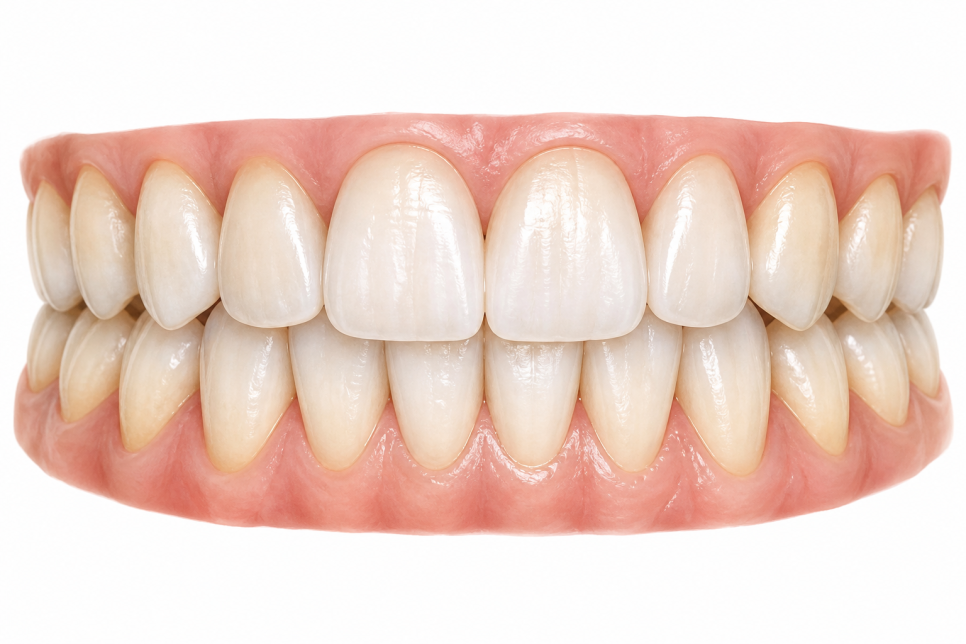 7-point checklist before laminate
These are the criteria you can check for yourself before deciding.
-
Do you fully understand that tooth reduction is an irreversible process?
-
Can you clearly communicate your desired color and shape to the medical team?
-
Have you checked whether your current gum and tooth health is suitable for the procedure?
-
Have you first reviewed whether there are any bite problems?
-
Is there a process to check the result in advance with temporary teeth?
-
Have you been given an explanation about the quality of the dental lab and the materials used?
-
Have you received enough guidance about lifespan, maintenance, and the possibility of retreatment?
If these items are still unclear,
it is better to check once more before deciding on the procedure.
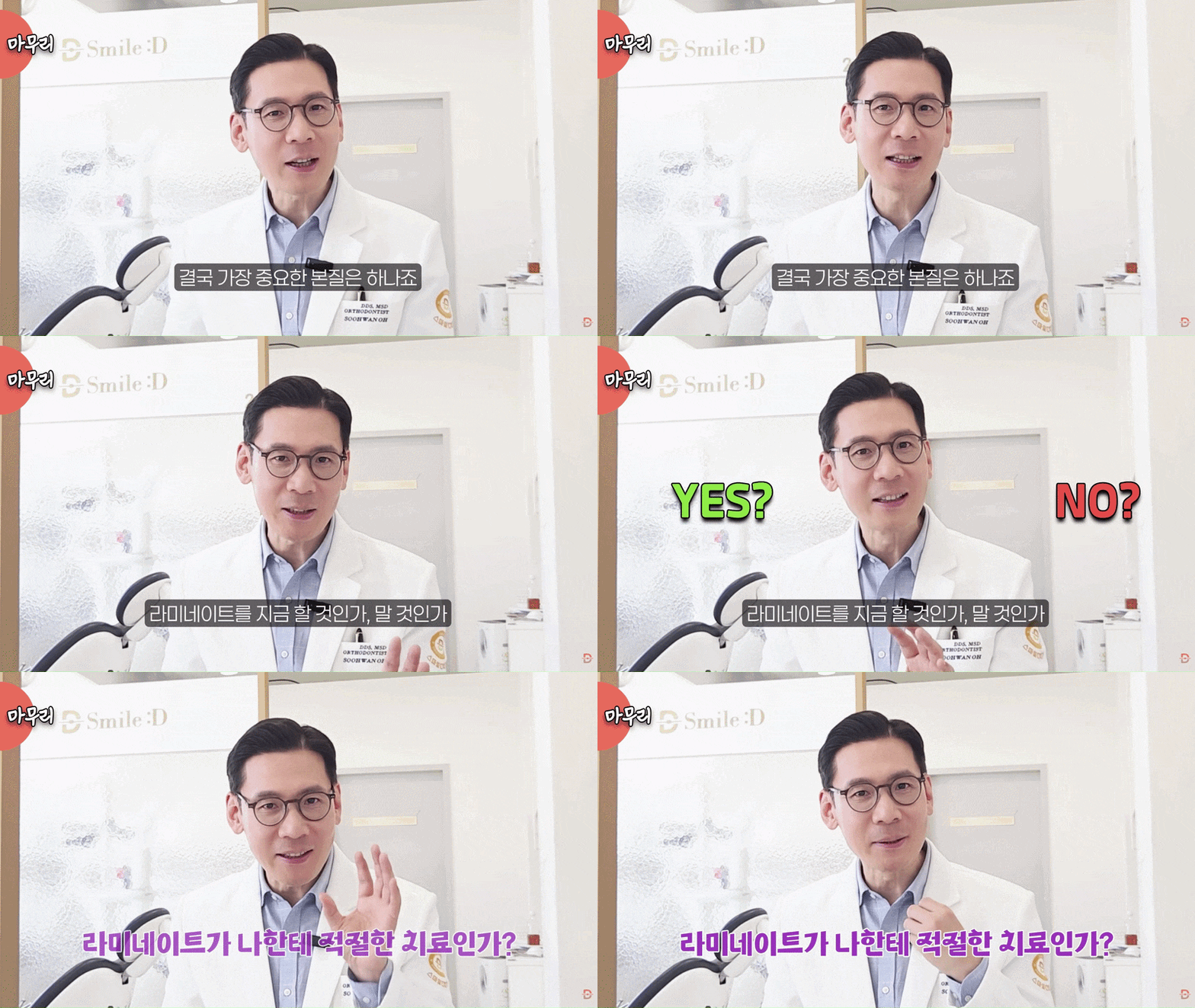 ☎️ Smile D Dental Clinic: 0507-1449-2087
📍 13F, ICT Tower, 624 Gangnam-daero, Gangnam-gu, Seoul
The answer that fits your teeth is different, even if the concern is the same
I’ve organized the key information you should know before deciding on laminate:
the causes of side effects,
the realistic limits of no-prep treatment,
the criteria for a natural design,
and how to manage its lifespan.
When done well, laminate can be used 만족ably for a long time.
But whether it is right for your teeth can only be determined through direct evaluation,
not through a blog post.
Even two people with the same concern often need completely different approaches depending on their dental condition.
If you would like a diagnosis that considers tooth structure and bite from a medical perspective,
you can check with a dental clinic that performs laminate.
Thank you for reading today.
I’ll be back with another post that helps with dental health.
--
※ This post is an informational post prepared by a medical institution in compliance with Articles 56 and 57 of the Medical Service Act.
It was written based only on informational content exempt from medical advertising review.
These images are explanatory materials intended to help understanding, and actual treatment is determined after consultation with the medical team.