Hello.
I’m Oh Soo-hwan, the chief director of Gangnam Smile D Dental Clinic.
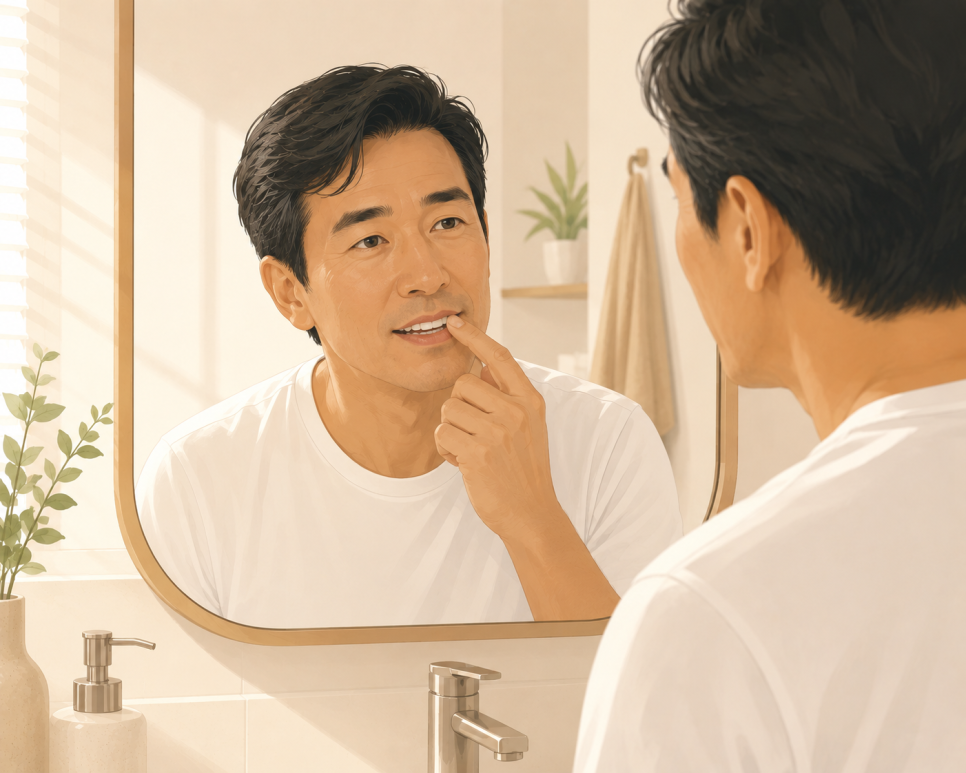
When you reach your 50s, the direction of dental concerns changes a little.
In the past, it may have been, “My crowded teeth bother me” or “I don’t like how they look when I smile.”
Now, many people say, “My teeth are getting more and more spaced out,” “Chewing is uncomfortable,” or “I’m wondering whether I need implants.”
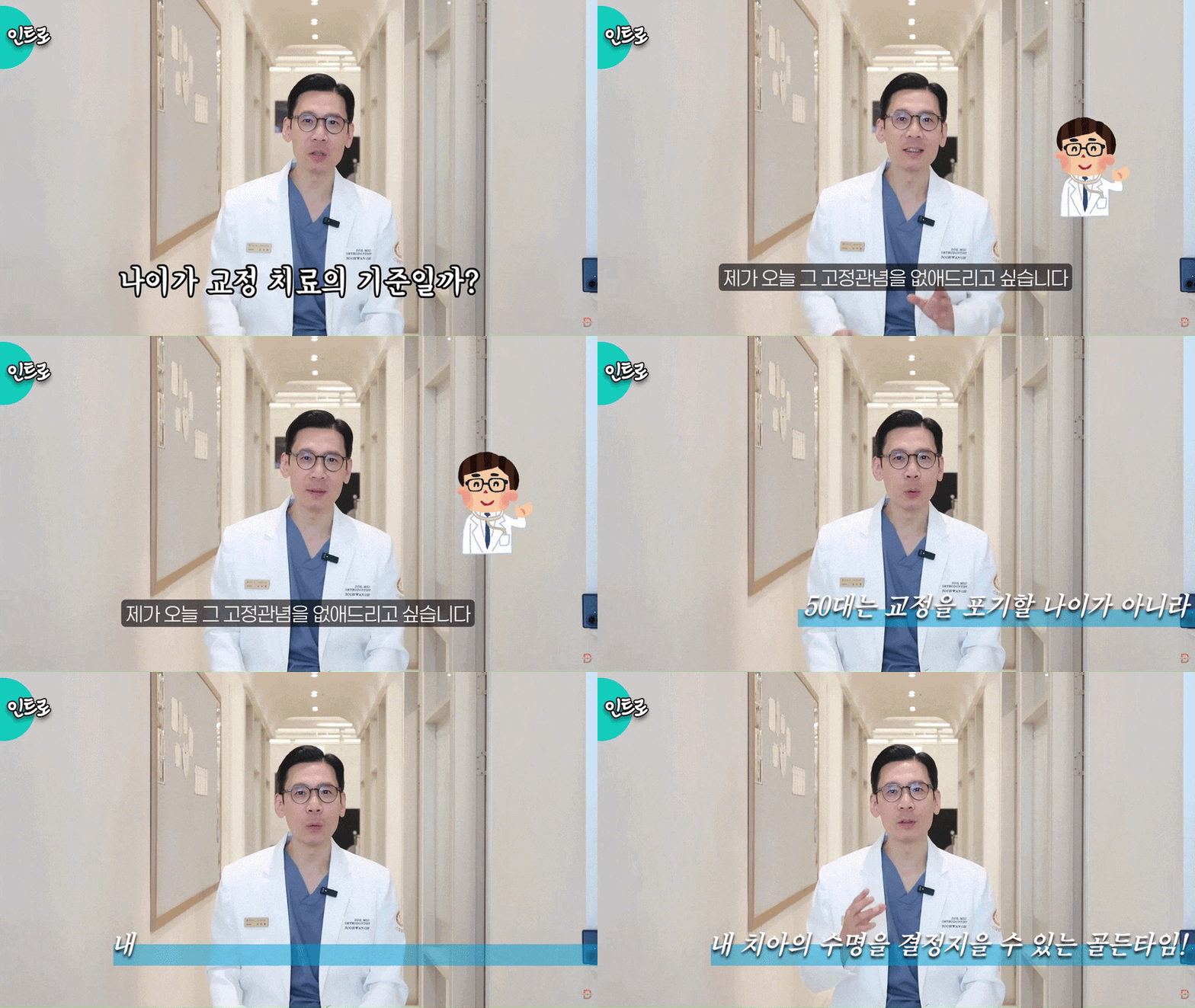
In particular, among those considering orthodontic treatment, I hear this very often:
“Will orthodontic treatment at this age make my teeth even looser?”
In fact, orthodontic treatment in middle age is approached a little differently from treatment in your 20s.
But rather than being a treatment that is unconditionally risky,
It is closer to a treatment where the starting condition matters much more.
 Smile D Dental Clinic
What matters more than age is the “strength of the gums”
The first thing checked in orthodontic treatment for people in their 50s is not age.
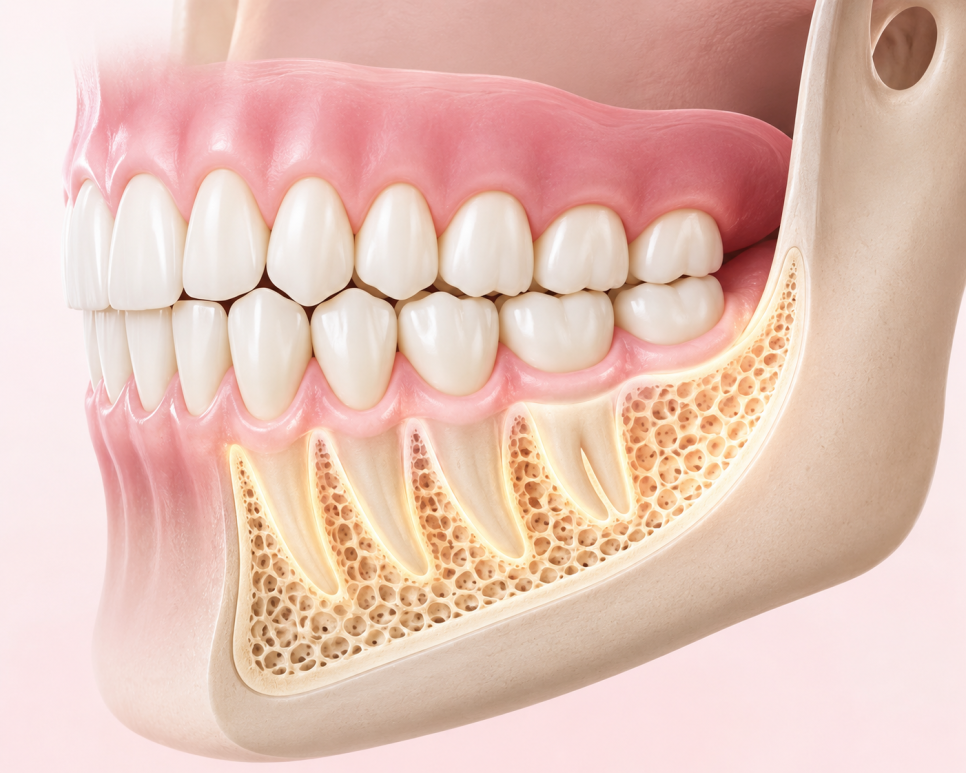
In reality, the first things examined are the jawbone and gum condition that support the teeth.
Teeth do not move simply by force;
they move as the surrounding bone slowly remodels.
So if the gum condition is being maintained healthily,
orthodontic treatment itself can still be fully possible even in middle age.
On the other hand, even if someone is relatively young, if gum inflammation is severe
or the alveolar bone has become significantly weakened, a cautious approach may be necessary.
In the end, what matters is less “How old are you?”
and more “How much of the foundation that supports the teeth remains?”
Criterion the dentist checks first ① Alveolar bone height
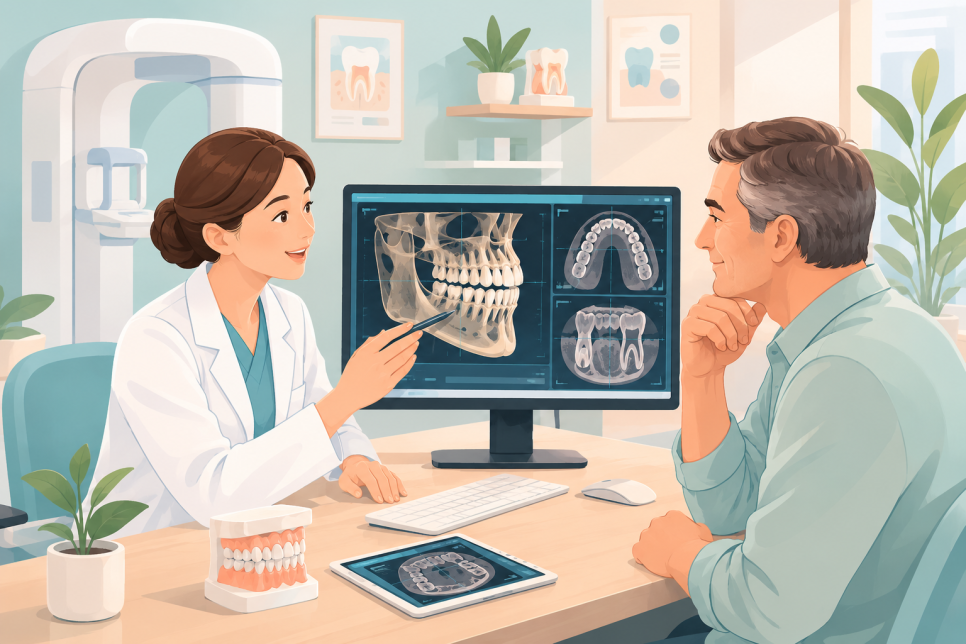
One of the most important things looked at during consultations for middle-aged orthodontic treatment is the condition of the alveolar bone.
The alveolar bone is the bone that holds the tooth roots,
and the question is whether this height is being maintained sufficiently.
To put it simply, it is similar to checking whether the soil is firmly supporting a tree before replanting it.
If the alveolar bone has been significantly resorbed, forcing tooth movement can be a burden.
On the other hand, if the bone height is relatively stable,
orthodontic treatment may be considered even at an older age.
That is why middle-aged orthodontic treatment is not just about tooth alignment;
it is important to check the CT scan and gum condition together.
Criterion the dentist checks first ② Whether there is gum inflammation
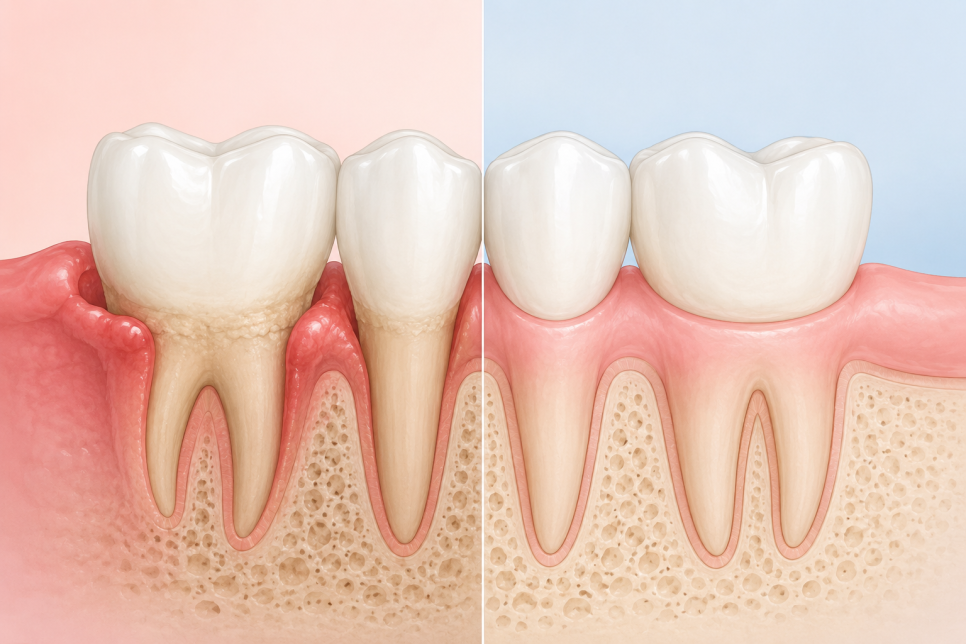
If your gums bleed frequently when brushing, or if they feel swollen and loose,
you should first check for the possibility of periodontal inflammation.
That is because if teeth are moved forcefully while the gums are inflamed,
bone resorption may progress faster.
In particular, some cases where “the teeth suddenly became spaced apart” are not simply alignment issues,
but are caused by gum disease.
In such cases, instead of rushing into orthodontic treatment, gum treatment and inflammation control are often needed first.
This is also why stability matters more than speed in middle-aged orthodontic treatment.
Criterion the dentist checks first ③ Existing implants and prosthetic condition
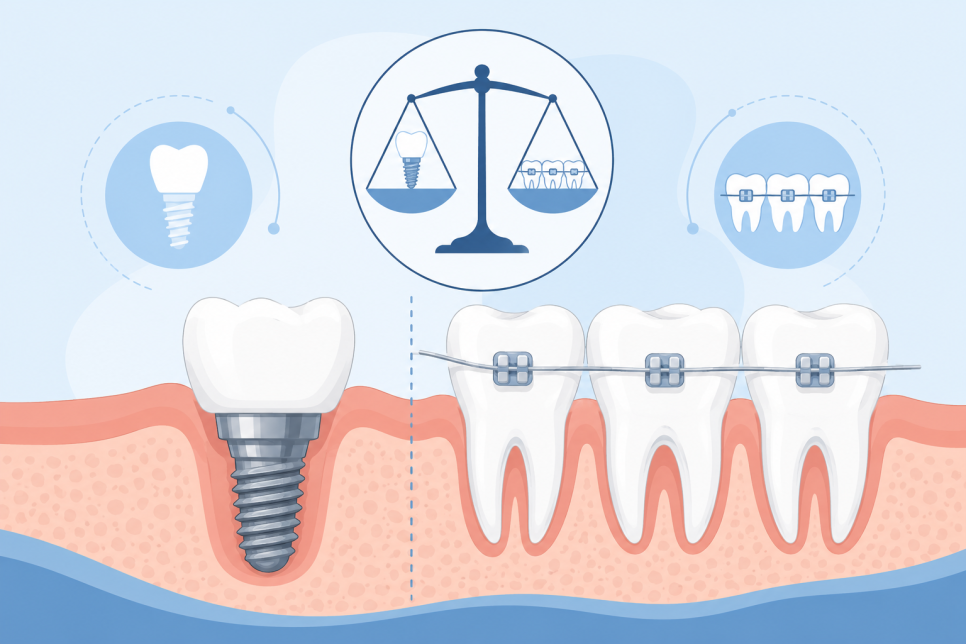
After age 50, it is not uncommon for people to already have implants or bridgework.
In such cases, a much more detailed plan than standard orthodontic treatment may be needed.
In particular, because implants do not move like natural teeth,
the movement direction of surrounding teeth and the space arrangement must be considered together.
Conversely, if an implant is needed but there is not enough space or the teeth have tipped over,
orthodontic treatment may be done first to organize the positions before making the prosthetic plan.
That is why middle-aged orthodontic treatment is often less about simply “making the teeth straight”
and more about organizing the tooth structure that will be used going forward.
If these changes are happening, it may be time to consider orthodontic treatment
After middle age, tooth alignment can change little by little due to aging and changes in the bite.
For example:
- The spaces between the front teeth gradually widen
- You have had a long-standing habit of chewing only on one side
- A missing molar has been left untreated for a long time
- Food gets stuck more often than before
- Your teeth feel like they are protruding forward
These changes are not always just cosmetic issues.
They can also be connected to bite balance or gum changes.
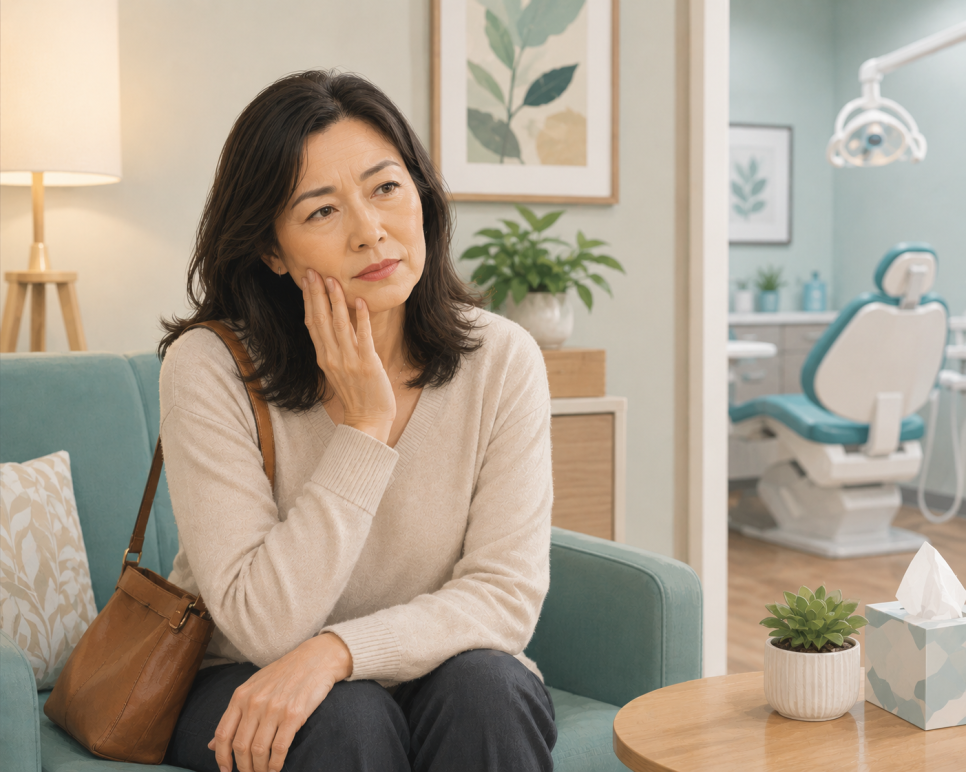
In particular, if a molar is left untreated for a long time, the surrounding teeth can tip over,
and the overall bite height may collapse.
So rather than dismissing it by thinking, “It doesn’t hurt, so it must be fine,”
it may be helpful to check your current condition once.
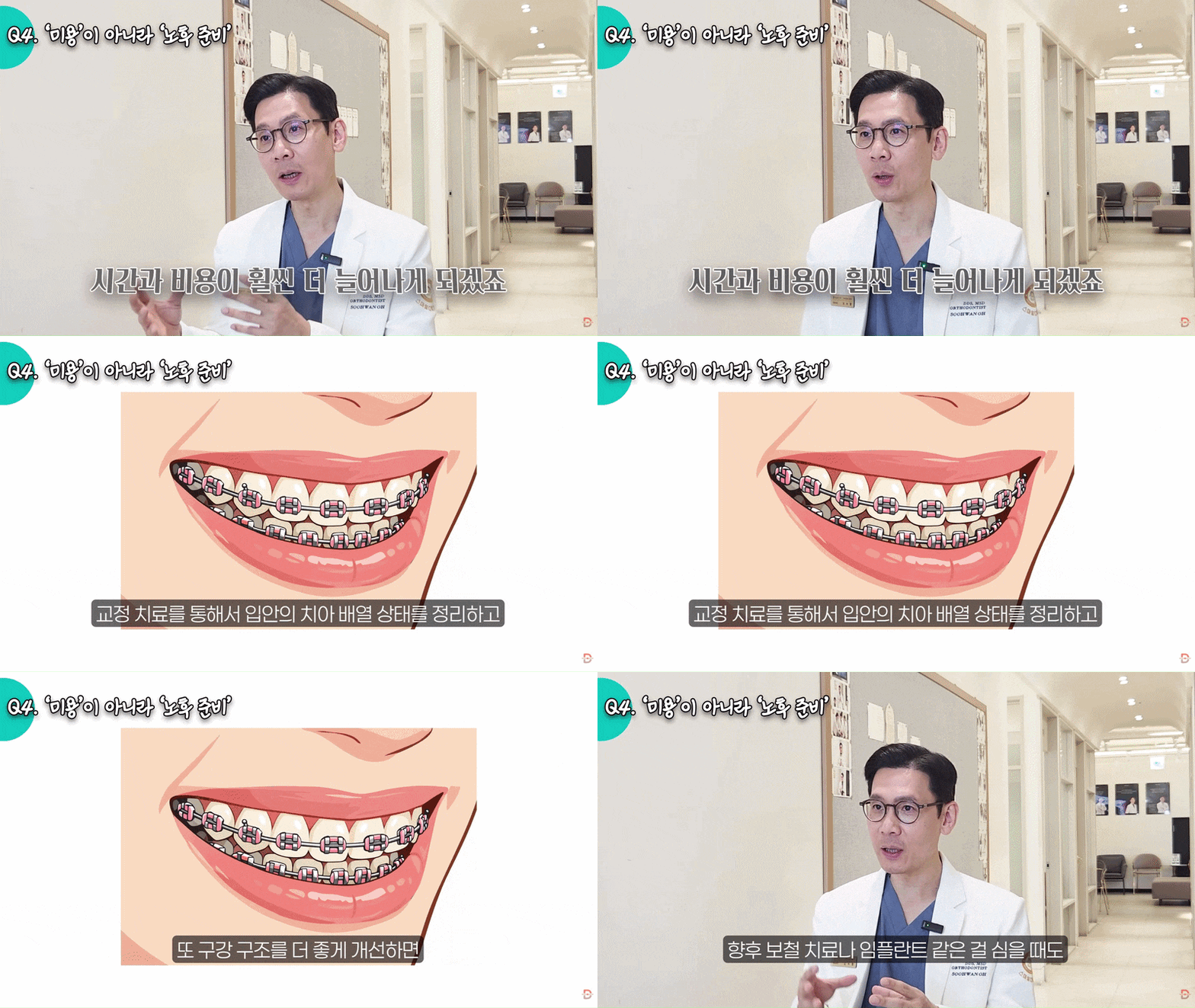
The goal of orthodontic treatment in your 50s is not only to “look better”
When I see people considering middle-aged orthodontic treatment, more often than not they are not seeking consultation because they want to “look better.”
Instead, many come because they want to use their teeth well for a long time.
If the tooth alignment and bite become stable,
it may help make eating more comfortable
and reduce situations where excessive force is concentrated on specific teeth.
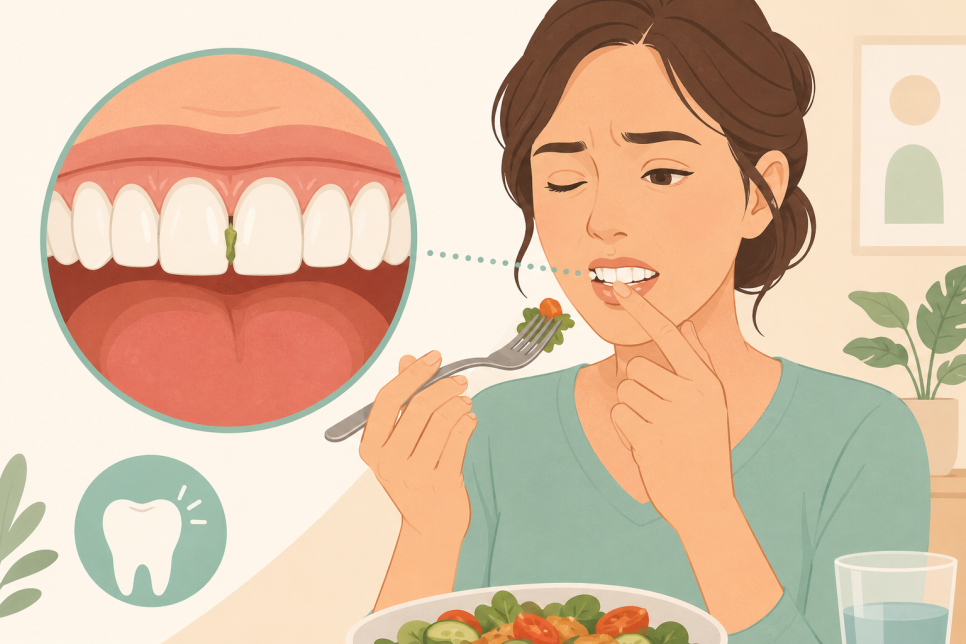
Also, when planning implant or prosthetic treatment, having the structure organized can be advantageous
when deciding the direction of future maintenance.
Of course, orthodontic treatment is not necessary in every case.
But what matters is starting with an understanding of how your current dental condition is changing.
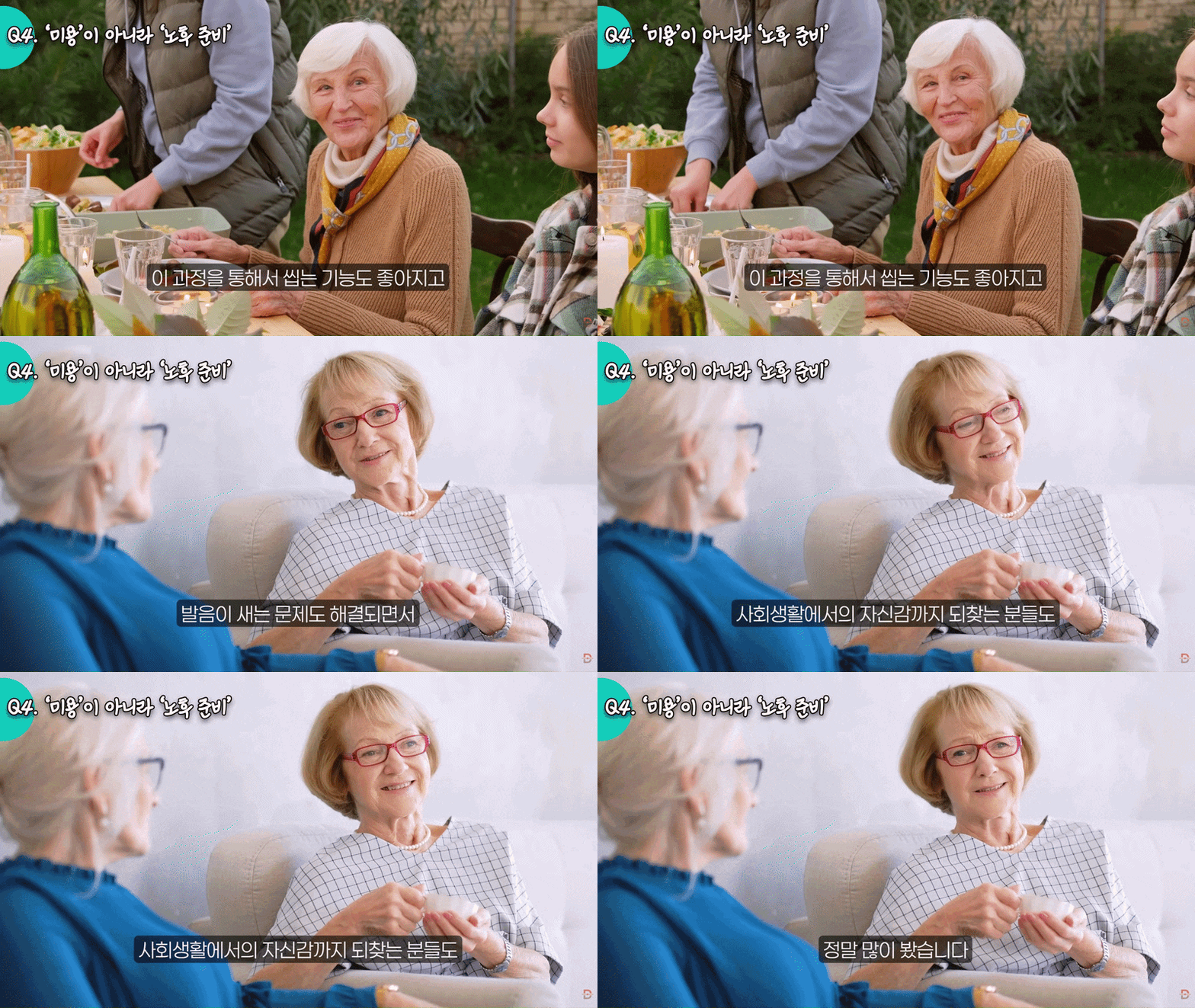
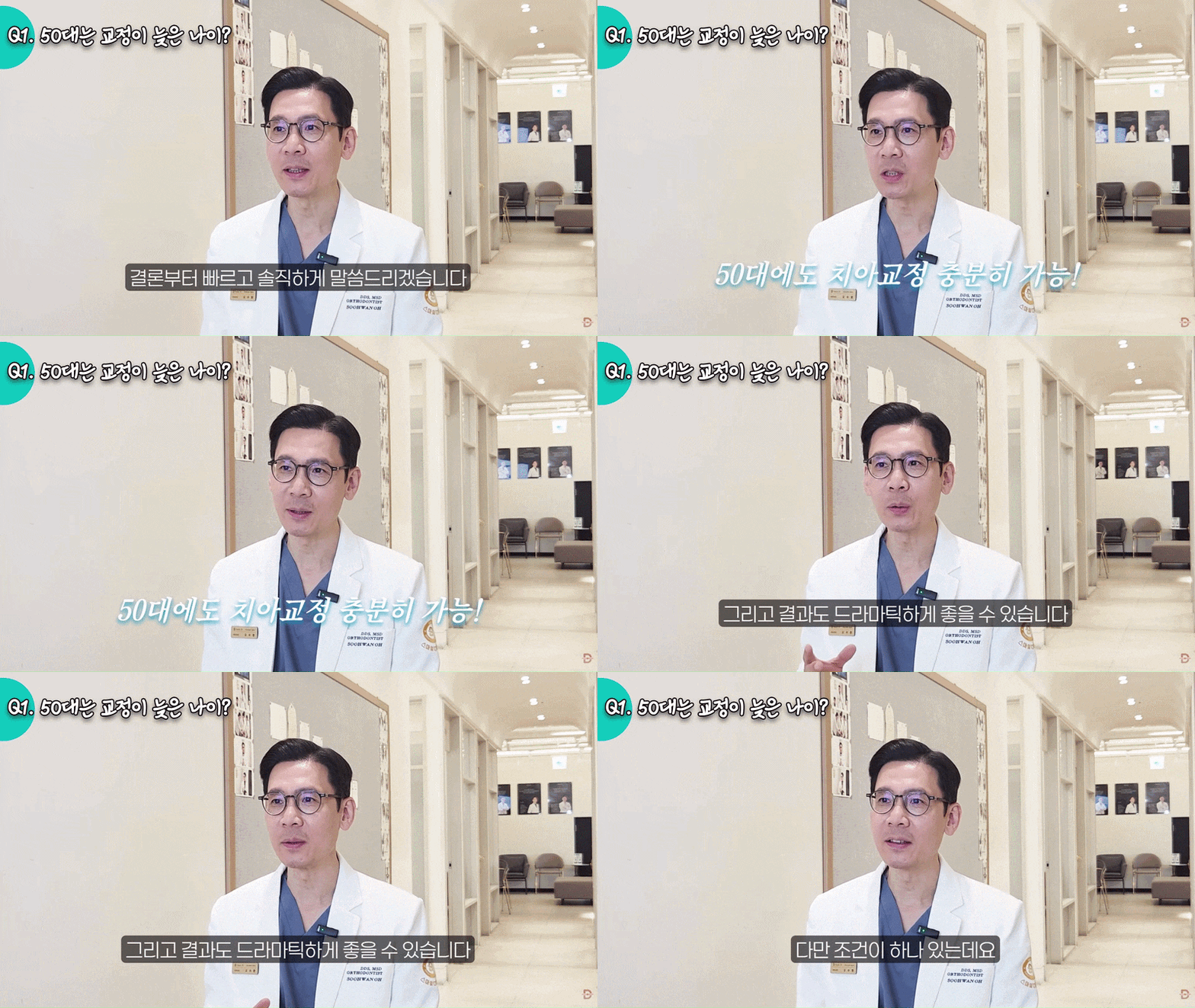
Orthodontic treatment for people in their 50s is neither a treatment that is always too late,
nor one that must always be rushed.
It is more important to accurately check the current condition of the gums and teeth,
and decide the direction that fits your situation. 😊
If you have questions, please visit the clinic
and feel free to ask.