SmileD Dental Clinic
Hello.
I’m Oh Su-hwan, chief director of SmileD Dental Clinic, a dental clinic near Sinnonhyeon Station.
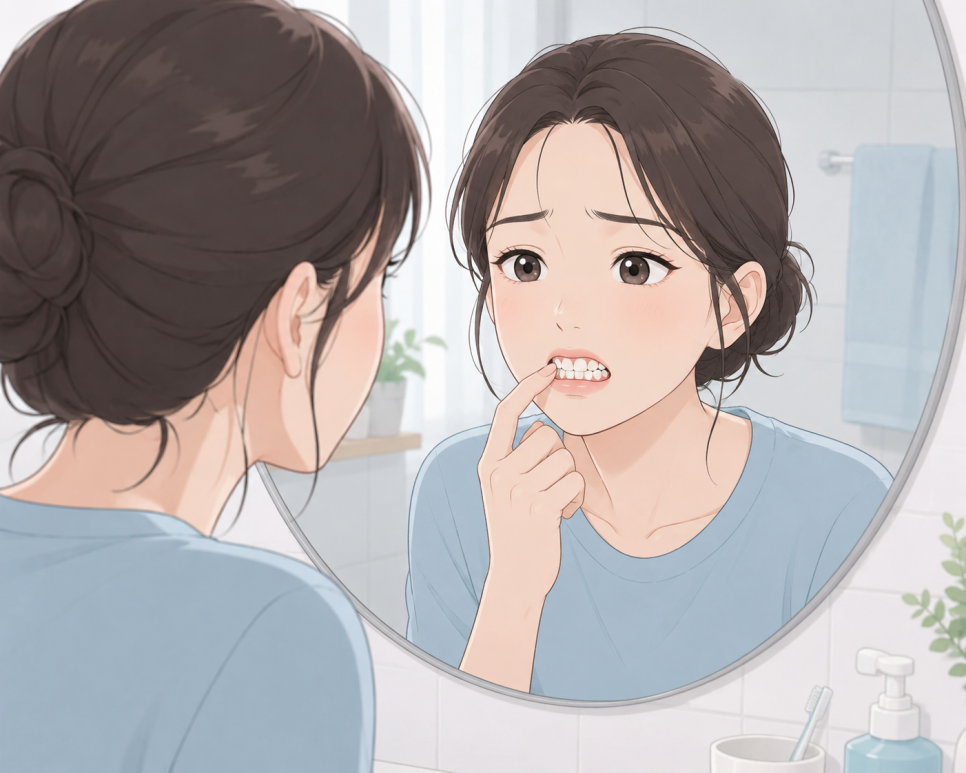
Every time they look in the mirror, some people notice that just one or two front teeth overlap slightly,
or that their tooth alignment only bothers them from certain angles in photos.
At times like this, the most common thoughts are:
“Do I have to get full orthodontic treatment?”
“Can’t I just straighten the front teeth a little?”
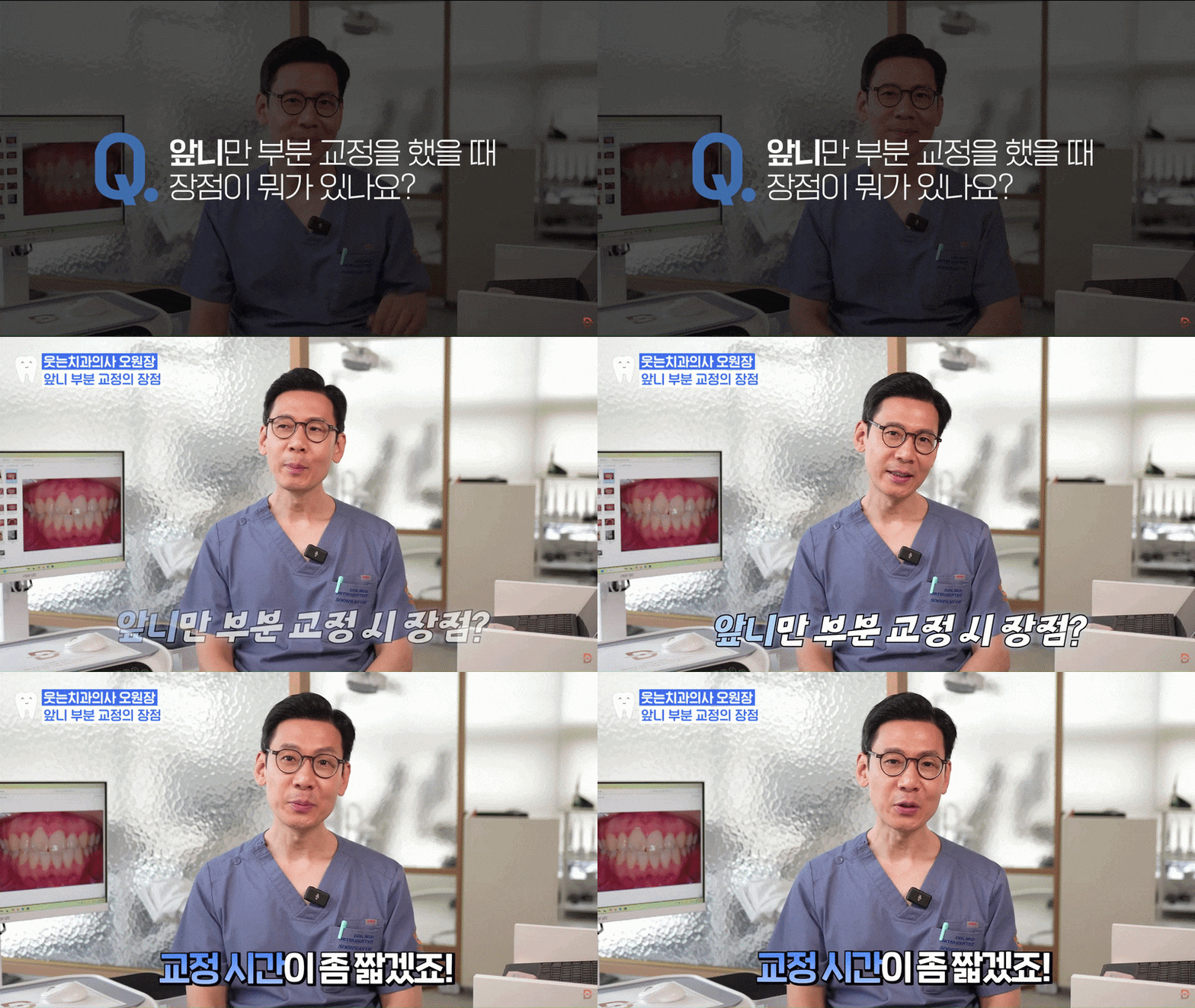
Front tooth orthodontic treatment
In fact, among those who inquire about partial orthodontic treatment,
many want to quickly correct only the part that is visible rather than the entire set of teeth.
However, the important thing is that not everyone whose front teeth are misaligned can receive partial orthodontic treatment.
< SmileD Dental Clinic Location >
< Learn More About SmileD Dental Clinic >
| 📞 Contact SmileD Dental Clinic |
|---|
| 0507-1449-2087 |
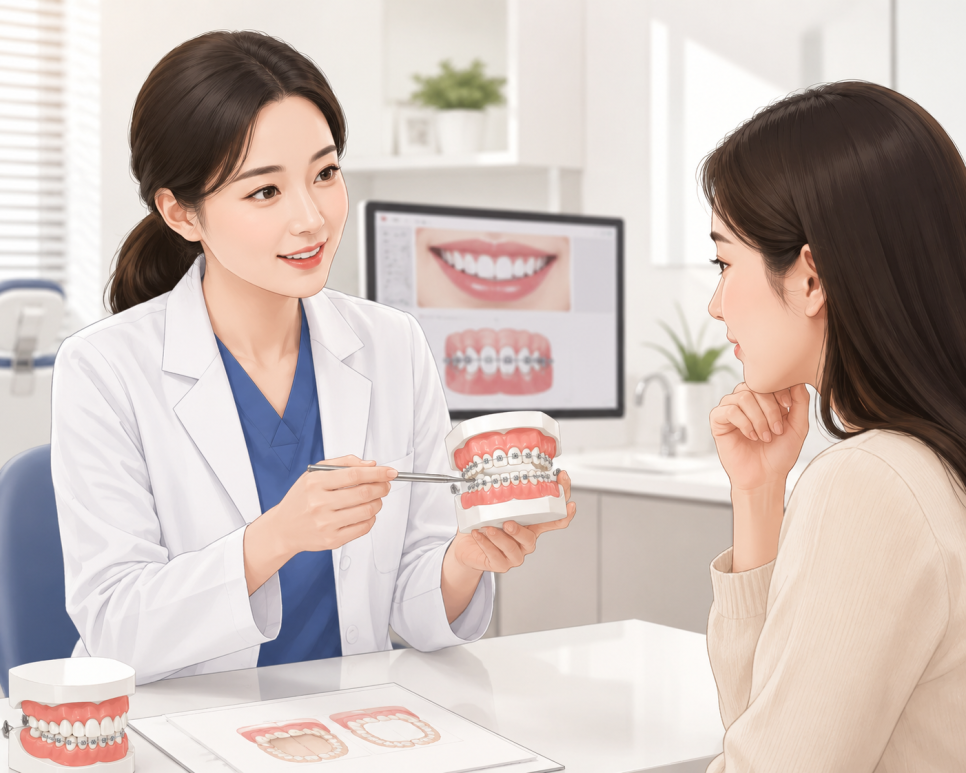
Orthodontic clinic in Gangnam
What exactly is partial orthodontic treatment?
Partial orthodontic treatment, as the name suggests, is an orthodontic method that
moves only some of the teeth in a limited way rather than the entire dentition.
It is often considered in cases where the front teeth are slightly overlapping,
where the spacing is not large,
or where only part of the alignment has shifted again after previous orthodontic treatment.
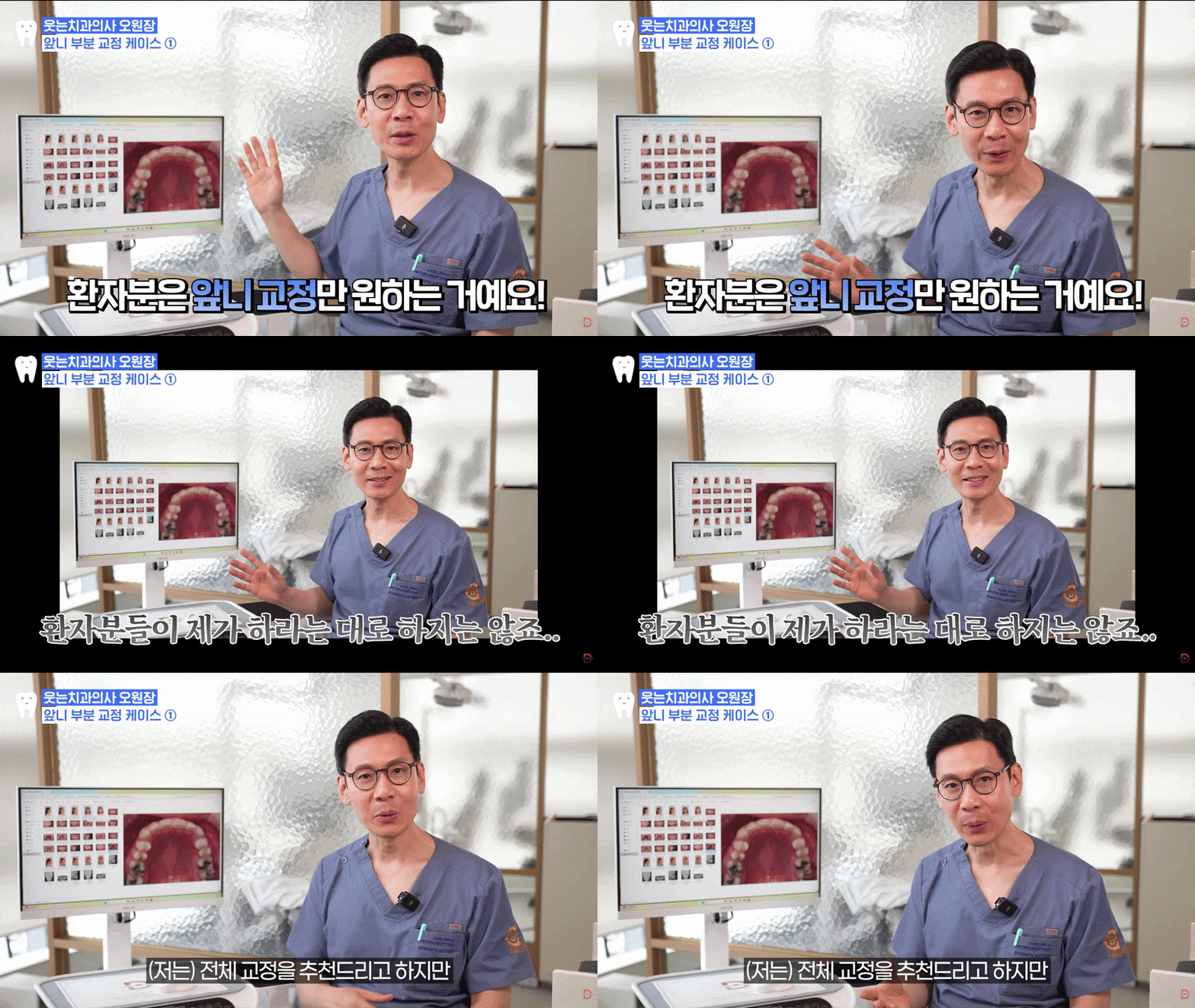
Partial orthodontic treatment
However, there is a common misunderstanding here.
It is easy to think, “If only the front teeth need to move, then it should be simple,”
but teeth are structured to move in relation to one another,
so in many cases the issue is not limited to the front teeth alone.
That is why eligibility for partial orthodontic treatment
is often not decided simply by looking at the arrangement of a few teeth.
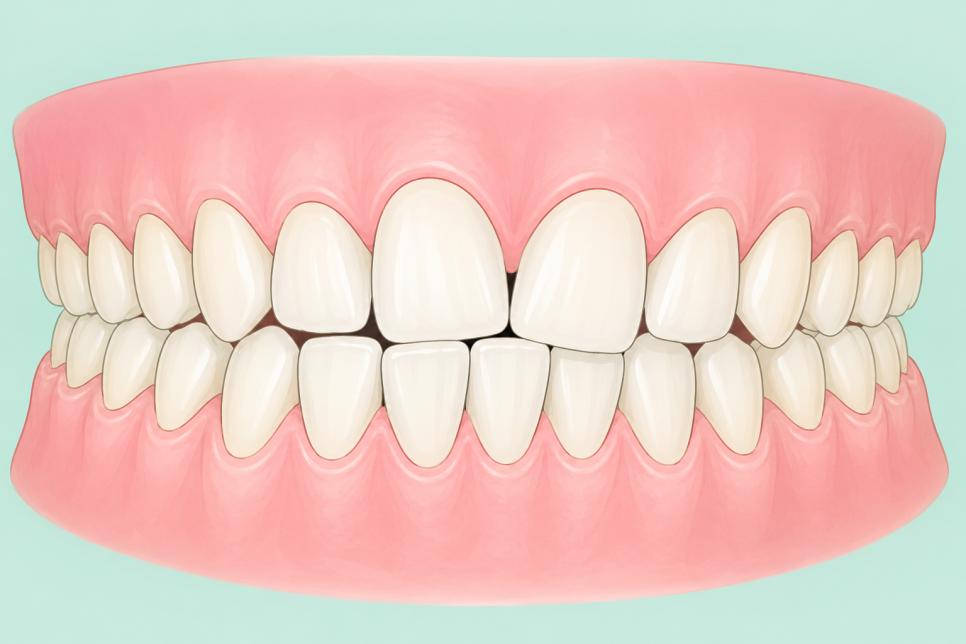
We look at the bite, not just the front teeth
One of the words that comes up often in partial orthodontic consultations is “bite.”
A bite refers to the relationship between the upper and lower teeth,
and even if the front teeth only look a little crooked,
in reality the molar bite or jaw position may also be affecting things.
For example,
if there is not enough space to move the front teeth inward,
or if forcing the teeth into alignment would cause other teeth to collide,
then a more comprehensive movement plan rather than partial orthodontic treatment may be needed.
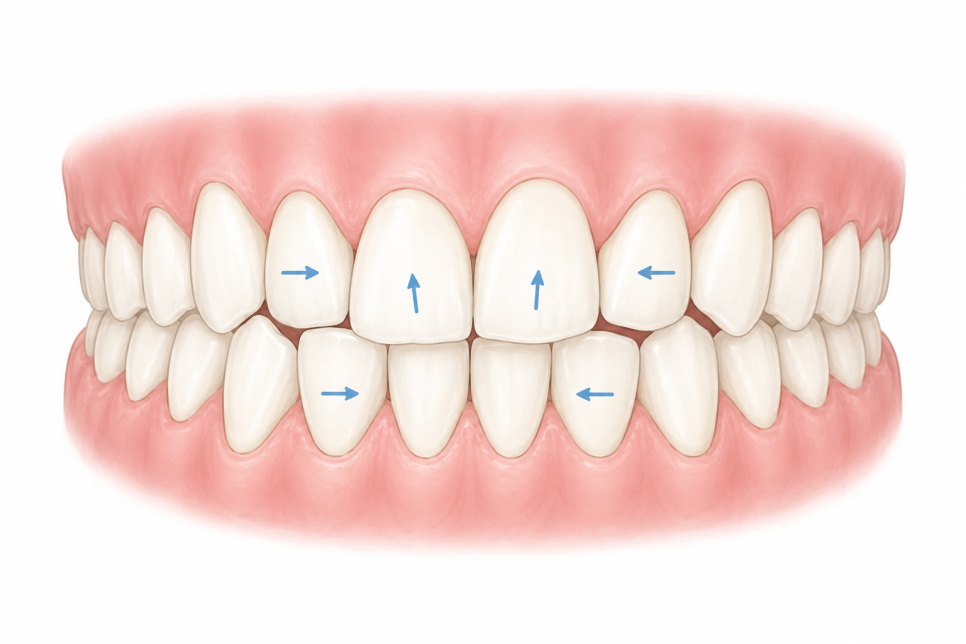
Orthodontic treatment
On the other hand, if the bite is relatively stable,
and the range of movement is not large,
partial orthodontic treatment may be an option.
In the end, what matters is not
“how crooked it is,” but
“why it became that way.”
Partial orthodontic treatment can also be difficult in some cases
Although many people inquire about partial orthodontic treatment,
there are also quite a few cases where full orthodontic treatment is recommended.
Typical examples include
cases with protruding teeth,
cases with severe lack of space for crowded teeth,
cases where the midline is significantly off,
and cases with major bite imbalance.
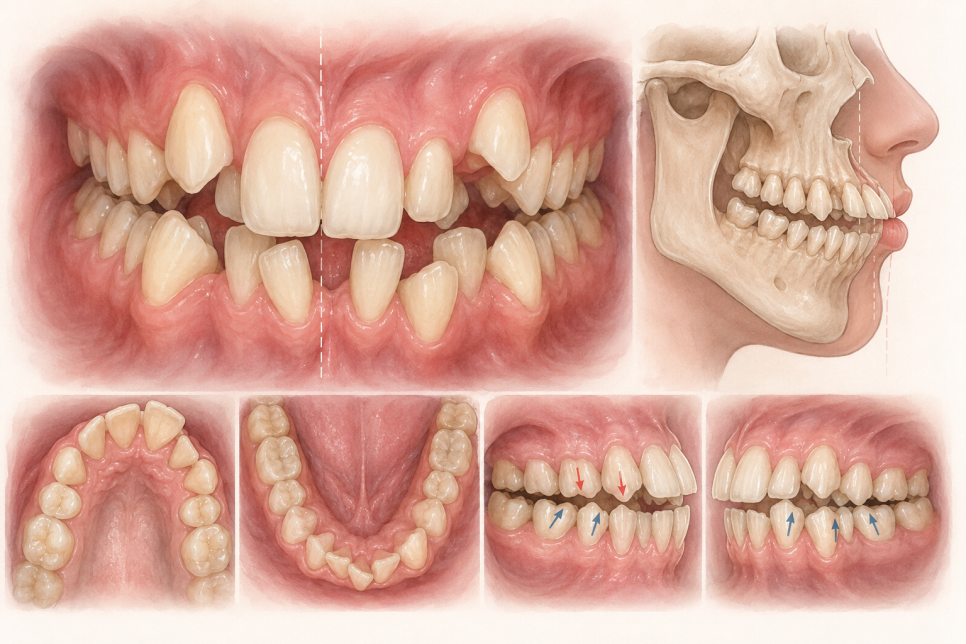
If you force only the front teeth into place in these situations,
the visible alignment may seem briefly corrected,
but there may still be shortcomings in chewing function or long-term stability.
So if you are told during a consultation that
“partial orthodontic treatment may be difficult,”
it is important not to be disappointed,
but to check together why that judgment was made.
Orthodontic treatment is a little different from simply making the visible teeth look straight.
Will partial orthodontic treatment always finish quickly?
Because partial orthodontic treatment usually involves a limited range of movement,
it often takes less time than full orthodontic treatment.
However, the treatment period also varies greatly from person to person.
This is because it can depend on the speed of tooth movement,
the condition of the gums and alveolar bone,
the type of orthodontic appliance,
and whether a retainer is worn.
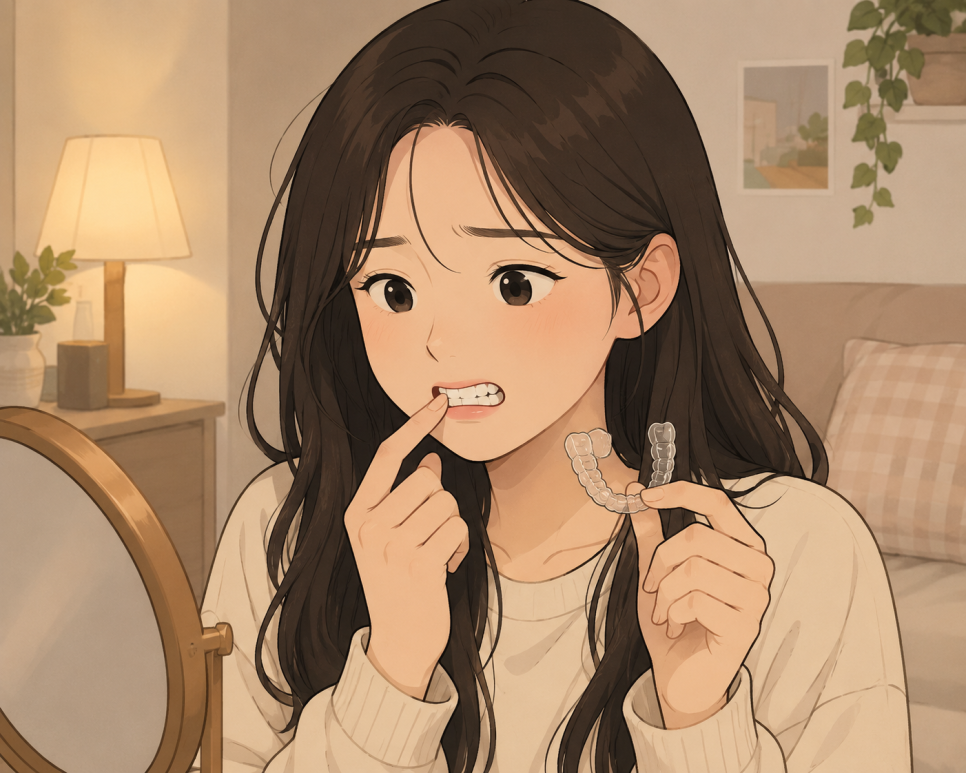
Especially in adult orthodontics,
the environment for tooth movement can differ from that of school-age patients,
so it is hard to say definitively that “it will always be finished in a few months.”
Also, during treatment,
there may be cases where adjustments to the movement direction are needed compared to the initial plan,
so the plan may be revised while monitoring the process.
That is why, rather than deciding on a treatment method based only on the timeline,
it is important to first check which approach is realistic for your own teeth.
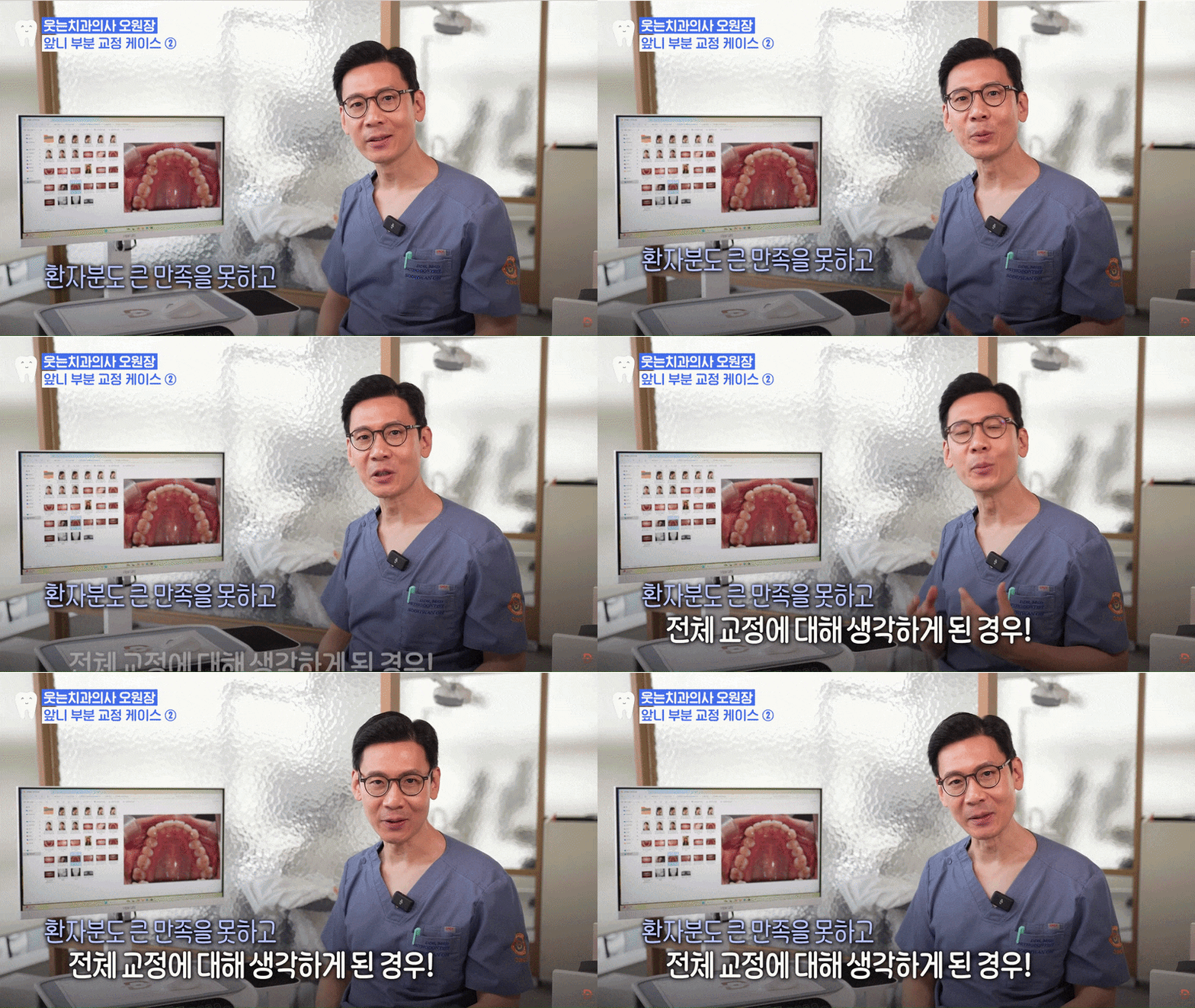
You can do a simple check at home
Of course, an accurate judgment requires an examination,
but there are also 기준 you can check on your own when considering partial orthodontic treatment.
✔ Only part of the front teeth looks slightly overlapped
✔ There is no major discomfort when chewing with the molars
✔ The teeth do not look severely protruded when the mouth is closed
✔ I had orthodontic treatment before, but only part of the alignment has shifted again
✔ The spacing between teeth does not seem to be a major issue
On the other hand,
✔ The teeth look significantly protruded
✔ The overall alignment looks greatly off when smiling
✔ There is a noticeable difference in the left and right bite
✔ Jaw movement feels uncomfortable
in such cases,
there may be a need for a more comprehensive diagnosis rather than partial orthodontic treatment.
However, these criteria are only for reference,
and the actual possibility can be determined more specifically only after checking tooth alignment, bite, and spacing conditions together.
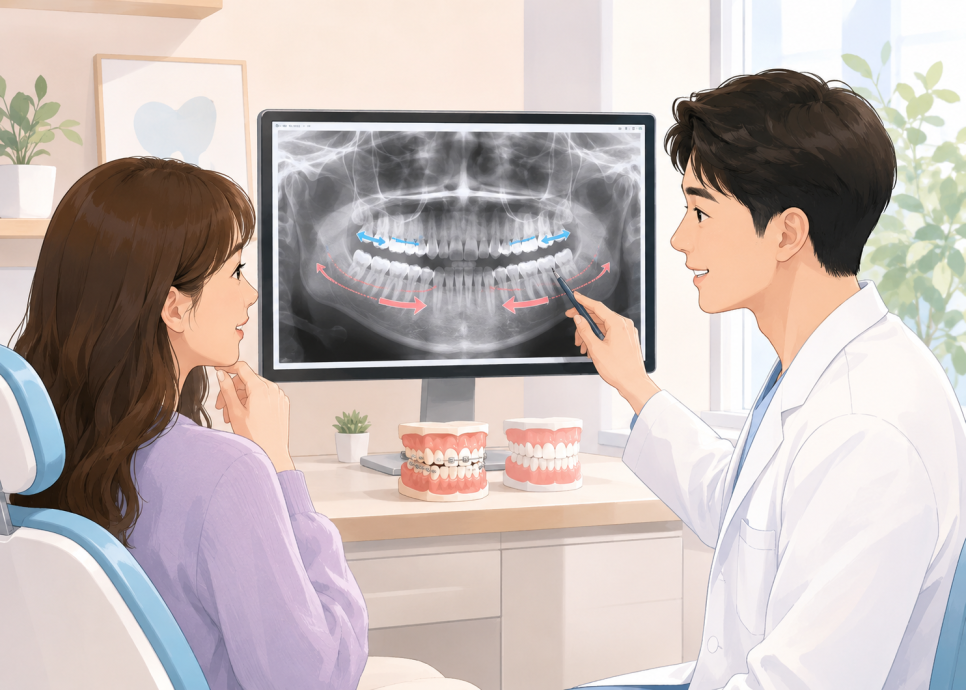
Partial orthodontic treatment is a type of treatment that clearly divides into cases that are possible and cases that are difficult.
It may be important to check not only the visible alignment of the front teeth,
but also the overall bite and movement direction.
If you are curious, I recommend visiting a dental clinic for a diagnosis and consultation.
Thank you for reading.
This was Oh Su-hwan, chief director of SmileD Dental Clinic near Sinnonhyeon Station. 😊
※ This post is an informational post prepared by a medical institution in compliance with Articles 56 and 57 of the Medical Service Act and related regulations.
It was written based only on informational content exempt from medical advertising review.
These images are explanatory materials to help understanding, and actual treatment is determined after consultation with medical staff.