Hello.
I’m Oh Su-hwan, the chief director of Smile D Dental Clinic, a dental clinic near Sinsa Station.
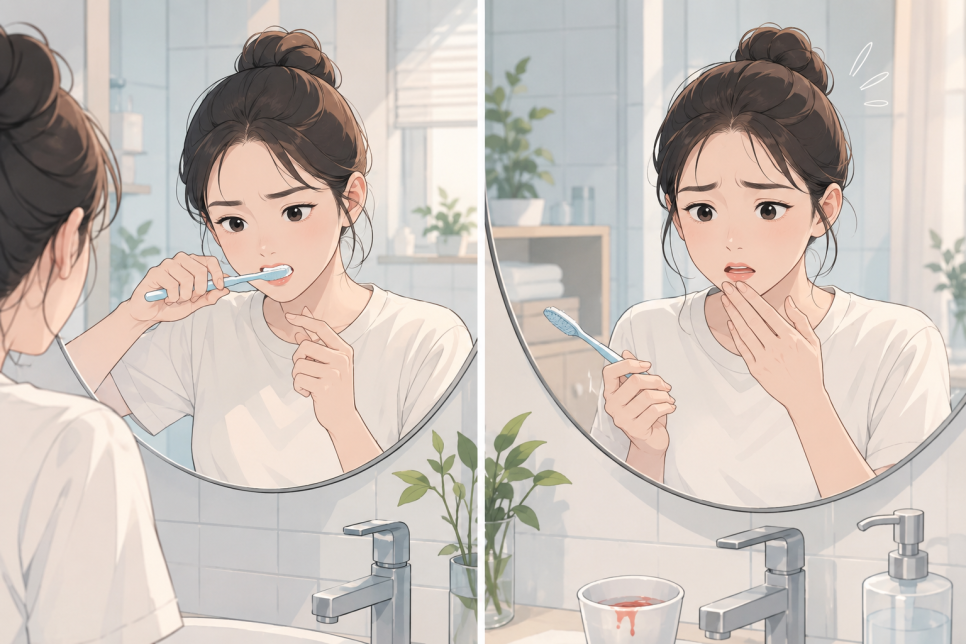
There are people who brush their teeth three times a day without fail, yet still end up having cavity treatment repeated,
or who hear “you need to manage them a little more” every time they get a scaling.
At times like this, many people think, “Are my teeth just naturally weak?”
In reality, it is not uncommon for the oral environment to change because of daily habits that are even more important than the number of times you brush.
Today, I’ll organize some of the “habits that gradually damage teeth” that we often see at the dental clinic.
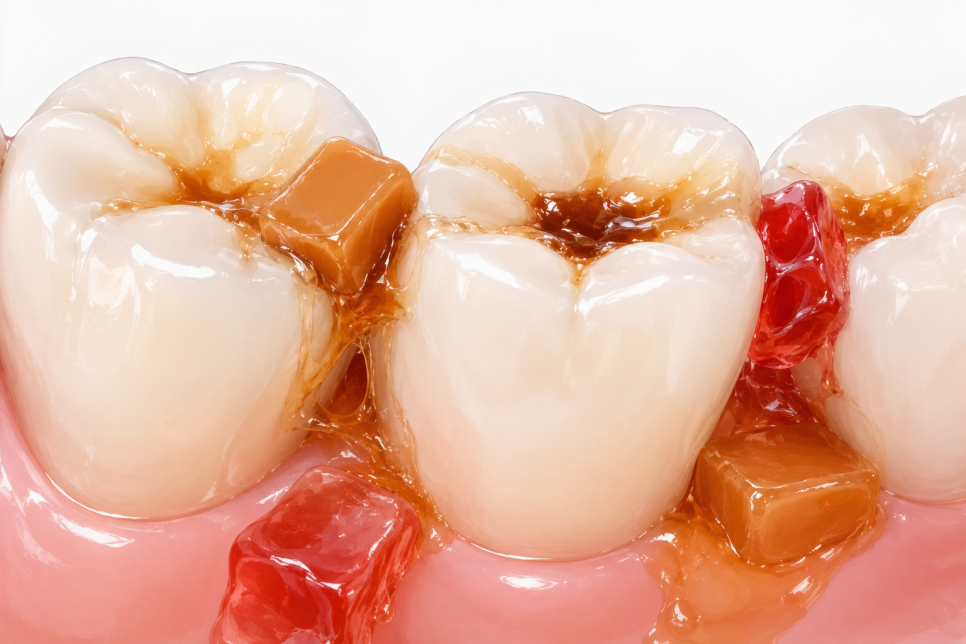
The reason cavities still form even if you brush is the “time they remain there.”
Cavities are not caused simply by eating sweet foods.
How long food remains on the surface of the teeth is also a very important factor.
Sticky foods such as jelly, taffy, and caramel are especially likely to cling to the spaces between teeth and the grooves for a long time.
A habit of sipping coffee or carbonated drinks little by little and often can also keep the mouth in an acidic environment for an extended period.
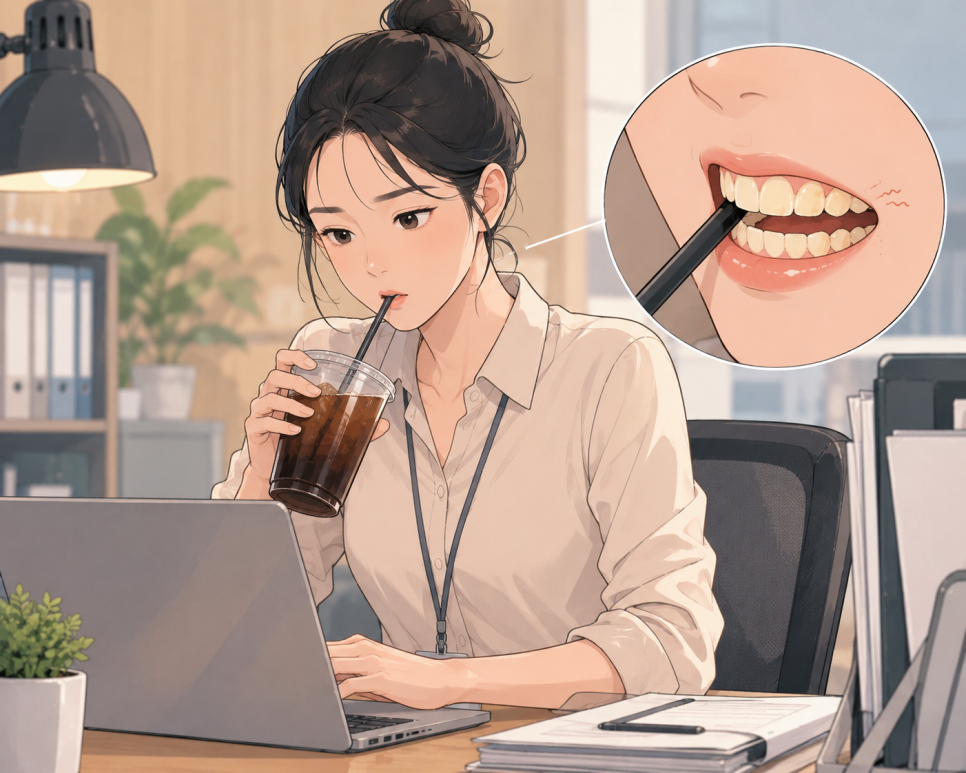
Because sometimes the problem is not “eating a lot,” but “being exposed for a long time,”
habits like snacking over a long period of time
or slowly drinking beverages continuously can affect your teeth more than you might think.
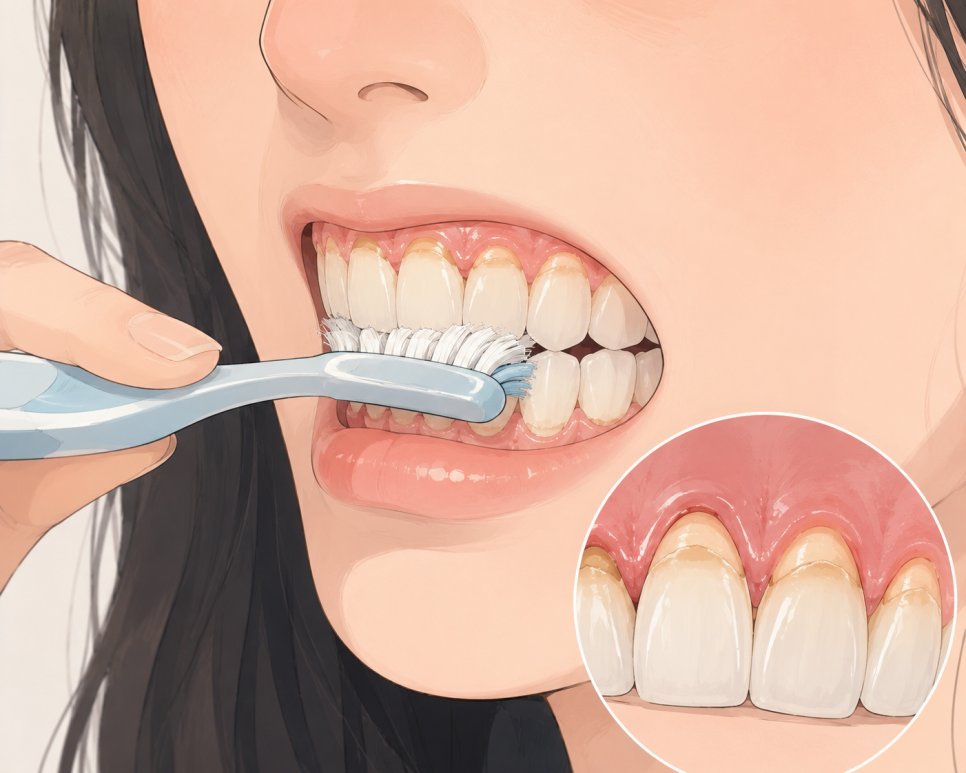 Does brushing harder make your teeth cleaner? Not necessarily.
Many people press their toothbrush down hard because it feels more refreshing.
But applying too much force can gradually wear down the tooth surface
or even cause the gums to recede.
In particular, if the area around the front teeth or canines looks worn down,
or if you repeatedly feel sensitivity to cold water,
it may be worth checking your brushing habits.
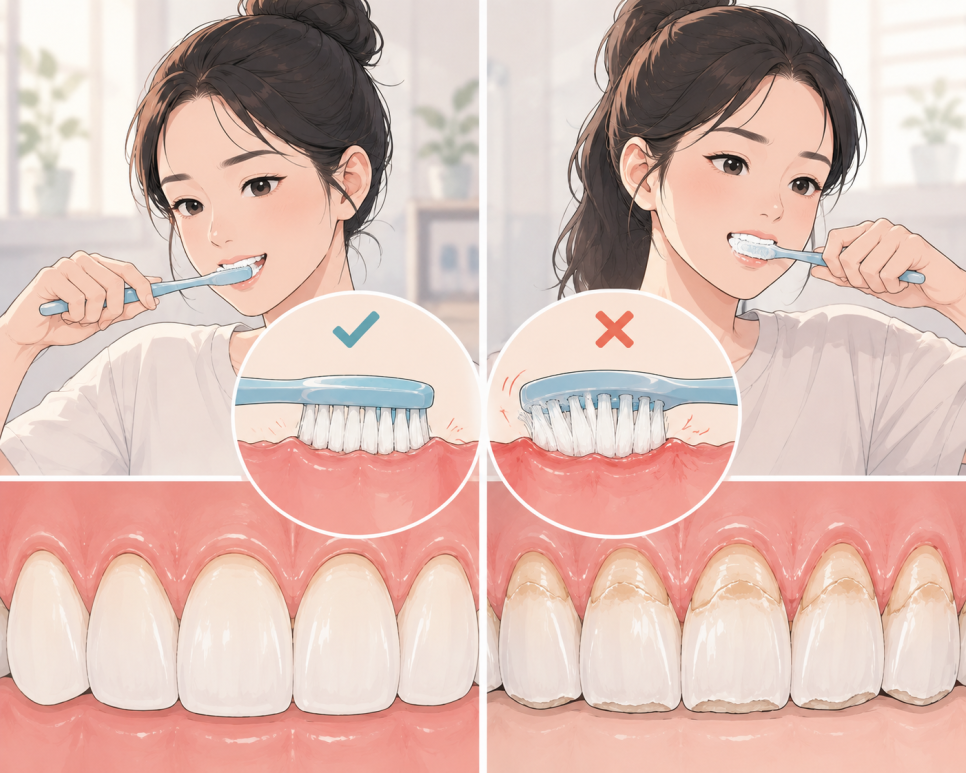
When it comes to brushing, “gentle and thorough” is more important than “hard.”
A habit of applying so much force that the bristles spread out quickly
can actually place a burden on the teeth and gums.
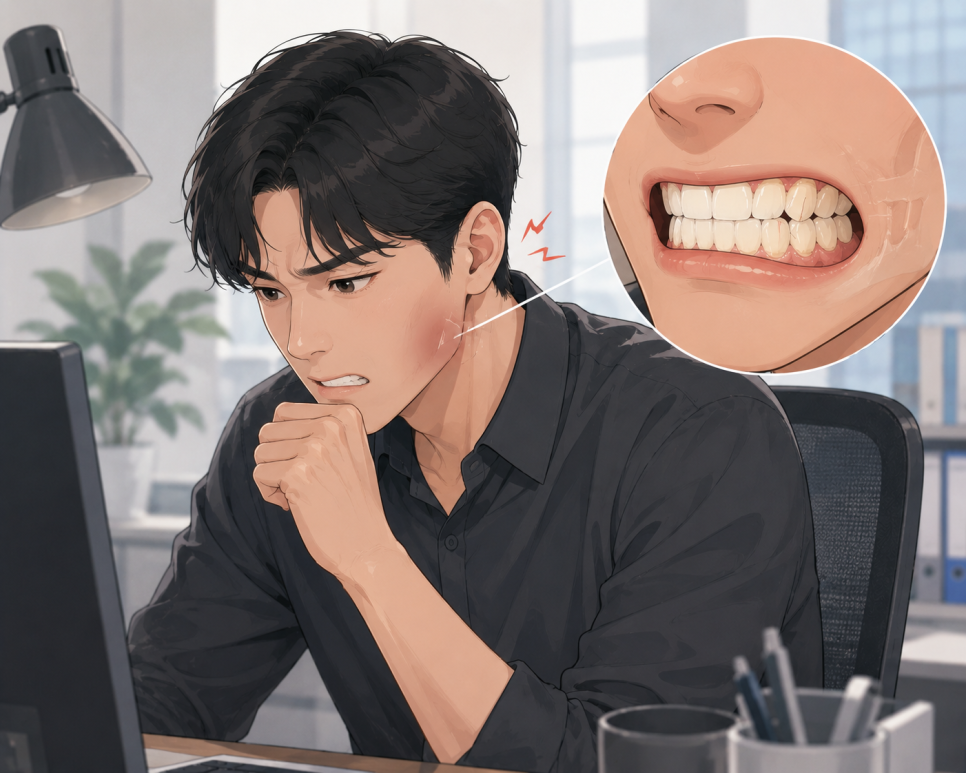
A habit many people have without realizing it: clenching their teeth
There are also quite a few people whose jaw gets tense when they are concentrating,
or who grind their teeth during sleep.
The problem is that when these habits are repeated,
strong pressure is continuously applied to the teeth.
Even if they look fine on the outside, tiny cracks can develop,
or it can lead to jaw muscle fatigue, headaches, and discomfort in the temporomandibular joint.
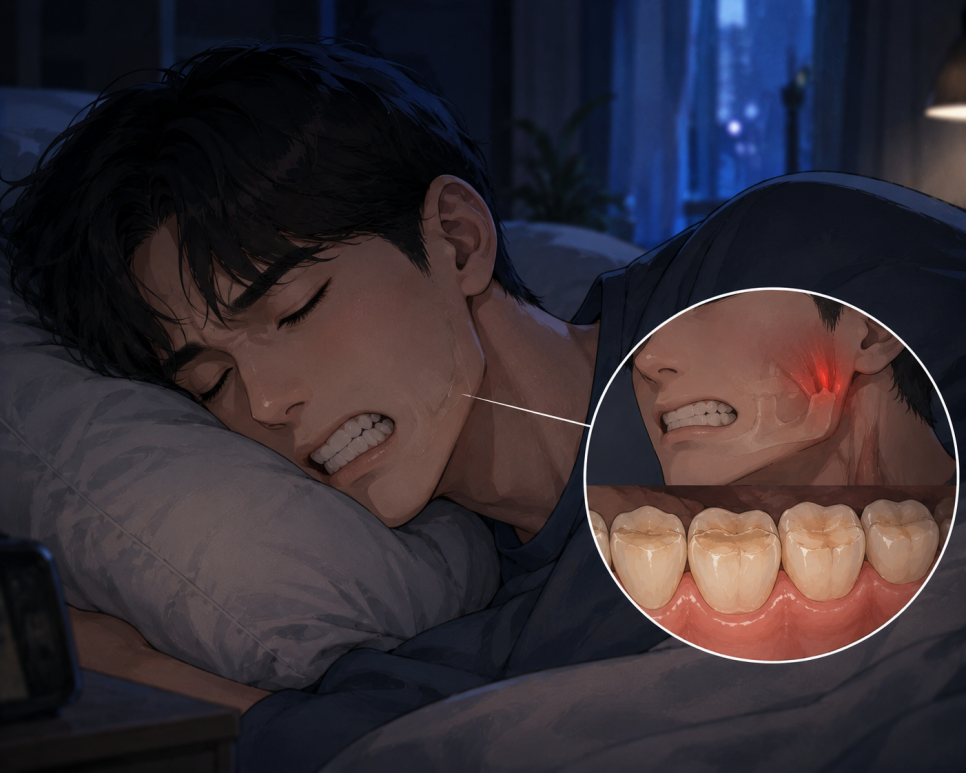
If your jaw feels stiff when you wake up in the morning,
or if you have been told that your molars are unusually worn down,
it is better not to dismiss it as simple fatigue.
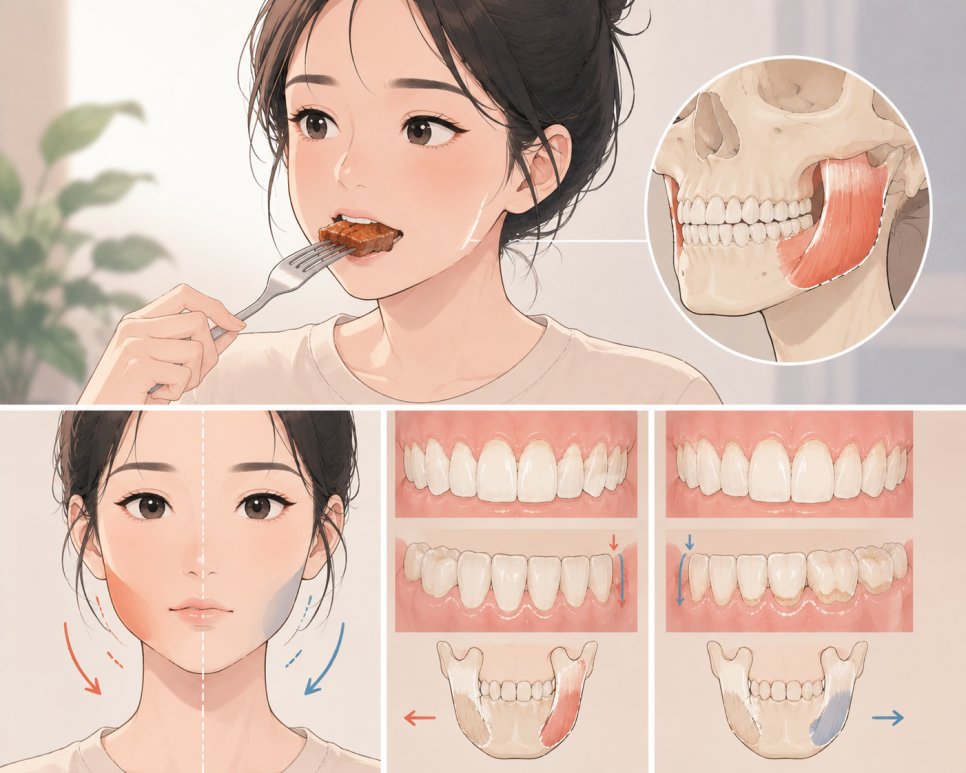 A habit of chewing on only one side can also have an effect
Chewing only on one side is often repeated unconsciously because it feels more comfortable.
However, if it continues for a long time, only certain teeth and one temporomandibular joint are used repeatedly,
which can change the balance of muscle use.
In fact, the pattern of tooth wear can appear differently on the left and right,
or you may feel a difference in how your jaw is used.
Also, if you are using only the opposite side because one side of your teeth feels uncomfortable,
it may already be a sign that cavities, gum problems, or bite issues have started,
so it can be helpful to check the cause.
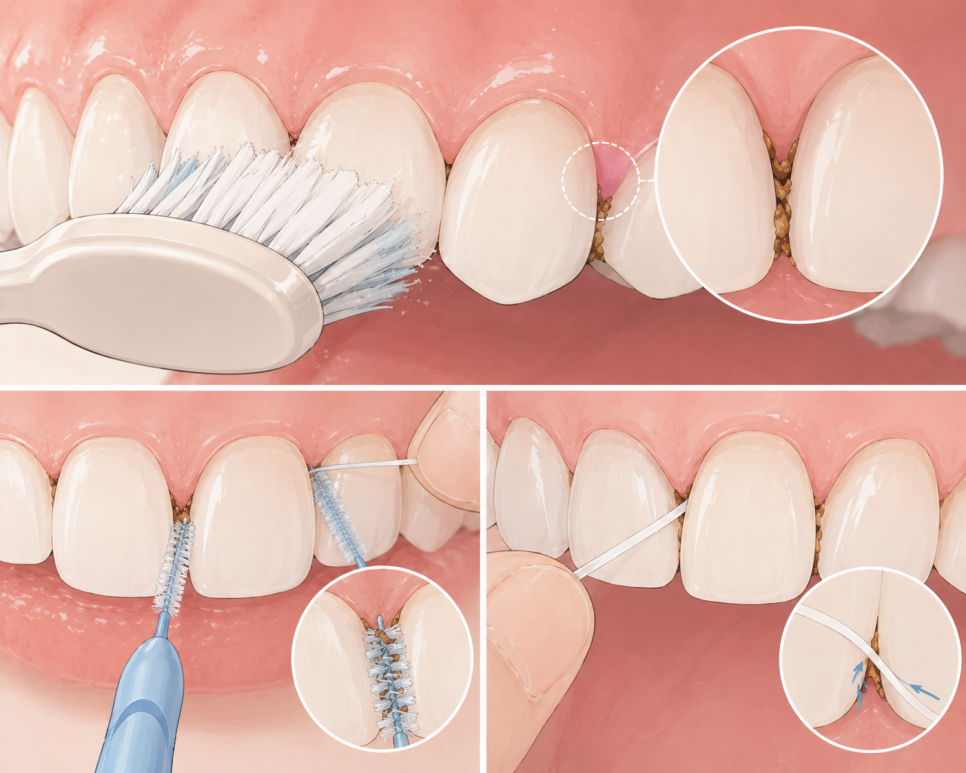
What’s the difference if you don’t use floss or interdental brushes?
We also get many questions like, “I brush diligently, so why does tartar keep forming?”
A toothbrush is effective for cleaning the outer surfaces of the teeth,
but it is difficult to completely care for the spaces between teeth.
In particular, narrow spaces where food often gets stuck, such as between molars,
often require floss or interdental brushes to be properly managed.
It may feel inconvenient at first,
but many people find that even using them just once a day makes their mouth feel much fresher.
In some cases, it can also help with gum care.
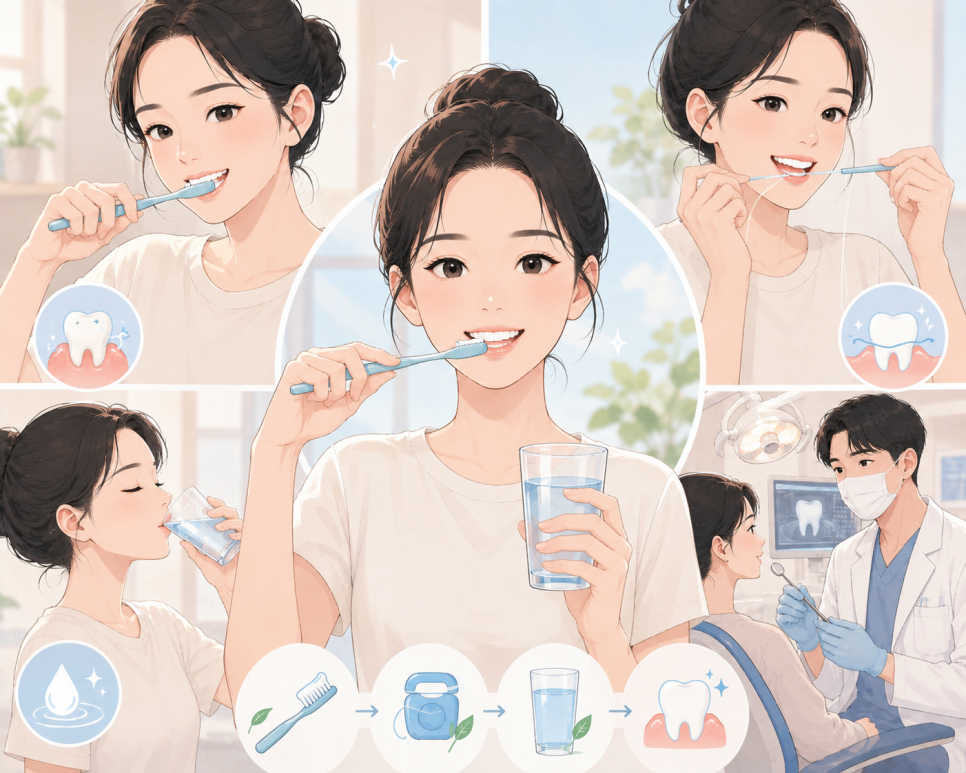 In the end, what matters is not “special care,” but consistent habits
Once teeth are significantly damaged, it is often difficult to restore them to their original condition.
That is why many dentists keep talking about the importance of daily habits and regular care,
rather than treatment alone.
You do not need any special secret.
- Do not frequently bite into very hard foods
- Do not keep beverages in your mouth for a long time
- Control the force when brushing
- Use floss
- Get regular checkups
These basic habits are often what make a difference in the long run.
If you are worried about repeated cavities, sensitivity, food getting stuck, or gum discomfort,
it may also help to check your current condition accurately rather than judging it on your own.
If you have any questions, please feel free to contact Smile D Dental Clinic 😊
--
※ This post is an informational post from a medical institution that complies with Articles 56 and 57 of the Medical Service Act.
It was written based only on informational content exempt from medical advertising review.
These images are explanatory materials to help understanding, and actual treatment is determined after consultation with medical staff.