
When eating, have you ever felt as though the force is concentrated on just one side of your teeth?
It may feel as though a particular tooth touches first whenever you chew,
or that brushing your teeth does not leave you feeling completely refreshed because your teeth are not evenly aligned.
When these discomforts build up,
they can lead to more than just minor inconvenience and may develop into larger problems.
Today, I would like to introduce a female office worker in her 30s.
She visited 스마일디치과의원 after being referred by a friend who had already completed orthodontic treatment.
She said she had been concerned for a long time about gaps between her teeth and her bite.
She also experienced discomfort because chewing forces were concentrated on certain teeth, and she continued to notice that the gap between her front teeth was gradually widening, so she decided to undergo orthodontic treatment.
The examination showed an imbalance in the bite on both sides, and the teeth appeared spaced apart when viewed from the front.
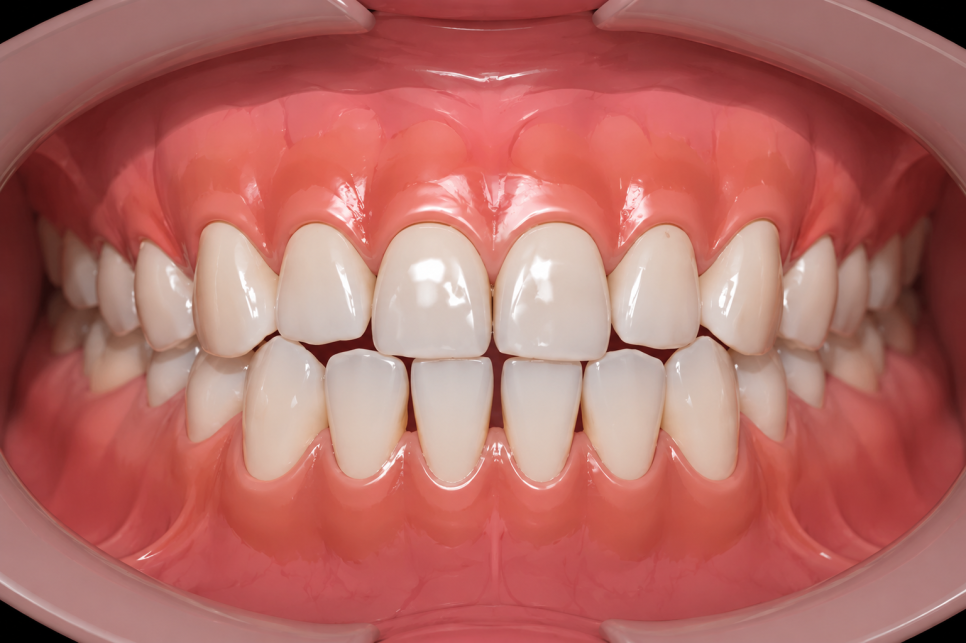
This image was staged for illustrative purposes.
Why Should Malocclusion Not Be Left Untreated?
Many people with Class I malocclusion think, “Since the molar relationship is normal, maybe I can just live with it.”
However, crowded teeth or an irregular dental alignment can cause various functional problems as well.
The first problem that often appears is occlusal interference.
When the teeth do not meet evenly,
excessive chewing force becomes concentrated on certain teeth.
If this condition continues, those teeth may wear down more quickly.
If left untreated for a long time, the teeth themselves may become worn,
which can lead to sensitivity,
and in severe cases, damage to the dental pulp, or nerve, may occur.
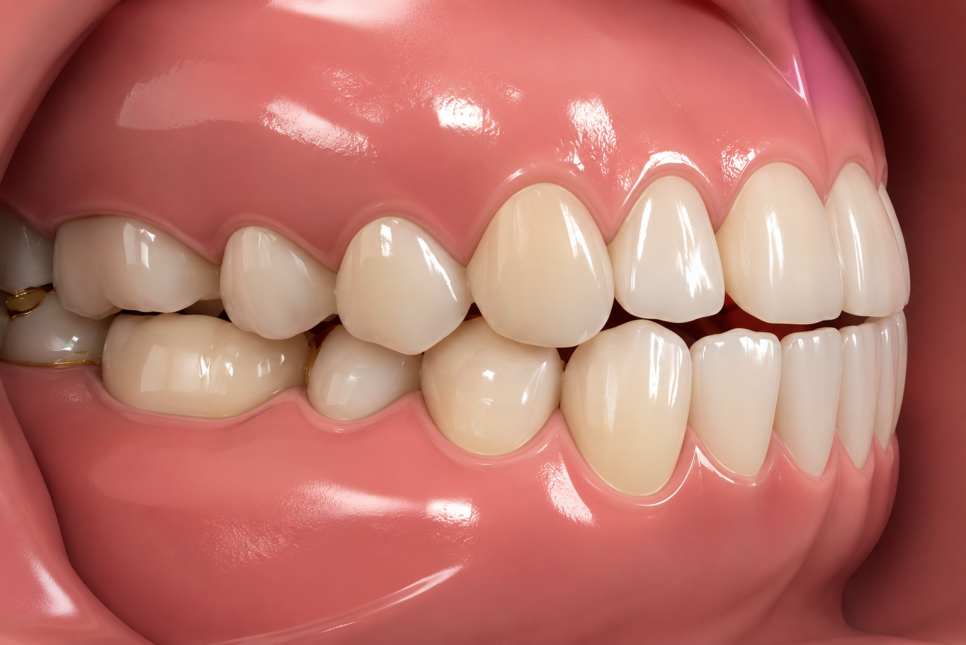
This image was staged for illustrative purposes.
When teeth are crookedly arranged,
areas that a toothbrush cannot reach easily can develop.
Even with thorough brushing,
plaque and tartar can accumulate easily,
increasing the possibility of tooth decay and gum disease.
When spaces develop between the teeth,
speech may become less clear, and food may frequently get stuck.
In the long term, an imbalanced bite can place stress on the temporomandibular joints,
which may cause clicking sounds in the jaw or temporomandibular joint pain.
Malocclusion is not simply a cosmetic issue;
it is a condition directly related to overall oral health.
Extraction vs. Non-Extraction: How Is the Decision Made?
The question we hear most often during orthodontic consultations is,
“Do I need to have teeth extracted?”
Whether extraction is necessary is determined through a comprehensive evaluation of tooth crowding,
the size of the dental arch—the curved bony structure in which the teeth are arranged—,
the degree of lip and facial protrusion,
and the relationship between the teeth and the supporting jawbone, among other factors.
In this patient’s case,
detailed analysis showed that sufficient dental arch space could be secured,
and because lip protrusion was not severe, the treatment plan involved arch expansion combined with interproximal reduction, without extracting the regular teeth.
All four wisdom teeth were extracted.
As in this patient’s case, even when malocclusion is present, orthodontic treatment can sometimes be performed while preserving healthy teeth, depending on the case.
This image was staged for illustrative purposes.
Treatment Plan and Appliance Selection
After completing a detailed examination and analysis,
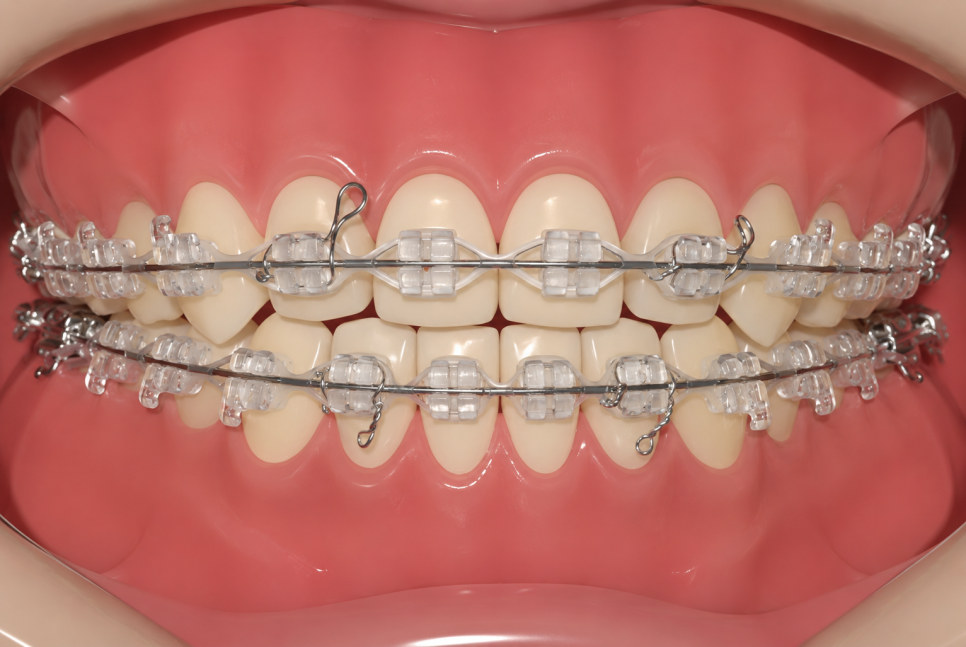
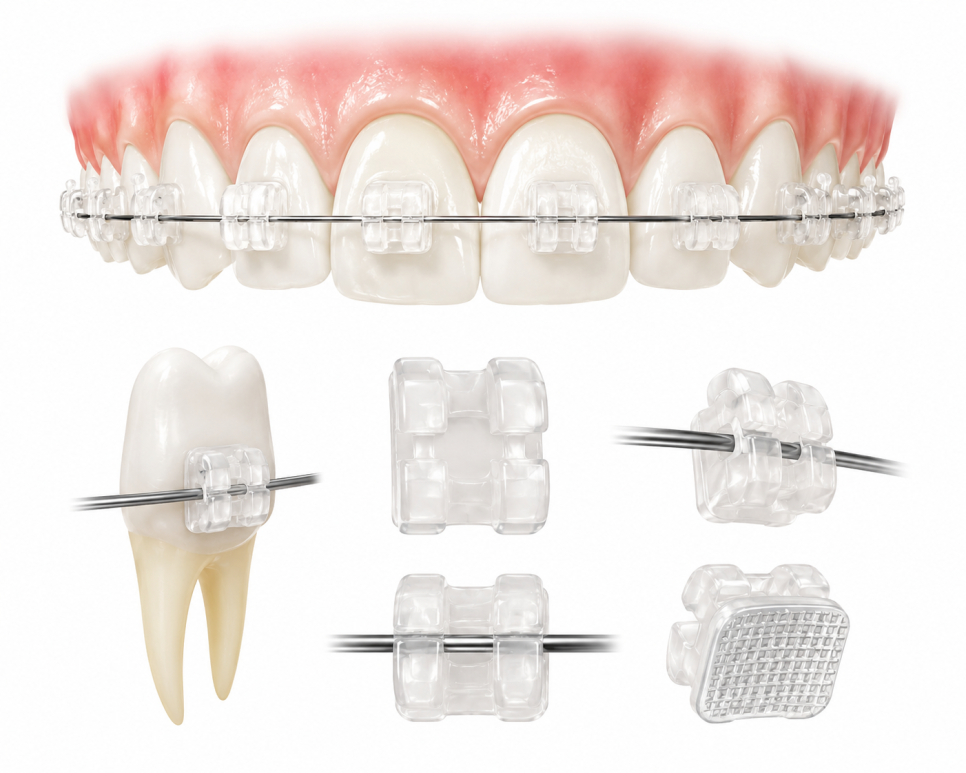
ceramic brackets were recommended for this patient.
Mini-screws were not used in this case.
The direction and extent of tooth movement could be sufficiently controlled with brackets and wires alone.
The reason this patient chose our Gangnam orthodontic clinic, 스마일디치과의원, was a recommendation from a close friend who had already completed orthodontic treatment.
Because she had seen the results herself and came with confidence in the treatment, we also provided especially attentive care.
< 스마일디치과의원 Location >
< Learn More About 스마일디치과의원 >
How Does Orthodontic Treatment for Gaps Between the Front Teeth and Malocclusion Progress?
① Detailed Diagnosis and Treatment Planning
Through intraoral photographs, panoramic and lateral cephalometric radiographs,
and a 3D oral scan,
we carefully analyzed the tooth alignment and dental arch size
and finalized a treatment plan tailored to the patient.

② Initial Stage (Appliance Placement and Beginning Tooth Movement)
After attaching the ceramic brackets, we connected the initial wire and began moving the teeth.
Ceramic brackets are made of a translucent material similar in color to natural teeth,
so they are less noticeable than metal brackets.
Although metal wires are used,
the brackets themselves have a natural color,
so the aesthetic burden in everyday life is much lower.
During this stage, wires shaped to expand the dental arch were used to create space throughout the dental alignment.
Please note that ceramic brackets are not used as often these days.
This image was staged for illustrative purposes.
③ Middle Stage (Detailed Bite Adjustment)
After the teeth had moved into approximately their intended positions,
we replaced the wire with a thicker, more rigid one and began detailed bite adjustment.
A small amount of interproximal reduction was performed to fine-tune the space,
with a focus on aligning the front teeth and improving the gaps between them.
Noticeable changes began to appear approximately 3–4 months after treatment started.
④ Finishing and Placement of Retainers
After approximately 1 year and 2 months of orthodontic treatment,
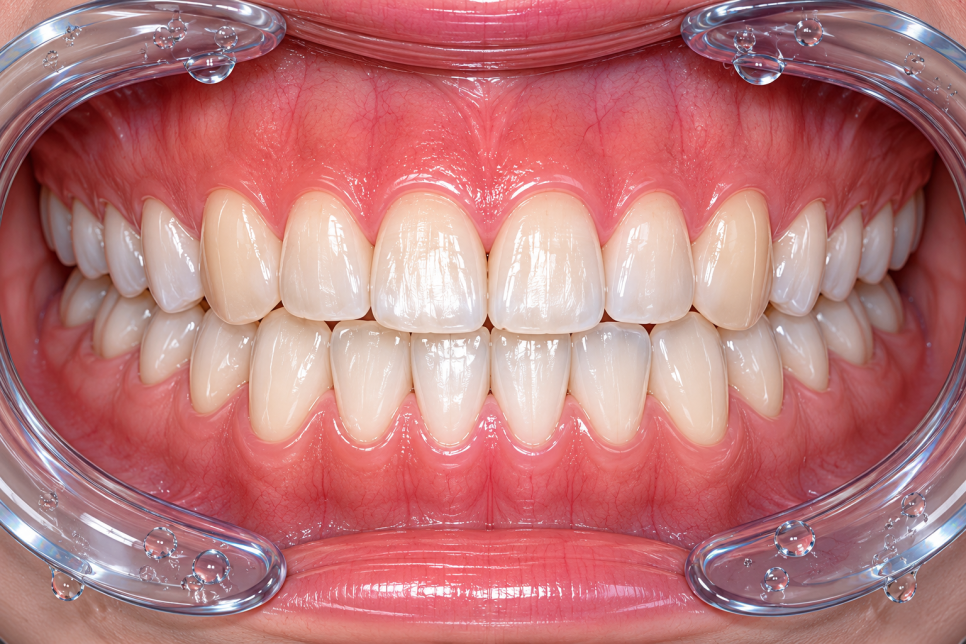
we removed the brackets
and attached retainers to prevent the teeth from returning to their original positions.
A fixed retainer was applied behind the front teeth,
and instructions on how to care for it were provided.
This image was staged for illustrative purposes.
Treatment Results for Gaps Between the Front Teeth and Malocclusion
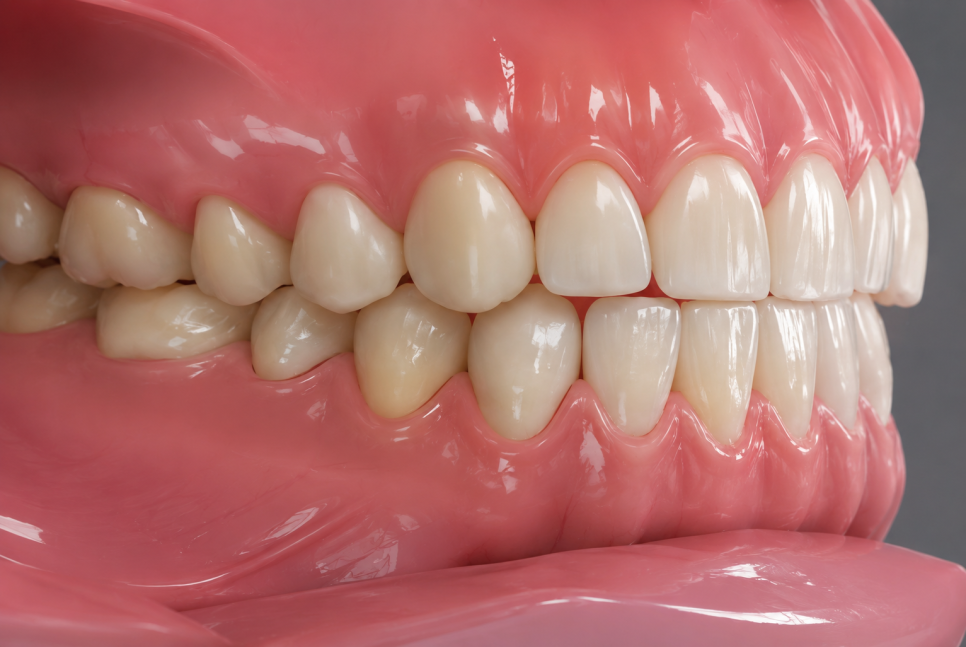
The first change was an aesthetic improvement.
The teeth that had been separated by gaps were brought neatly together,
creating an orderly dental alignment.
The gap between the front teeth also closed naturally,
making the teeth look much more attractive when smiling.
The patient was so satisfied that she said, “Now I can smile confidently when taking pictures.”
The second change was functional improvement.
As the imbalanced bite, in which chewing force had been concentrated on certain teeth, was corrected, chewing forces were distributed more evenly across both sides.
Discomfort while eating was significantly reduced,
and she said that the feeling of strain on her jaw had also eased.
The third change was improved oral hygiene.
As the teeth became more evenly aligned,
the toothbrush bristles could reach the corners between the teeth much more easily.
Using dental floss and interdental brushes also became easier,
improving her overall ability to maintain oral cleanliness,
and the condition of her gums also became noticeably healthier.
This image was staged for illustrative purposes.
To be honest, I hesitated a lot before getting orthodontic treatment,
but once I tried it, it interfered with my daily life much less than I expected.
I almost cried when I first looked in the mirror after the treatment was finished…
There are many people who continue to think, “My teeth are only a little uneven, so it should be fine,”
and live with it.
However, because malocclusion can affect the bite and oral health over time,
if you have concerns, we recommend receiving a professional diagnosis at least once.

At our Gangnam orthodontic clinic, 스마일디치과의원,
we propose customized orthodontic treatment plans suited to each patient’s case.
If you have been concerned about malocclusion for a long time,
please feel free to schedule a consultation.
A small act of courage can create a fairly significant change 😊
Thank you for reading today.