If you find yourself unable to smile naturally and openly, covering your mouth with your hand when you smile,
that discomfort may be affecting your everyday life more deeply than you realize.
Do you find that pressure is concentrated on certain teeth when you eat,
or that you avoid the camera because you become self-conscious about your side profile when taking photos?
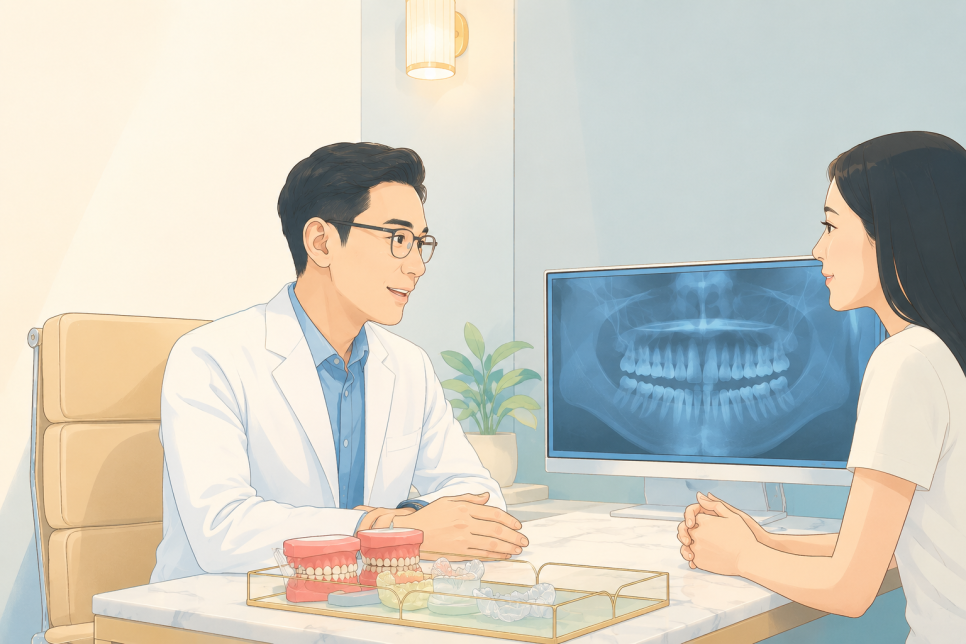
The patient we are introducing today was a woman in her 20s
who found 스마일디치과의원, a Gangnam orthodontic clinic, through a Naver Blog search.
When she first visited, she said that she could feel pressure concentrating around her front teeth when chewing food,
and that she had almost stopped taking selfies because she felt reluctant to upload photos to social media.
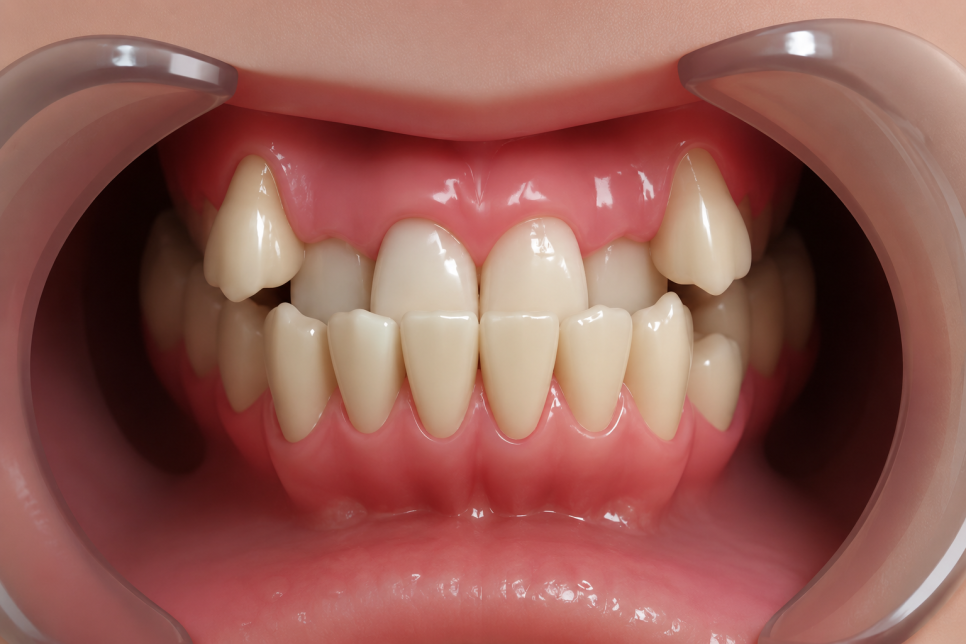 This image was created for illustrative purposes.
Her lower jaw was positioned farther forward than her upper jaw,
indicating a Class III malocclusion, also known as an underbite or a protruding lower jaw.
She also had a crossbite, in which the lower front teeth were positioned in front because the upper and lower front teeth did not meet properly, along with crowded teeth.
From the side, the protruding appearance of her jaw had been a long-standing source of self-consciousness,
which led her to decide to undergo orthodontic treatment.
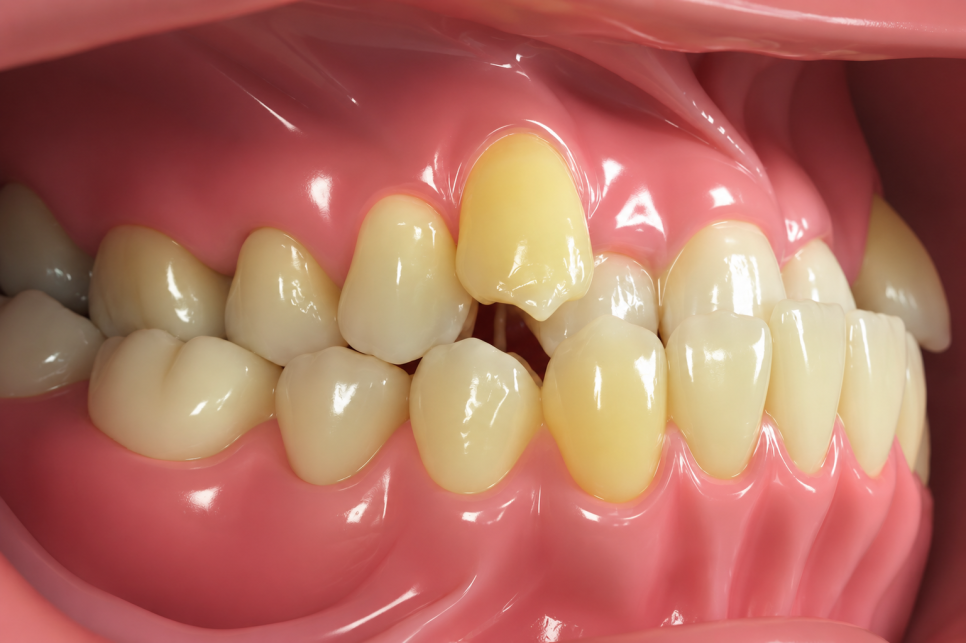 This image was created for illustrative purposes.
Why Should Crowded Teeth Be Treated Rather Than Left Untreated?
Class III malocclusion is not simply an issue of appearance.
When the lower jaw is positioned forward in an underbite,
the front teeth do not meet properly, significantly reducing their cutting and tearing function when eating.
When biting forces are concentrated on only certain teeth, as in this patient’s case,
the risk of wear and fracture of those teeth increases,
which may shorten their overall lifespan in the long term.
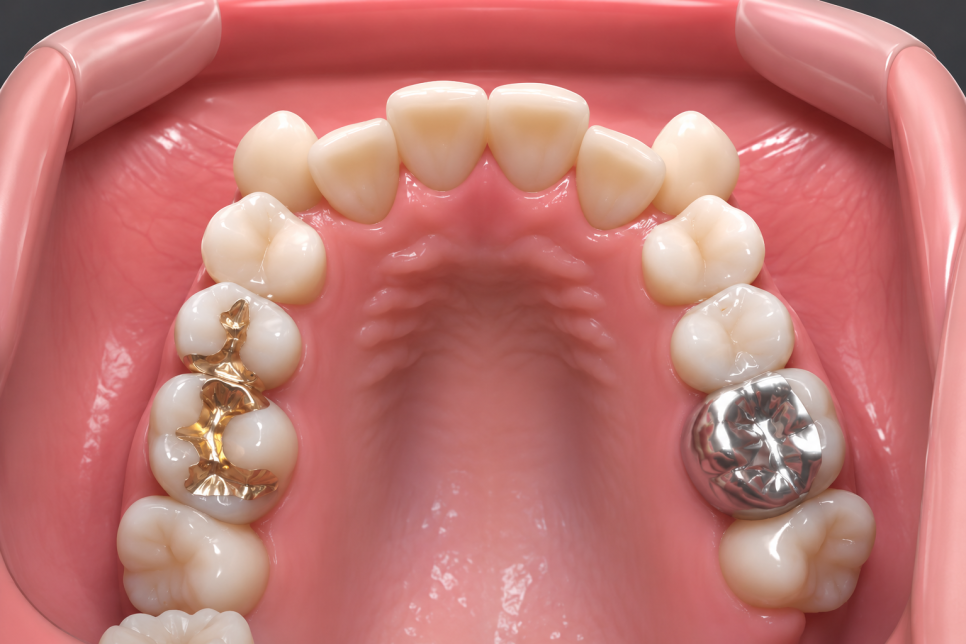 This image was created for illustrative purposes.
These are not the only functional problems.
When the lower jaw cannot remain in its normal position,
continued strain may be placed on the chewing muscles and temporomandibular joints,
which can lead to temporomandibular disorders (TMD).
Pronunciation may also become inaccurate, particularly for sounds such as “s,” “j,” and “ch,”
and when spaces develop between the front teeth, the tongue may habitually push into those spaces,
reinforcing a tongue-thrusting habit.
If crowded teeth are also present,
cleaning between the teeth becomes more difficult, increasing the likelihood of cavities and
gum disease.
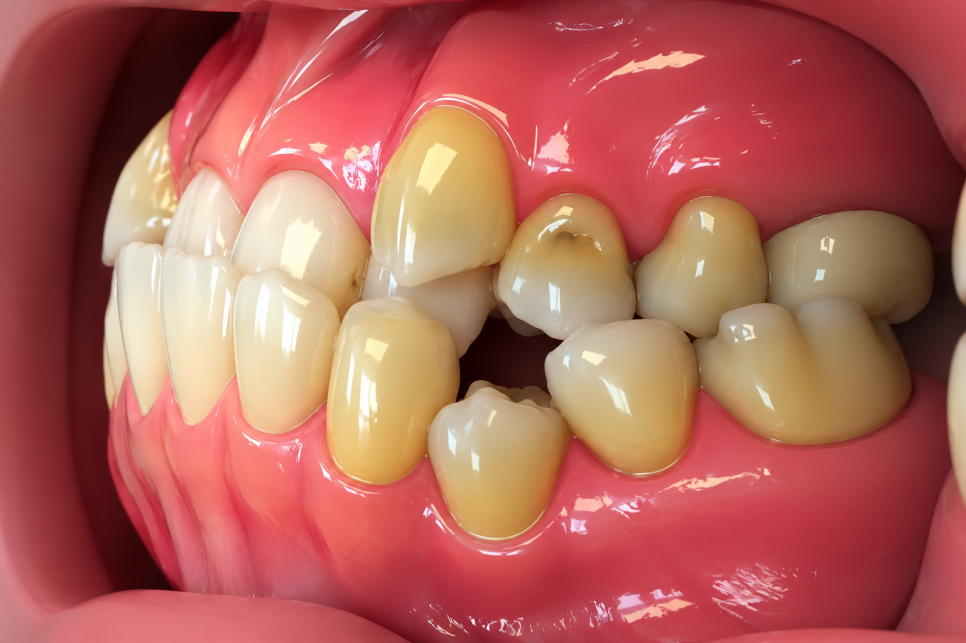 This image was created for illustrative purposes.
Even if you are not experiencing significant discomfort right now,
malocclusion can cause complex problems when left untreated for a long time.
Therefore, it is important to receive an accurate diagnosis as early as possible.
Extraction vs. Non-Extraction: How Is the Decision Made?
Because this patient had both Class III malocclusion and crowded teeth,
there was an absolute lack of space for proper tooth alignment.
To move the lower jaw backward while correcting the underbite and the crowded teeth,
it was essential to create sufficient space.
Accordingly, orthodontic treatment involving tooth movement after premolar extraction was determined to be the best option.
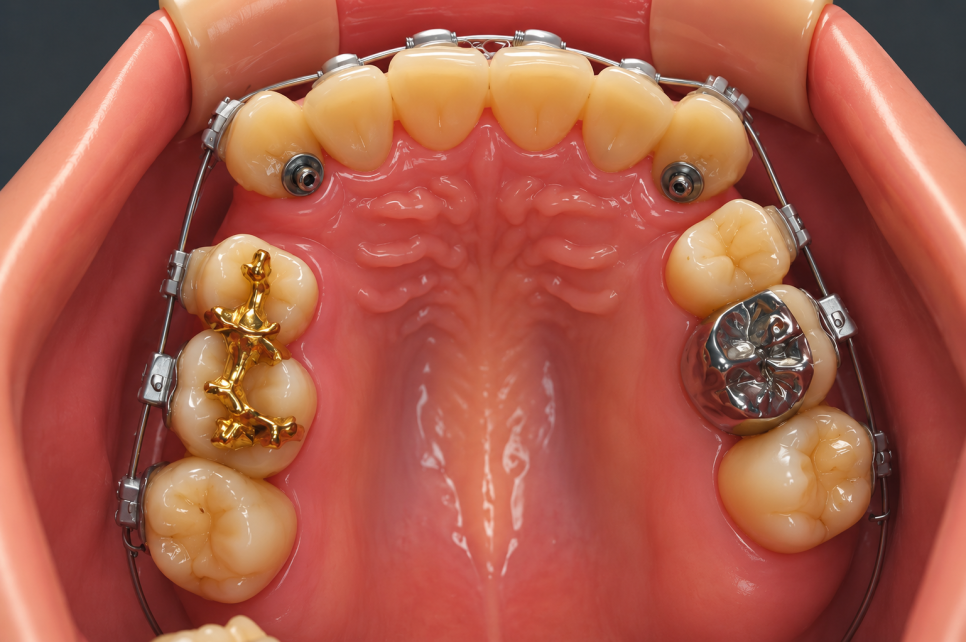 This image was created for illustrative purposes.
Extraction and non-extraction orthodontic treatments
are each appropriate for different situations,
so we will compare them below.
[Suitable Cases]
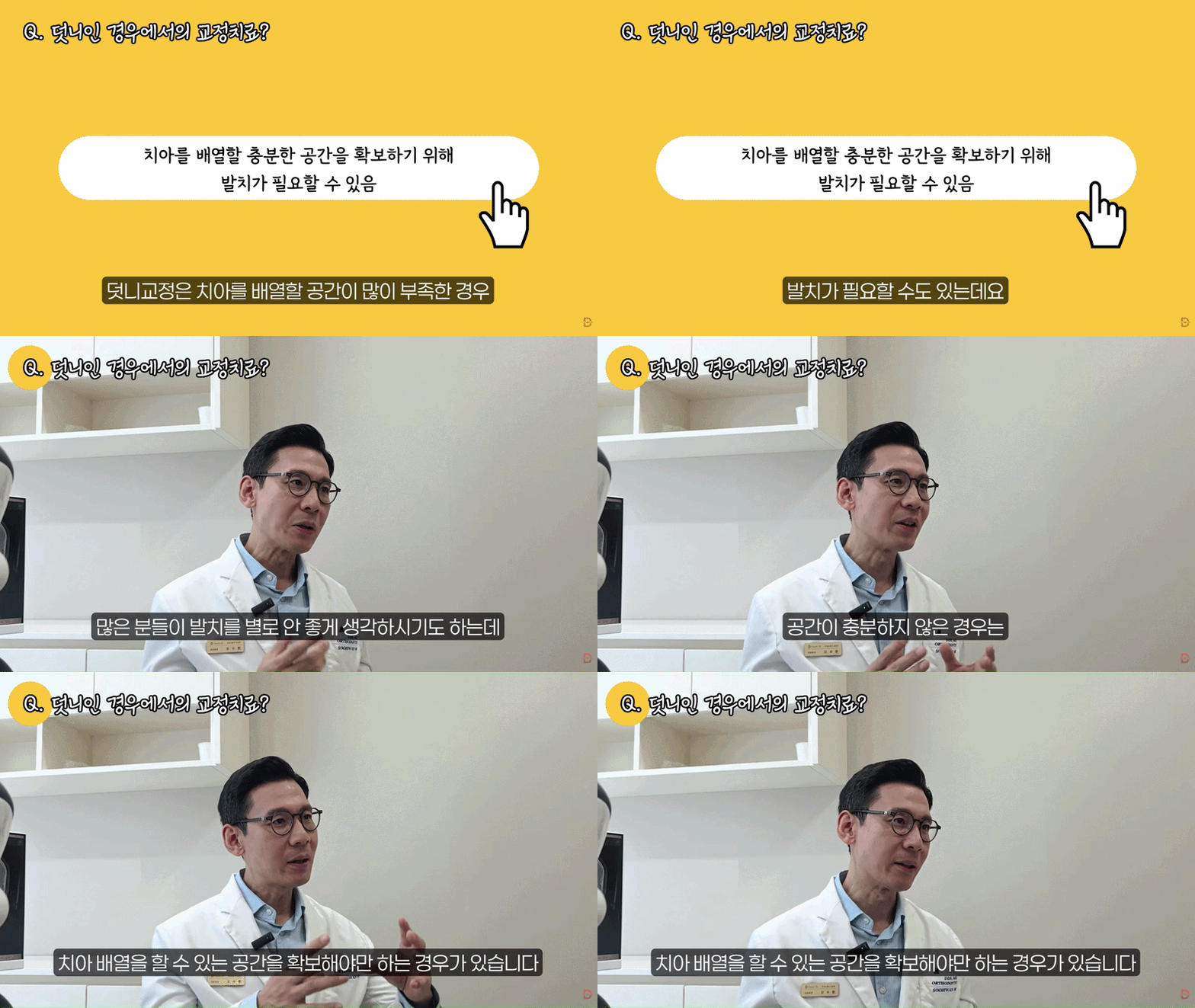
Extraction orthodontics: Suitable when there is insufficient space for tooth alignment,
when movement of the jaw position or the entire dental arch is needed, such as with protruding teeth or a protruding lower jaw,
or in complex cases involving both an underbite and crowded teeth.
Non-extraction orthodontics: Suitable for mild malocclusion cases where there is relatively sufficient space for tooth alignment or only the angulation of the teeth needs to be adjusted.
[Treatment Duration]
Extraction orthodontics: Usually takes approximately two to three years because the teeth are moved while the extraction spaces are gradually closed.
Non-extraction orthodontics: When the range of movement is limited, treatment may sometimes be completed within one year and six months to two years.
[Advantages]
Extraction orthodontics: By creating sufficient space, the teeth can be moved precisely into the desired positions,
which may improve the bite and alter the facial contours.
Non-extraction orthodontics: Because no teeth are removed, there is less psychological burden,
and relatively quick results may be seen when the treatment scope is simple.
Treatment Plan and Appliance Selection
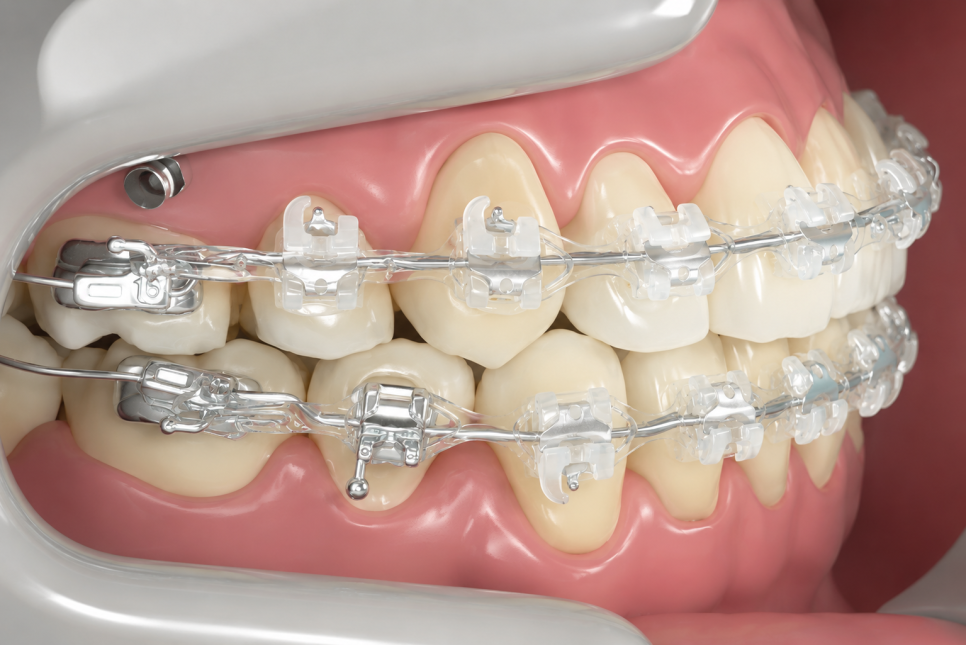
For this patient, we selected Clippy C, a self-ligating bracket system.
Unlike conventional metal brackets,
Clippy C secures the wire using a clip mechanism built into the bracket itself,
without elastic rings or ligature wires to hold the wire in place.
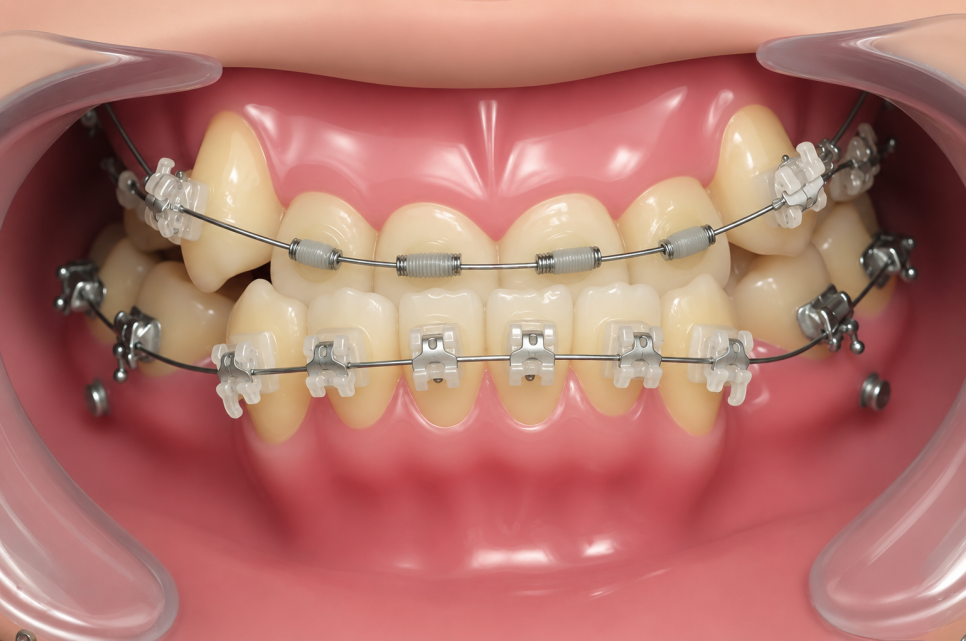 This image was created for illustrative purposes.
This reduces the friction applied to the teeth,
resulting in less pain and discomfort during tooth movement.
Another advantage is that orthodontic force is applied continuously and evenly.
Appointments may also be spaced somewhat farther apart than with conventional methods,
which often makes this option particularly satisfying for patients in their 20s with busy daily lives.
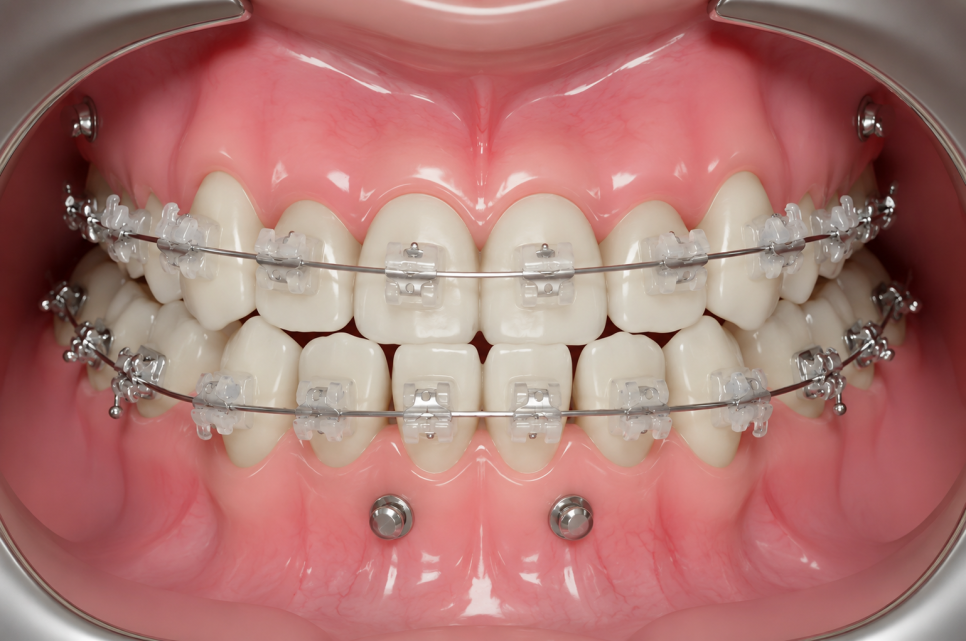 This image was created for illustrative purposes.
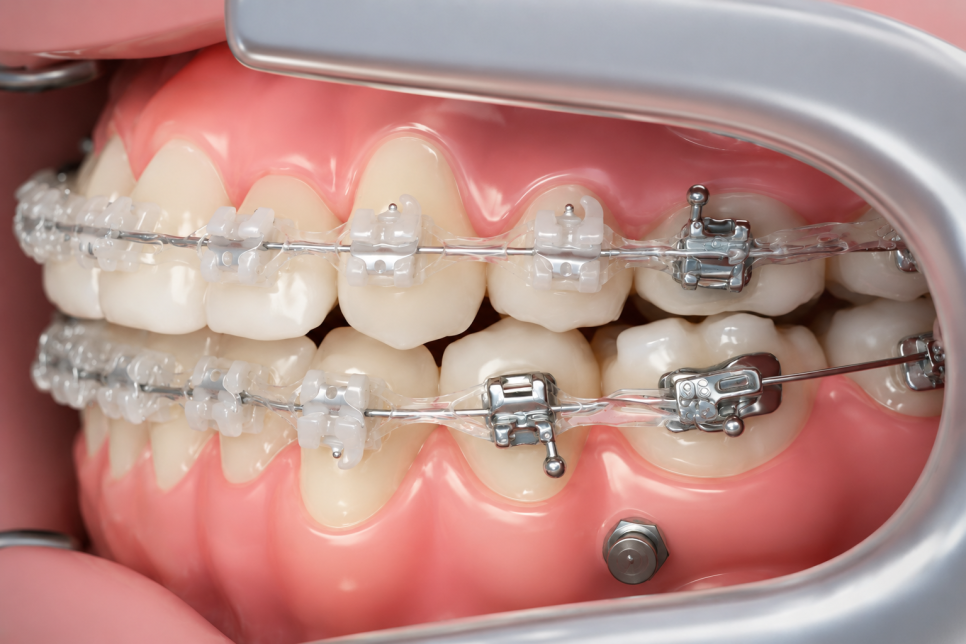
In addition, a total of six miniscrews were used in this case.
Miniscrews are placed directly into the gum bone to provide anchorage as a reference point for tooth movement.
This allows the target teeth to be moved precisely in the desired direction without relying on other teeth,
significantly improving treatment efficiency in complex Class III malocclusion cases.
For the orthodontic extractions, teeth 14, 24, 34, and 44 were removed,
for a total of four premolars, creating the space needed for tooth movement.
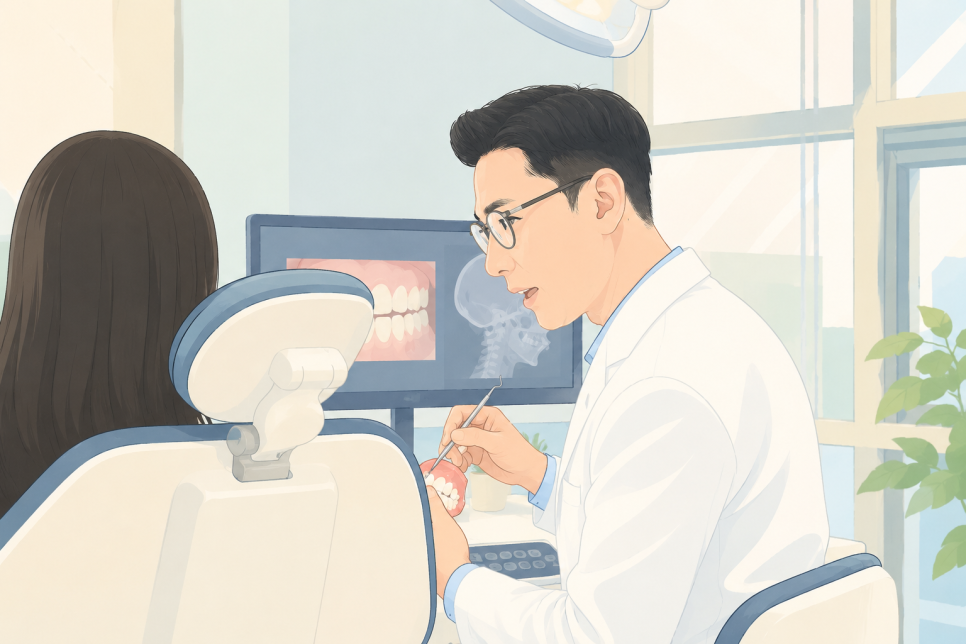
One reason this patient chose 스마일디치과의원
was that an orthodontic specialist is always present, allowing the same specialist to lead the treatment from the initial diagnosis through completion.
Because orthodontic treatment takes place over an extended period,
the expertise and trustworthiness of the medical team are directly connected to the treatment outcome.
This appeared to be an especially important consideration for her.
< 스마일디치과의원 Location >
< More About 스마일디치과의원 >
 This image was created for illustrative purposes.
Treatment Process for Crowded Teeth and an Underbite
Treatment Process ① Detailed Diagnosis and Planning
Based on various records, including panoramic radiographs and intraoral scans,
we closely analyzed the skeletal characteristics of the Class III malocclusion and the tooth alignment,
then established a customized treatment plan that included the extraction sites and tooth-movement paths.
Treatment Process ② Initial Stage (Appliance Placement and Start of Tooth Movement)
After extracting premolars 14, 24, 34, and 44,
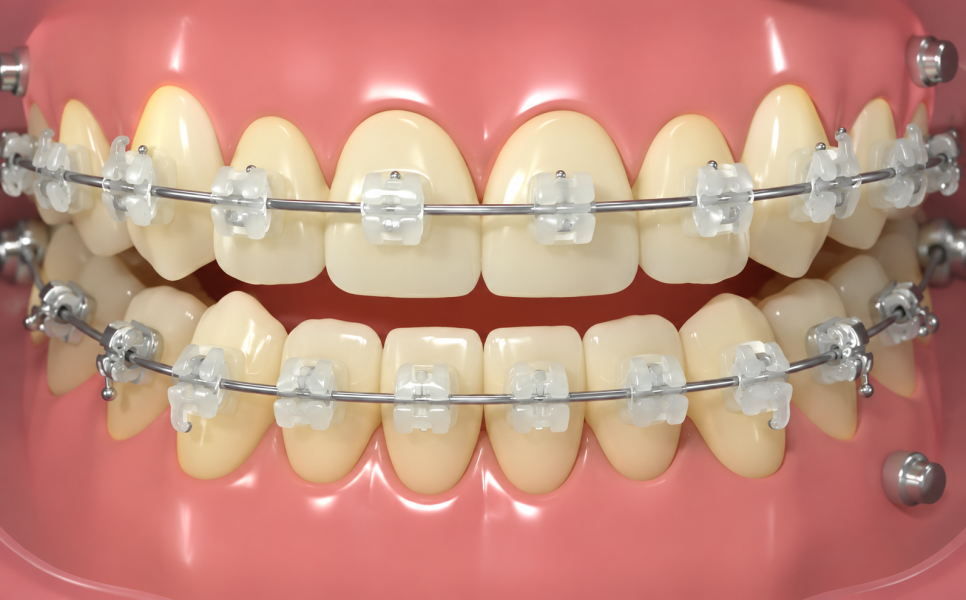
Clippy C brackets were placed across the entire dental arch,
and six miniscrews were inserted.
During the first three to six months, the wire thickness was gradually increased
while the teeth were being leveled and aligned.
This image was created for illustrative purposes.
Treatment Process ③ Mid-Treatment Stage (Detailed Bite Adjustment)
Around one year after treatment began, the extraction spaces were closed
while correction of the underbite and detailed bite adjustment were carried out intensively.
At this stage, you can feel the gradual change as the upper and lower teeth begin to meet more like a normal bite.
Treatment Process ④ Finishing and Retainer Placement
After approximately two years and four months of orthodontic treatment,
both fixed retainers (bonded retainers)
and removable clear retainers were used to maintain the corrected tooth positions.
During the retainer-wearing period,
the teeth are monitored through regular checkups so that they can settle into stable positions.
 This image was created for illustrative purposes.
Treatment Results for Crowded Teeth and an Underbite
The first change was the recovery of bite function.
As the unbalanced chewing habit, in which force had long been concentrated on certain teeth, was resolved,
the upper and lower teeth met evenly, making it more comfortable to chew food.
As the underbite changed to a normal bite,
the cutting function of the front teeth also recovered, and she said that eating itself became more enjoyable.
The second change was improved appearance.
She said that the most significant change was noticeable in the side profile of her face.
As the lower jawline, which had projected forward like a protruding lower jaw, became naturally more balanced,
her side profile softened.
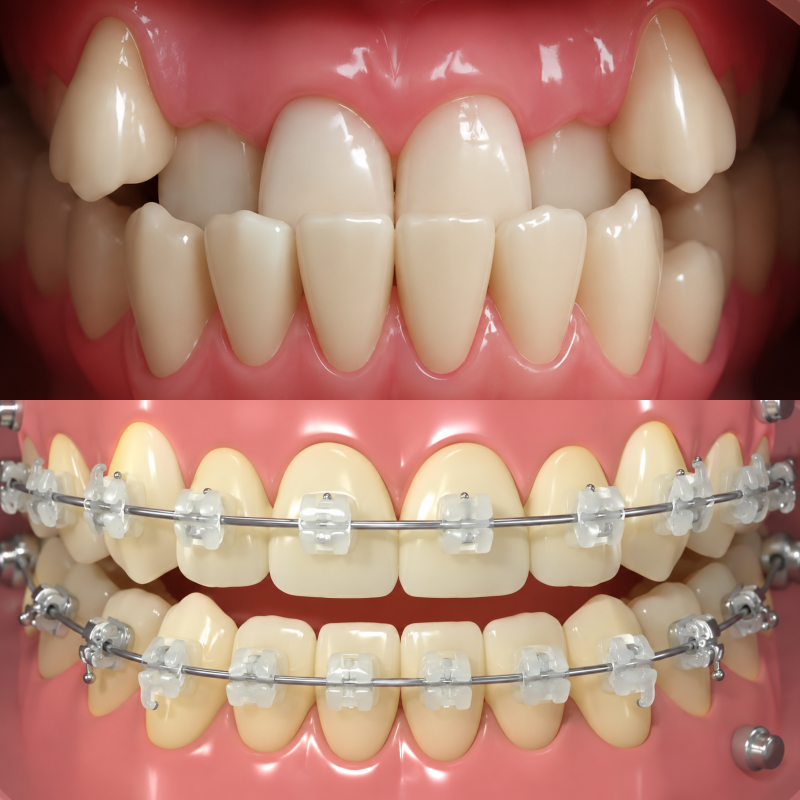
The crowded teeth were also corrected, making the dental alignment appear much more even when viewed from the front.
The habit of covering her mouth with her hand when smiling naturally disappeared,
and she was happy that she could take photos without feeling self-conscious.
 This image was created for illustrative purposes.
The third change was improved oral hygiene.
As the teeth became evenly aligned,
brushing and flossing between the teeth, which had previously been difficult to manage, became much easier.
Her gum condition has also remained stable,
providing a good foundation for long-term dental health.
“After getting orthodontic treatment, I stood at the front on purpose when taking photos with my friends for the first time...!!”
We understand better than anyone how people feel when they cover their mouths every time they smile
and avoid taking photos because they are worried that their side profile might be captured.
 This image was created for illustrative purposes.
Like the patient introduced today,
if you have been concerned for a long time about Class III malocclusion, a protruding lower jaw, or an underbite,
we hope you will not continue worrying alone or put off seeking care.

At 스마일디치과의원, located near Sinsa Station in Gangnam,
an orthodontic specialist personally accompanies patients from consultation through treatment completion,
helping find the solution best suited to their concerns.
Because malocclusion can lead to increasingly complex functional, aesthetic, and psychological concerns when left untreated,
today is the best day to take the first step.
Please feel free to contact us or visit us for a consultation at any time.
Thank you.
< 스마일디치과의원 Location >
< More About 스마일디치과의원 >