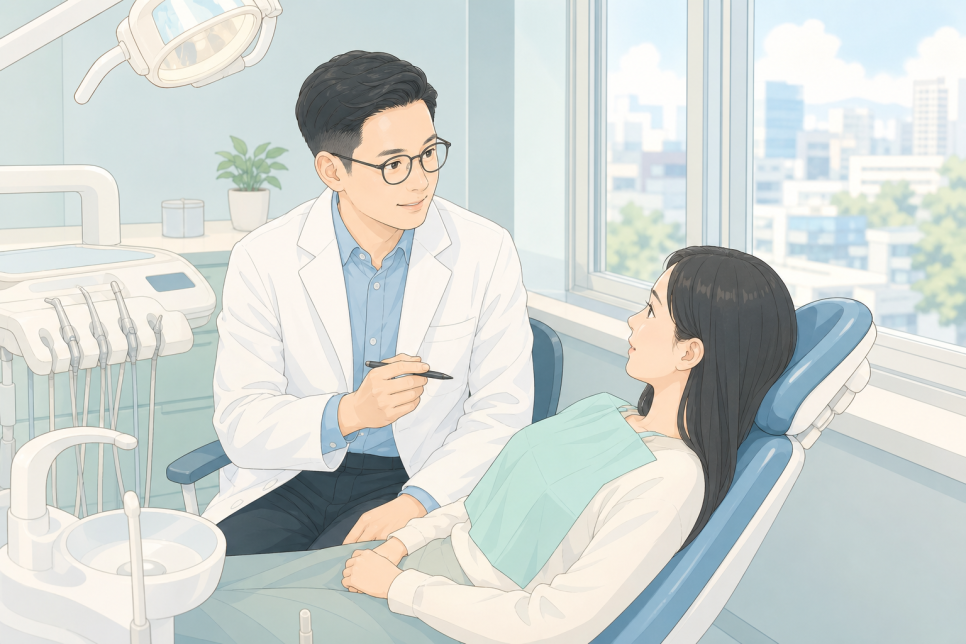
This image was staged for illustrative purposes.
Have you ever deleted a photo because you felt self-conscious about the alignment of your teeth every time you looked at it?
If the appearance of your teeth in the mirror has been bothering you, this article may be helpful.
We would like to share the orthodontic treatment story of an office worker in their 30s who visited our Gangnam orthodontic clinic, Smile D Dental Clinic.
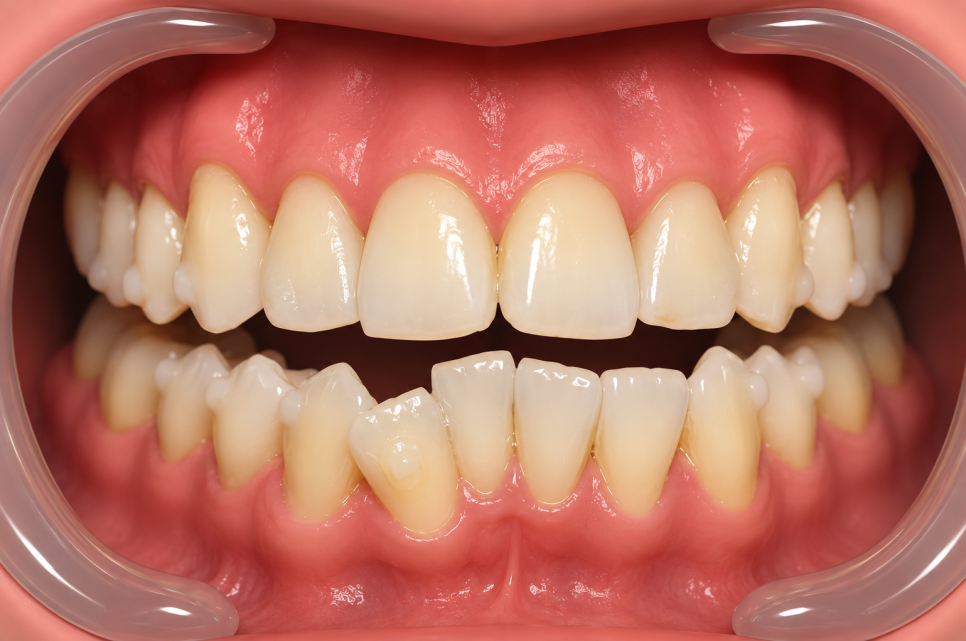
This image was staged for illustrative purposes.
This patient was an office worker in their 30s who had been considering orthodontic treatment for a long time because the alignment of their lower teeth was uneven.
While searching for orthodontic treatment reviews on Naver Blog, they learned about Smile D Dental Clinic. After visiting the clinic for a consultation, they decided to begin treatment.
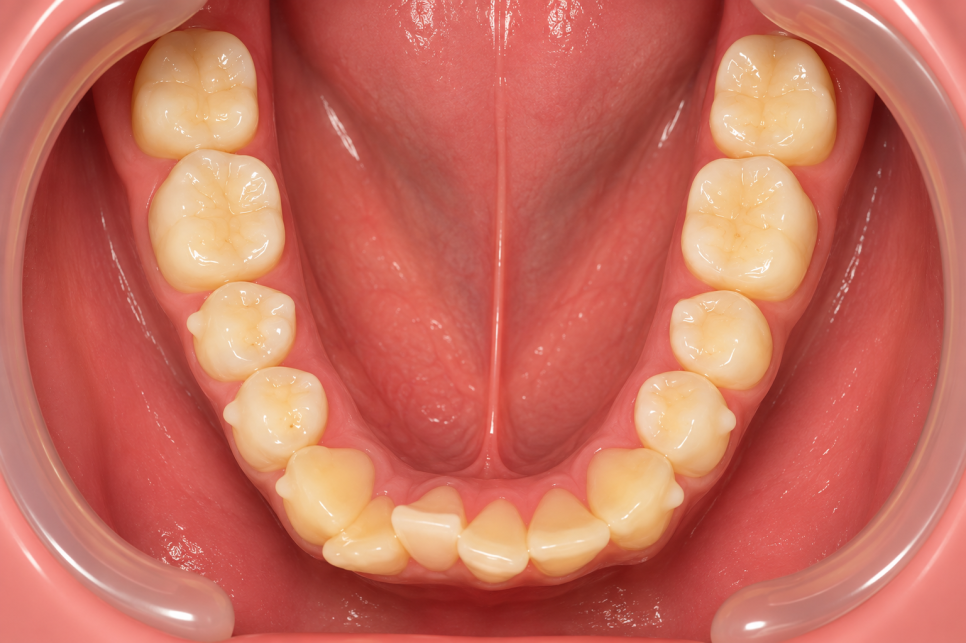
This image was staged for illustrative purposes.
Detailed Diagnostic Process for Non-Extraction Invisalign Treatment
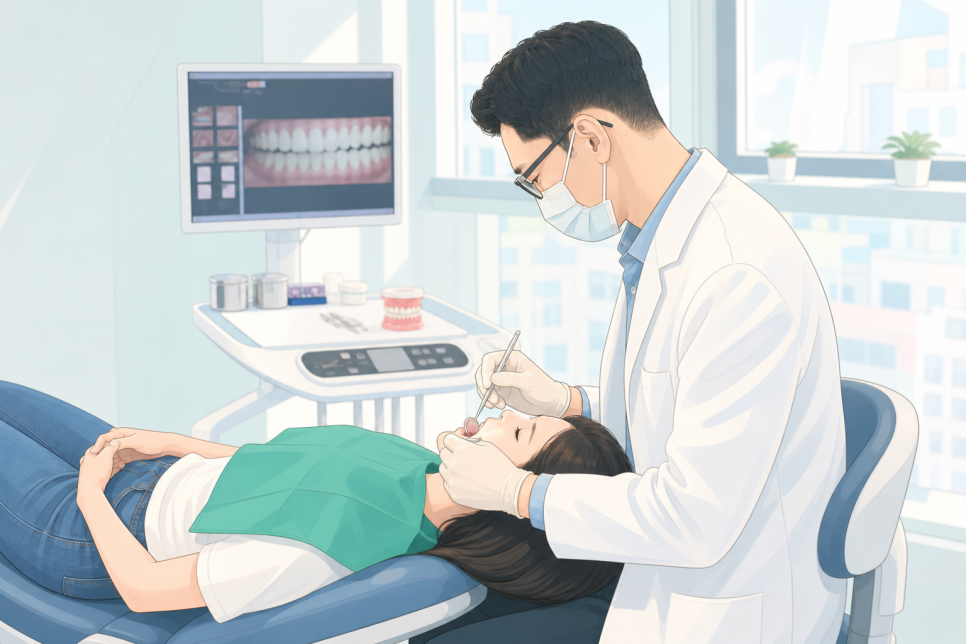
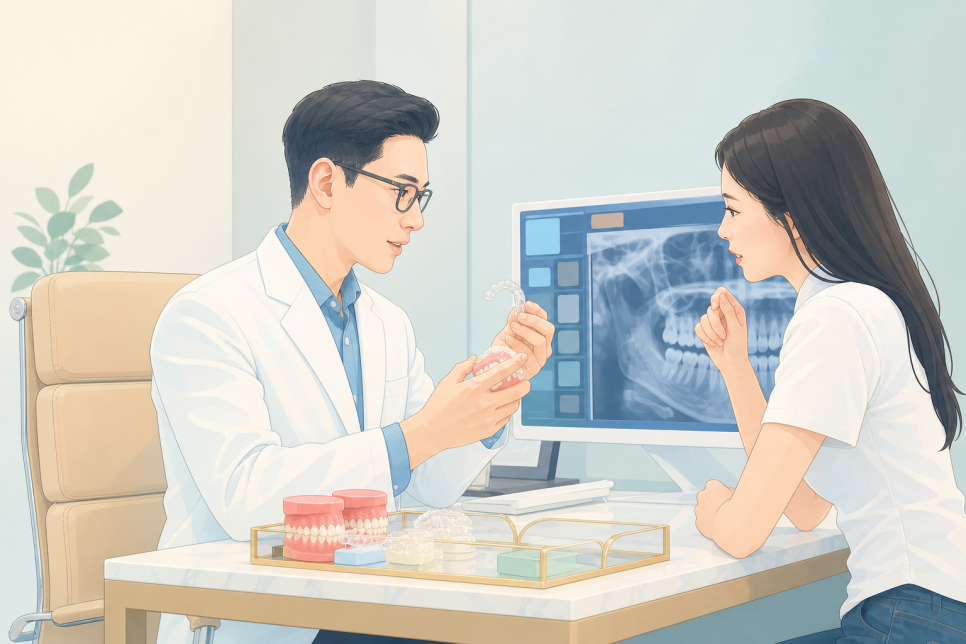
After the visit, panoramic X-rays and cephalometric radiographs were taken.
Based on the lateral photographs, the E-line (the line connecting the forehead and the tip of the chin) was checked, and the alignment of the teeth and the relationship between the upper and lower jaws were carefully analyzed.
The primary treatment goal was to address the uneven alignment of the lower teeth, so a treatment plan was developed to straighten the teeth.
< Smile D Dental Clinic Location >
< Learn More About Smile D Dental Clinic >
| 📞 Smile D Dental Clinic |
|---|
| 0507-1449-2087 |
This image was staged for illustrative purposes.
Extraction vs. Non-Extraction — Why Were Only the Wisdom Teeth Extracted?
When it is determined that the teeth can be moved sufficiently without extracting teeth for orthodontic treatment, treatment may proceed after extracting only the wisdom teeth rather than the premolars.
In this patient’s case as well, only the wisdom teeth were extracted without orthodontic extractions. Mini-screws were used as anchorage to improve the alignment of the teeth.
| | Extraction Treatment | Non-Extraction Treatment |
|---|
| Suitable cases | Significant protrusion, insufficient space in the dental arch | Mild protrusion, sufficient space in the dental arch |
| Amount of tooth movement | A greater amount of movement can be achieved | Limited |
| Treatment duration | May be relatively longer | Relatively shorter |
| Improvement in profile | Noticeable improvement may be expected | Slight improvement |
| Points to consider | Pain after extraction and space management may be necessary | The possibility of relapse must be considered |
Non-Extraction Invisalign Treatment Plan and Orthodontic Appliances
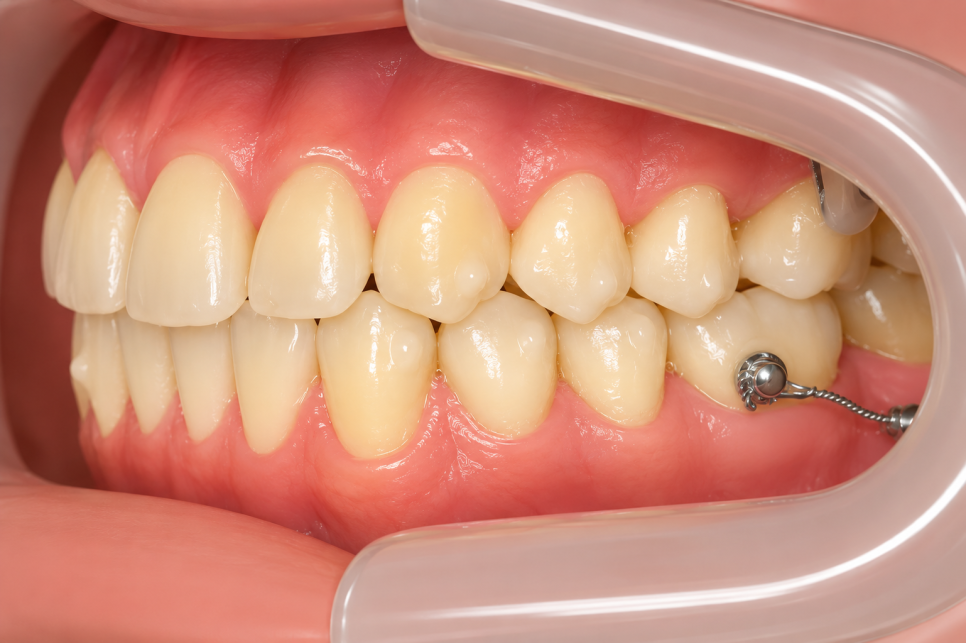
This image was staged for illustrative purposes.
Treatment began with Invisalign (clear aligners).
A total of four mini-screws (TADs) were placed to move the teeth effectively.
Mini-screws serve as anchorage, helping move only the desired teeth precisely.
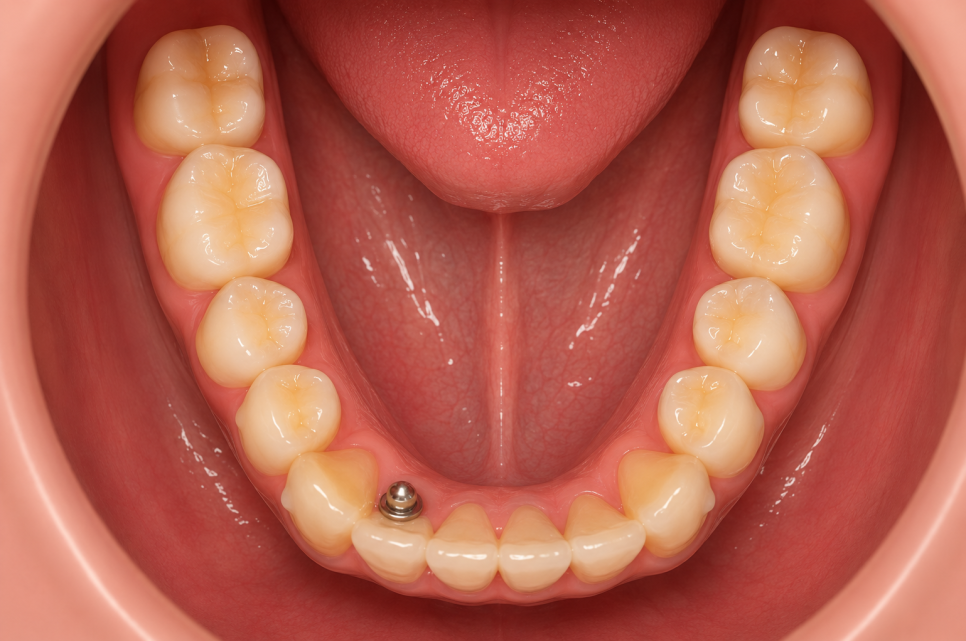
This image was staged for illustrative purposes.
An important aspect of orthodontic treatment is that it is not enough simply to move the teeth. The direction and angle of the tooth roots must also be adjusted to achieve a stable and even alignment.
Non-Extraction Invisalign Treatment Process
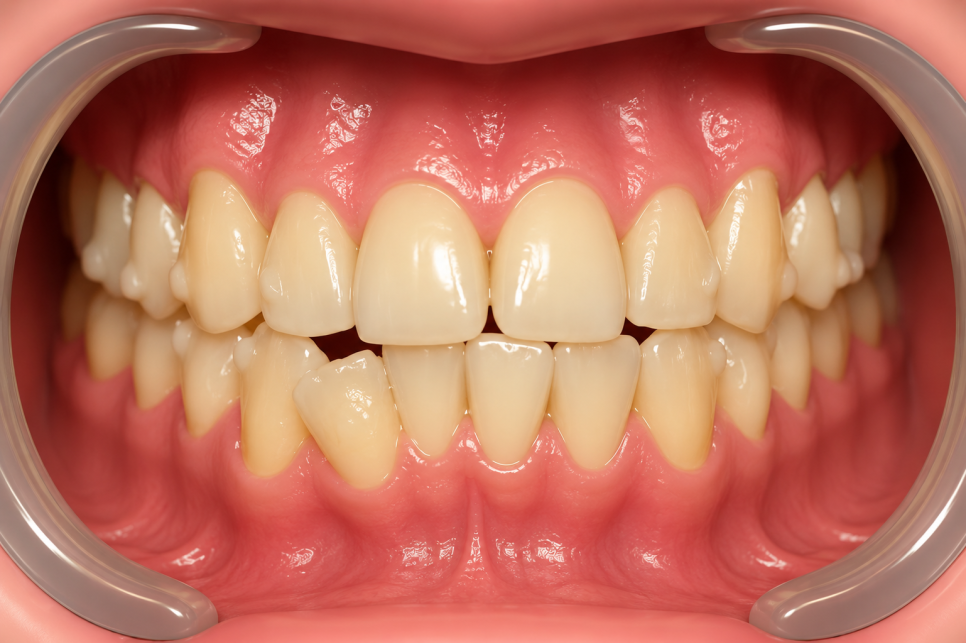
This image was staged for illustrative purposes.
Treatment Stage ① Appliance Placement and Initial Alignment (1–3 Months)
This is the stage in which the teeth are initially aligned.
The entire dental arch is gradually aligned by changing the Invisalign aligners in sequence.
There may be mild pain and a sensation of having a foreign object in the mouth at first, but most people adapt within two weeks.
This image was staged for illustrative purposes.
Treatment Stage ② Detailed Tooth Movement and Alignment Improvement (Afterward–Approximately 16 Months)
This is the key stage in which the teeth are moved to their target positions.
Using mini-screw anchorage, only the necessary teeth are moved intensively, and the most noticeable changes in tooth alignment occur during this stage.
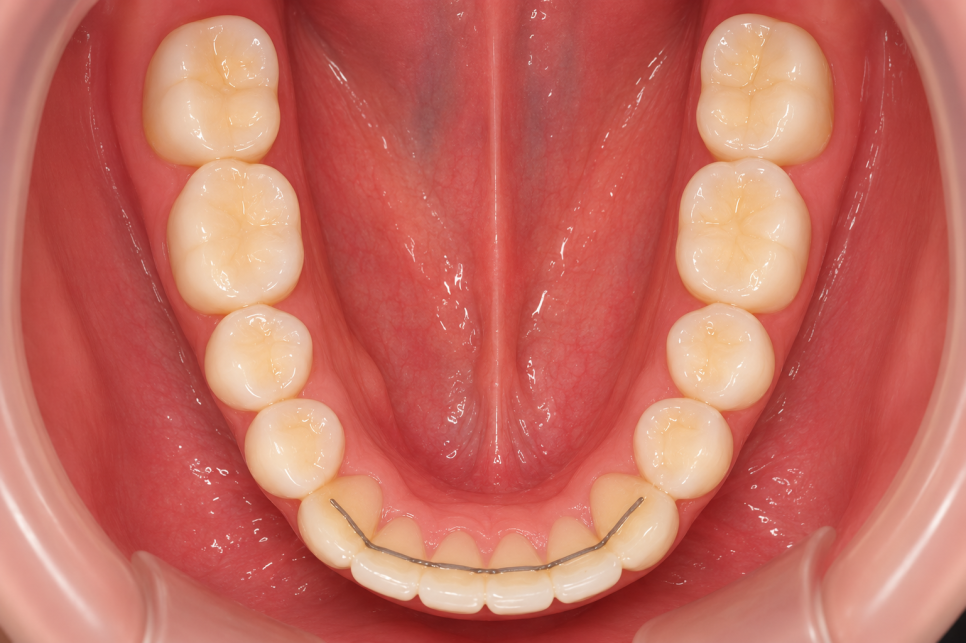
This image was staged for illustrative purposes.
Treatment Stage ③ Final Detailed Adjustments and Appliance Removal
This is the final stage, in which the positions of the teeth and the bite are finely adjusted.
After confirming that the upper and lower teeth fit together stably, the appliances are removed and a retainer is fitted.
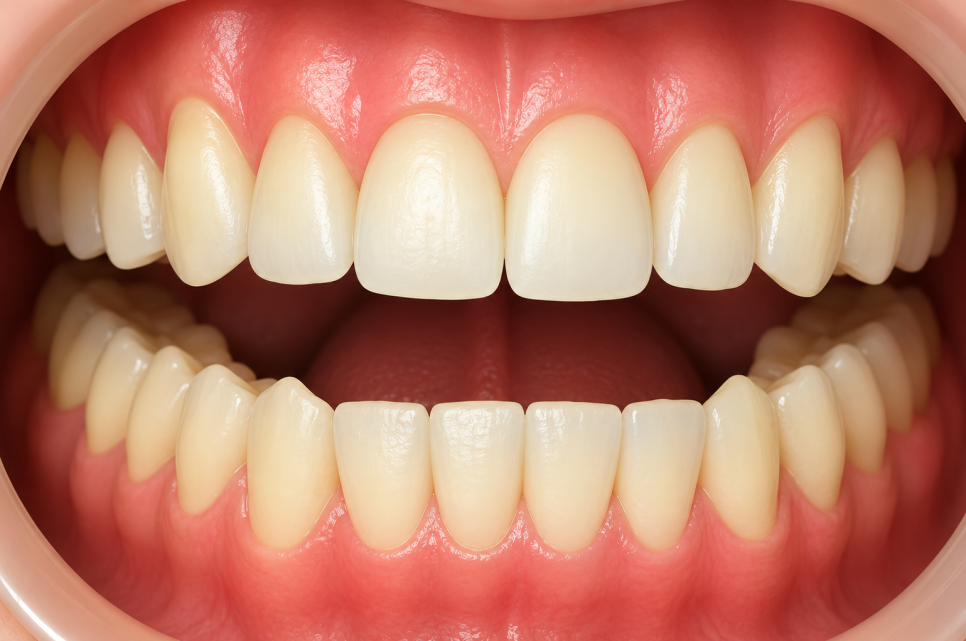
This image was staged for illustrative purposes.
Results of Non-Extraction Invisalign Treatment
After approximately one year and six months of orthodontic treatment, the alignment of the lower teeth had been evenly organized, making the overall dental alignment much straighter.
The lips could close naturally without straining, and brushing became much easier as the alignment of the teeth improved.
The condition of the gums also visibly improved, resulting in positive changes in overall oral health.
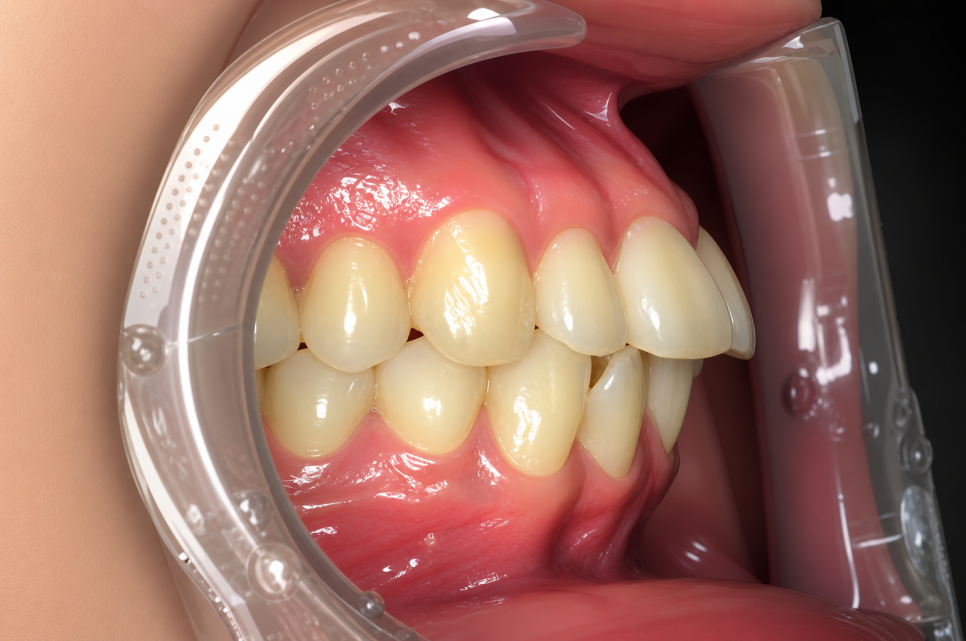
This image was staged for illustrative purposes.
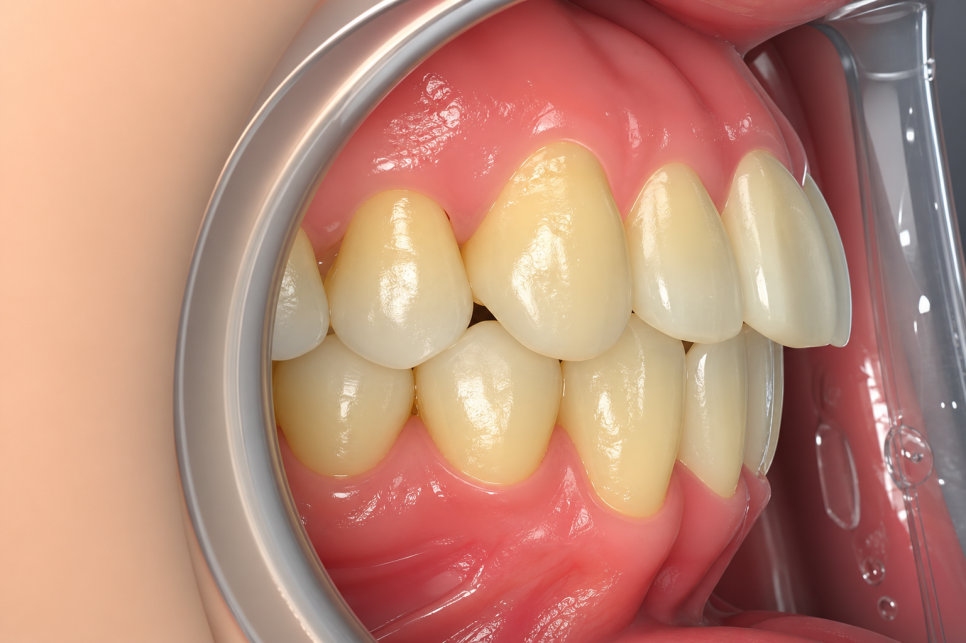
This image was staged for illustrative purposes.
In Closing
If you have been putting off treatment for a long time because you are concerned about the alignment of your teeth, we recommend getting an accurate diagnosis at least once.
Whether extractions are needed, the treatment duration, and the type of appliance depend on each individual’s skeletal and dental condition. It is therefore important to establish a plan suited to you through an in-person consultation.
This image was staged for illustrative purposes.
Smile D Dental Clinic, located near Sinsa Station in Gangnam, provides orthodontic treatment directly under Dr. Oh Su-hwan, the clinic’s director and an orthodontic specialist certified by the Ministry of Health and Welfare.
If you have similar concerns, please feel free to contact us for a consultation at any time :)
< Smile D Dental Clinic Location >
< Learn More About Smile D Dental Clinic >
| 📞 Smile D Dental Clinic |
|---|
| 0507-1449-2087 |
※ This post is an informational post prepared by a medical institution in compliance with Articles 56 and 57 of the Medical Service Act.
It was written based solely on informational content exempt from review under the regulations governing medical advertising.
The images in this post are explanatory materials intended to aid understanding, and actual treatment is determined after consultation with a medical professional.