Hello.
I am Oh Su-hwan, a dentist certified as a specialist in orthodontics by the Ministry of Health and Welfare,
and the director of 스마일디치과의원 near Sinsa Station in Gangnam.

If you look in the mirror after completing orthodontic treatment and find a black, triangular gap between your front teeth, you may feel alarmed.

Could the orthodontic treatment have gone wrong?
Why did a space that was not there before appear?
Today, I will explain why black triangles can appear after orthodontic treatment and how the appropriate approach varies depending on their size and condition, from the perspective of a specialist in orthodontics.
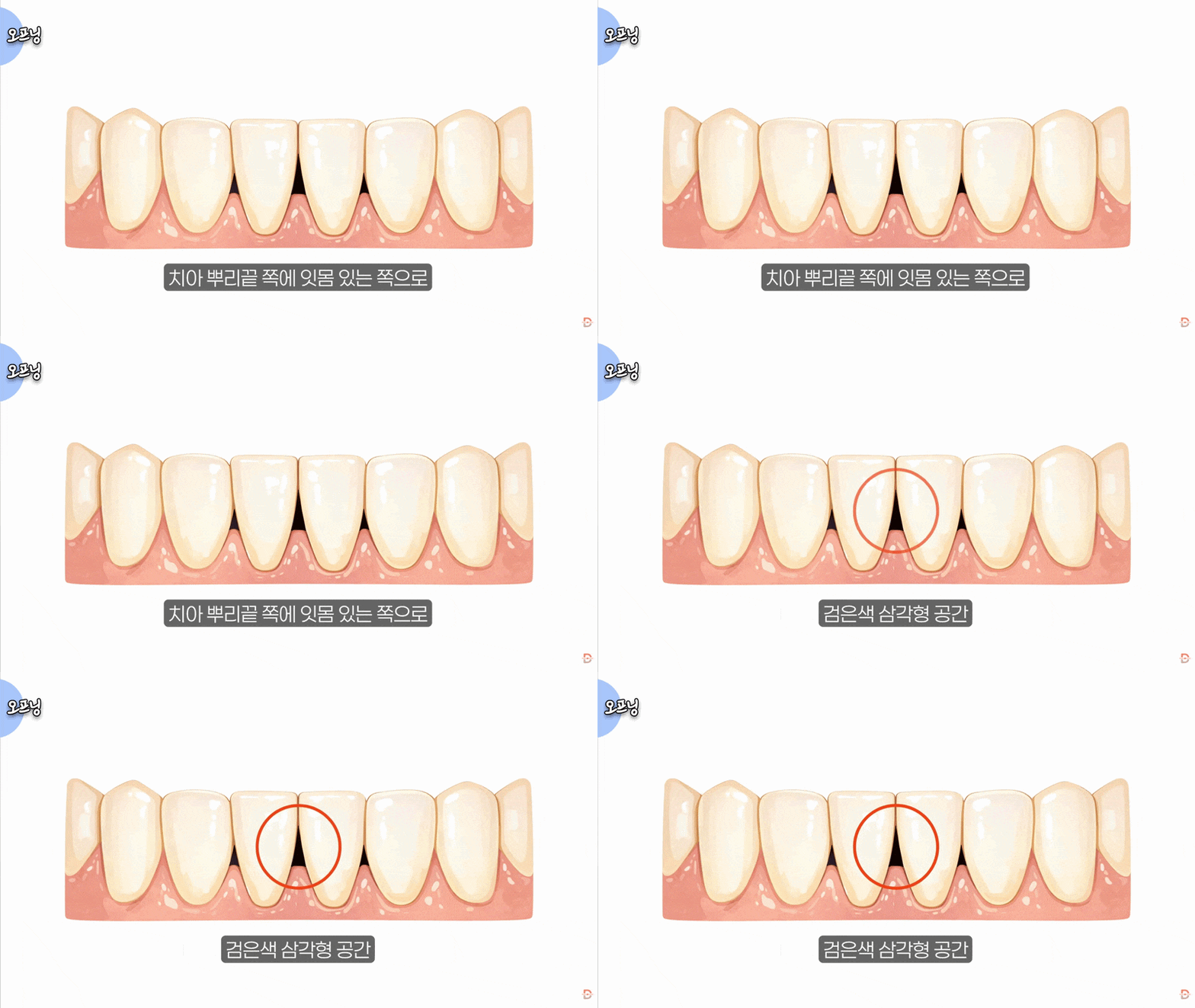
What Is a Black Triangle?
A black triangle is a space that appears empty in the shape of a black triangle between teeth, particularly near the gums.
Normally, this area should be completely filled with pink gum tissue.
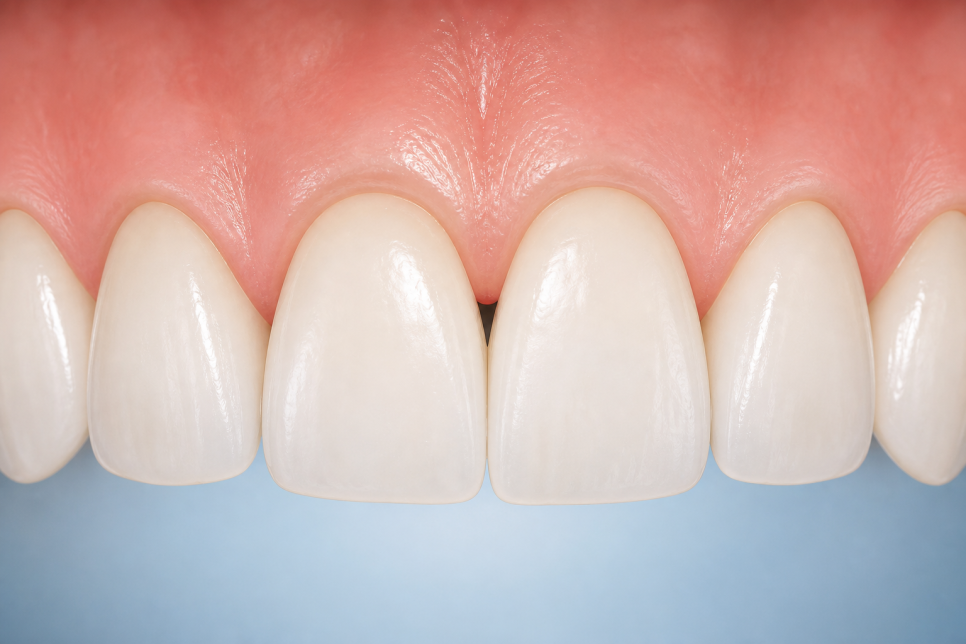
However, if this tissue recedes or fails to fill the area, the space between the teeth may appear dark and empty.
In addition to being a cosmetic concern, it can also cause everyday discomfort, such as food repeatedly getting stuck or a sensation that air escapes when speaking.

Why Does It Become Particularly Noticeable After Orthodontic Treatment?
Many people feel that a black triangle has developed after receiving orthodontic treatment.
However, to be precise, it does not occur because orthodontic treatment damages the gums.
Before orthodontic treatment, teeth are often overlapped or unevenly arranged.
In this condition, empty spaces between the teeth may be hidden by the overlapping teeth and therefore remain unnoticed.
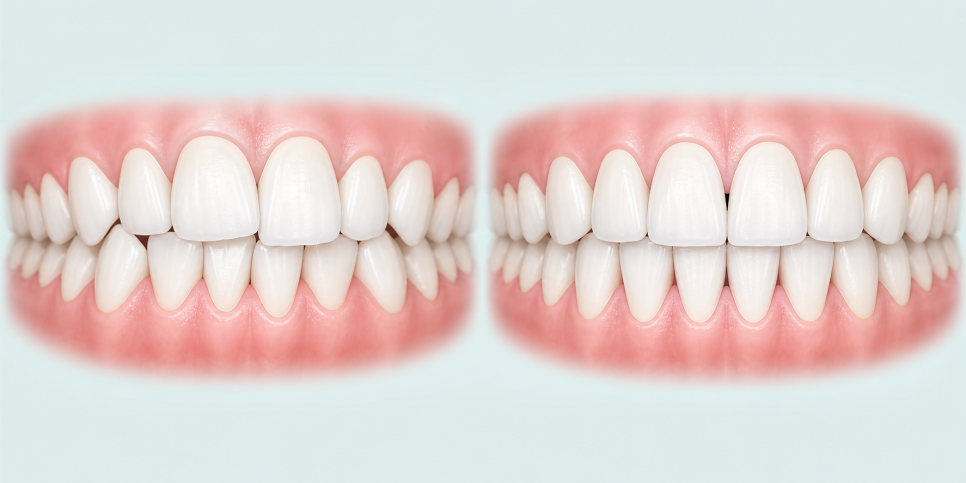
As orthodontic treatment straightens the teeth, the structural gaps that had been hidden become visible for the first time.
It is not that the orthodontic treatment failed; rather, you can understand it as the exposure of spaces that were present from the beginning.
< Location of 스마일디치과의원 >
< More about 스마일디치과의원 >
There is one more reason.
Before orthodontic treatment, the gums may be swollen, or tartar may block the spaces between the teeth, making them appear to have no gaps.
As gum health improves during orthodontic treatment and tartar is removed, those spaces may naturally become visible.

The Causes of Black Triangles
The causes can be broadly divided into three categories.
First, gum disease and aging.
As people age or periodontal disease progresses, gum tissue and the bone supporting the gums gradually recede.
As the gums move downward, the spaces between the teeth become increasingly visible.
Second, structural changes after orthodontic treatment.
As explained above, when teeth overlap, the gum tissue between them may not have been able to settle properly.
The gap becomes visible as the teeth are straightened.
Third, changes after gum swelling and tartar removal.
As gums that were swollen due to inflammation become healthier, the tissue may settle and reveal a space.
Black Triangle Treatment: The Approach Varies Depending on Its Size and Condition
A black triangle does not always require treatment.
The appropriate method varies depending on its size and current condition.
< If it is very small, within 1 mm >
The priority is to maintain thorough oral hygiene without any special procedure.
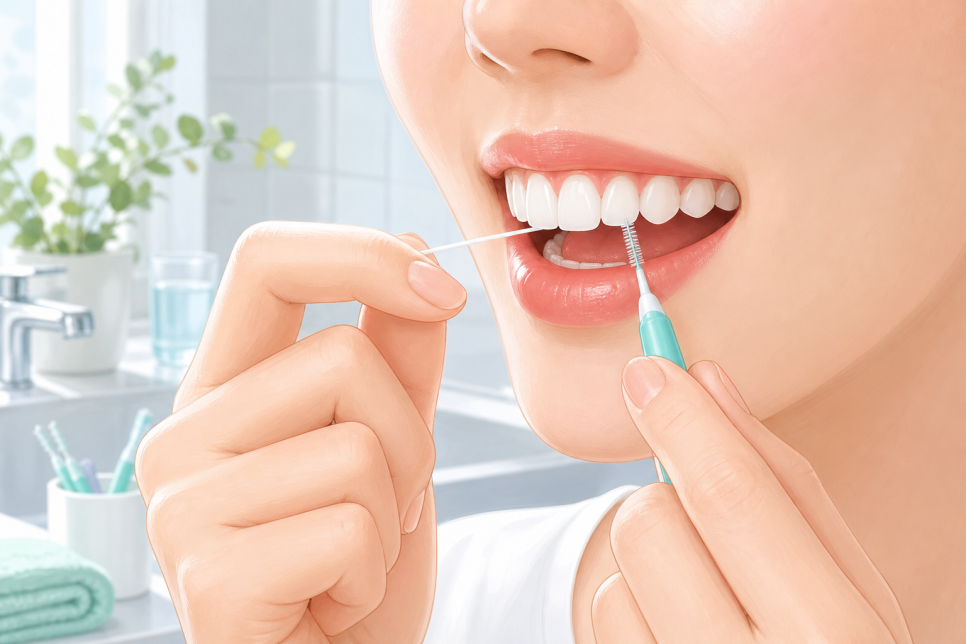
Make flossing and using an interdental brush part of your daily routine to keep the spaces between your teeth clean.
If the gap is this small, there is no need to rush into treatment.
< If orthodontic treatment is still in progress — interproximal reduction >
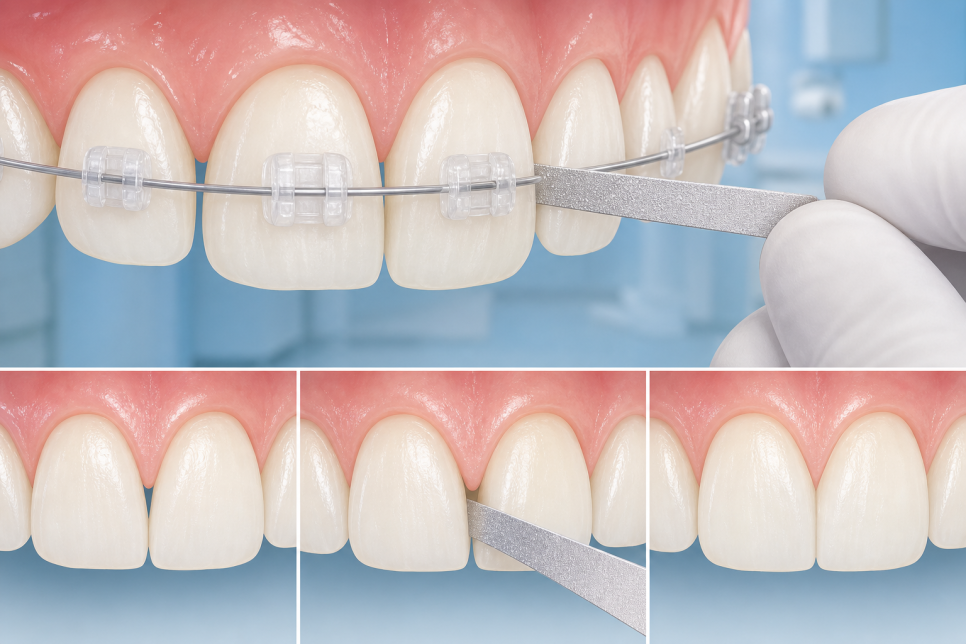
If you are still undergoing orthodontic treatment, one option is to perform interproximal reduction, which involves minimally reshaping the sides of the teeth, and then bring the teeth together again through orthodontic treatment.
As the contact points become longer, the space may be reduced or eliminated.
< If the space is large or you also want to improve the appearance — veneers >
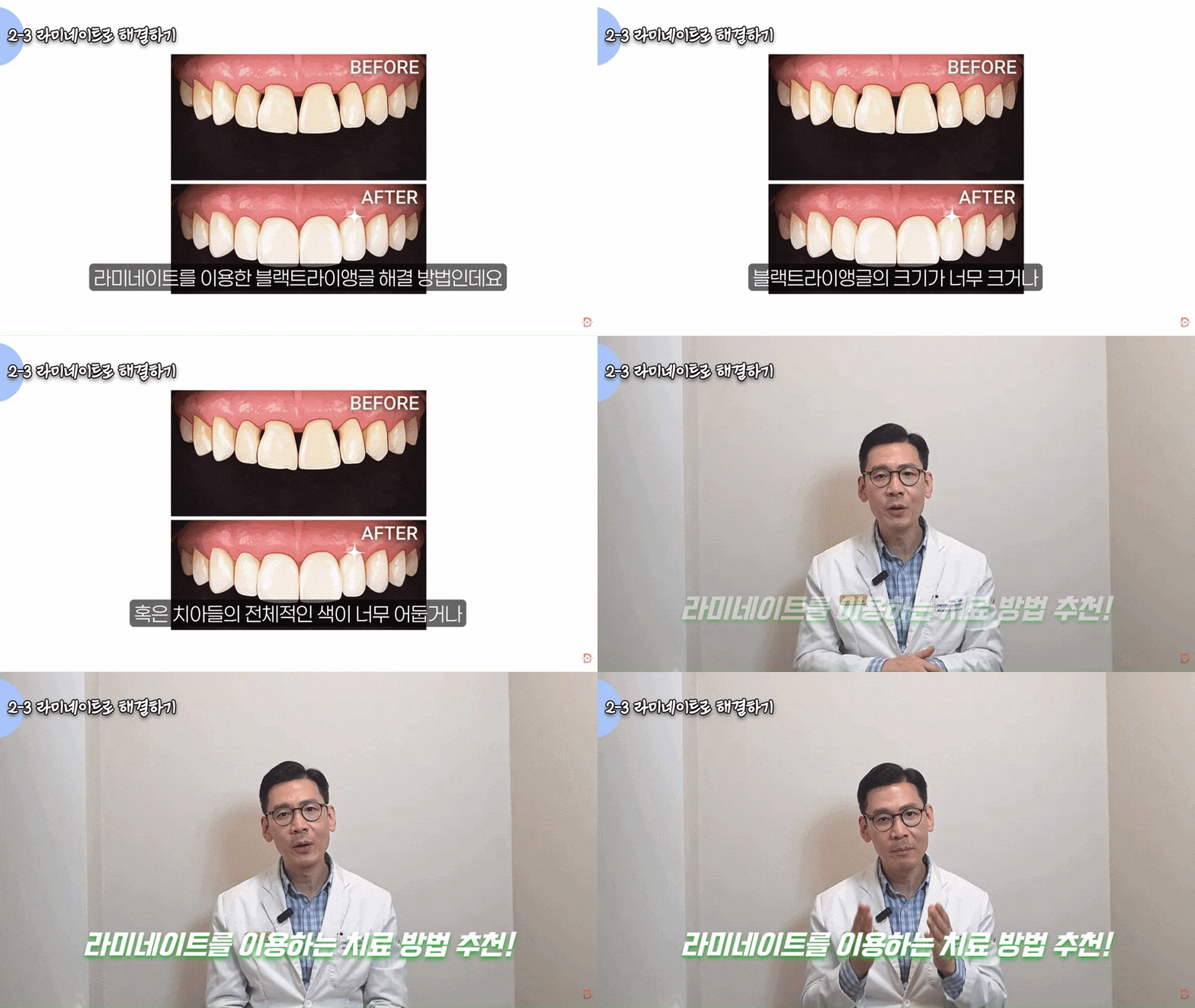
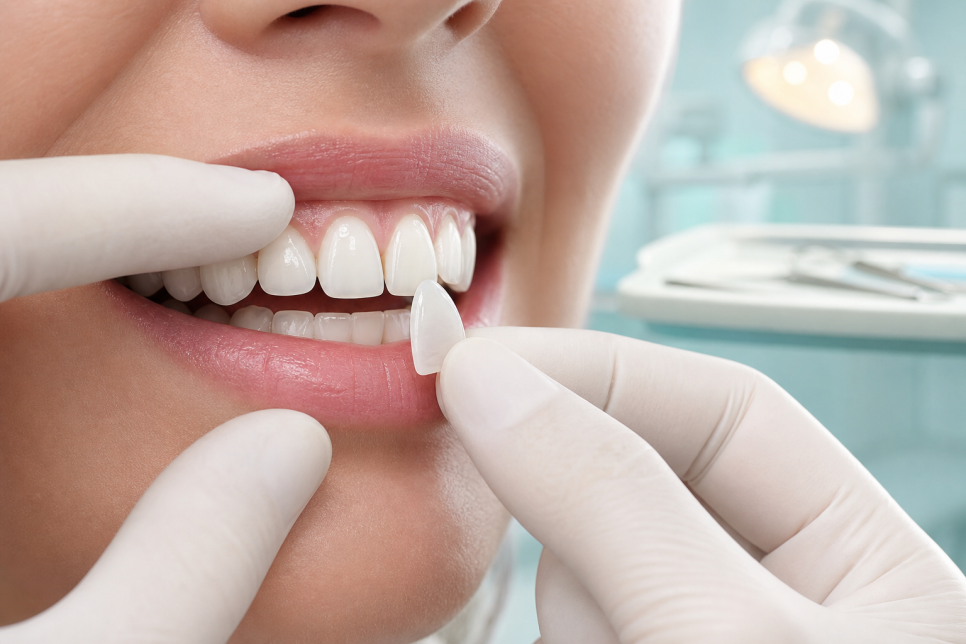
If the space is wide or you also wish to improve the color of your teeth, veneers may be considered.
No-prep veneers can be performed with little to no reduction of the teeth.
Because they are made of ceramic, they have a smooth surface, attract less plaque, and are almost resistant to discoloration.
They are also relatively durable, and their shape can be designed according to the golden proportions of the teeth, offering a high level of cosmetic satisfaction.
Three Things You Must Check at the Dental Clinic Before Deciding on Treatment
Whether you are considering composite resin or veneers, there are several things you should check first rather than proceeding without careful consideration.
"Are my gums healthy right now?"
If the space is filled while the gums are still swollen, a gap may form again after the swelling subsides.
The standard approach is to begin treatment after the gum condition has stabilized.
"Has my orthodontic treatment been completely completed?"
If the teeth are still moving, the space may become wider.
Treatment should begin after orthodontic treatment has been fully completed and the retention phase has begun.
"Is there any problem with my bite?"
If the force exerted when the front teeth meet is excessively strong, veneers may break or come off.
The bite must be checked before treatment.
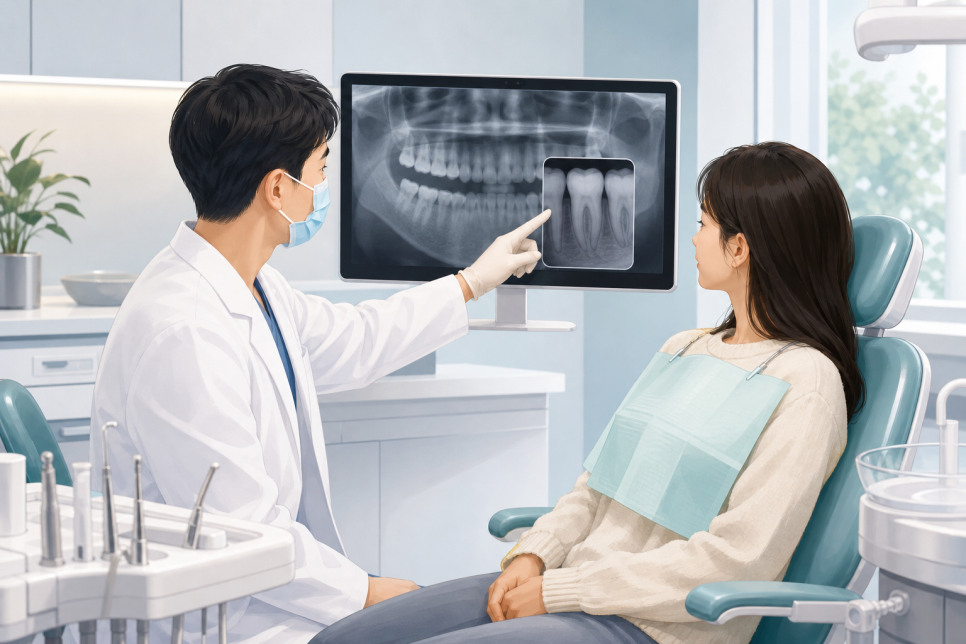
What you see in the mirror at home and what is confirmed through X-rays at the dental clinic may be different.
If you are concerned about a black triangle, I recommend that you do not judge it based solely on its appearance. First have your condition accurately evaluated at a dental clinic, and then decide on the appropriate treatment approach.
This has been Oh Su-hwan of 스마일디치과의원, a dentist certified as a specialist in orthodontics by the Ministry of Health and Welfare.
Thank you for reading today.
< Location of 스마일디치과의원 >
< More about 스마일디치과의원 >
※ This post is an informational post prepared by a medical institution in compliance with Articles 56 and 57 of the Medical Service Act and related medical regulations.
It was written based solely on informational content exempt from review of medical advertising.
These images are explanatory materials intended to aid understanding, and actual treatment will be decided after consultation with a medical professional.