Have you ever heard things like these after starting orthodontic treatment?
"It looks like we need to place a screw."
"From now on, you’ll need to wear rubber bands."
It makes you pause for a moment.
A screw in the gums?
Rubber bands every day?
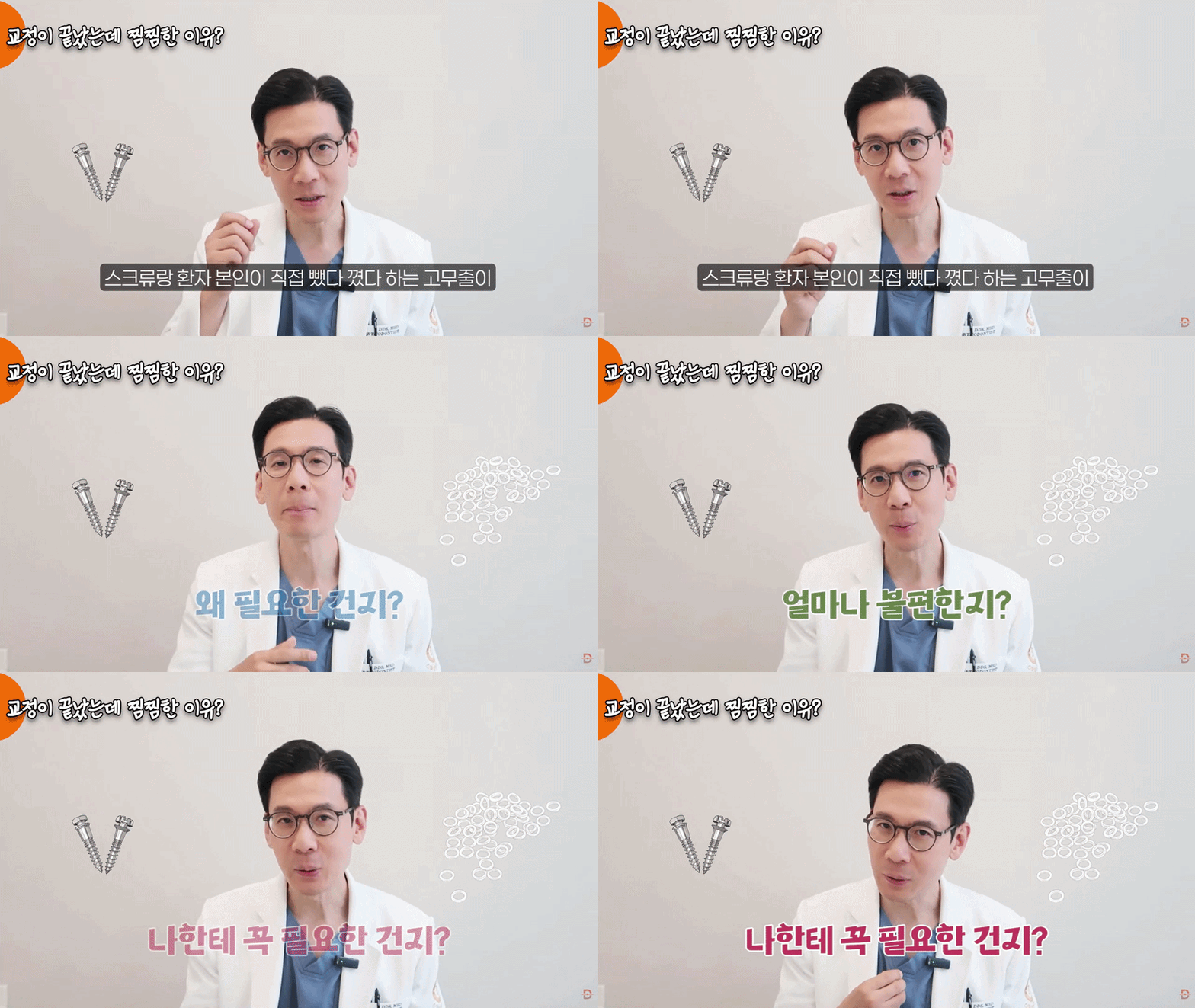
Let me give you the conclusion first.
These two things are key factors that can determine the outcome of orthodontic treatment.
I’ll explain why, one point at a time.
I am Oh Soo-hwan, director of Smile D Dental Clinic, with more than 20 years of clinical experience in the Sinsa Station area of Gangnam.
< Smile D Dental Clinic Location >
< More About Smile D Dental Clinic >
| 📞 Smile D Dental Clinic |
|---|
| 0507-1449-2087 |
What Do Orthodontic Screws Do?
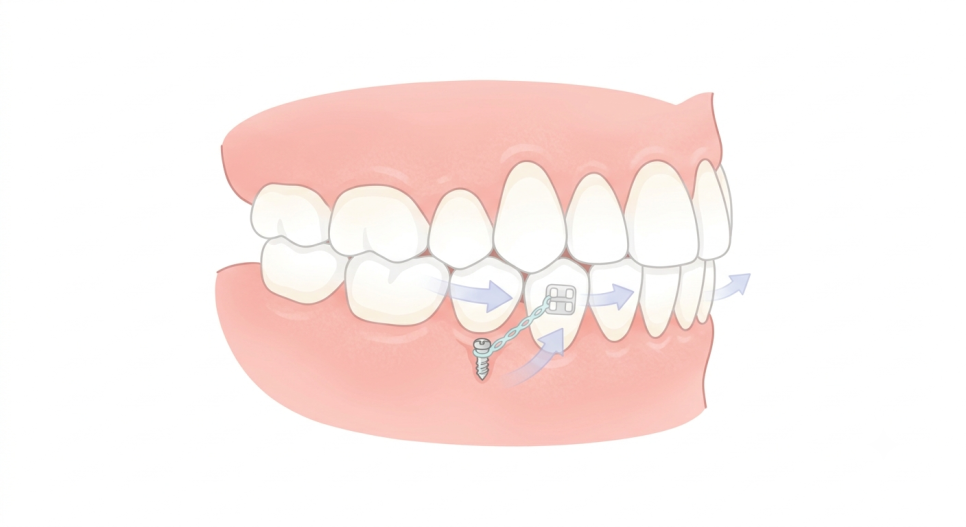
To move teeth, force needs to be applied to something.
The reference point used to apply that force is called the anchorage point.
In the past, molars served this role.
The problem is that when force is applied to the molars, the molars are pulled along as well.
You may try to pull the front teeth backward, only to have the molars move forward.
Mini-screws are fixed directly into the jawbone, so this kind of counterreaction does not occur.
They allow the desired teeth to be moved precisely, only in the desired direction.
When Are Mini-Screws Necessary?
They are not necessary for every orthodontic patient.
If any of the following applies, screws can make a significant difference in the treatment outcome.
-
When extraction-based orthodontic treatment is needed to improve protruding teeth or lips
-
When the front teeth need to be pulled significantly backward
-
When the teeth need to be moved vertically, as in an open bite or deep bite
Does It Hurt a Lot?
This is what people worry about most.
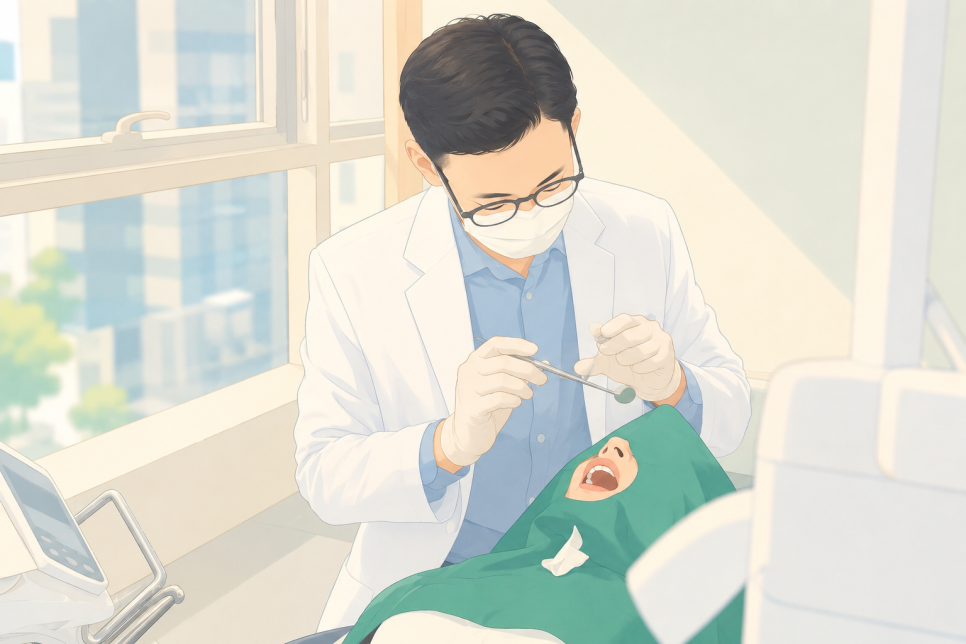
A local anesthetic is applied to the gums before placement.
The procedure itself is brief, taking around five minutes, and because it is performed under anesthesia, there is usually little to no pain during placement.
Some soreness may be felt for one or two days after the anesthesia wears off, but it can be adequately managed with prescribed pain medication.
Once orthodontic treatment is complete, the screws can be easily removed without anesthesia, and the gums naturally recover in about a week.

What Do Removable Rubber Bands Do?
Orthodontic treatment is not finished just because the teeth are neatly aligned.
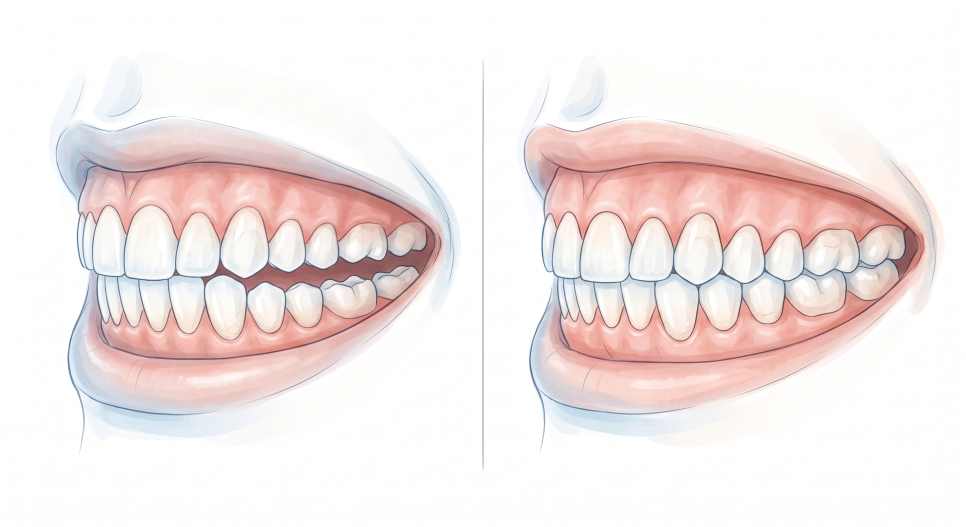
The upper and lower teeth also need to fit together properly.
If the molars do not make proper contact when chewing, a functional problem may remain no matter how attractive the alignment looks.
Removable rubber bands are used to adjust this relationship between the upper and lower teeth.
The patient puts them on and removes them personally.
How Long Should Removable Rubber Bands Be Worn?
Except while eating and brushing your teeth,
They should be worn for at least 20 hours a day as a general rule.
At first, you may feel soreness or a pulling sensation around the jaw.
This is a normal response to force being applied to the teeth and dental arches.
Most people adjust after about one to two weeks, and wearing them becomes a habit.

What Happens If You Do Not Wear Removable Rubber Bands?
This is where many people make mistakes.
Because the visible alignment of the teeth becomes straighter,
some people skip the rubber bands because wearing them feels bothersome.
The results may appear as follows.
-
The front teeth look attractive, but the upper and lower molars do not make contact when you bite down firmly.
-
Something feels uncomfortable, but you cannot identify what the problem is.
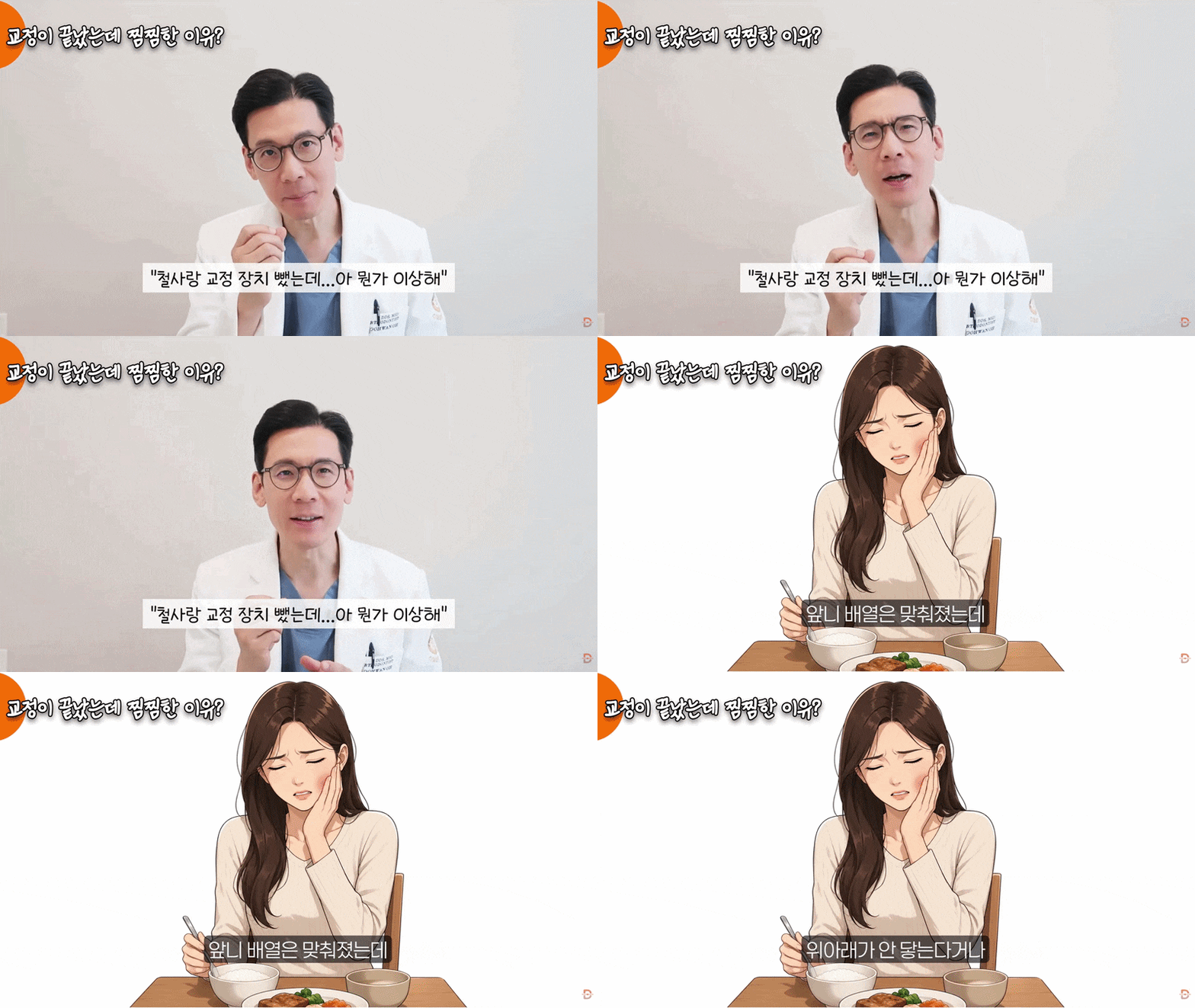
An extended treatment period is one problem,
but the overall quality of the orthodontic result also changes.
Rubber bands are not optional.
What Difference Does It Make If Screws and Rubber Bands Are Not Used?
| Appliance | When used properly | When ignored |
|---|
| Mini-screws | The front teeth move sufficiently backward, improving protrusion | The molars are pulled forward, reducing the effect of improving protrusion |
| Removable rubber bands | The upper and lower teeth fit together precisely | The teeth are well aligned, but the molar bite is poor, leaving an uncomfortable result |
As mentioned above, this is not simply a matter of treatment duration.
Please remember that the quality of the final result can be different.

Ultimately, the Initial Treatment Plan Is Most Important
Screws and rubber bands are not necessary for every orthodontic patient.
For simple alignment treatment, it may be possible to achieve a sufficiently good result without them.
What matters is receiving a clear explanation during the initial consultation of why these appliances are necessary for you.
Once you understand the reason, your cooperation with treatment—and the result—can change.
If screws or rubber bands are discussed during your orthodontic treatment,
it may be fair to say that the treatment plan has been properly designed.
Even if they are bothersome or frightening, continue following the instructions carefully through to the end.

If your medical provider does not explain in detail why additional tools such as screws or rubber bands are necessary for you,
it may be worth reconsidering your options.
Thank you for reading today.
I am Oh Soo-hwan, director of Smile D Dental Clinic and a dentist certified by the Ministry of Health and Welfare as a specialist in orthodontics.
< Smile D Dental Clinic Location >
< More About Smile D Dental Clinic >
| 📞 Smile D Dental Clinic |
|---|
| 0507-1449-2087 |

※ This post is informational content prepared by a medical institution in compliance with Articles 56 and 57 of the Medical Service Act.
It was written based solely on informational content exempt from review of medical advertising.
The images are explanatory materials intended to aid understanding, and actual treatment will be determined after consultation with a medical professional.