If you are concerned about the color or shape of your front teeth and look into cosmetic dental treatment,
it is common to come across veneers and all-ceramic crowns together.
In particular, many people considering veneers worry:
“Will my teeth need to be shaved down a lot?”
“Will they become sensitive or painful later?”
“Once I have them done, will I have to keep replacing them?”

Recently, veneer treatment designed to preserve as much of the natural tooth as possible has been receiving attention,
but no-prep or minimal-prep treatment is not possible in every case.
Depending on the condition, alignment, color, and existing damage of the teeth,
veneers may be suitable, or all-ceramic crowns may be more necessary.
Today, I will explain the differences between veneers and all-ceramic crowns, the amount of tooth reduction involved, and the criteria for choosing a treatment.
< Smile:D Dental Clinic Location >
< Learn More About Smile:D Dental Clinic >
| 📞 Contact Smile:D Dental Clinic |
|---|
| 0507-1449-2087 |

Why Are People Concerned About Tooth Reduction When Considering Veneers?
Veneers are a treatment in which thin ceramic restorations are bonded to the front surfaces of the teeth to improve their color or shape.
They may be considered when:
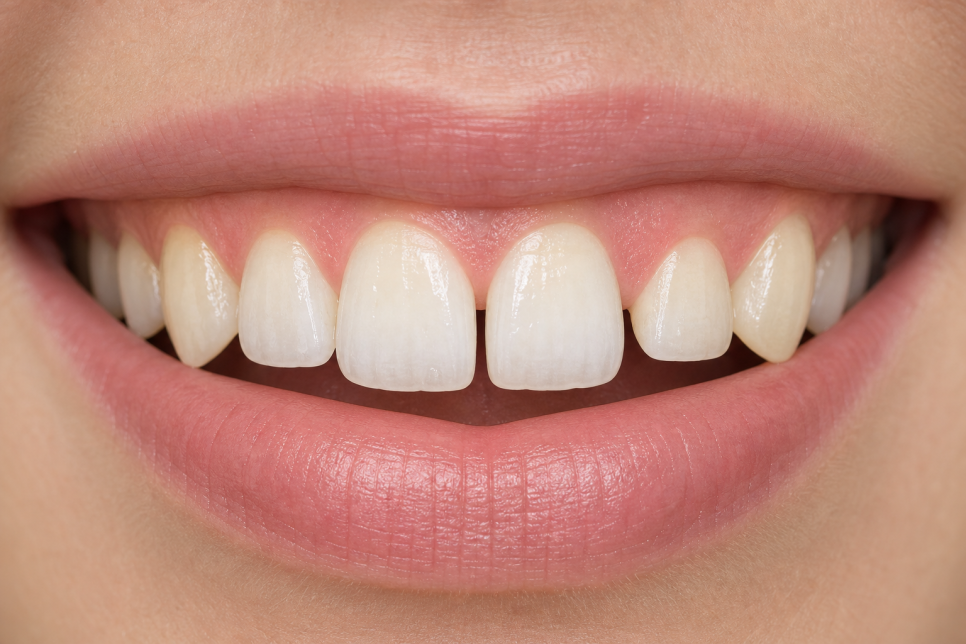
The front teeth are dark in color,
The teeth are small,
There are gaps between the teeth,
or the alignment appears slightly uneven.
However, when many people think of veneers,
they assume that the treatment involves extensively shaving down the teeth and feel hesitant about it.

In the past, there were cases in which a relatively large amount of tooth structure was removed to achieve cosmetic results,
but recently, treatment plans are often designed to preserve the natural teeth as much as possible.
However, it is difficult to assume that the teeth will not be shaped at all in every case simply because the term “no-prep veneers” is used.
If the teeth protrude forward, the alignment is significantly uneven,
or there is a substantial difference in color, some reduction may be necessary.
In other words, the amount of reduction is not determined solely by the name of the treatment;
it may vary depending on the current condition of the teeth.
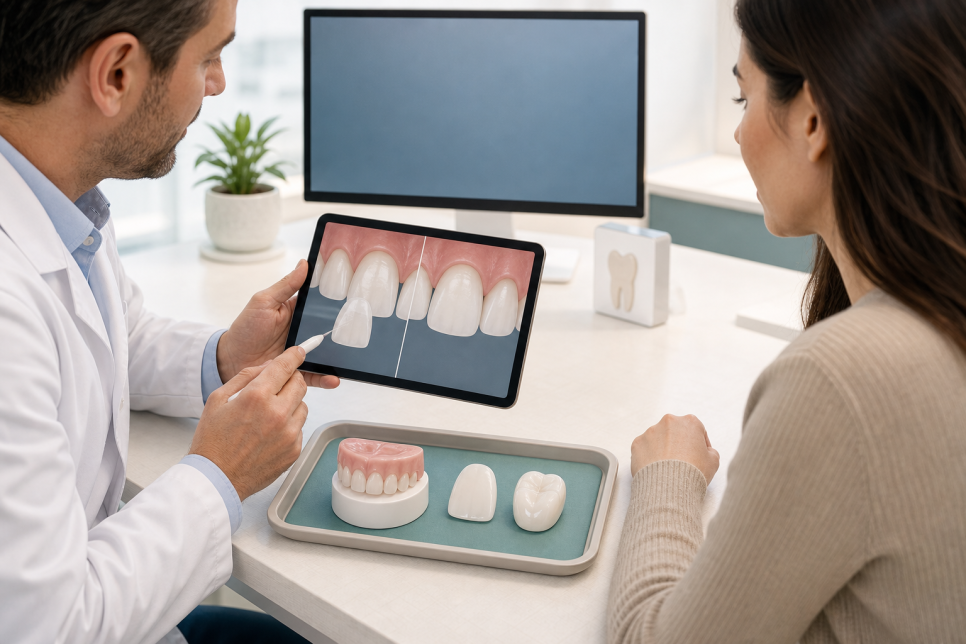
Can Veneers Cause Sensitivity?
Many people are also concerned about sensitivity after getting veneers.
Sensitivity may occur when a large amount of tooth structure has been removed,
when the tooth surface is particularly sensitive,
or when temporary irritation develops after the bonding process.
In particular, excessive tooth reduction can irritate the dentin, the inner layer of the tooth,
which may increase the likelihood of sensitivity.

Therefore, before veneer treatment,
the tooth thickness, enamel condition, tooth alignment, and bite relationship should be evaluated together.
The bite refers to the way the upper and lower teeth come together.
Front-tooth veneers are not a treatment that considers only the external appearance;
it is also necessary to examine the forces placed on the front teeth when chewing.
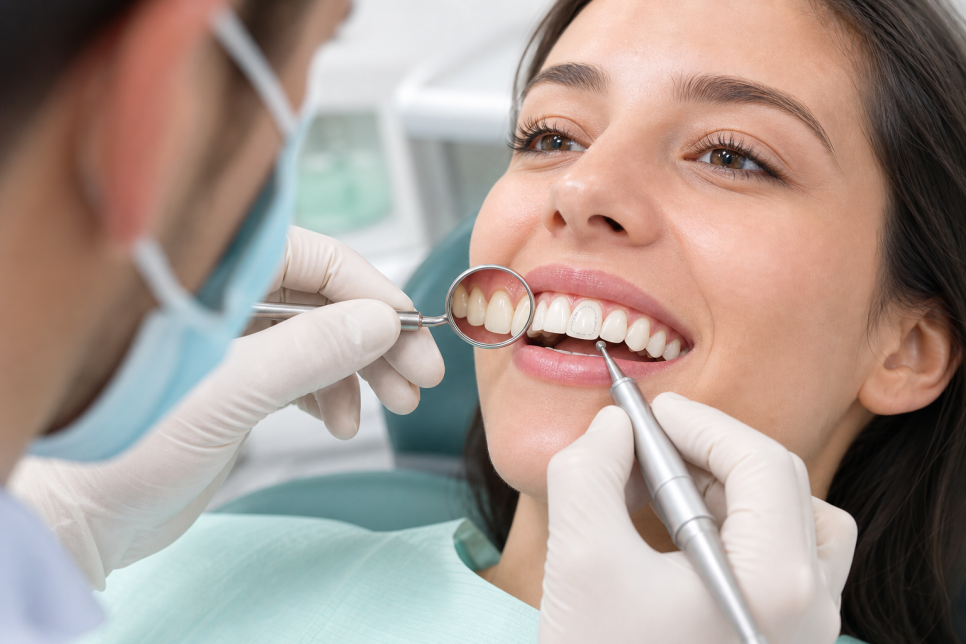
If veneers are placed when the bite is misaligned, the restorations may crack or come off.
If you are considering Sinsa Station no-prep veneers,
it is necessary to first determine whether your teeth are actually in a condition that allows tooth reduction to be minimized.
Differences Between Veneers and All-Ceramic Crowns
Both veneers and all-ceramic crowns can be used to improve the appearance of the front teeth,
but the treatment methods are different.
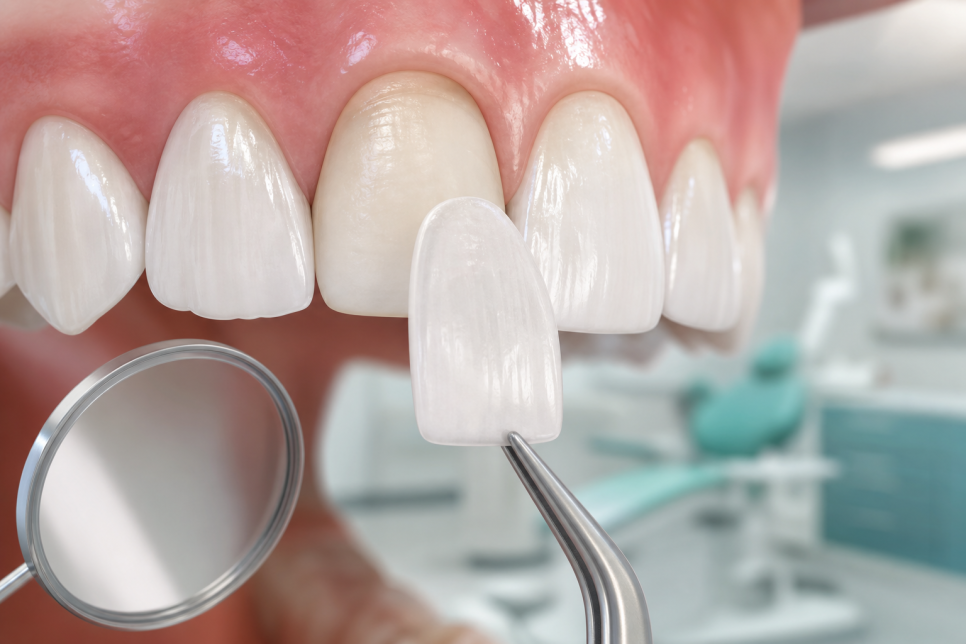
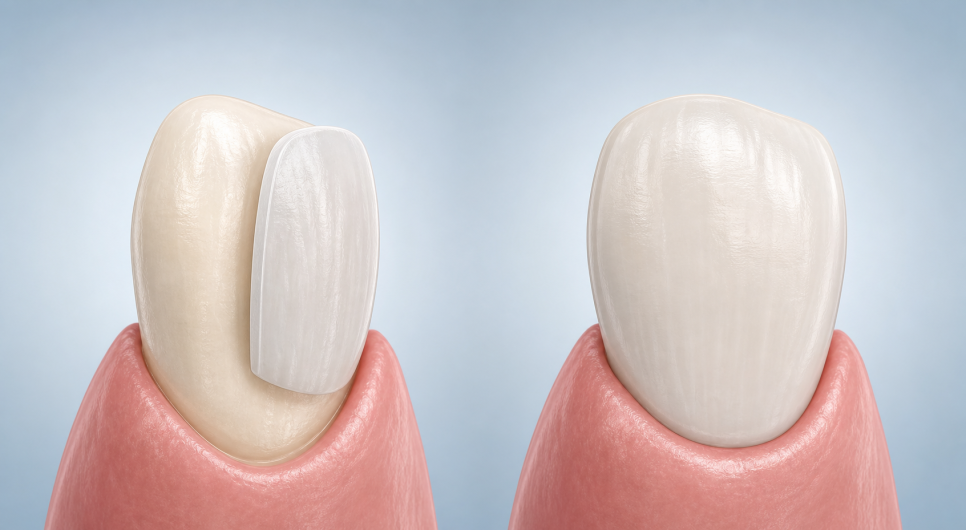
Veneers are thin restorations that primarily cover the front surfaces of the teeth.
They can be used to preserve as much of the natural tooth as possible
while improving color, shape, small gaps, and minor alignment issues.
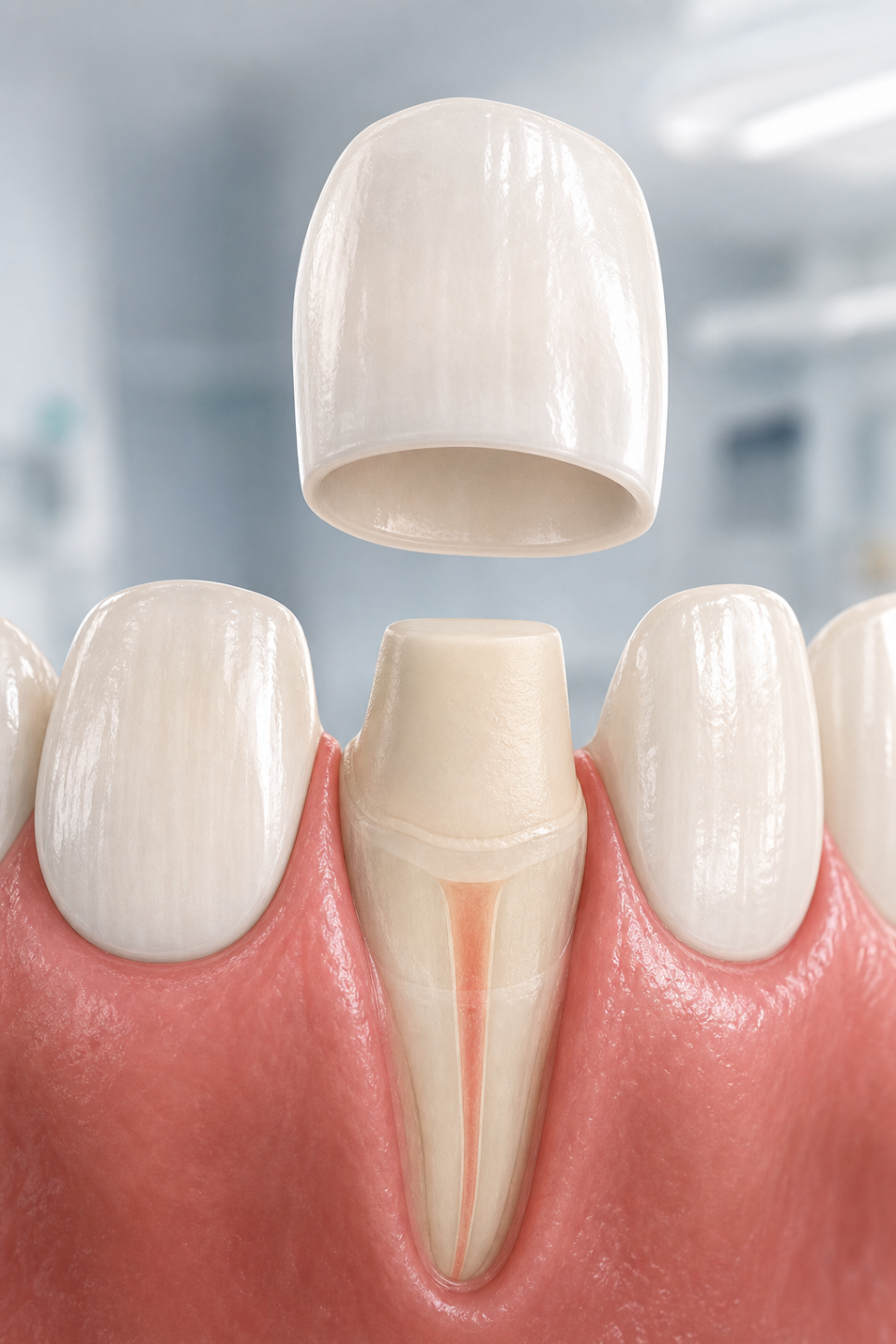
In contrast, an all-ceramic crown is a restoration that surrounds the entire tooth.
It may be considered when a tooth is extensively fractured, when the area affected by existing decay is extensive, or when the remaining tooth structure is weak, such as in a tooth that has undergone root canal treatment.
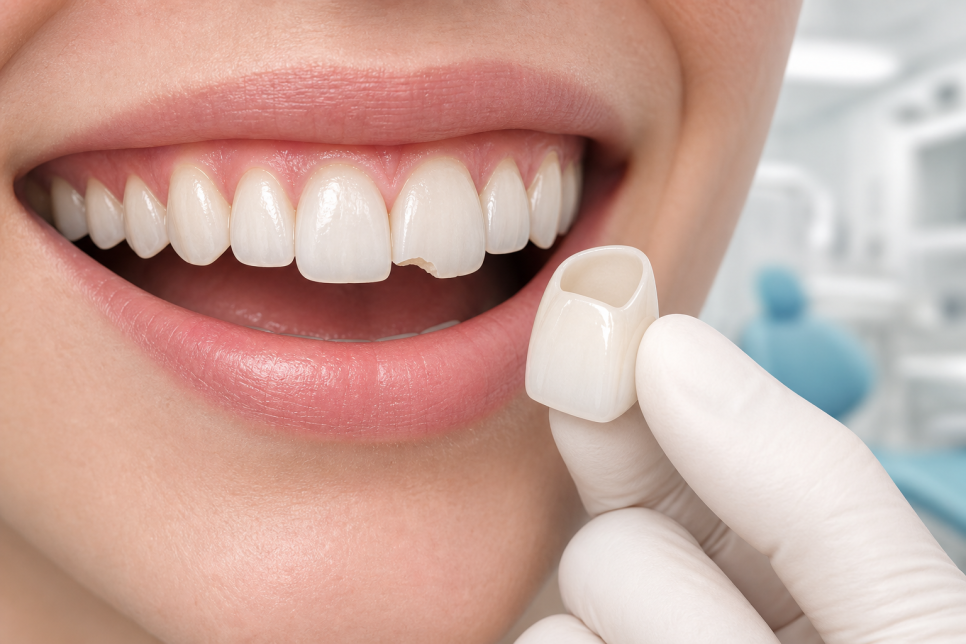
Simply put, veneers are closer to cosmetic improvement focused on the front surface of the tooth,
while all-ceramic crowns are restorative treatment that surrounds and protects the entire tooth.
Therefore, although the purposes of the two treatments may appear similar, the situations in which they are used may differ.

How Do Tooth Reduction and Cosmetic Results Differ?
In general, the amount of tooth reduction
is known to be smaller for veneers than for all-ceramic crowns.
This is because veneers are placed by securing only the minimal space needed, primarily on the front surface of the tooth,
for bonding the ceramic.
In contrast, because an all-ceramic crown must surround the entire tooth,
it may be necessary to shape not only the front surface but also the sides and inner surface.
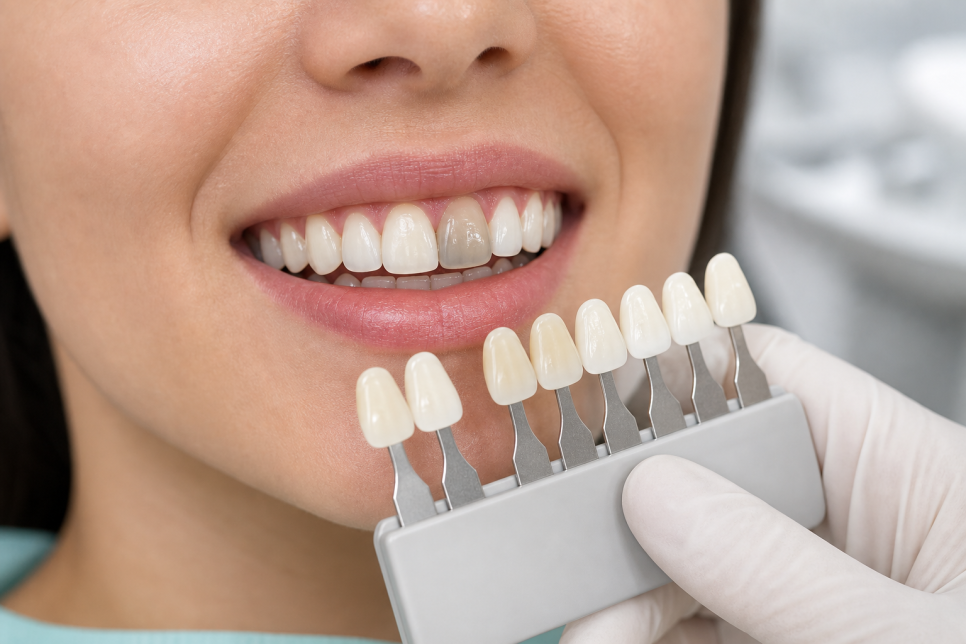
In terms of appearance, both treatments can aim to create a natural-looking color.
Because veneers use thin ceramic,
they may offer advantages in preserving the translucency and color expression of natural teeth.
However, when tooth discoloration is severe or there is a large area involving existing restorations, decay, or fracture,
it may be difficult to achieve the desired color or shape with veneers alone.

Ultimately, the important question is not which treatment is better,
but which treatment is more suitable for the current condition of the teeth.
When Can Veneers Be Considered?
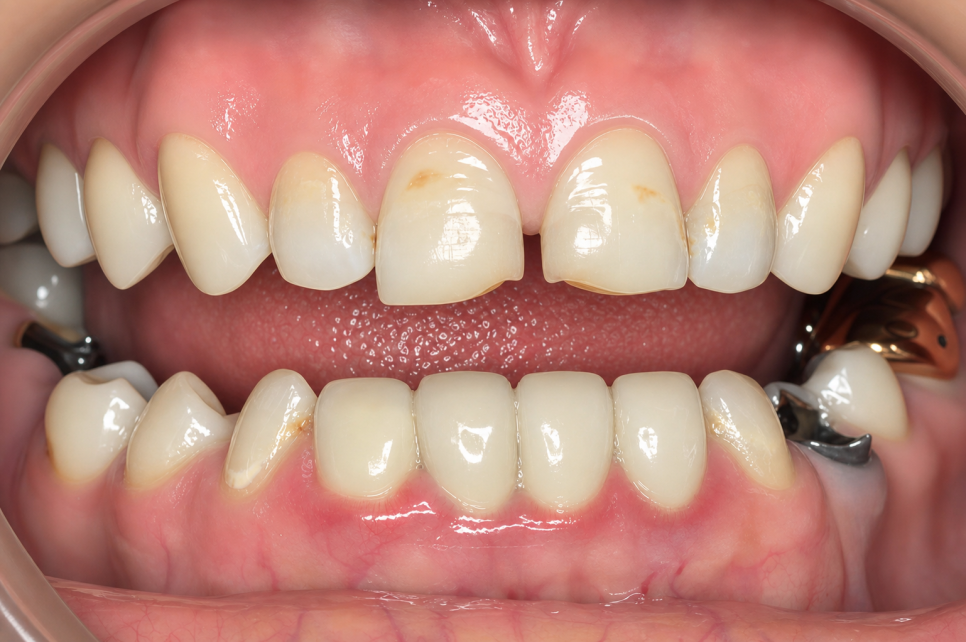
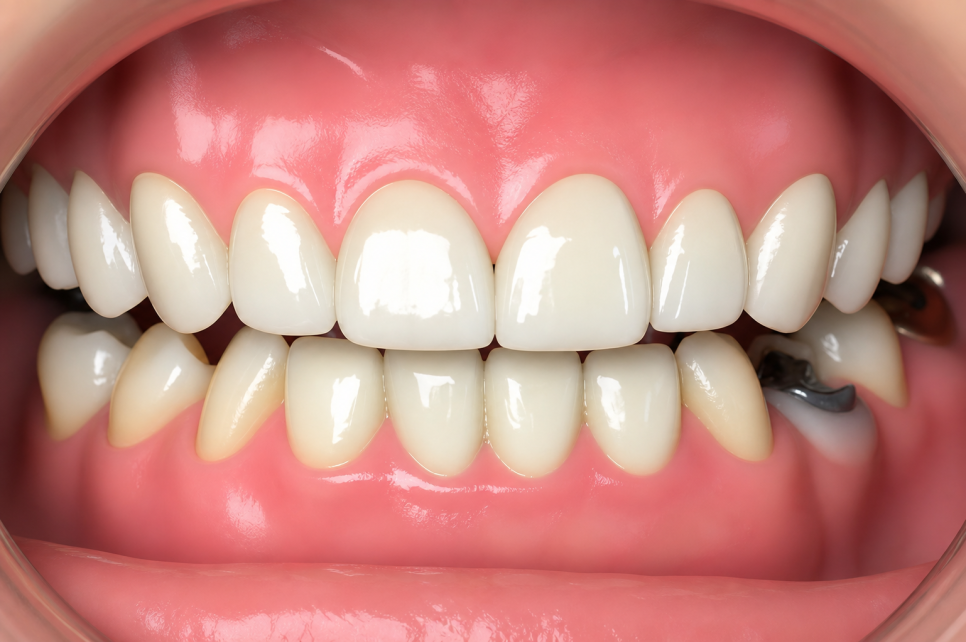
Veneers may be considered in the following cases.
Previous image
Next image
These images were staged to aid understanding.
-
When you want to improve the color of the front teeth
-
When you want to make slight improvements to the shape of the teeth
-
When small gaps between the teeth are bothersome
-
When you want to improve subtle differences in tooth size or length
-
When the teeth are not extensively damaged and preserving the natural teeth is important
-
When you want to cosmetically improve minor alignment issues
However, if the teeth are significantly misaligned,
if the front teeth protrude forward,
or if strong forces are placed on them due to the bite, veneers alone may have limitations.
In such cases, orthodontic treatment, crowns, or other treatment methods may also need to be considered.
When Can All-Ceramic Crowns Be Considered?
All-ceramic crowns may be considered in the following cases.
-
When a tooth is extensively fractured
-
When the tooth structure is weakened because the area affected by decay is extensive
-
When tooth protection is needed after root canal treatment
-
When an existing restoration needs to be replaced
-
When severe discoloration is difficult to conceal with veneers alone
-
When the overall shape of the tooth needs to be reconstructed
Because an all-ceramic crown surrounds the entire tooth,
the amount of tooth reduction may be greater than with veneers.
However, when a tooth is extensively damaged or requires structural protection,
a crown may be more suitable.
Therefore, rather than deciding based only on the amount of reduction,
it is important to consider both how much of the tooth can be preserved
and how stably it can be used over time.
What to Check Before Treatment
Before choosing veneers or all-ceramic crowns, it is advisable to check the following:
-
The extent to which tooth reduction is currently needed
-
Whether enough enamel remains
-
Tooth color and the degree of discoloration
-
Tooth alignment and whether the teeth protrude
-
The bite of the front teeth
-
Whether there is existing decay or a restoration
-
History of root canal treatment
-
The gumline and smile line
-
The possibility of long-term maintenance
Veneers are often described as having a service life of approximately 7–10 years,
but the actual duration may vary depending on an individual's oral condition, bite, care habits, and whether they grind their teeth.
Regular checkups and oral care remain important after treatment.
In Conclusion
Both veneers and all-ceramic crowns can be used to improve the appearance of the front teeth,
but they differ in treatment method, amount of tooth reduction, and criteria for use.
If the teeth are not extensively damaged and you want to improve their color or shape,
veneers may be considered.
In contrast, if the teeth are significantly damaged or require structural protection, such as teeth that have undergone root canal treatment,
all-ceramic crowns may be considered as a more suitable option.
The important thing is not to decide first whether “veneers or crowns are better,”
but to determine the current condition of your teeth.
If you are considering Sinsa Station no-prep veneers,
we recommend discussing your options thoroughly to determine whether veneers or crowns are more suitable for you.
Thank you for reading.
< Smile:D Dental Clinic Location >
< Learn More About Smile:D Dental Clinic >
| 📞 Contact Smile:D Dental Clinic |
|---|
| 0507-1449-2087 |

※ This post was prepared as informational content in compliance with Article 56, Article 57, and other relevant provisions of the Medical Service Act.
It was prepared for the purpose of providing general medical information exempt from medical advertising review,
and does not guarantee the effects of any specific procedure or treatment or replace a medical diagnosis.
The images and materials used in this post are examples intended to aid understanding;
actual diagnosis and treatment are determined through consultation and examination by medical professionals.
Depending on an individual's health condition and the characteristics of any disease,
the treatment method, prognosis, and treatment effects may vary,
and side effects may occur.