If your front teeth are slightly crooked or the spacing between your teeth is uneven,
it is easy to overlook the issue at first without giving it much thought.
However, if it keeps bothering you when you take photos or smile,
and remains unchanged over time, many people begin considering orthodontic treatment.
In particular, if you are working,
the concern that braces with visible wires may show can lead many people to postpone treatment.
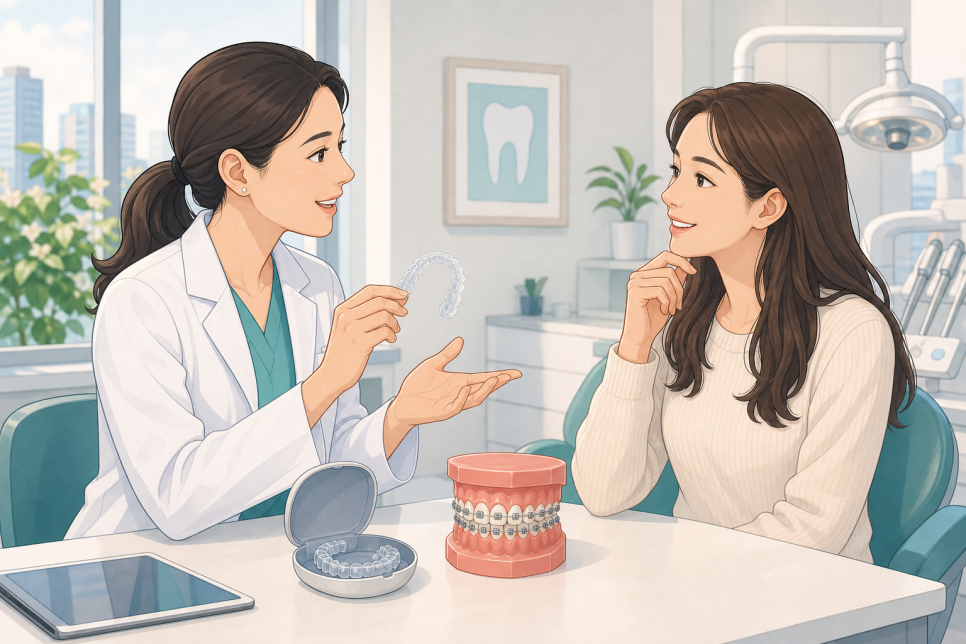
For this reason, interest in Invisalign, which uses clear appliances for orthodontic treatment,
has continued among those looking for a Gangnam Invisalign dental clinic.
Why Do People Consider Invisalign?
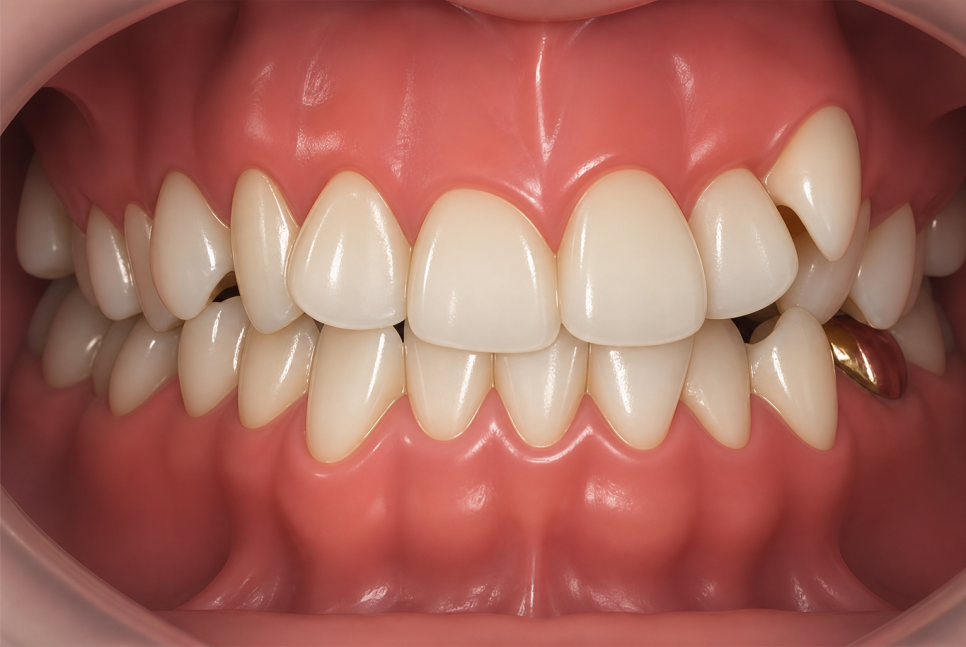
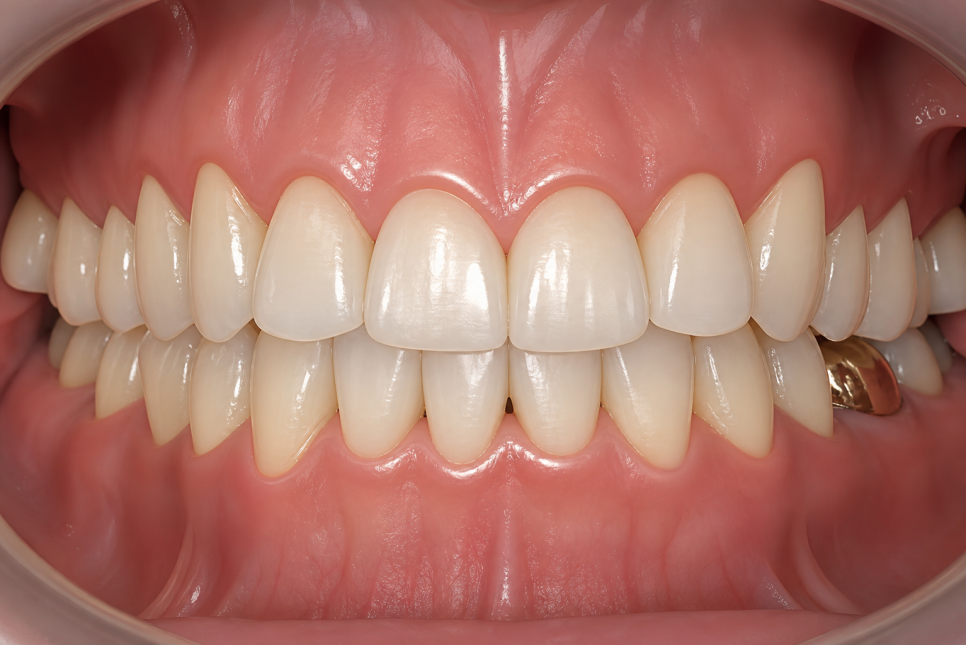
When the front teeth are slightly misaligned or the spaces between the teeth are uneven,
there may be little functional discomfort,
so it can be difficult to immediately recognize the need for orthodontic treatment.
As a result, many people postpone it and only consider a consultation after time has passed.

Especially for people in their 20s and 30s who are socially active,
the concern that braces with visible wires may stand out
can be a major reason for hesitating over orthodontic treatment.

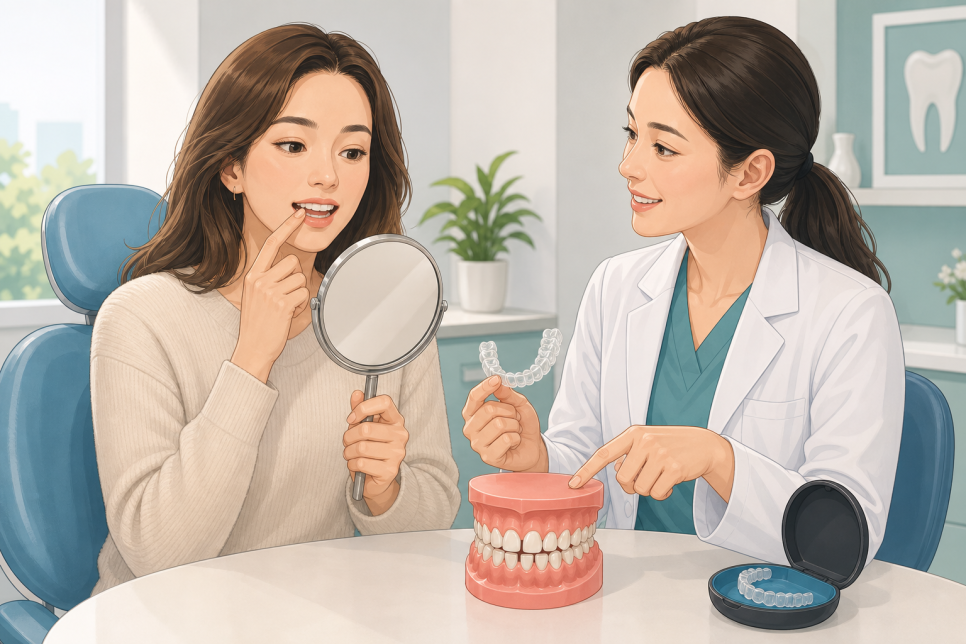
Invisalign guides tooth movement by replacing clear appliances in stages.
Because the appliances are relatively inconspicuous and removable,
it is often mentioned as an option that can reduce aesthetic concerns.
 Previous image
Next image
Previous image
Next image
These images were staged to aid understanding.
Why Is It Difficult to Treat This as a Simple Issue?
If slightly misaligned teeth are left untreated, the issue may gradually cause increasing discomfort
not only aesthetically but also when chewing food or pronouncing words.
In addition, if the spaces between the teeth are uneven,
areas that are difficult to brush may develop,
so the possibility of plaque buildup or gum problems should also be taken into consideration.
Most importantly, the question of “whether orthodontic treatment is possible with clear appliances”
is not simply a matter of choosing the type of appliance.
It is important to understand that the direction of tooth movement and the bite must also be assessed together.
Causes That Need to Be Assessed from a Dental Perspective
When determining whether Invisalign is suitable, several criteria are considered together.
Bite condition
Tooth movement plan
Spaces between the teeth
Condition of the front-tooth alignment
Extent of molar movement
Whether extractions are necessary
Whether malocclusion is present
Even when the symptom is simply described as “crooked front teeth,”
the cause and extent of movement may differ from person to person,
so a detailed assessment is necessary.

Treatment Options May Vary Depending on the Condition
When the front teeth are slightly misaligned,
or in situations involving adjustment of spaces between the teeth, mild crowding, or retreatment,
the possibility of using Invisalign may be reviewed.
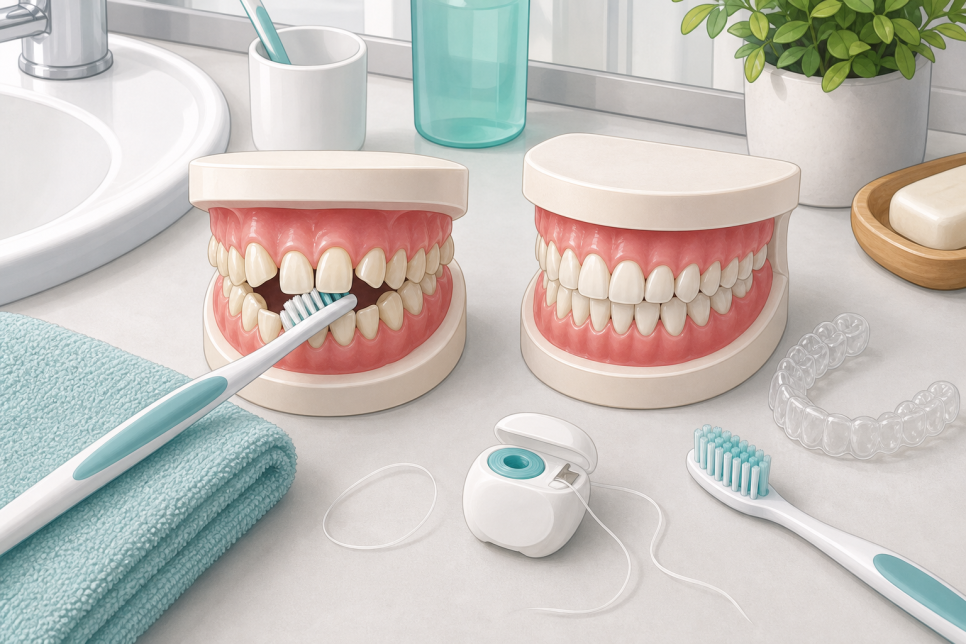
On the other hand, if extractions are necessary or the amount of molar movement is substantial,
or if severe malocclusion is present,
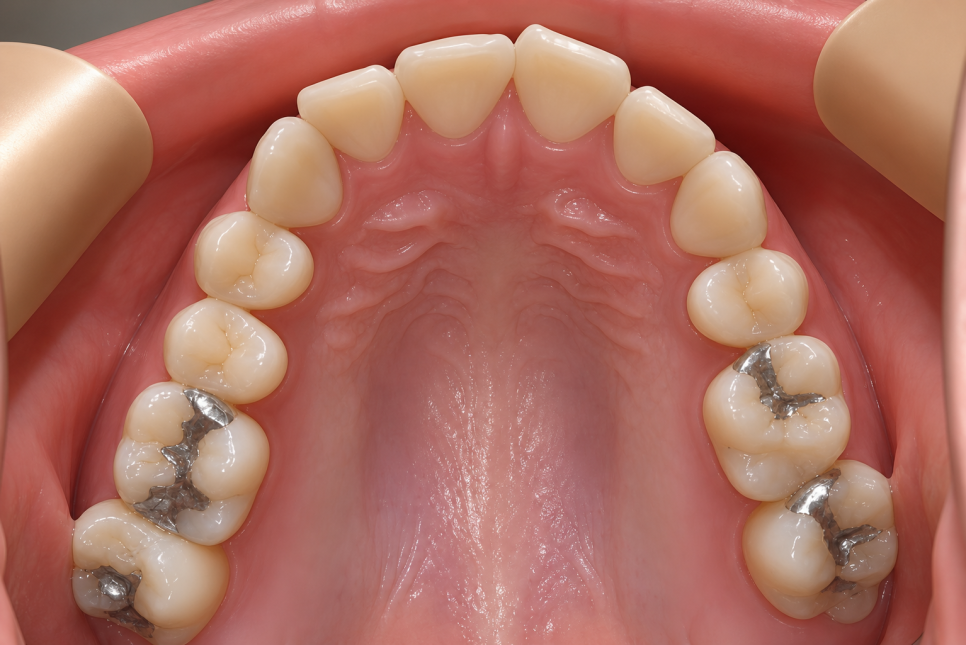
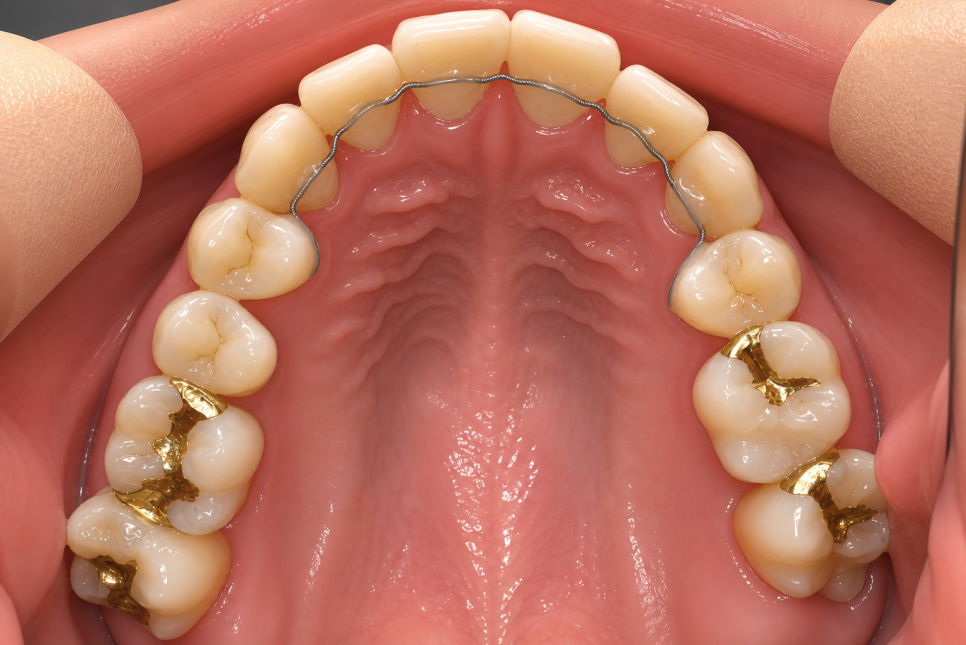
fixed appliances such as traditional braces may be considered a more stable option.

Traditional braces can be applied to a broad range of cases
and allow precise control of tooth movement.
For complex orthodontic treatment or cases involving protrusion or rotation,
they are often mentioned as a relatively stable option when predictable results are desired.
However, it is also important to consider that the appliances are visible and may cause an initial foreign-body sensation.
 Previous image
Next image
Previous image
Next image
These images were staged to aid understanding.
Ultimately, the key point is not which option is “better,”
but that the appropriate approach may vary depending on the condition of the teeth, the difficulty of the orthodontic treatment, and lifestyle patterns.
Points to Check Before Treatment
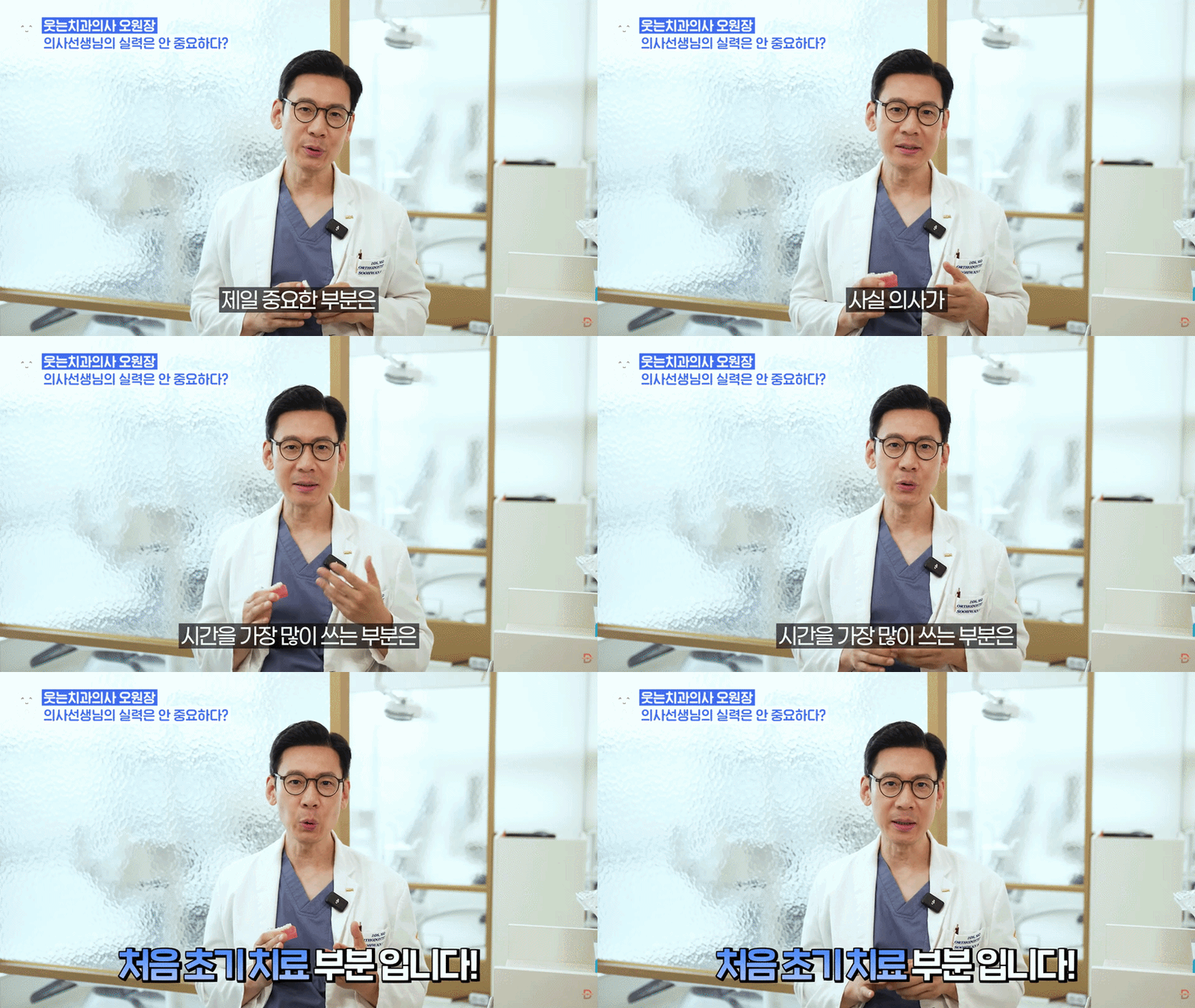
With Invisalign, in particular, wearing time has a significant impact on treatment results.
If the recommended daily wearing time—at least 20 to 22 hours—is not followed,
teeth may not move as planned, which may extend the treatment period.
This is something that must be considered before choosing a treatment method.
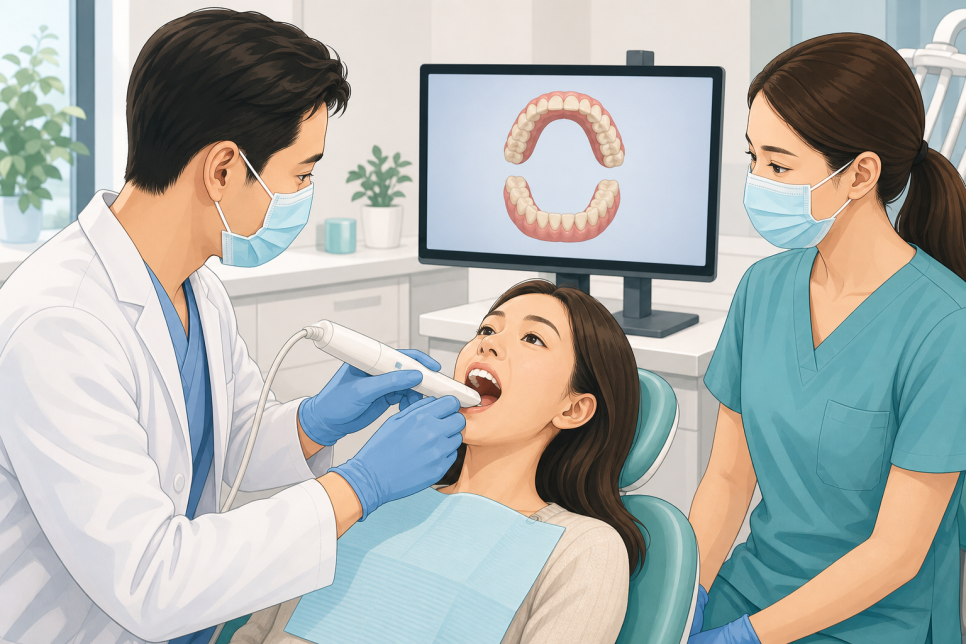
For an accurate assessment, it is necessary to use an oral scan, X-rays, bite analysis, and other evaluations
to check whether Invisalign is suitable and to review the expected treatment period.
Why Delaying Orthodontic Treatment May Increase the Burden
If a condition requiring orthodontic treatment is left untreated for a long time,
the extent of tooth movement may increase,
or stress on the gums and bite may accumulate.
An issue that could have been adjusted relatively simply if identified early
may lead to a more complicated treatment plan as time passes.
Of course, postponing an assessment does not necessarily lead to extensive treatment.
However, accurately understanding your current condition
may help determine the scope and direction of subsequent treatment.

In Closing
Invisalign and traditional braces each have their own advantages and disadvantages.
Which option is more suitable may depend on tooth alignment, the bite, and lifestyle patterns.
If discretion is the most important criterion, Invisalign may be considered.
If a broad range of applications and predictable tooth movement are priorities, traditional braces may be considered.

If you have concerns about your current tooth alignment or orthodontic treatment options,
we recommend confirming the cause through an accurate examination rather than making the decision on your own.
If you are considering a consultation at a Gangnam Invisalign dental clinic,
please make your decision after receiving a thorough consultation before treatment to review your current condition and the available treatment options.
Thank you for reading.
< Smile D Dental Location >
< More from Smile D Dental >
| 📞 Connect with Smile D Dental |
|---|
| 0507-1449-2087 |
※ This post is informational content prepared in compliance with applicable laws and regulations, including Articles 56 and 57 of the Medical Service Act.
It was prepared for the purpose of providing general medical information exempt from medical advertising review,
and does not guarantee the effects of any specific procedure or treatment or substitute for a medical diagnosis.
The images and materials used in this post are examples intended to aid understanding.
Actual diagnosis and treatment are determined through consultation and examination by medical professionals.
Depending on an individual’s health condition and the characteristics of their illness,
the treatment method, prognosis, and treatment effects may vary,
and there is also a possibility that side effects may occur.