Although you went through orthodontic treatment with difficulty when you were younger,
many people feel confused when, over time, their front teeth become crooked again
or their jaw appears to protrude as it did before.
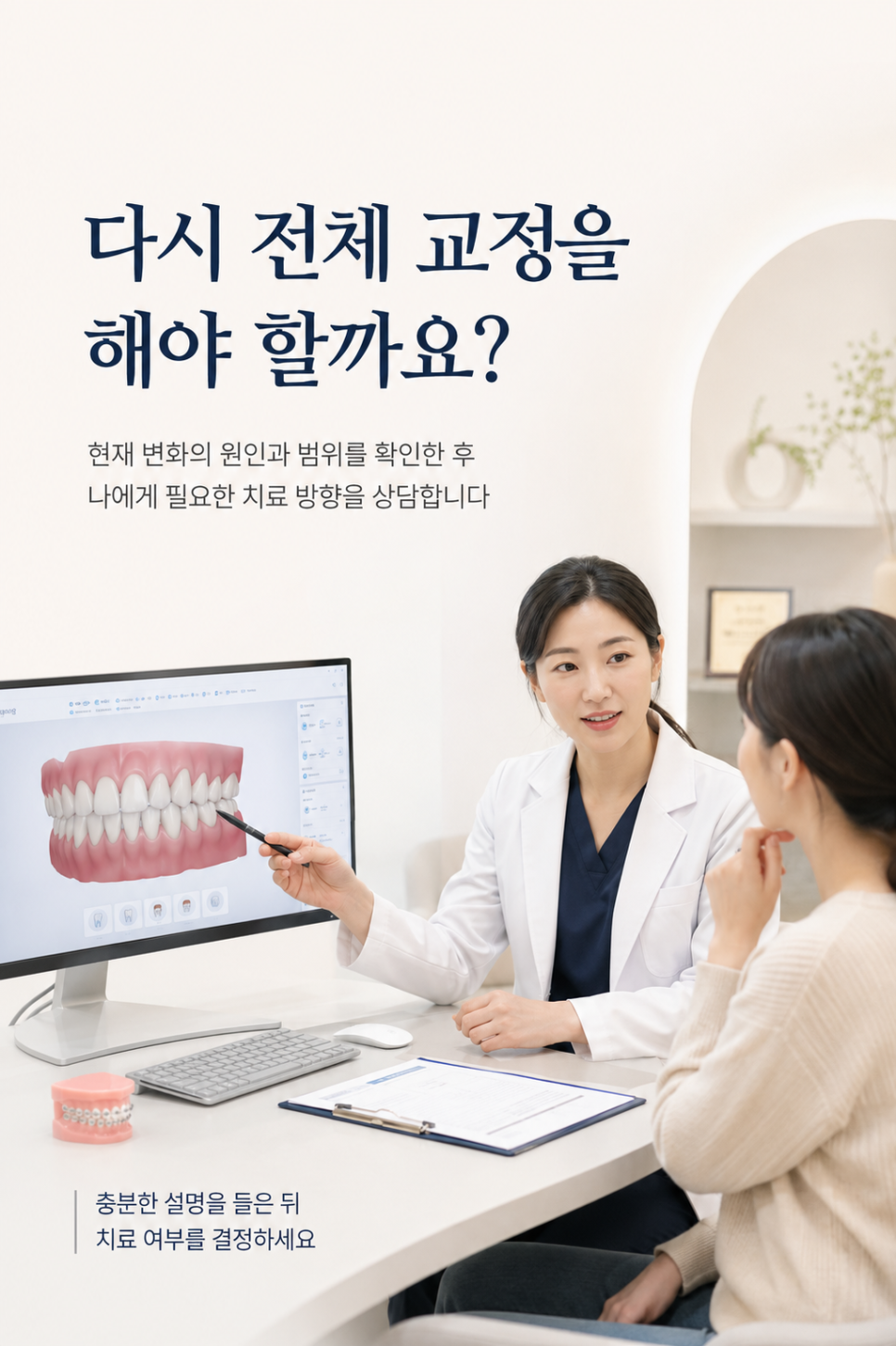
Your teeth were clearly straightened,
but if your previous appearance seems to overlap whenever you look in the mirror,
you may wonder whether it is simply your imagination
or whether your teeth have actually shifted.
Recently, more people have been looking into Gangnam orthodontic specialist dental clinics because of these concerns.
Especially if you were not diligent about wearing your retainer
or experienced skeletal changes during growth,
your bite may gradually change over time.
However, noticing these changes does not necessarily mean
that extensive treatment is required again.
The priority is to accurately assess your current condition.
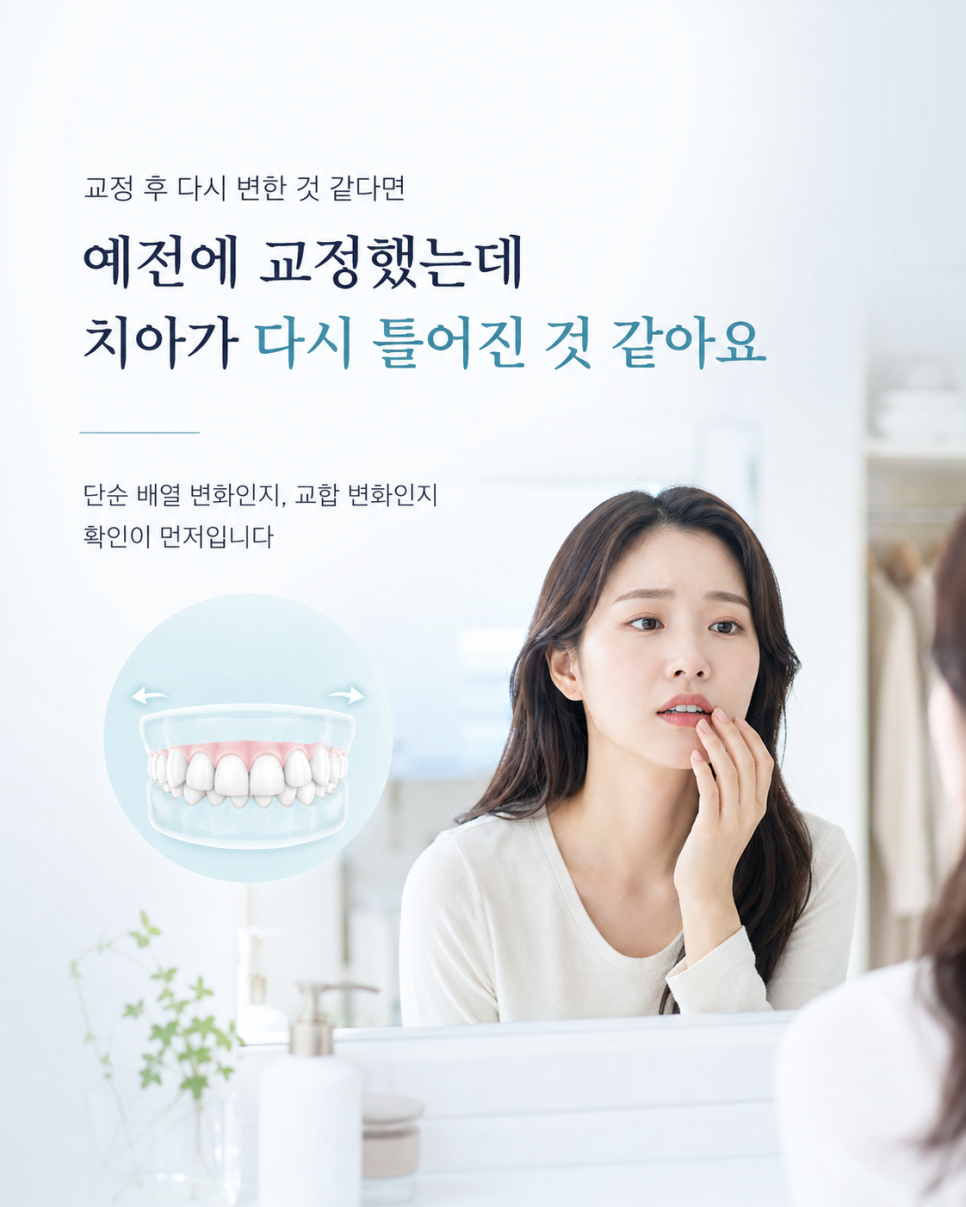
Why You May Feel That Your Teeth Have Become Crooked Again
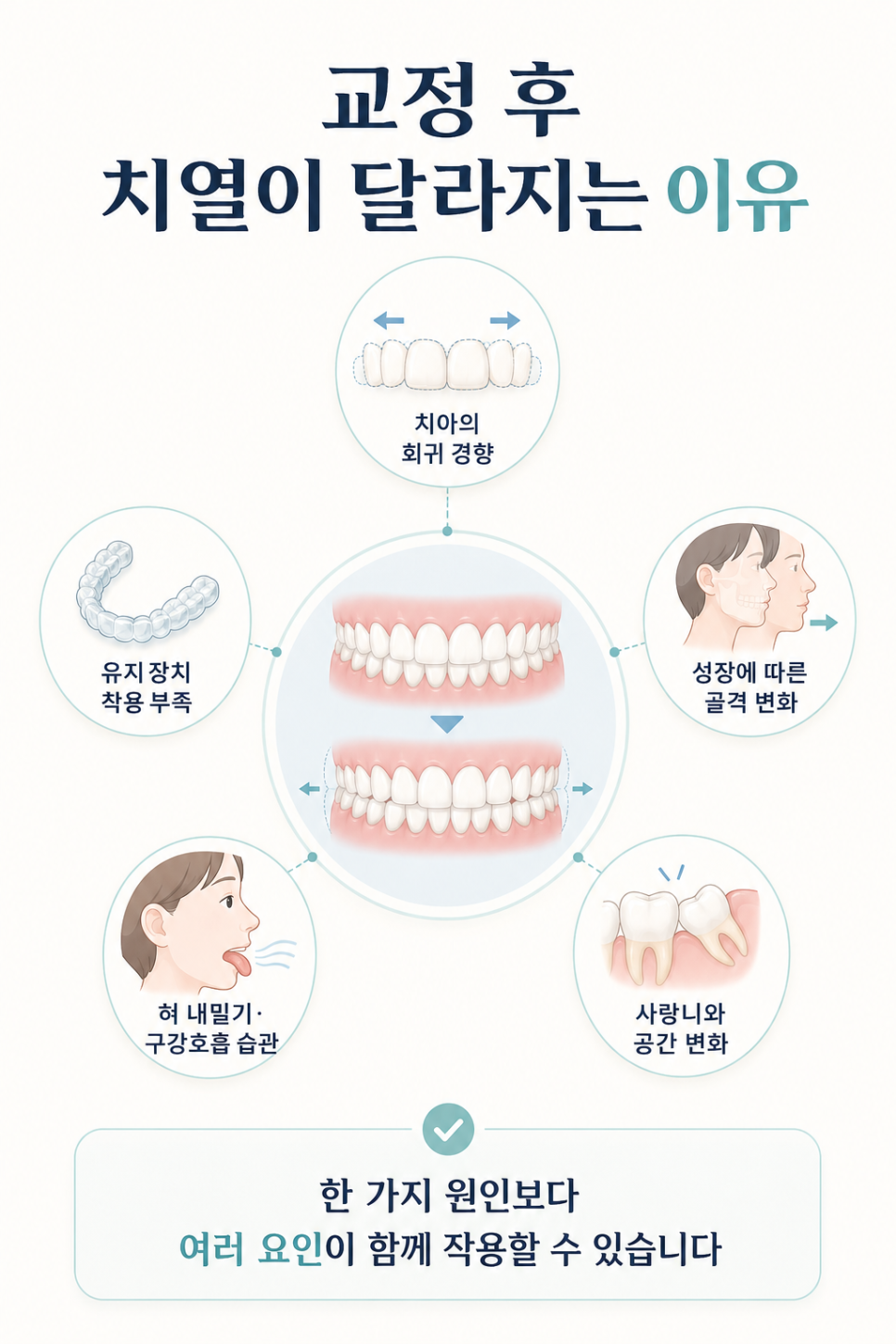
Even after orthodontic treatment,
teeth retain a certain tendency
to move back toward their original positions.
This is known as a relapse tendency.
In particular, when the skeletal structure continues to change during growth,
the difference in the growth rates of the upper and lower jaws
can gradually alter the balance established through the initial orthodontic treatment.
Changes in tooth alignment may also occur
if you did not wear your retainer sufficiently
for the prescribed period
or wore it for irregular lengths of time.
Other factors may also work together, such as wisdom tooth eruption, habitual tongue thrusting, and mouth breathing,
so it is difficult to identify a single cause.
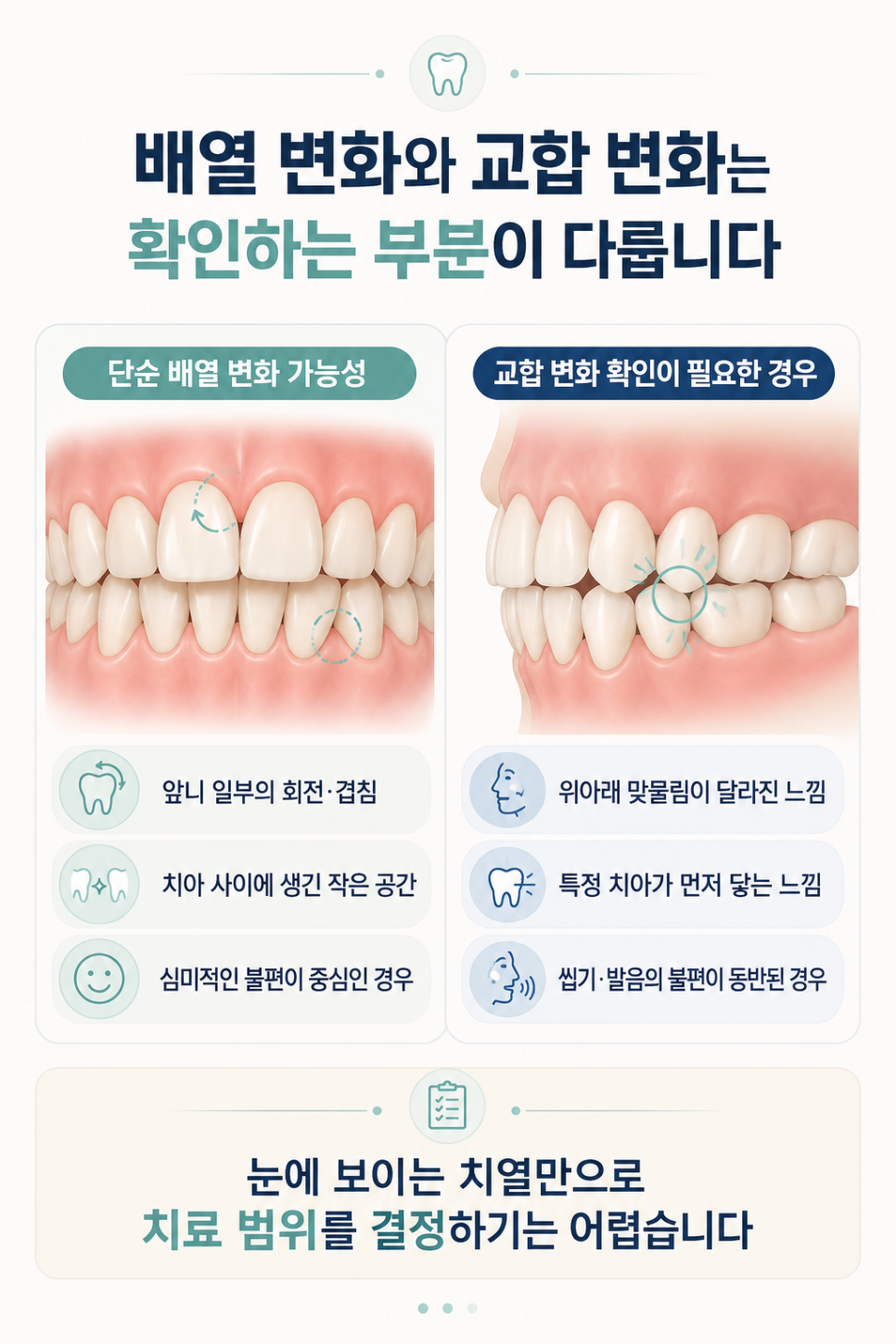
Why It Is Necessary to Determine Whether the Issue Is Simple Alignment or a Bite Problem
The appropriate approach may differ depending on whether
only a few front teeth have become slightly crooked
or the way the upper and lower teeth fit together has changed.
It can be difficult to accurately assess the condition
based only on the visible alignment of the teeth.
In particular, if excessive force is placed on certain teeth when chewing
or it has become uncomfortable to bite through food with the front teeth,
there may be changes not only in the alignment
but also in the bite itself.
In such cases, it may be necessary to examine
not only the teeth but also the jawbone and gum condition.

What Should Be Checked Dentally?
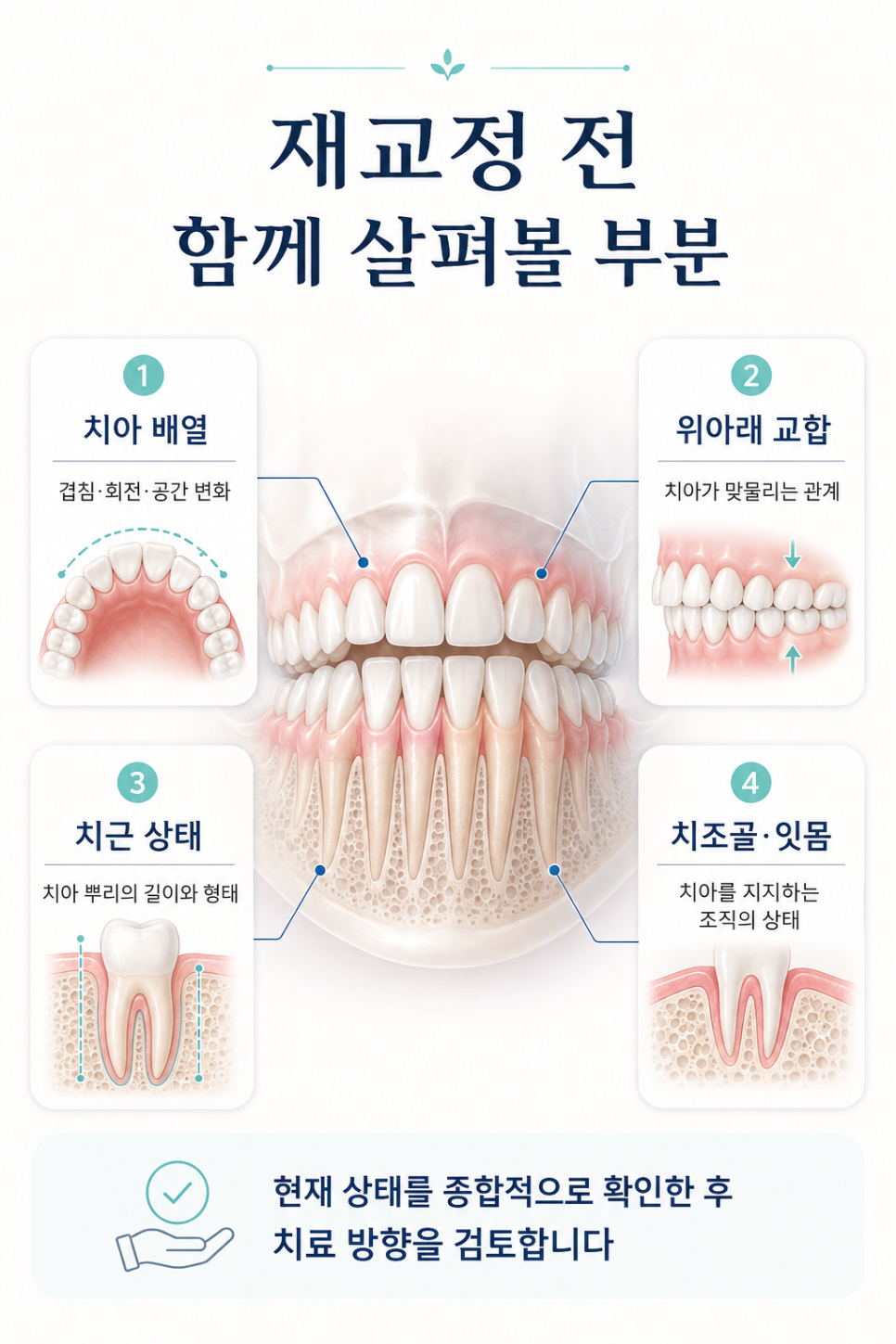
The bite refers to the relationship between the upper and lower teeth as they come together.
Changes in this relationship may affect chewing function,
speech, and appearance.
When considering retreatment, it is important to examine both
the condition of the tooth roots
and the alveolar bone that supports the teeth.
< Smile D Location >
< More About Smile D >
| 📞 Contact Smile D |
|---|
| 0507-1449-2087 |
If you have a history of previous orthodontic treatment,
it is also advisable to check for root resorption
and changes in the height of the alveolar bone.
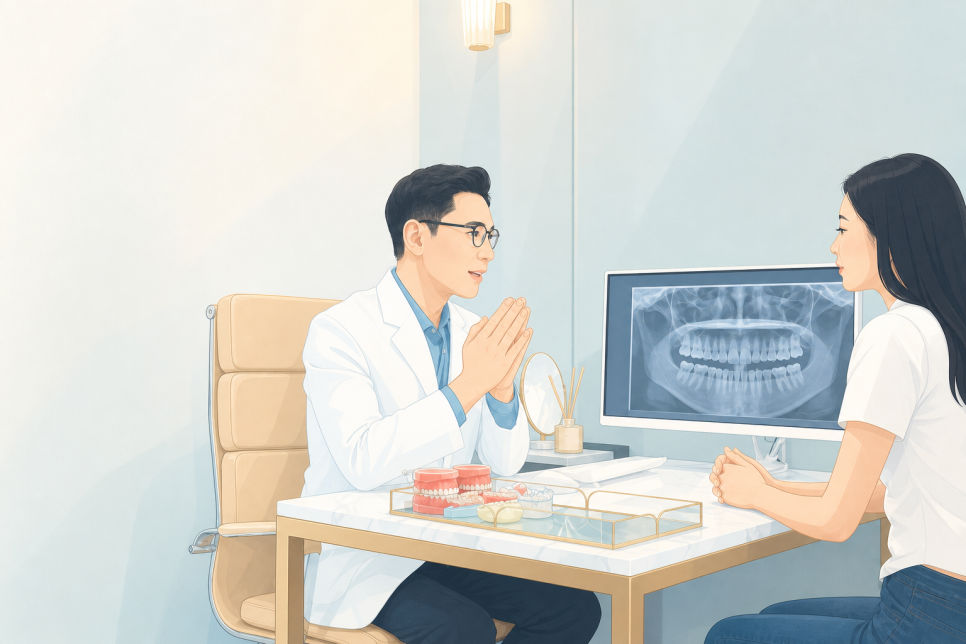
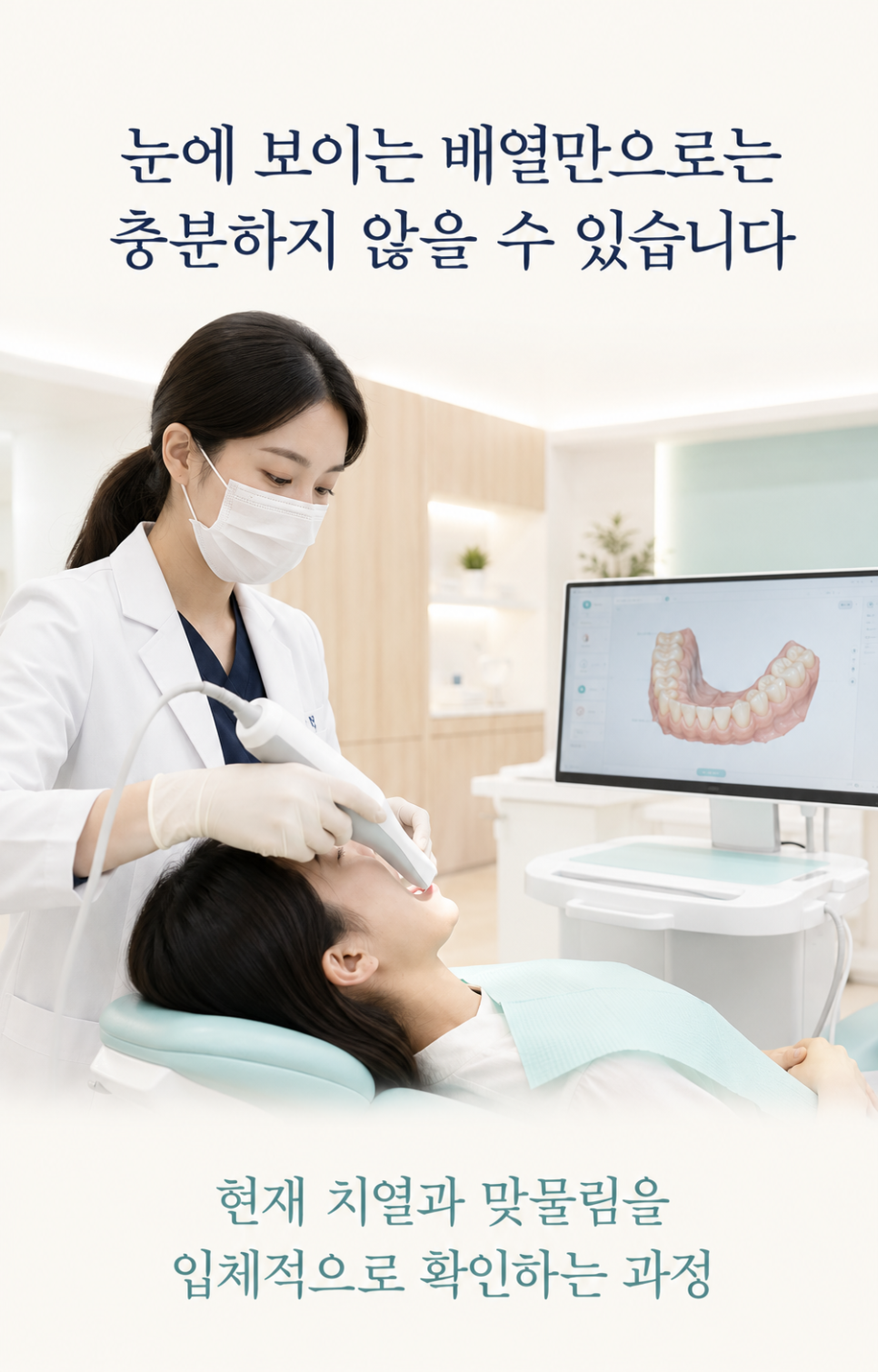
A detailed examination using 3D CT or an intraoral scanner
should be performed first to assess your current condition three-dimensionally.
This can help establish the subsequent treatment direction more clearly.
Treatment Options May Vary Depending on Your Condition
Even when retreatment is necessary,
not everyone receives treatment in the same way.
If only the alignment of a few front teeth needs to be refined,
relatively simple partial orthodontic treatment may be considered.
On the other hand, if skeletal changes are also present,
comprehensive orthodontic treatment or special appliances may be necessary.
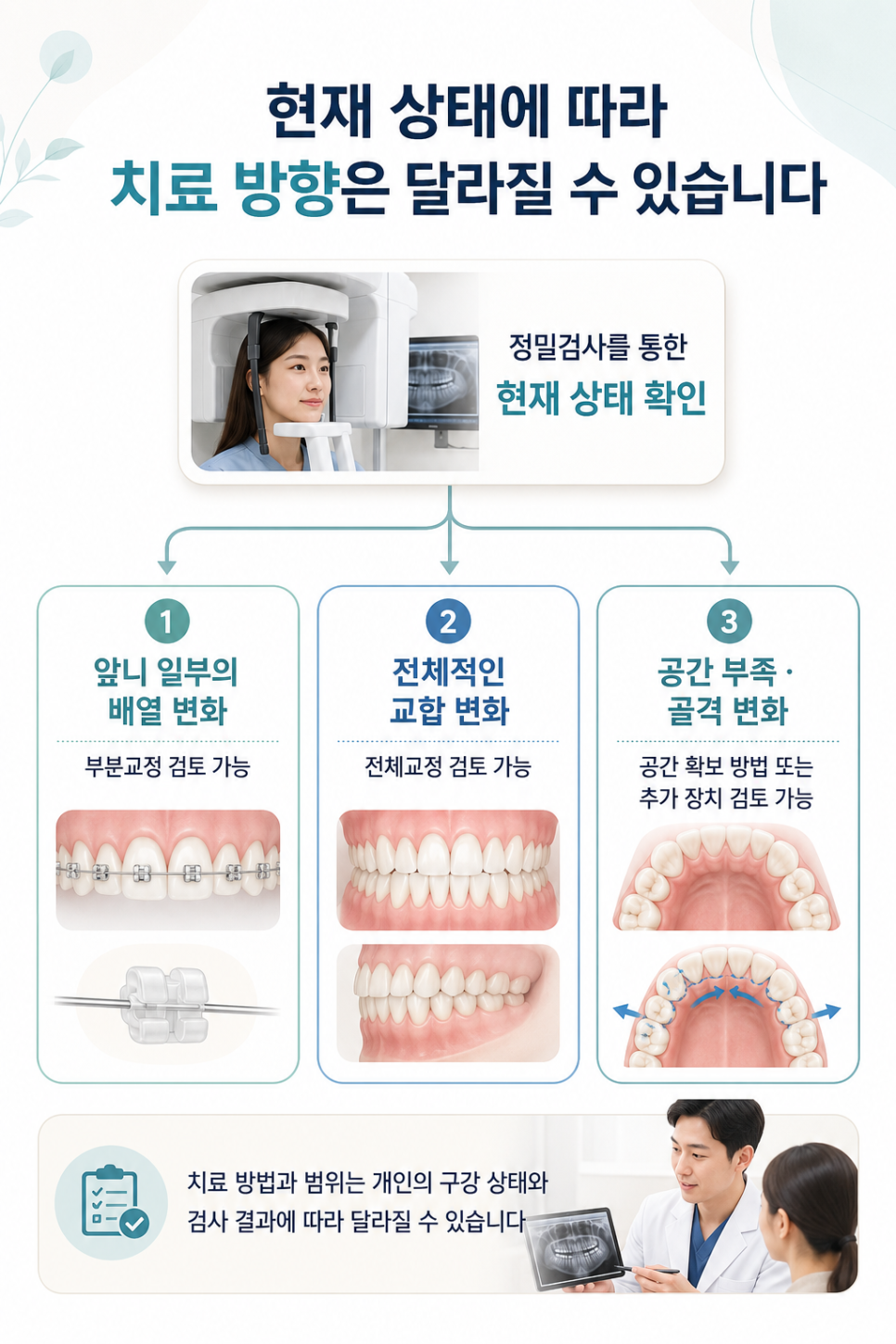
The need for tooth extraction may also vary from person to person.
If the teeth have overlapped again because there is insufficient space,
creating space through extraction may be considered.
However, if space can be created through interproximal reduction
or expansion of the dental arch,
non-extraction treatment may also be considered.
This direction may also change depending on the results of a detailed examination.
Why Delaying an Examination May Increase the Burden
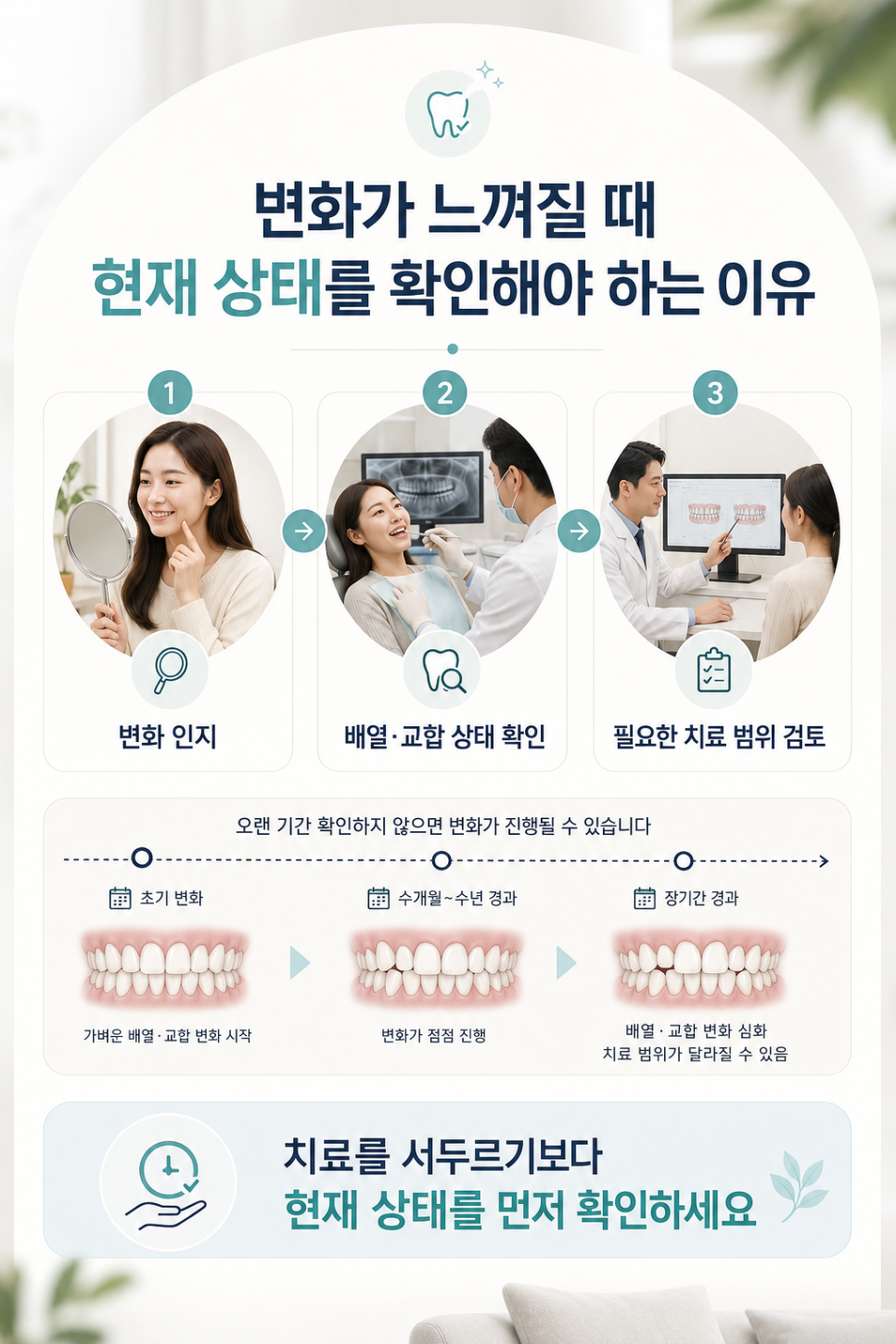
If the teeth are examined during the early stage, when they are shifting little by little,
it may be possible to finish with relatively simple adjustments.
However, if the changes are left untreated over time,
spaces between the teeth and the bite relationship may become more significantly misaligned,
potentially expanding the scope of treatment.
In particular, retreatment often requires more careful consideration
of the forces applied to the teeth and gums
than initial orthodontic treatment.
As the condition progresses,
the treatment period and process may become more complicated.
Therefore, having the changes checked in advance
when you first notice them
may help with establishing a subsequent treatment plan.
In Closing
If your teeth feel as though they are moving again after orthodontic treatment,
we recommend having your current bite and the cause assessed through a detailed examination
rather than trying to determine the cause on your own.
After receiving a thorough consultation at a Gangnam orthodontic specialist dental clinic,
it is advisable to make a decision after confirming the treatment direction suited to your condition.

※ This post is informational content prepared in compliance with applicable laws and regulations, including Articles 56 and 57 of the Medical Service Act.
It was prepared to provide general medical information exempt from review of medical advertising,
and does not guarantee the effects of any particular procedure or replace a diagnosis.
The images and materials used in this post are examples intended to aid understanding;
actual diagnoses are determined through consultation and examination by medical professionals.
Depending on an individual's health condition and the characteristics of their condition,
the treatment method, prognosis, and effects may vary,
and there is also a possibility of side effects.