Have you ever felt self-conscious because the gap between your front teeth
seemed especially noticeable every time you looked in the mirror?
At first, it may be only a slight gap,
so it is easy to dismiss it as insignificant.
However, if it remains unchanged over time, you may feel as though your speech is slightly slurred,
or find yourself covering your mouth when taking photos.
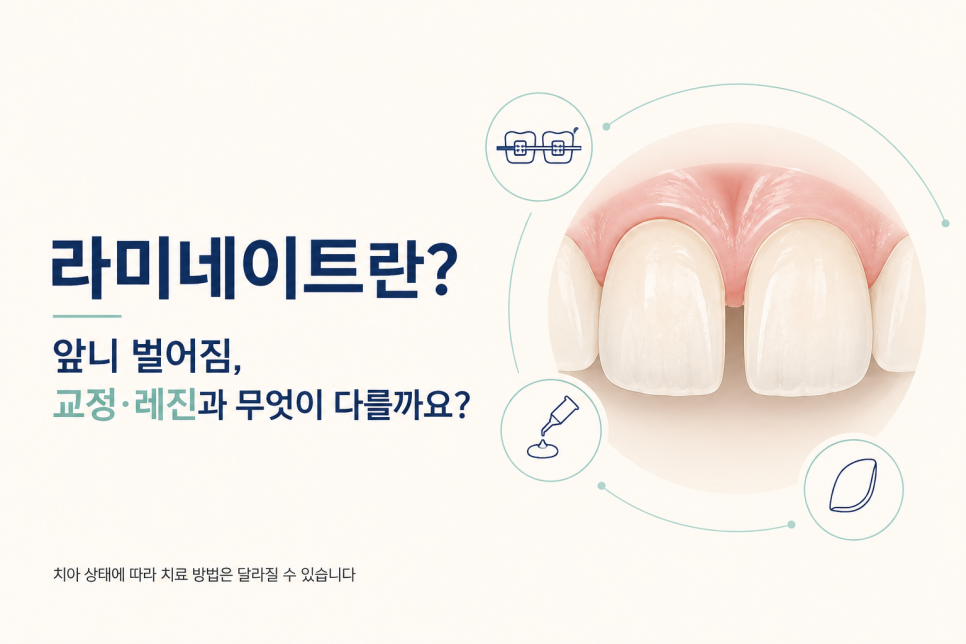
Even so, many people hesitate to begin orthodontic treatment right away
because of concerns about visible appliances and the length of treatment.
A procedure often mentioned in situations like this is veneers.
Today, we will go over what veneers are,
as well as how they differ from orthodontics and resin treatment.

First, let us look at what veneers are
Veneers involve lightly preparing the front surface of a tooth
and attaching a thin ceramic layer similar in color to the tooth
to improve its shape and color.
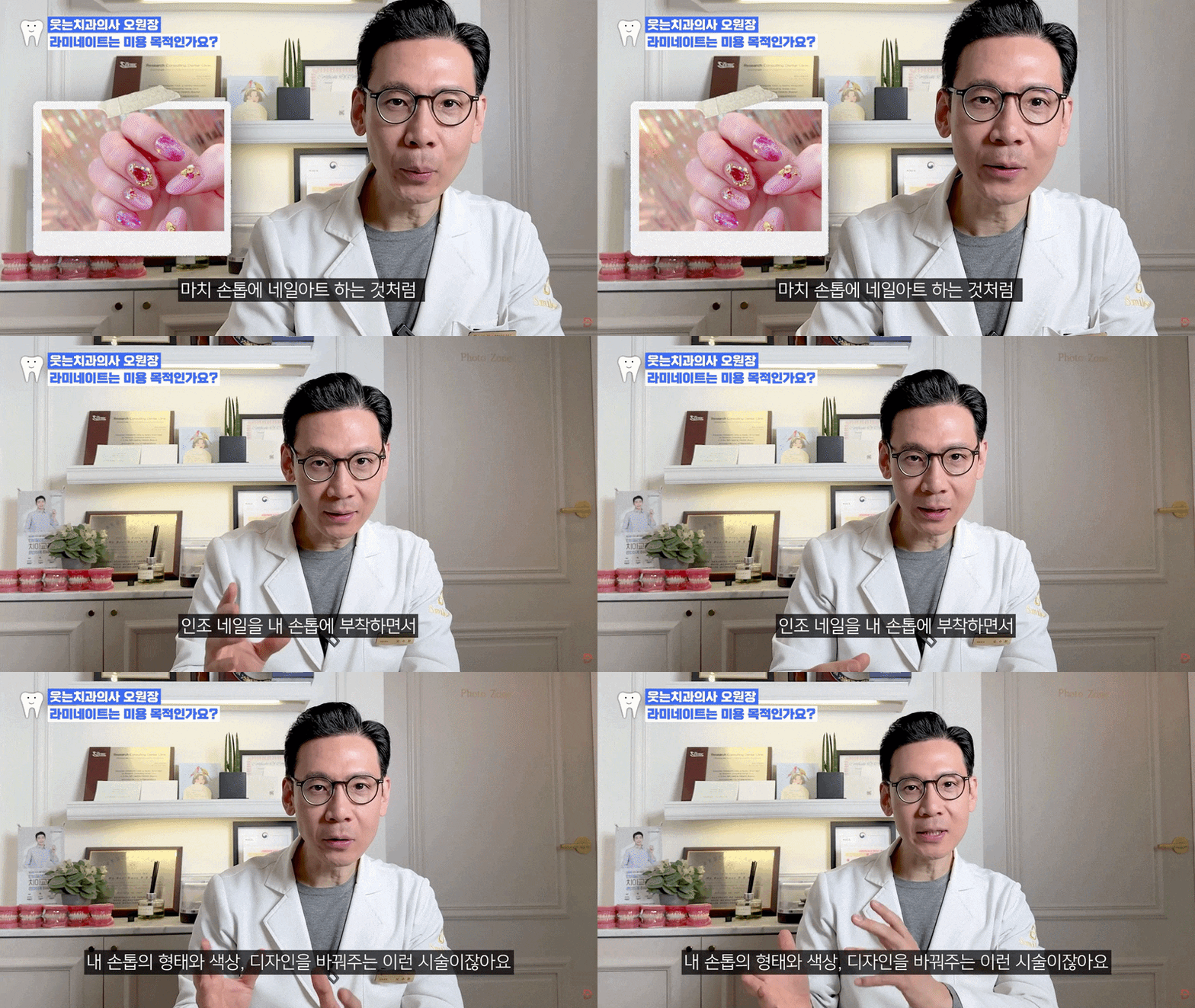
It may be easy to understand if you imagine lightly shaping the surface of a fingernail
and placing an artificial nail over it.
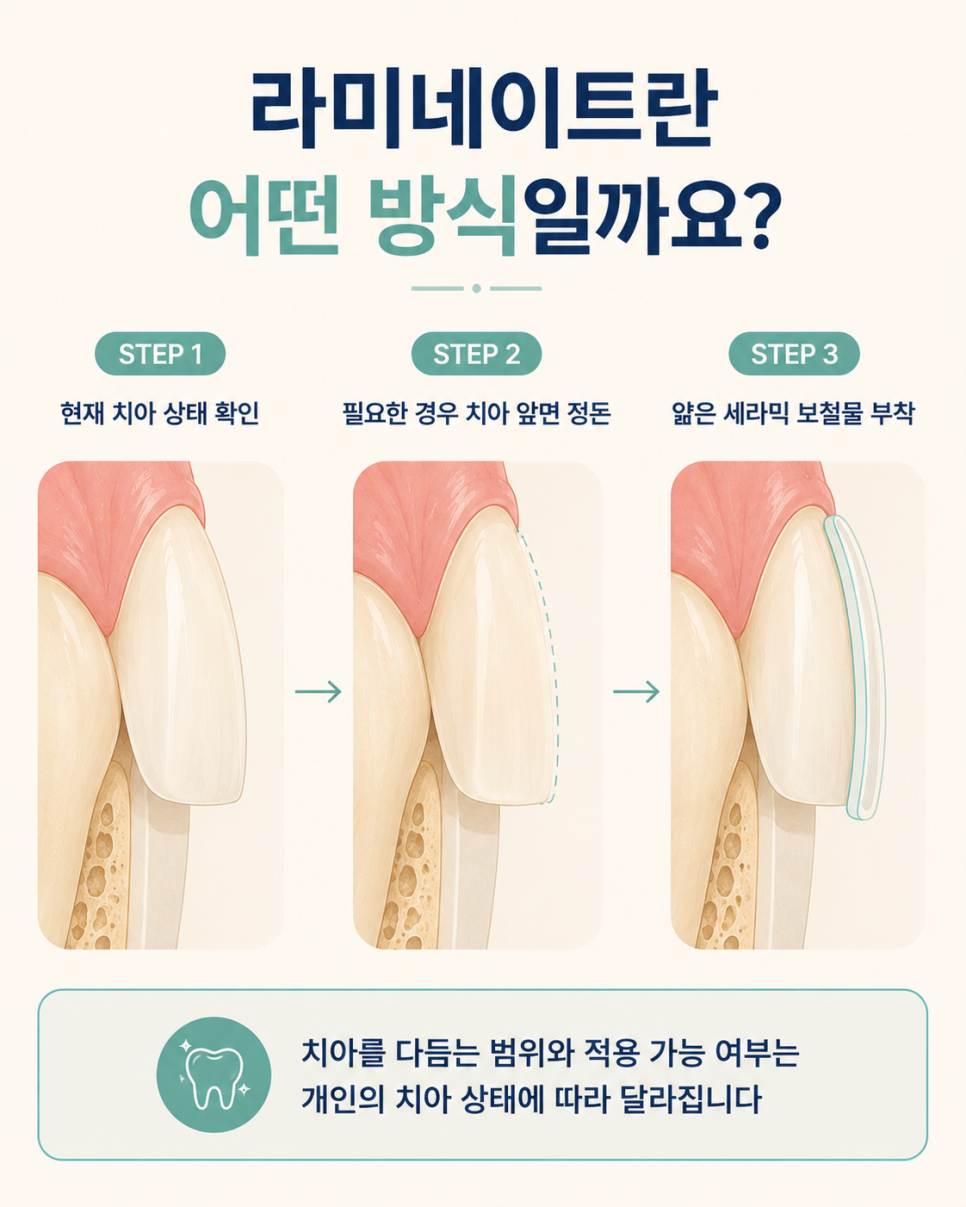
Rather than filing down and covering the entire tooth,
this method mainly involves lightly preparing the visible front surface.
As a result, the color, shape, and size of the teeth,
as well as minor spacing between them, can be addressed together.
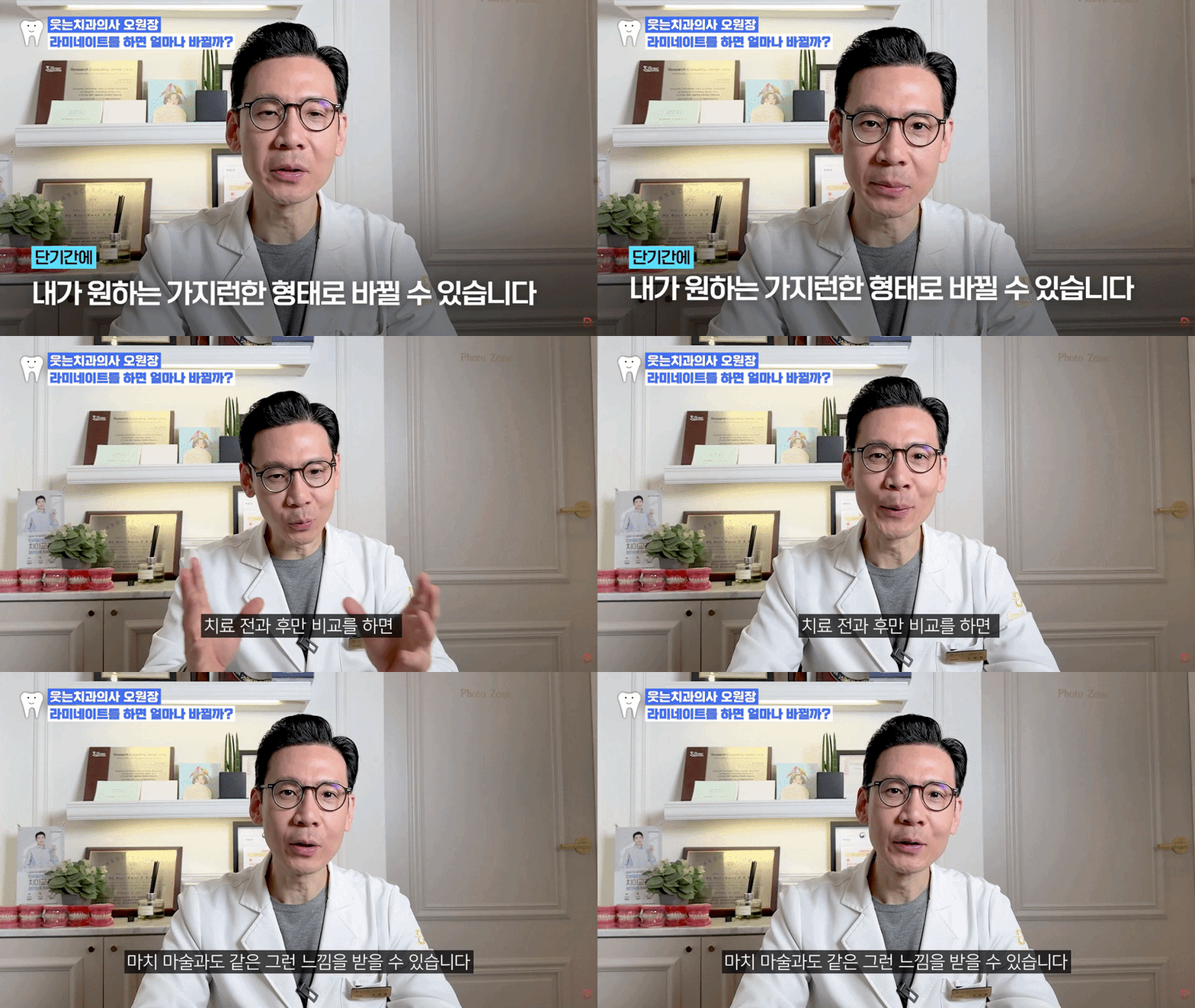
Recently, procedures that involve little to no preparation of the teeth
or minimize the amount of preparation are also being performed.
However, whether this is suitable can vary depending on the condition of the teeth,
so confirmation through a consultation is necessary.

Why Gaps Between the Front Teeth Can Be More Than a Simple Concern
Gaps between the front teeth are often viewed as merely a cosmetic issue,
but in some cases they can also lead to functional discomfort.
-
Speech may feel unclear, or you may become self-conscious during conversations.
-
Food may frequently become trapped, causing repeated irritation to the gums.
-
You may feel self-conscious when smiling and become less expressive or withdrawn during conversations.
If these discomforts continue to occur,
it is advisable to identify the cause through an accurate examination rather than making a judgment on your own.
< Smile D Location >
< Smile D More Information >
| 📞 Contact Smile D |
|---|
| 0507-1449-2087 |
Causes That Should Be Checked Dentally
Even when they appear to be the same type of “gap,” the cause can differ from person to person.

-
A gap may occur naturally when the teeth are unusually small.
-
It may be related to the alignment of the teeth or the bite—the way the upper and lower teeth come together.
-
The edges of the teeth may be slightly worn or irregular.
-
It may be related to the condition of the gums or the position of the tooth roots.
Because the approach may vary depending on the cause,
it is important to confirm the condition through a detailed examination
rather than judging it based only on appearance.
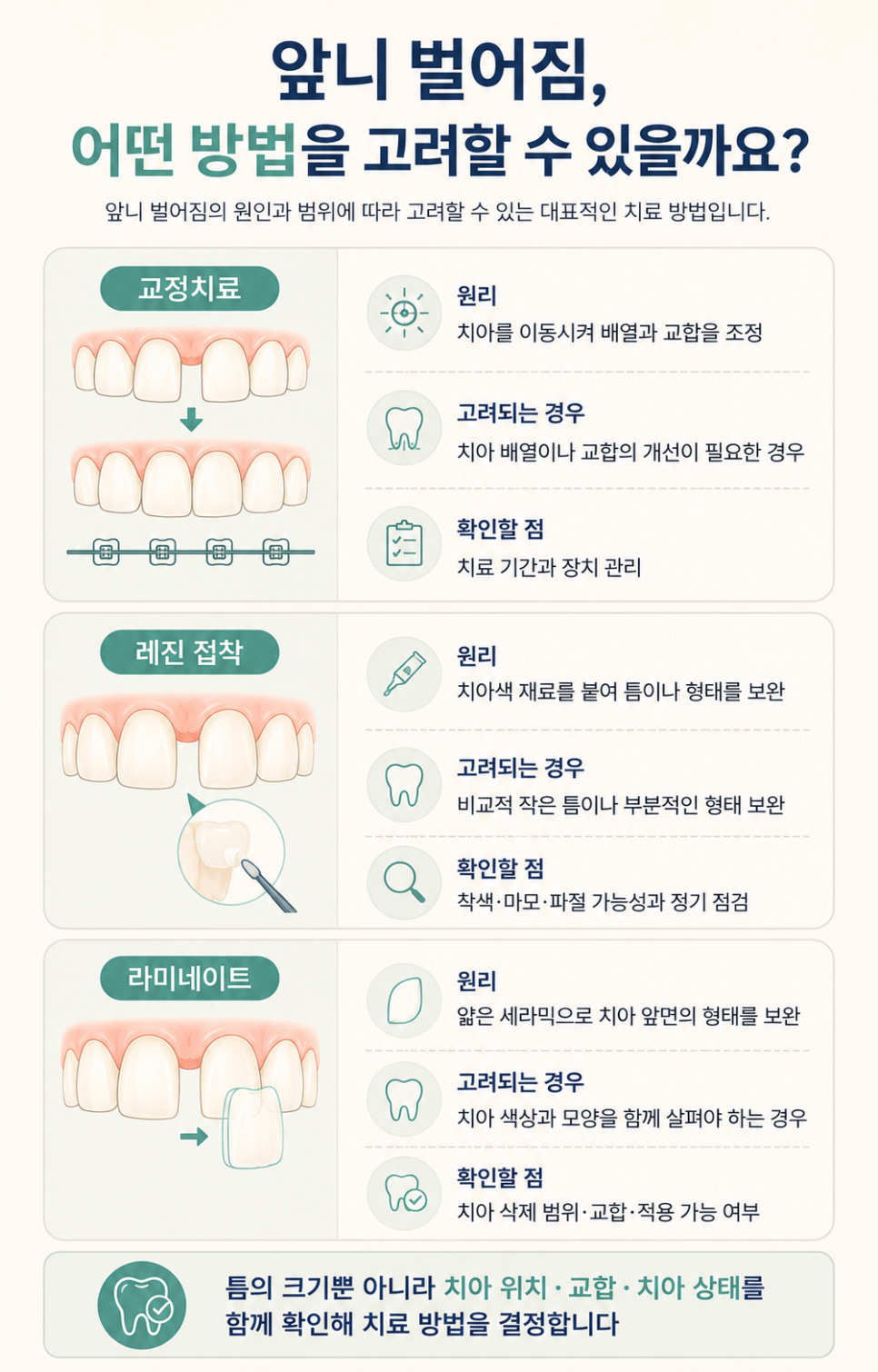
Treatment Options Vary by Condition: Comparing Orthodontics, Resin, and Veneers
There is no single method for improving gaps between the teeth,
and several options may be considered depending on the condition and the desired outcome.
| Orthodontic treatment | Definition: A method of creating naturally aligned teeth by moving them Characteristics: Can also be considered when there is a skeletal cause Precaution: Appliances must be maintained for a certain period |
|---|
| Resin treatment | Definition: A method of filling gaps between the teeth in a relatively short time Characteristics: Treatment can be completed quickly Precautions: Discoloration and wear may occur over time, requiring periodic checkups |
| Veneers | Definition: A method of attaching a thin ceramic layer after minimally preparing the front surface of the tooth Characteristics: The color and shape of the teeth can be improved at the same time Precaution: Depending on whether the issue is dental or skeletal, the degree of tooth damage, and the alignment, it is necessary to choose the appropriate approach between “veneers” and “crowns” |
The appropriate treatment approach may vary depending on whether the issue is dental or skeletal,
as well as on the condition of the teeth,
so consultation is necessary for confirmation.

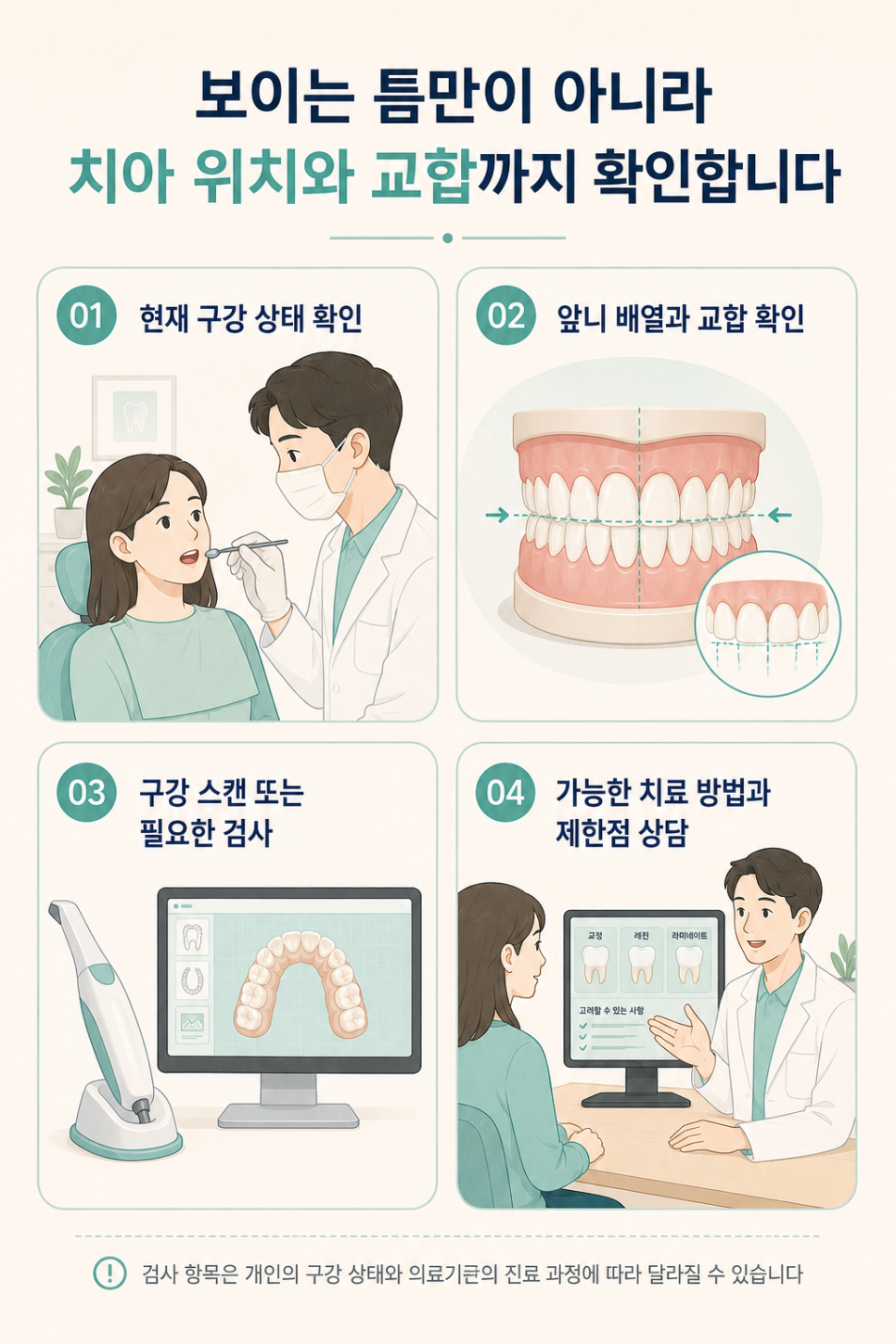
Points to Check Before Veneer Treatment
If you are considering veneers,
it may be helpful to check the following points in advance.
Amount and extent of tooth preparation:
The amount of preparation may vary depending on the condition.
Tooth discoloration or degree of wear:
In some cases, veneers may be considered when improvement through whitening alone is difficult.
Degree of protrusion or misalignment:
If the teeth are severely protruding or significantly misaligned, a different approach may be necessary.
Bite:
The treatment plan may vary depending on how the upper and lower teeth come together.
These points can be checked in advance through models or digital scans,
so we recommend discussing them thoroughly during the consultation before treatment.
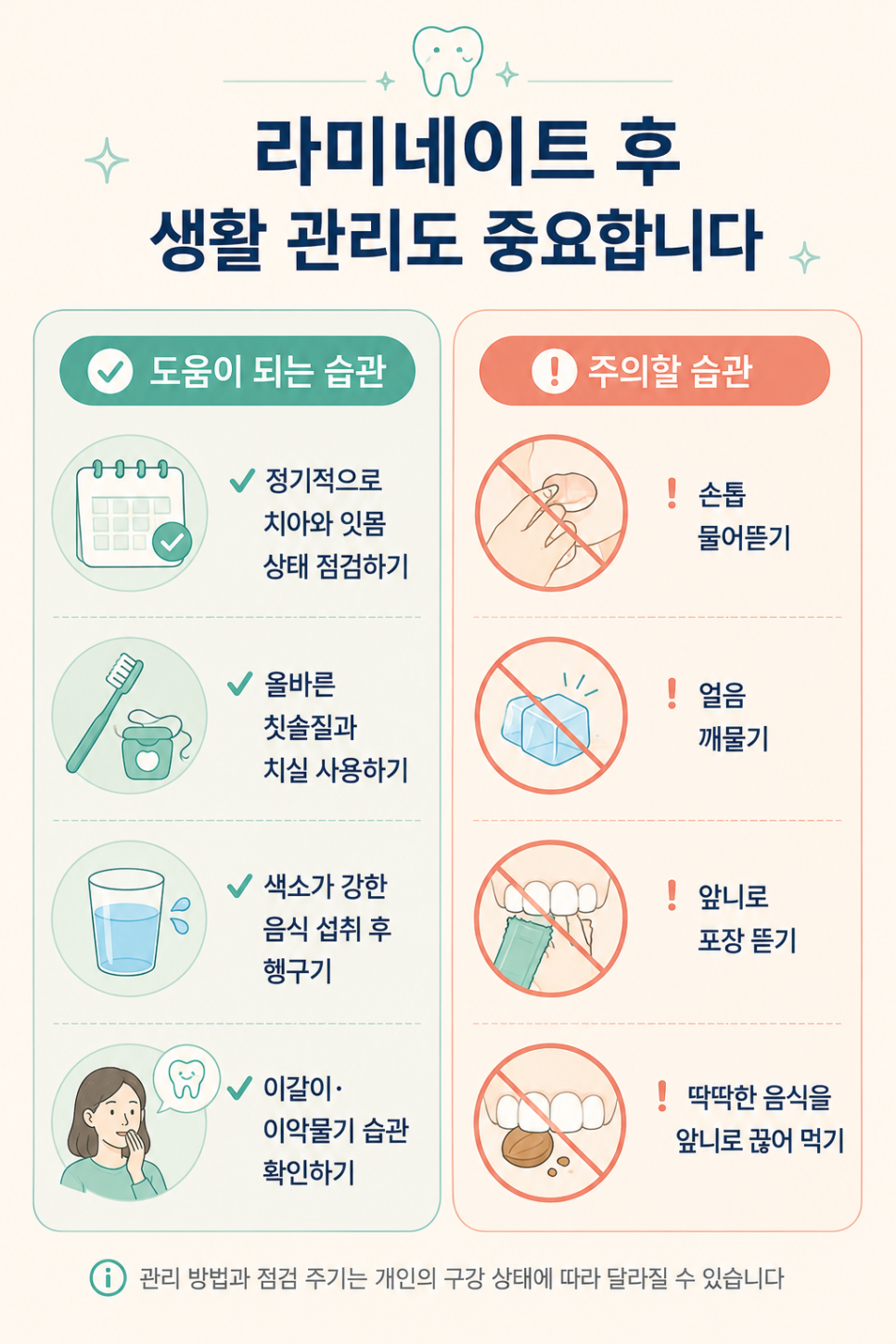
Post-Treatment Care and When to Consider Retreatment
Even after receiving veneers,
how long they last may vary depending on care and maintenance.
Breaking hard foods with the front teeth or biting your nails
may increase the risk of fracture, so caution is needed.
After consuming strongly pigmented foods and beverages such as coffee, black tea, or red wine,
rinsing your mouth or brushing your teeth may help prevent discoloration.
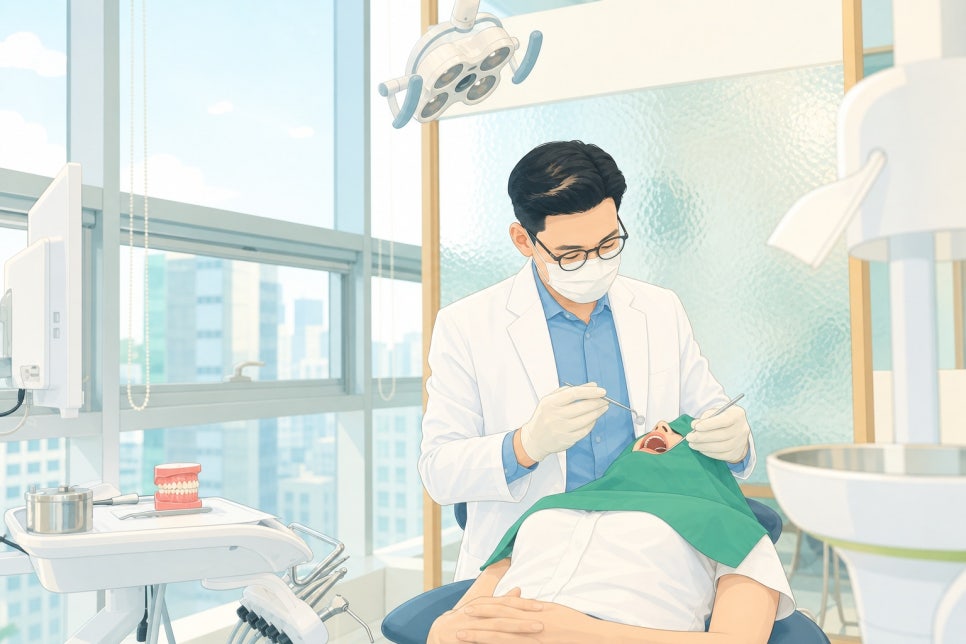
If part of the restoration becomes damaged over time,
if discoloration appears where it meets the gums,
or if the gums gradually recede
and the margin becomes visible,
it may be time to check whether retreatment is needed.
Regular checkups can help ensure that the appropriate time for evaluation is not missed.
In Closing...
Veneers are not simply a procedure for making teeth whiter.
They are one option that may improve the color, shape, and alignment of the teeth together.
However, the method that is right for you may vary depending on the condition and cause of the issue,
so we recommend confirming this through an accurate examination rather than making a decision on your own.
If gaps between your front teeth or the shape of your teeth continue to concern you,
please make a decision after thoroughly discussing your current condition and possible treatment options before treatment begins.
Thank you for reading today.

※ This post is informational content prepared in compliance with relevant laws and regulations, including Articles 56 and 57 of the Medical Service Act.
It was prepared for the purpose of providing general medical information exempt from medical advertising review,
and does not guarantee the effects of any specific procedure or treatment or replace a medical diagnosis.
The images and materials used in this post are examples intended to aid understanding.
Actual diagnosis and treatment are determined through consultation and examination by medical professionals.
Depending on an individual's health status and the characteristics of their condition,
the treatment method, prognosis, and treatment results may vary,
and there is also a possibility that side effects may occur.