Once orthodontic appliances are attached, one question often comes to mind first.
Can I eat this?
At first, it is easy to think that this is simply something you only need to be careful about for a few days.
However, how you manage your diet during orthodontic treatment
can affect the condition of the appliances and the progress of treatment,
so there are more aspects to pay attention to than you might expect.
Many people especially worry that they may no longer be able to eat foods they enjoy,
such as curry or steak,
or that an appliance may suddenly come loose.
However, simply avoiding everything is not the only answer.
If you learn how to choose foods according to the timing and condition of your treatment,
you can get through the orthodontic period much more comfortably.

The reason this can be difficult to dismiss as mere discomfort is that
when orthodontic appliances are attached or the wire is adjusted regularly,
the teeth begin to move as they become slightly loose.
During this period, foods that would normally feel perfectly fine
may feel unusually sensitive.
If you dismiss this tenderness by simply thinking, “It will probably be fine in a few days,”
and eat something excessively hard or chewy,
there may be cases where the appliance becomes damaged.
If an appliance comes loose or becomes deformed, you will need to visit the dentist again,
and in some cases, this may also affect the duration of orthodontic treatment.
For this reason, it is a good idea to review your eating habits from the beginning.
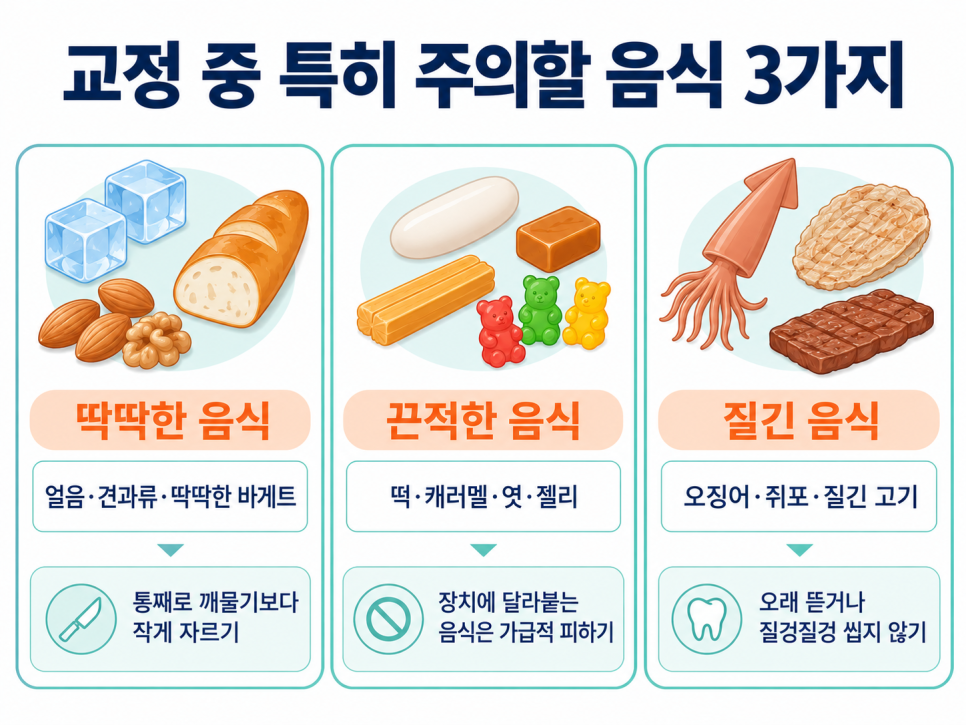
There are three main reasons why you should be cautious about eating during orthodontic treatment.
First are hard foods.
Ice, nuts, and hard baguettes, for example,
may cause brackets to come loose or appliances to become deformed.
Next are sticky foods.
Foods such as rice cakes, caramel, taffy, and jelly
can stick between the appliances and often be difficult to remove with brushing alone.
They may also pull on the appliance and cause it to come loose.
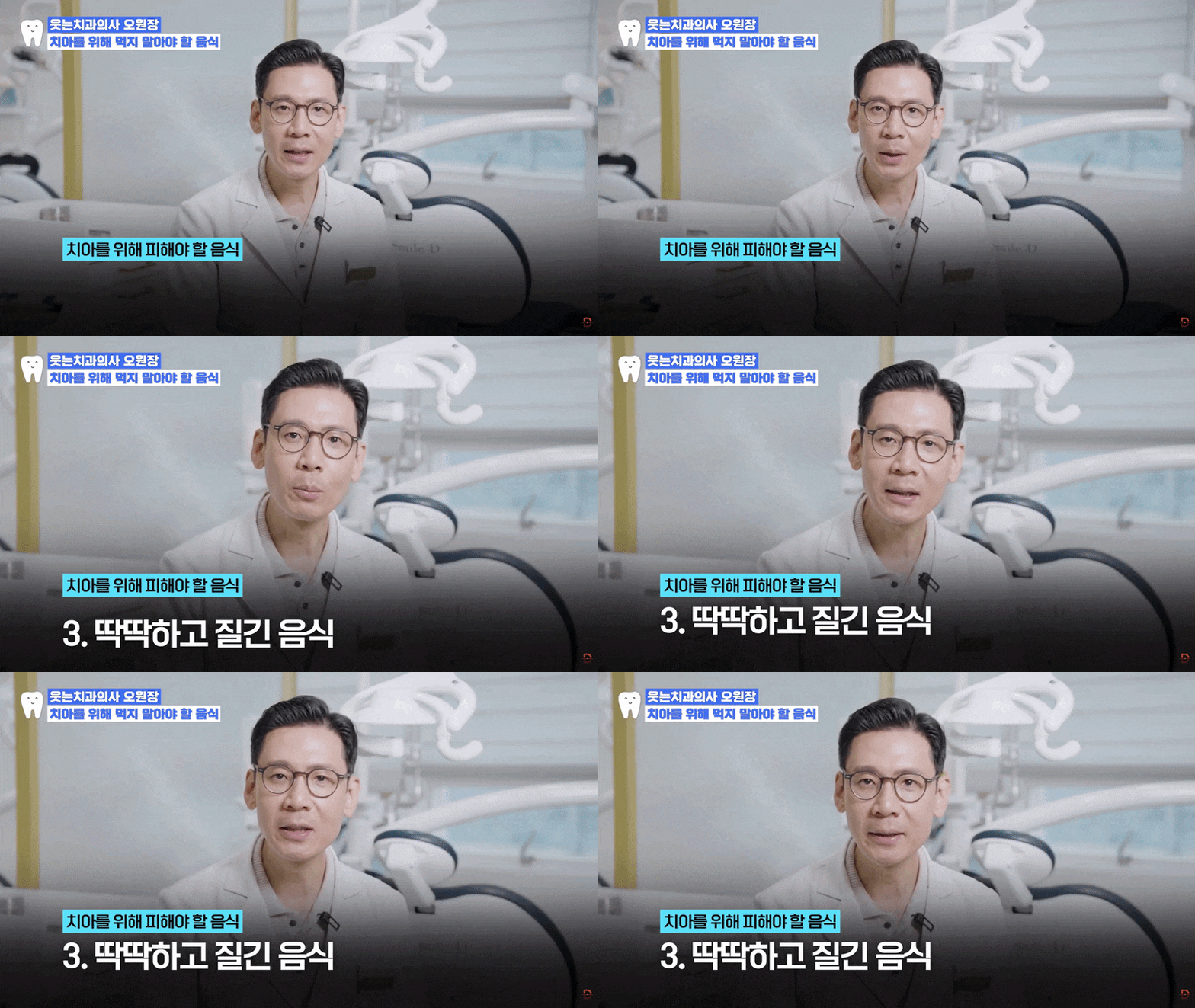
Finally, there are chewy foods.
Dried squid, seasoned dried fish, and chewy meats
can place stress on teeth or roots that are moving, so caution is needed.
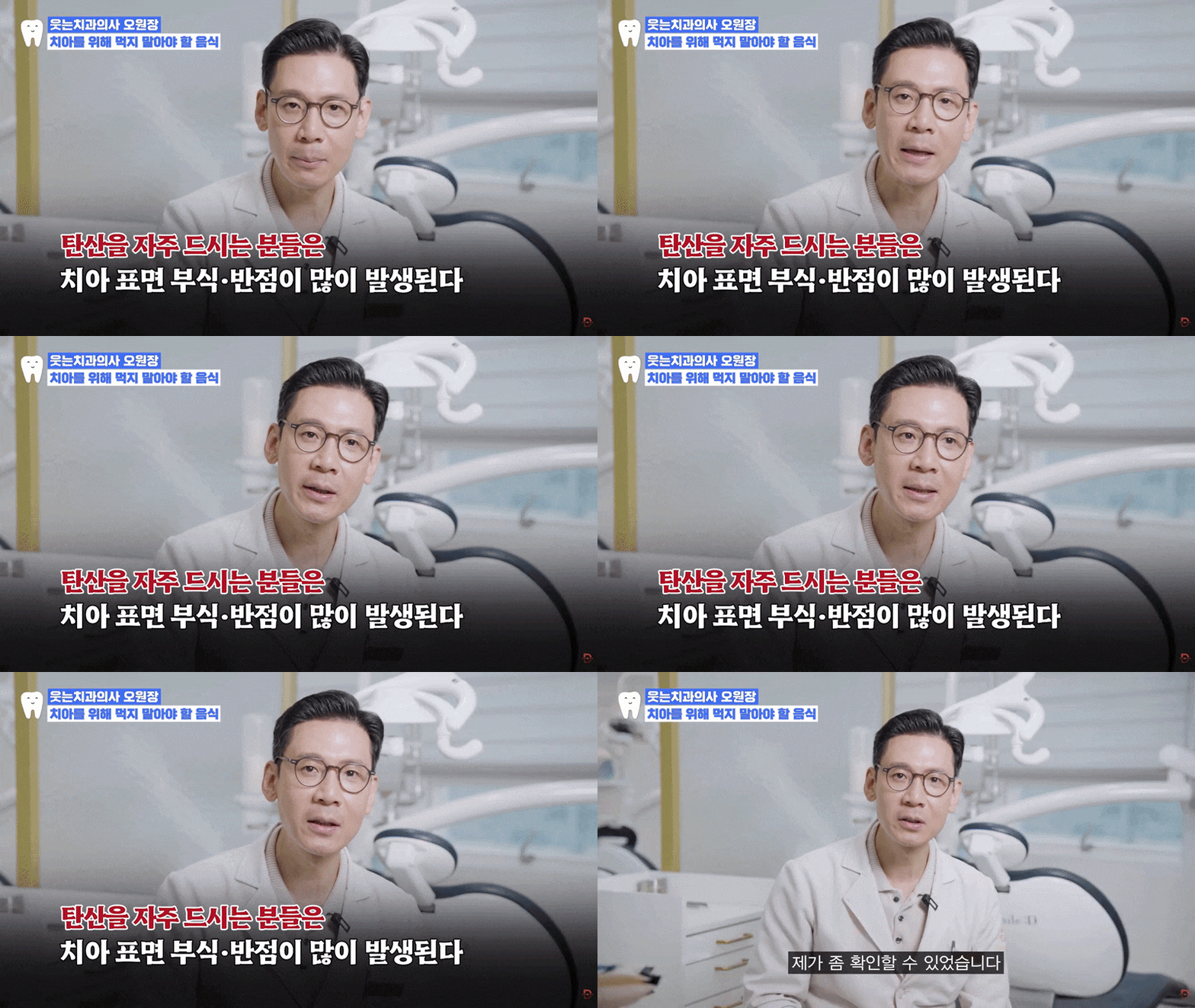
It is also helpful to know that strongly colored foods
such as curry, coffee, wine, and black tea
may stain the elastic bands that hold the appliances in place
or the clear appliances themselves.
Care That Varies Depending on the Orthodontic Appliance and Treatment Stage
Even with the same type of “orthodontic treatment,”
the points that require attention may vary depending on the type of appliance and the stage of treatment.
For about one to two weeks after the appliance is first attached or immediately after a wire adjustment,
the teeth are often particularly sensitive.
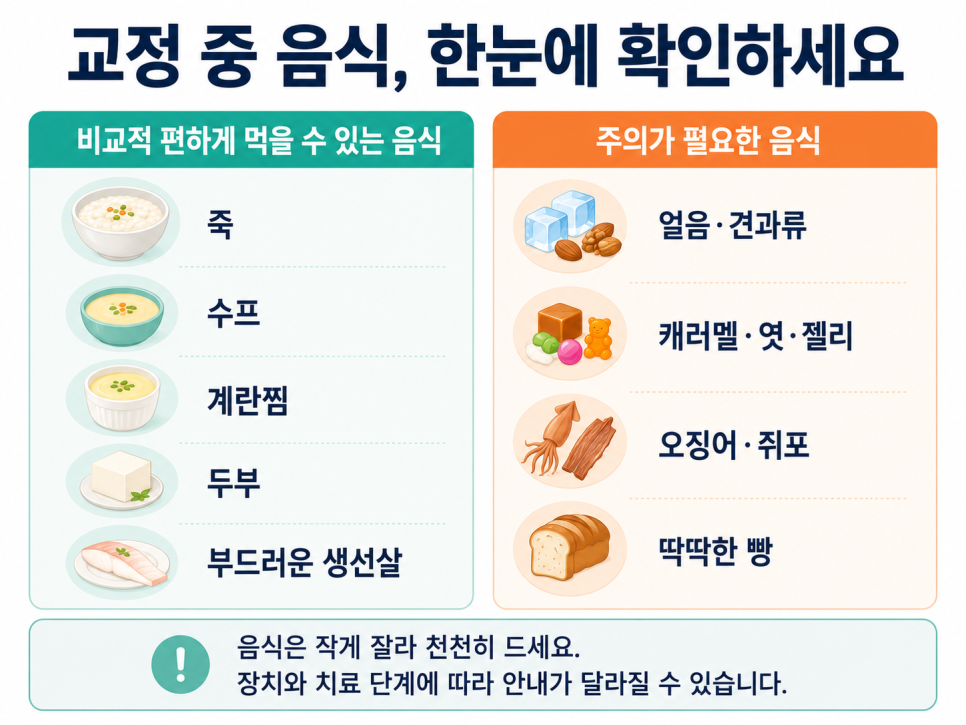
During this time, it may be helpful to focus on soft foods that require little chewing force,
such as porridge, soup, steamed eggs, tofu, and fish.
After you have adapted to some extent,
it is possible to eat a relatively wide variety of meals as long as you avoid
the hard, sticky, and chewy foods described above.
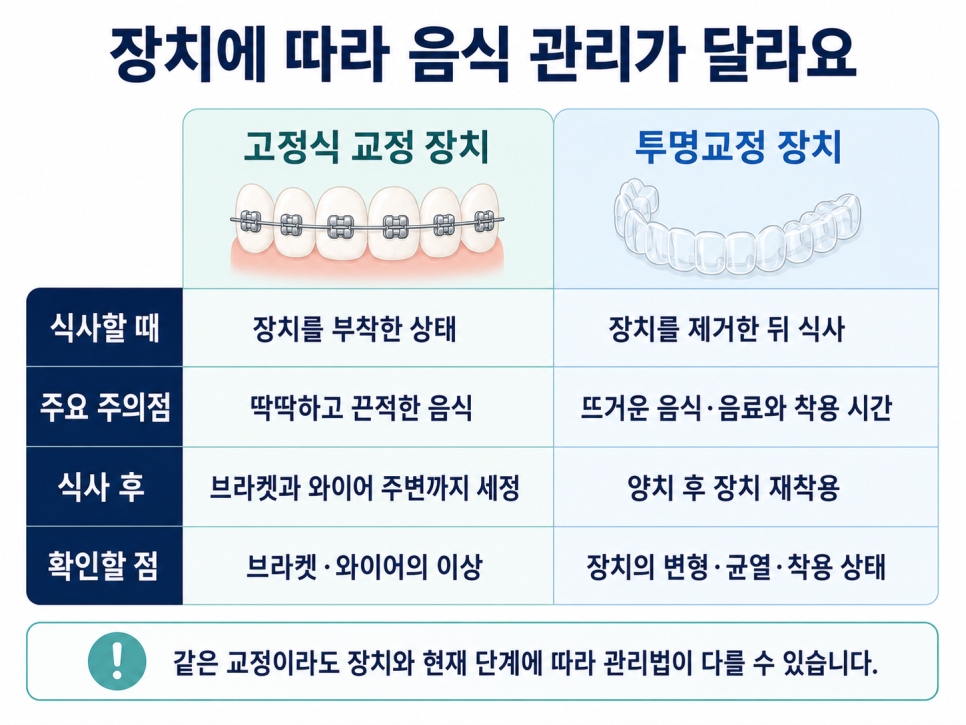
If you use clear orthodontic appliances,
you can remove them yourself when eating,
so the range of foods you can choose from may be relatively broader.
However, the appliances themselves are often made of materials that are sensitive to heat,
so you should be cautious because drinking hot beverages or soup while wearing them
may cause the appliances to become slightly deformed.
Also, because there is a recommended daily wearing time,
leaving the appliances out for a long time because meals take longer
may affect tooth movement, so it is best to be mindful of this.
Points to Check Before and After Treatment
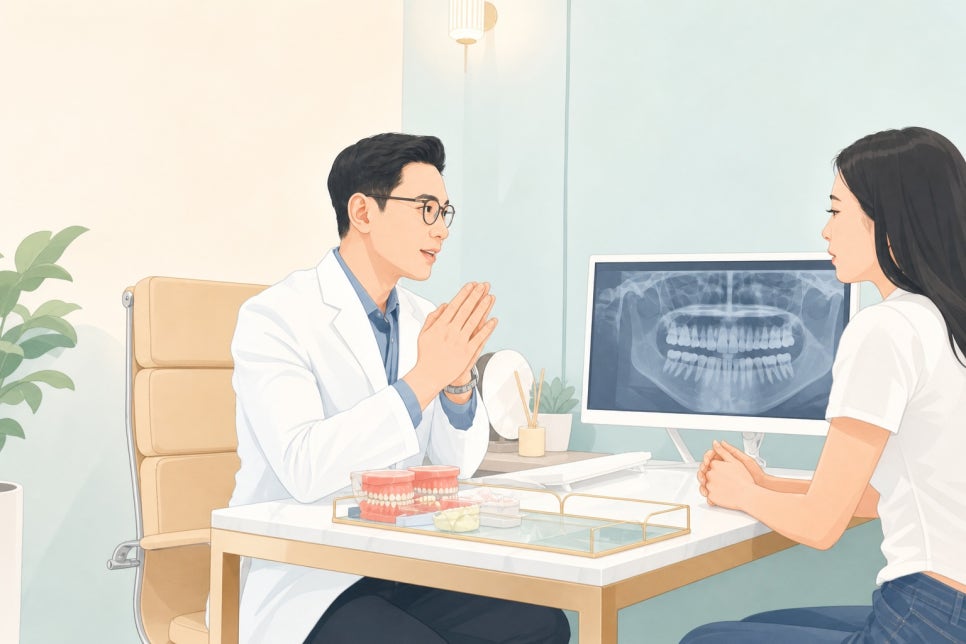
The concerns about food do not completely end just because the orthodontic appliances have been removed and you have moved on to the retainer stage.
Immediately after orthodontic treatment ends,
the teeth may not yet be fully settled in the jawbone.
Therefore, habits such as taking a large bite of an apple with your front teeth
or biting through chewy foods forcefully
may need to be reconsidered.
If you use a removable retainer,
it is advisable to maintain the habit of removing it when drinking hot beverages.
If you use a fixed retainer, it is advisable to continue being cautious with hard foods.
Since care methods may vary depending on the type of appliance you are using
and your current stage of orthodontic treatment,
we recommend checking the instructions provided by your dental clinic.
Carelessness Can Increase the Burden
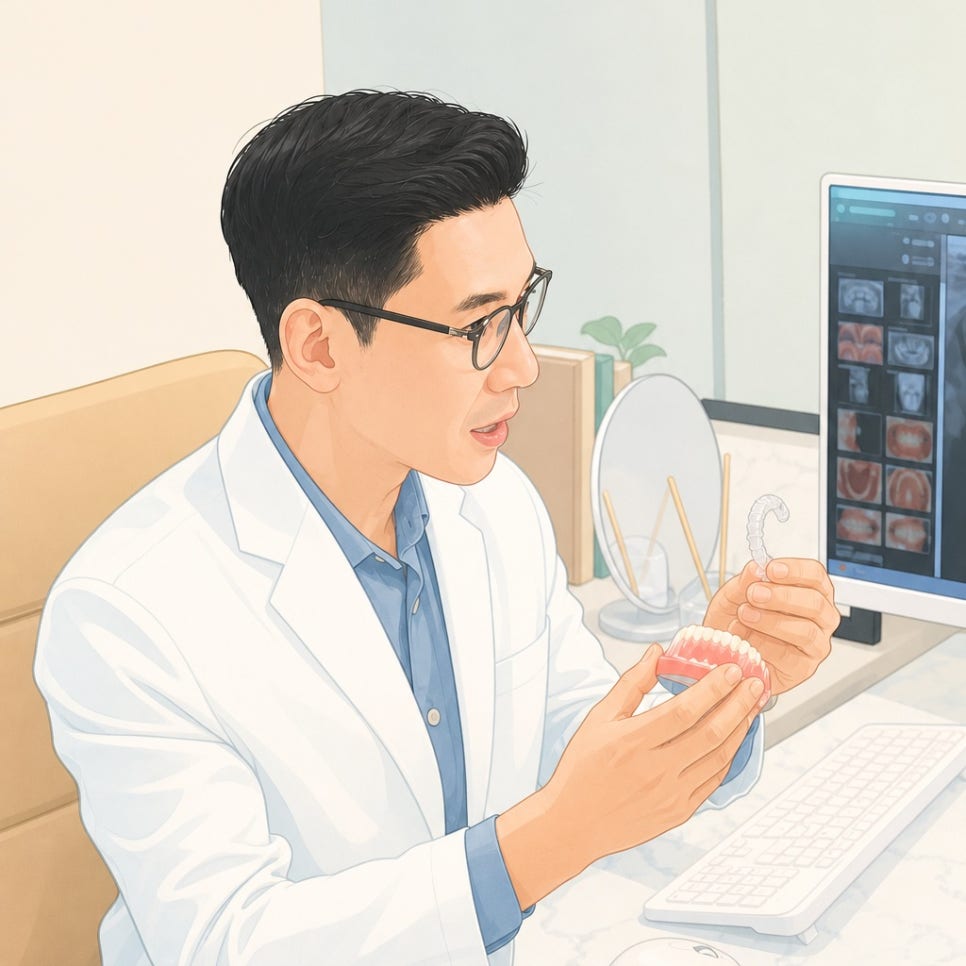
If situations in which an appliance frequently comes loose or becomes deformed continue to occur,
you may need to visit the dentist each time
for reattachment or replacement.
If this process is repeated,
it may cause the overall orthodontic treatment period to be longer than expected,
and it may also increase the burden of maintaining gum and dental hygiene.
In particular, if you skip rinsing or brushing after consuming strongly pigmented foods,
pigments or sugar may remain inside the appliances and affect oral hygiene.
To Conclude...
Care during orthodontic treatment is not simply about putting up with restrictions;
what matters is adjusting your habits according to the timing and condition of your appliances.
Developing habits such as cutting food into small pieces
and brushing thoroughly after meals can help you get through the orthodontic period much more comfortably.
Since the points requiring attention may vary depending on the type of appliance you are currently using
and your stage of orthodontic treatment,
if you have any questions,
we recommend consulting your dental clinic
and confirming the care methods appropriate for your condition.
Thank you for reading.

※ This post is informational content prepared in compliance with Article 56, Article 57, and other relevant provisions of the Medical Service Act.
It was prepared for the purpose of providing general medical information that is exempt from review of medical advertising,
and it does not guarantee the effects of any particular procedure or replace a diagnosis.
The images and materials used in this post are examples intended to aid understanding,
and an actual diagnosis is determined through consultation and examination by a medical professional.
Methods, prognosis, and effects may vary depending on each individual’s health condition and the characteristics of their disease,
and there is also a possibility of side effects.