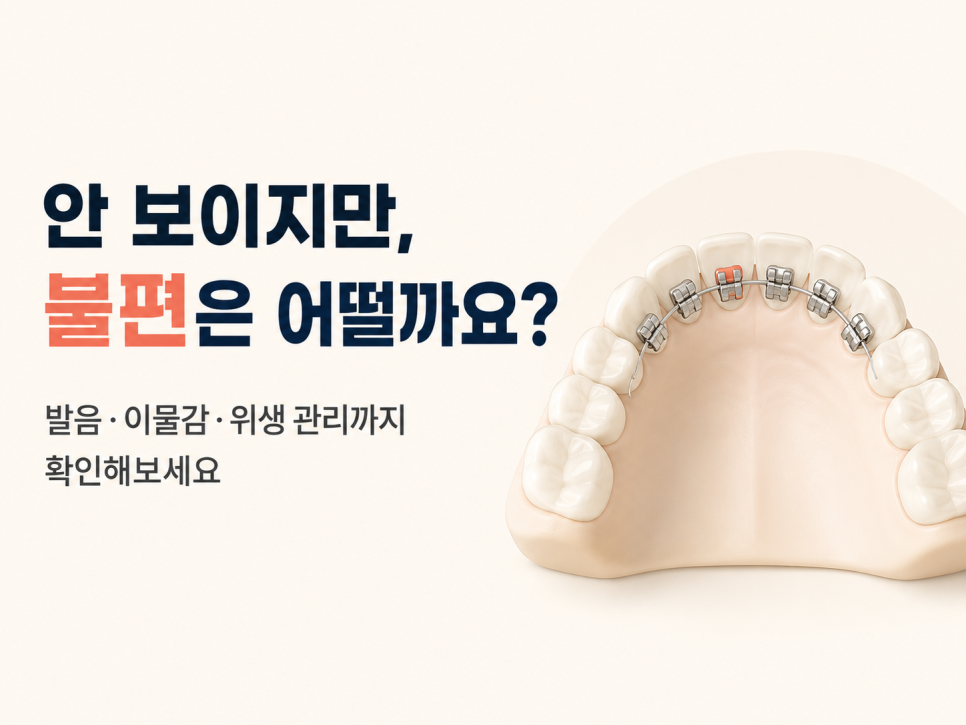
When looking into lingual braces, it is natural to worry about whether they will make speaking uncomfortable
and how noticeable the foreign-body sensation will be.
To put it simply,
changes in pronunciation and the foreign-body sensation are often more noticeable at first
and gradually decrease over time.
However, the speed of adjustment and the burden of maintaining oral hygiene
may vary depending on an individual's oral structure and lifestyle.
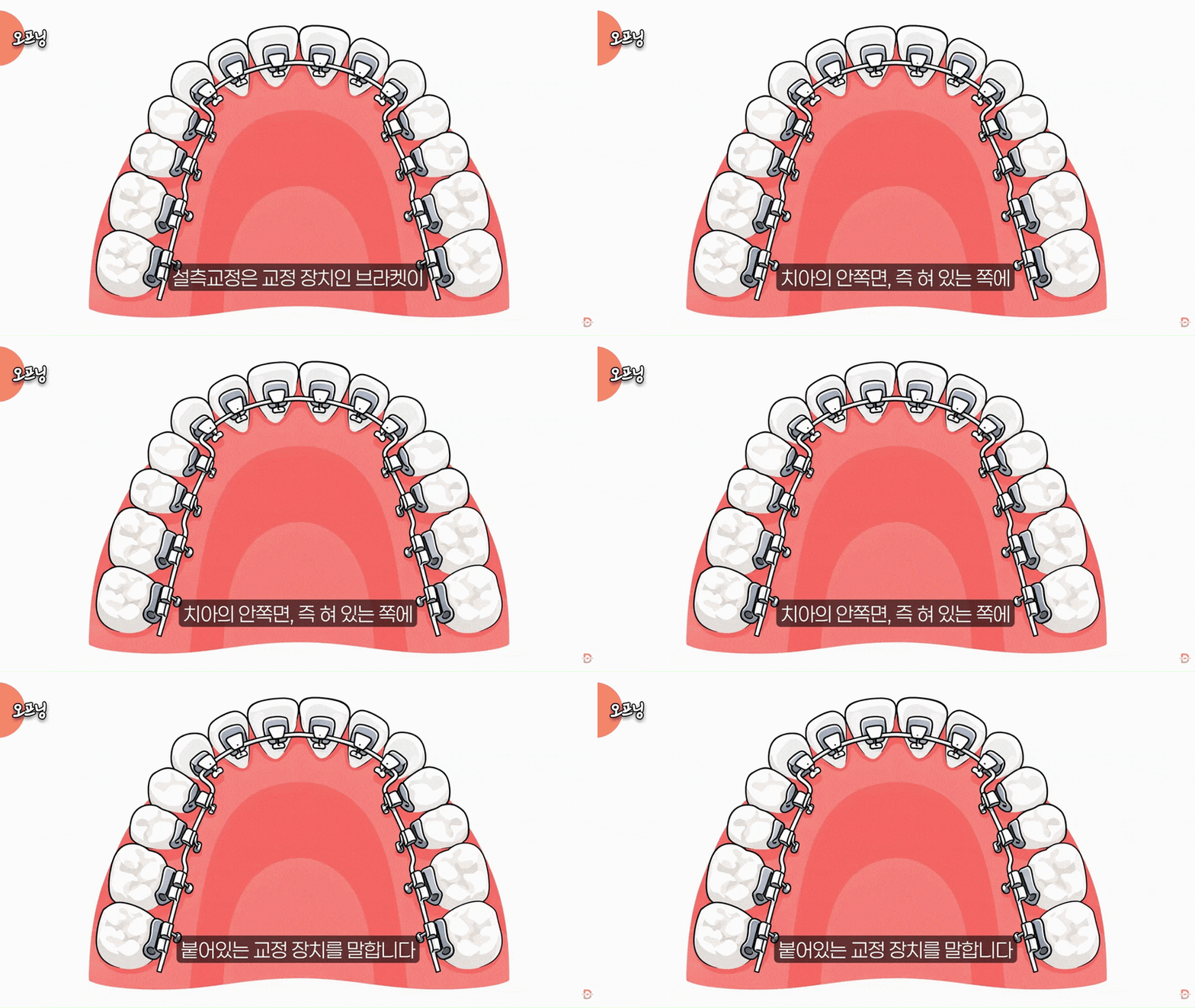
Why do lingual braces make speaking uncomfortable?
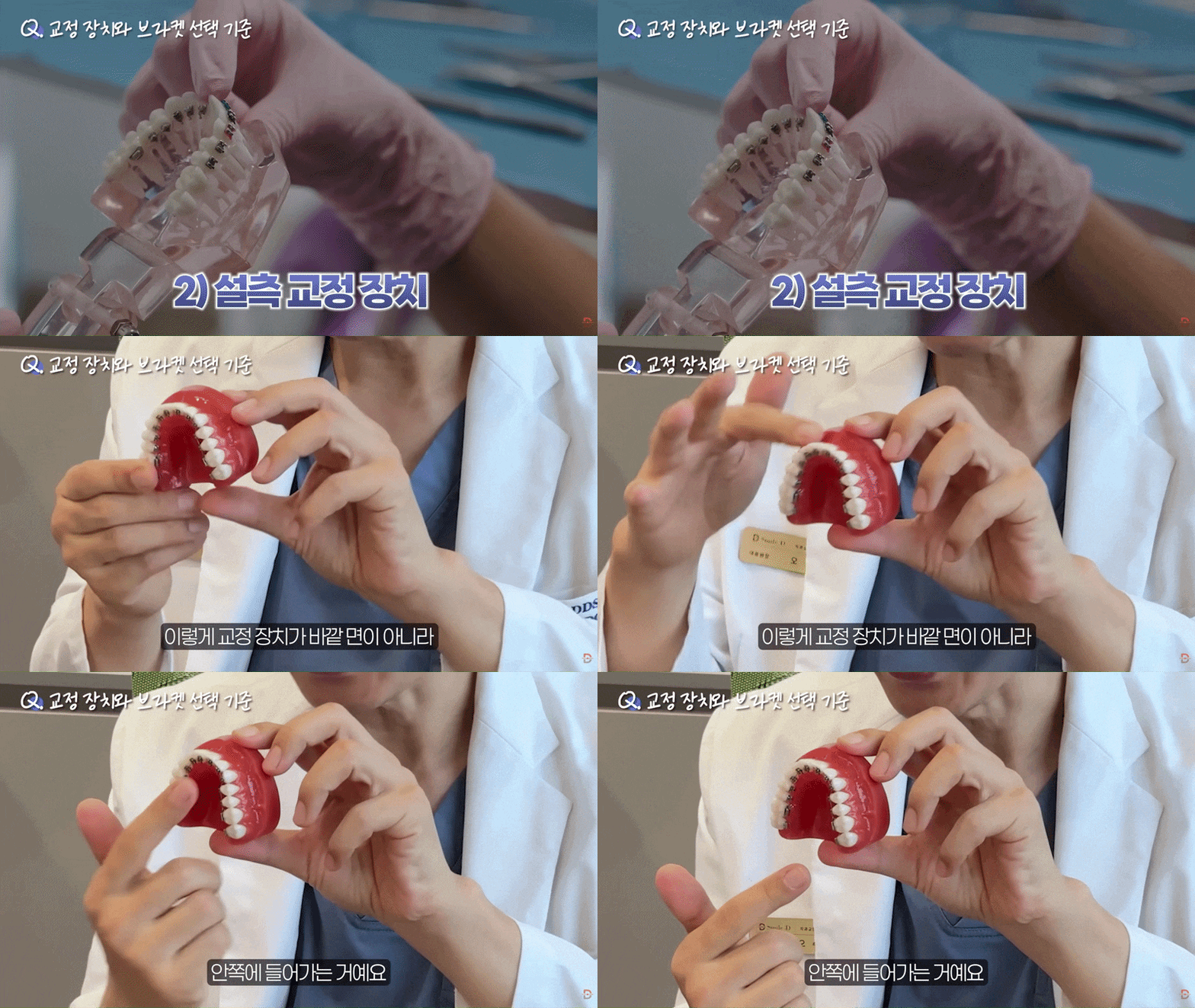
The appliances are attached to the inner surfaces where the tongue makes contact, rather than to the outer surfaces.
As brackets and wires occupy the space where the tongue normally moves,
the tongue's sense of position may change when speaking.
Initial awkwardness tends to be more noticeable with
certain sounds that require delicate use of the tip of the tongue.
Rather than being a problem with the braces themselves,
this can be viewed as a natural change that occurs while adjusting
to a new oral environment.
However, the amount of tongue space and the structure of the palate differ from person to person,
so the level of discomfort may vary even with the same type of braces.
< 스마일디 Location >
< More from 스마일디 >
| 📞 Contact 스마일디 |
|---|
| 02-512-2085 |

How long does the adjustment period take?
The adjustment period varies considerably from person to person, so it is difficult to give one definitive answer.
A foreign-body sensation is often prominent during the first few days after placement,
followed by gradual adjustment of the tongue to the new oral environment over the following weeks.
However, for people whose work involves frequent speaking, such as presentations or consultations,
changes in pronunciation may feel more significant at work until speech becomes natural again.

For these reasons, it is helpful to check the pros and cons of lingual braces in advance
and compare them with your own lifestyle.
If you frequently meet people or speak as part of your daily routine,
it is advisable to ask in detail during the consultation about the expected adjustment period.

Oral hygiene and the foreign-body sensation also need to be considered
Because the appliances are located on the inner surfaces of the teeth,
it is easy for areas that are difficult to reach with a toothbrush or dental floss to develop.
Food can also become trapped
in locations that are more difficult to clean than with appliances on the outer surfaces,
so it is necessary to develop the habit of using both an interdental brush and dental floss.
In addition, the foreign-body sensation caused by the tongue repeatedly touching the brackets and wires
is often more noticeable than with conventional braces attached to the outer surfaces.

Since this is also a frequently mentioned disadvantage, it is helpful to know about it in advance.
Hard or sticky foods
can cause brackets to come loose,
so it is best to avoid them whenever possible.
If the appliances feel uncomfortable,
it is better to visit the clinic for an examination than to touch them forcefully with your hands.
How difficult is the treatment process, and how broadly can this method be applied?
Depending on the type of appliance, a customized manufacturing process may be required.
For this reason, more detailed review is needed during the diagnostic and planning stages,
and adjusting the appliances is generally considered more difficult than with appliances attached to the outer surfaces.
The expected treatment duration depends less on the location of the appliances
than on the severity of the malocclusion and the treatment plan.

This method is often preferred by people in broadcasting, customer service, consulting, and other fields
where it is important that the braces not be visible,
but it is not equally suitable for every case.
If there is a skeletal issue that is difficult to improve through tooth movement alone,
other approaches may need to be considered.
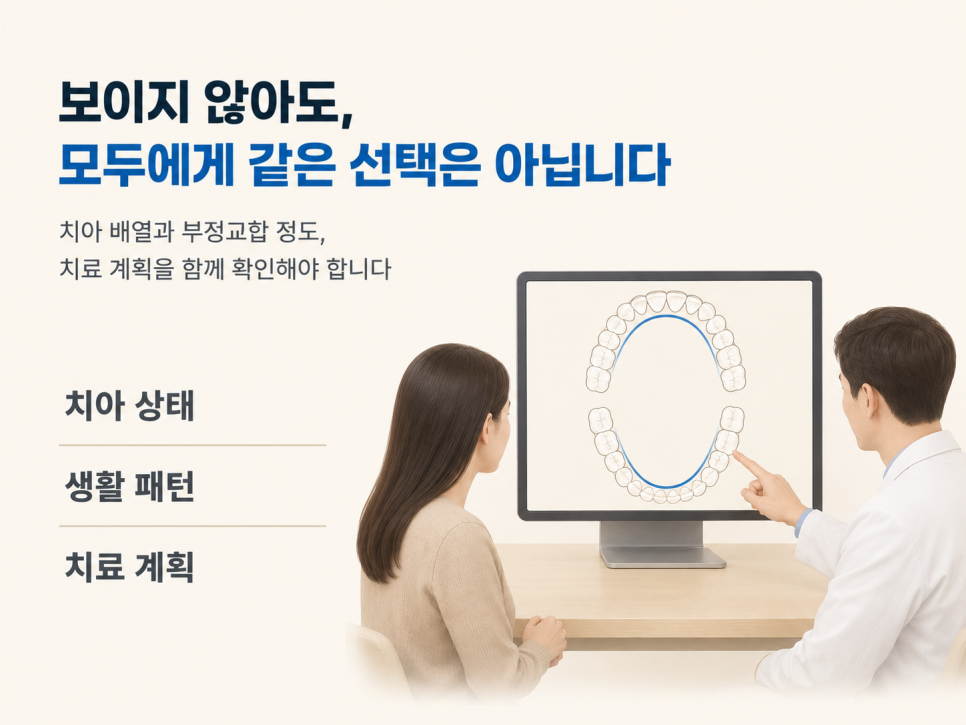
It is advisable to undergo a detailed examination to determine which method is appropriate for you.
Which cases require particularly careful consideration?
For voice actors, teachers, instructors, and others whose pronunciation is directly connected to their work,
it is especially important to allow sufficient time for adjustment.
This is because the time required for speech to become completely natural again
may place a burden on their work.
In such cases, it is advisable to listen carefully to an explanation of the adjustment process,
compare it with your schedule, and then make a decision.

In conclusion...
If you are considering lingual braces,
it is advisable to check in advance whether you can accommodate the pronunciation adjustment period,
whether you have enough time to devote to oral hygiene,
and whether the alignment of your teeth is suitable for this method.
In particular, if your work is directly connected to your pronunciation,
it may be helpful to allow a little more flexibility for the adjustment period before deciding.
Once you have fully understood the pros and cons of lingual braces,
you can assess your own condition and make a decision; there is no need to rush.

※ This post is informational content prepared in compliance with relevant laws and regulations, including Articles 56 and 57 of the Medical Service Act.
It was prepared to provide general medical information exempt from review of medical advertisements,
and does not guarantee the effects of any particular procedure or replace a medical diagnosis.
The images and materials used in this article are examples intended to aid understanding,
and an actual diagnosis is determined through consultation and examination by medical professionals.
Depending on each individual's health status and the characteristics of their condition,
the method, prognosis, and results may vary,
and there is also a possibility of side effects.