Hello.
I am Oh Su-hwan, the director of Smile D Dental Clinic near Sinsa Station.
Can cavities be prevented by simply cutting down on sugary foods and brushing well?
This is a question I often hear in the consultation room.
While the types of food we eat are important for dental health,
the factors that may have an even greater impact are
how often we eat,
how long food remains on our teeth,
and which lifestyle habits we repeat.
Even if you know the right ways to care for your teeth, it is difficult to expect results if you do not practice them every day.
On the other hand, even small actions—such as rinsing your mouth with water and using dental floss before bed—can become natural habits when repeated.
Today, we will look at foods that are bad for your teeth, habits to avoid, and which symptoms indicate that a dental examination may be needed.
What Is the Problem with Foods That Are Bad for Your Teeth?
Cavities cannot simply be viewed as a disease caused by “eating sugary foods.”
When bacteria in the mouth use the sugars and carbohydrates in food,
acids may be produced.
When this acidic environment is repeated,
minerals can be removed from the surface of the teeth, increasing the risk of cavities.
The American Dental Association also describes cavities as a multifactorial disease influenced by sugar,
and recommends managing the frequency of consuming both sugar and acidic foods.
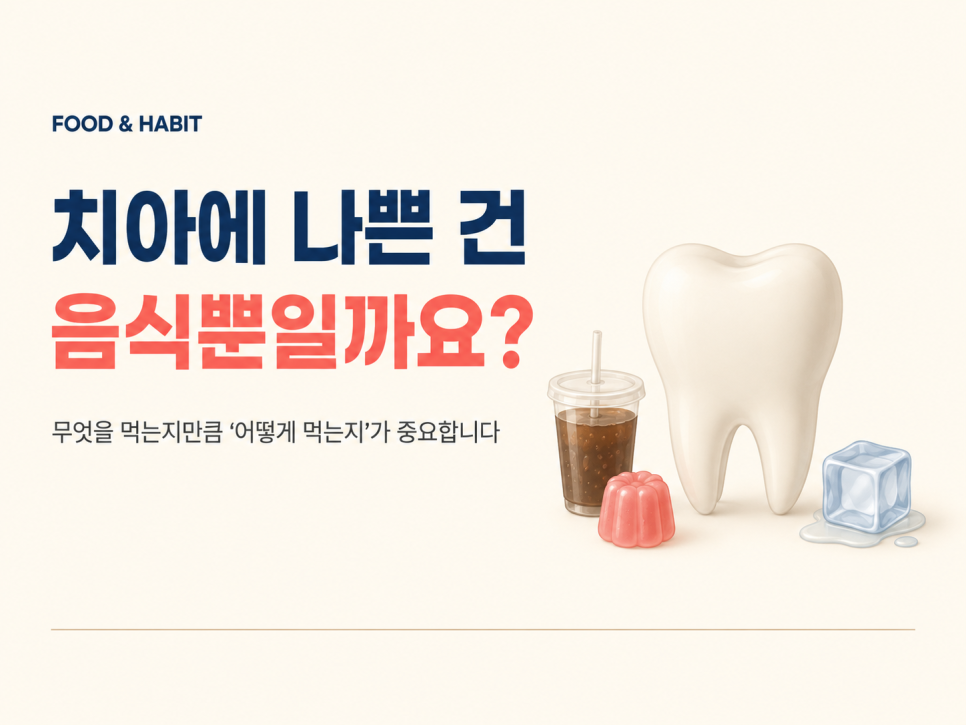
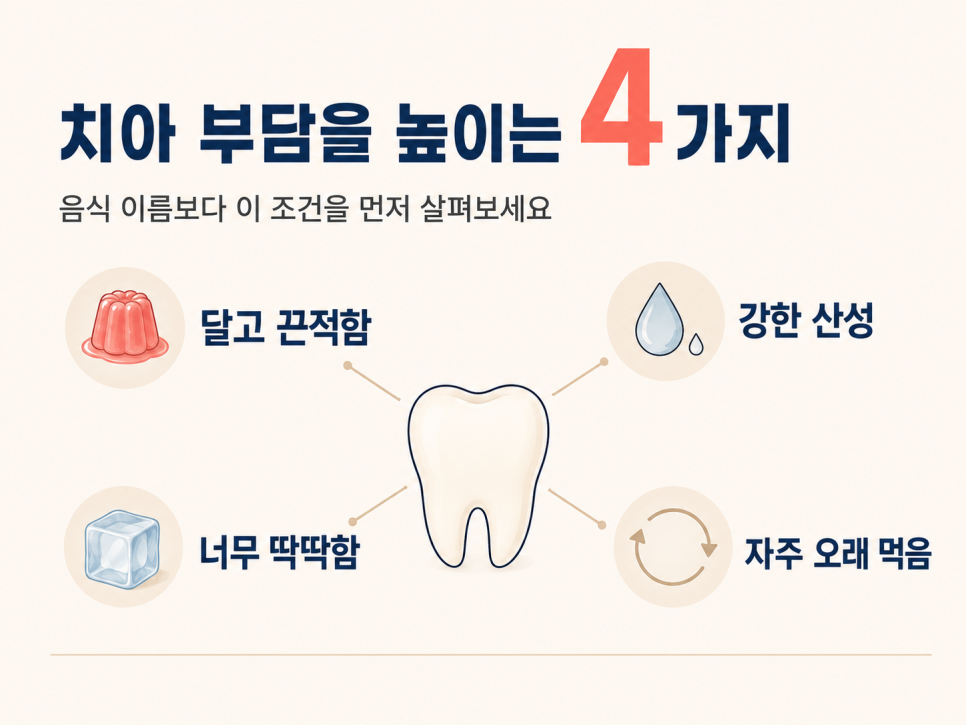
Therefore, the following factors are as important as what you eat.
Whether you eat small amounts over a long period
Whether the food easily sticks to your teeth
Whether you have a habit of holding acidic drinks in your mouth
Whether you rinse with water or care for your mouth after eating
Whether you eat snacks before bed
- Sticky, Sugary Foods Such as Gummies, Taffy, and Caramels
Gummies, taffy, caramels, and dried fruit are sweet and sticky,
so they can easily remain on the surface of and between your teeth for a long time.
The longer they remain attached to your teeth,
the more opportunities bacteria in the mouth have to use the sugar.
Food left in the grooves of the molars or between the teeth
may be difficult to remove with a toothbrush alone.
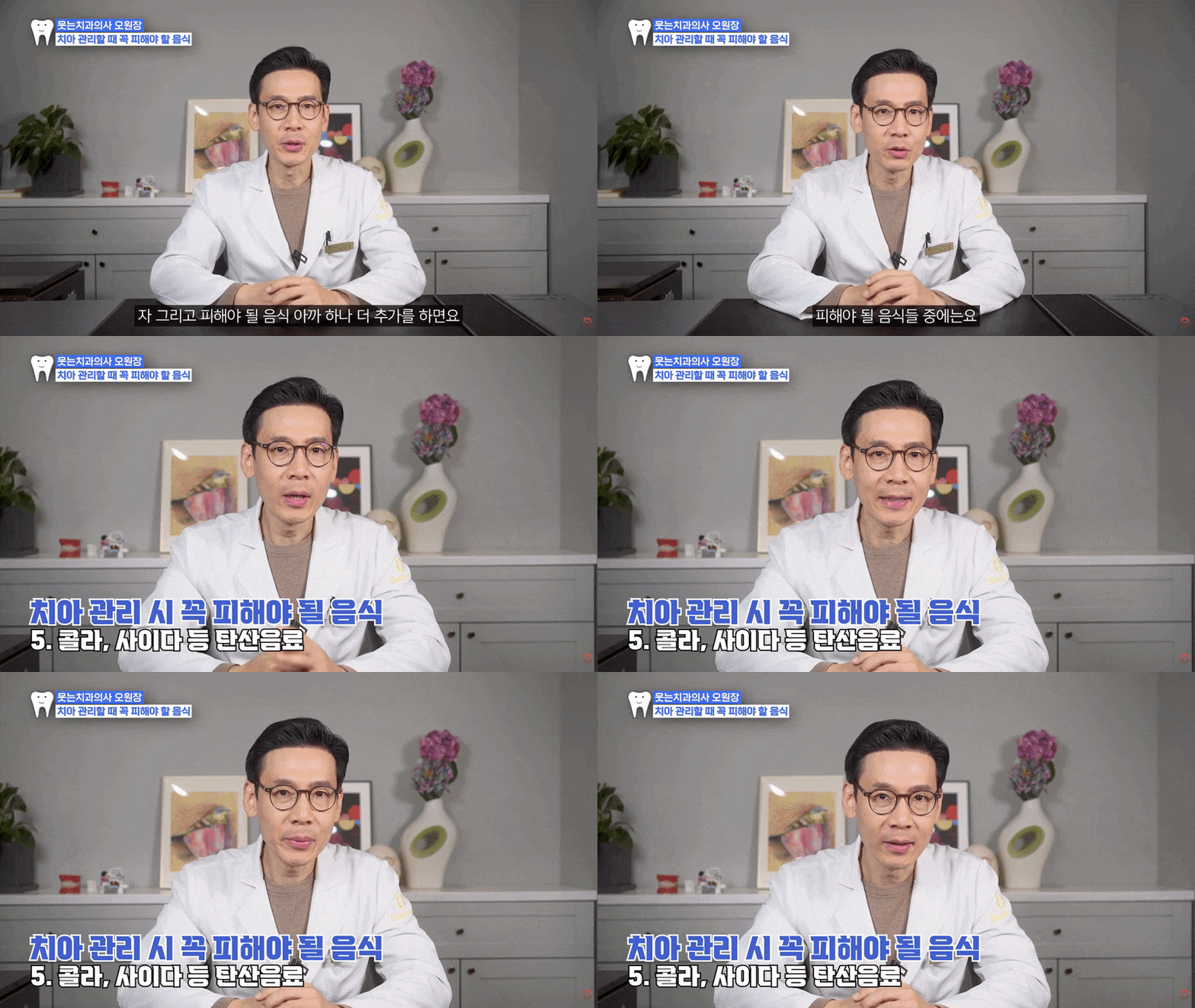
- Carbonated Drinks Such as Cola and Lemon-Lime Soda
Depending on the product, carbonated drinks may contain a high amount of sugar as well as acidic ingredients.
Sugar is associated with the risk of cavities,
and repeated exposure to acid
may increase the risk of erosion, in which the tooth surface wears away.
Even sugar-free carbonated drinks should be considered separately in terms of the effects of their acidity.
In particular, it is best to avoid holding the drink in your mouth for a long time
or sipping small amounts over several hours.
If you drink a carbonated beverage, rinse your mouth with water. If you use a straw,
consider placing it toward the inside of your mouth
so as to reduce direct contact between the drink and your front teeth.
< Smile D Location >
< More from Smile D >
| 📞 Contact Smile D |
|---|
| 02-512-2085 |
- Acidic Foods and Drinks Such as Fruit Juice, Energy Drinks, and Lemons
This does not mean that fruit itself is bad.
However, juice and highly acidic drinks
can increase the frequency with which your teeth are exposed to acid.
The following habits require particular caution:
-
Rubbing a lemon directly on your teeth
-
Sipping juice or energy drinks in small amounts over a long period
-
Swishing acidic drinks around in your mouth or holding them there
-
Brushing forcefully immediately after drinking an acidic beverage
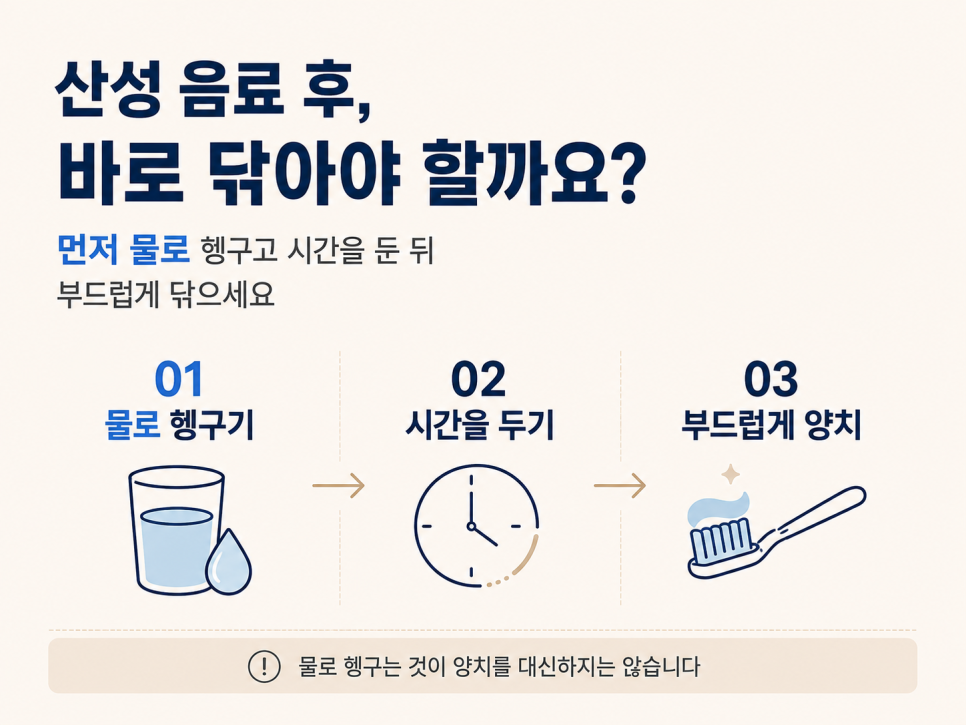
It is best to rinse with water first immediately after eating or drinking.
When tooth erosion is a concern,
rather than brushing forcefully right away,
it is recommended to allow time for saliva to neutralize the acid and then brush gently.
The ADA also advises rinsing with water and waiting about one hour
rather than brushing immediately after consuming an acidic drink.
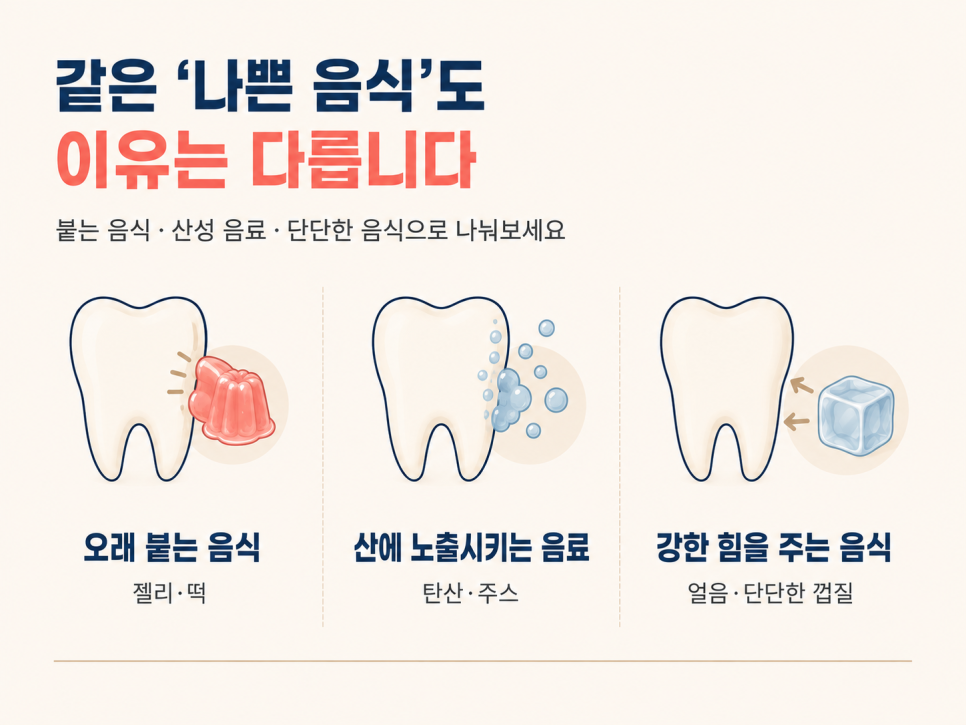
- Very Hard Foods Such as Ice, Hard Candy, and Crab Shells
Teeth are hard, but they are not unbreakable.
Repeatedly biting down on ice
or cracking crab shells, nut shells, and similar items with your teeth
can place considerable force on your teeth and dental restorations.
If a tooth already has a tiny crack
or a large filling or crown,
extra caution is needed because the possibility of damage may be greater.
If you have any of the following symptoms, it is best not to dismiss them as simple sensitivity:
-
A sharp twinge in only one tooth when chewing hard foods
-
Pain when releasing your bite after chewing
-
Sensitivity in only one particular tooth to cold foods
-
Feeling that part of a tooth is rough or chipped
These symptoms do not necessarily mean that you have a cracked tooth.
They may have various causes, including cavities, gum problems, or your bite,
so they need to be evaluated through an examination.
- Tough Foods Such as Dried Squid and Beef Jerky
Chewing tough foods for a long time
can place strain on the temporomandibular joints and chewing muscles.
People who normally clench or grind their teeth may feel more fatigue.
If your jaw feels stiff after eating or you feel discomfort when opening your mouth,
try reducing the amount of tough food you eat and the time spent chewing it.
If pain, limited mouth opening, or jaw-joint sounds recur, it is worth checking whether the issue is caused solely by food
or whether teeth grinding, clenching, or your bite may also be contributing.
- Drinks That May Cause Staining, Such as Coffee, Green Tea, and Wine
Pigments in coffee, green tea, wine, and similar drinks can cause extrinsic stains on the tooth surface.
However, rather than concluding that coffee itself is the only problem,
it is important to also consider the following consumption habits.
-
Whether you add a lot of sugar or syrup
-
Whether you sip one cup little by little over several hours
-
Whether you drink very little water after drinking coffee
-
Whether you smoke at the same time
-
Whether a significant amount of plaque and tartar has already accumulated
Staining is not the same disease as cavities.
Conversely, even if your teeth look clean in color,
there may be cavities between the teeth or gum inflammation,
so it is difficult to judge oral health by color alone.
- Refined Carbohydrates Such as Bread, Snacks, and Rice Cakes
Many people think only of candy and chocolate when they consider cavities.
However, carbohydrates such as bread, cookies, crackers, and rice cakes,
which can easily remain between the teeth and in the grooves of the molars,
may also be used by bacteria in the mouth.
In particular, the habit of keeping snacks beside your desk and eating small amounts throughout the day
may increase the number of times your teeth are exposed to an acidic environment compared with eating them once and finishing.
The key is not so much “whether you ate it or not,” but the frequency of consumption and how long it remains in the mouth.
What Should You Do If Brushing Is Difficult While You Are Out?
Drinking water or thoroughly rinsing your mouth with water
may help wash away food particles and acids.
However, figures such as “rinsing with water removes 70–80% of harmful substances”
vary depending on the type of food, the rinsing method, and the condition of the mouth,
and are difficult to generalize because the supporting evidence is unclear.
Rinsing with water is not a complete substitute for brushing.
After returning home, brush gently with fluoride toothpaste,
and care for the spaces between your teeth once a day with dental floss or an interdental brush.

Lifestyle Habits That Require as Much Attention as Food
The Habit of Clenching or Grinding Your Teeth
Repeatedly clenching your teeth or grinding them while asleep
can place strain on your teeth and jaw muscles.
If your jaw feels stiff in the morning, your teeth feel compressed,
or dental restorations repeatedly break,
your current symptoms and the condition of your tooth wear can be evaluated.
The Habits of Resting Your Chin on Your Hand and Chewing Only on One Side
Applying continuous force in one direction
or habitually using only one side can place strain on the jaw and chewing muscles.
However, it cannot be concluded that resting your chin on your hand alone
will necessarily cause facial asymmetry or a temporomandibular joint disorder.
Pain and functional problems can result from multiple contributing factors,
so an examination is needed if discomfort continues to recur.

The Habit of Brushing Too Hard
Brushing does not clean your teeth better simply because you use more force.
Repeated brushing with excessive force can cause the gums to recede
or worsen wear around the necks of the teeth.
It is important to brush carefully along the boundary between the teeth and gums with a soft-bristled toothbrush.
Using Your Teeth as Tools
Avoid opening bottle caps with your teeth
or tearing packages and cable ties with them.
A sudden, strong force can chip a tooth or damage an existing restoration.
Teeth are for chewing food—not for use as bottle openers or scissors.
Smoking
Smoking is not merely a matter of nicotine staining.
Because it can affect gum health and the risk of oral disease,
consider quitting smoking.

Five Practical Care Habits to Protect Your Teeth
- Do Not Try to Change Everything Perfectly at Once
A plan such as “I will never eat sugary foods again” is difficult to maintain for a long time.
Instead, start by setting small, specific actions such as the following:
-
Drink a glass of water after drinking a carbonated beverage
-
Reduce the number of nighttime snacks
-
Keep dental floss next to your toothbrush
-
Let ice melt instead of biting it
-
Always brush your teeth before going to bed
Repeated actions need to become natural habits
so that they are easier to maintain over the long term.
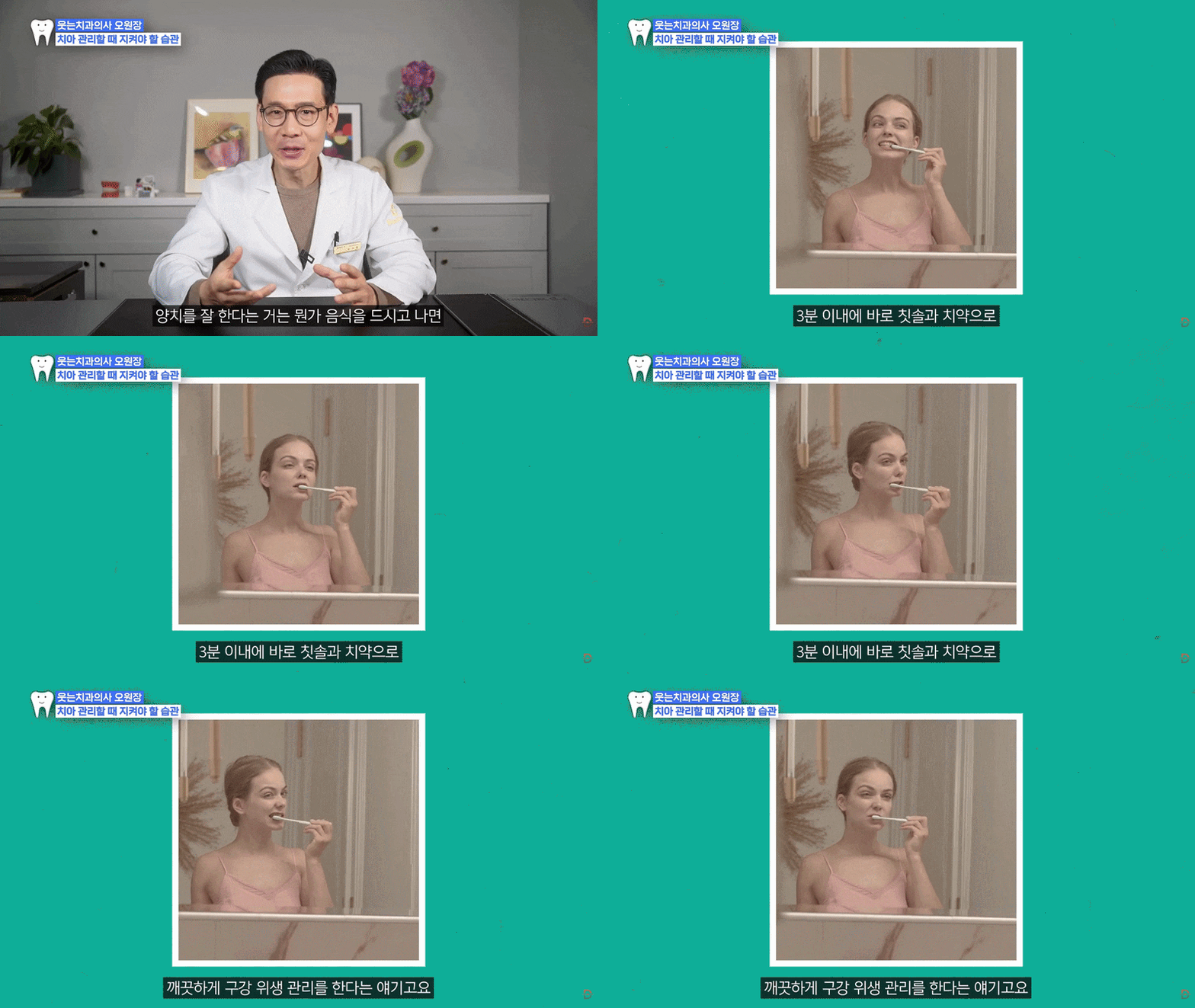
- Brush Gently Twice a Day with Fluoride Toothpaste
Removing food after meals is important,
but after eating acidic foods or drinking acidic beverages,
it is best to rinse with water first, wait for a while, and then brush gently.
Rather than focusing only on the number “three minutes after eating,”
consider the nature of the food you ate and the current condition of your teeth as well.
- Clean Between Your Teeth Once a Day
It is difficult to clean all the spaces between your teeth with a toothbrush alone.
If the spaces between your teeth are narrow, use dental floss.
If the spaces are wide or there are areas where the gums have receded,
you can use an interdental brush of the appropriate size.
Inserting an interdental brush that is too large by force
may injure the gums, so caution is needed.
- Chew Slowly, but Do Not Fixate on the Number of Chews
Chewing slowly
may help with saliva production and breaking down food.
However, there is no absolute standard requiring you to chew every food exactly 30 times.
Chewing tough or hard foods for too long can instead fatigue the jaw,
so it is best to adjust your habits to the condition of the food and your own temporomandibular joints.
- Adjust the Examination Schedule to Your Individual Condition
Regular oral examinations and professional cleanings
can help check the condition of your teeth and gums.
The examination schedule is not the same for everyone.
It may vary depending on your cavity risk, gum condition, smoking status,
systemic diseases, and whether you are receiving orthodontic or restorative treatment.

In Closing...
Even when people eat the same foods,
the risk of cavities and tooth wear may differ from person to person.
This is because factors such as saliva production, tooth alignment,
existing restorations, gum condition,
brushing habits, and the frequency of eating differ among individuals.
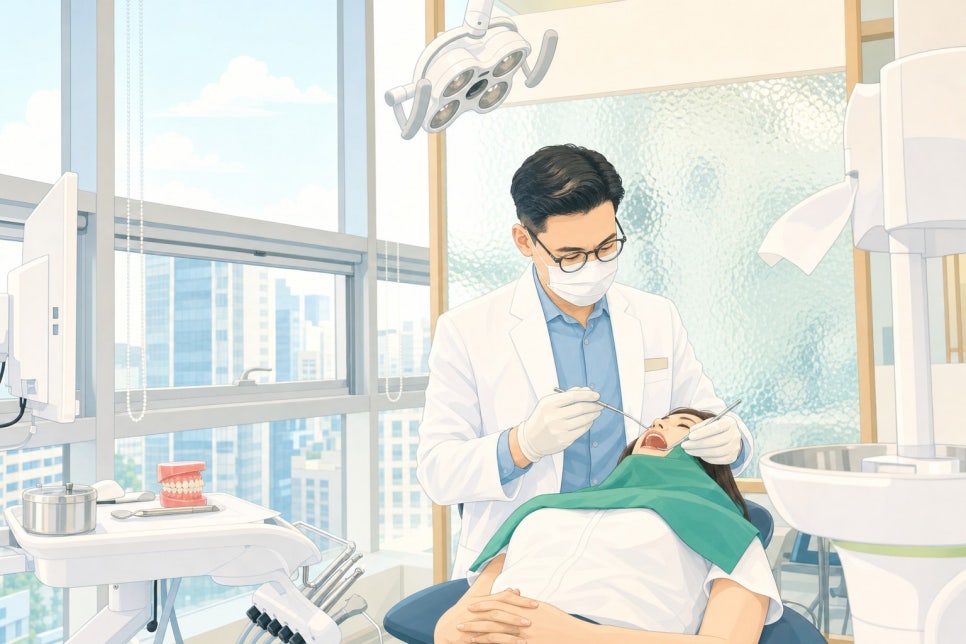
At Smile D Dental Clinic,
rather than deciding on a specific treatment first,
we review areas of discomfort and lifestyle habits through a medical history and oral examination,
and explain the necessary care methods based on the findings.
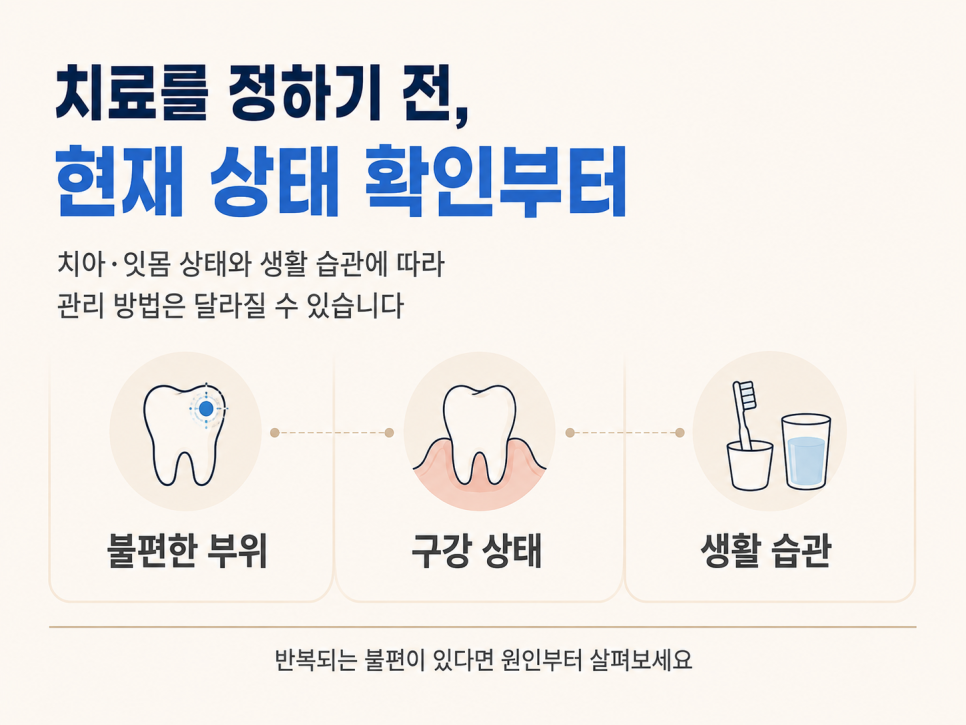
The necessary treatment and care methods may vary depending on the examination results,
and the same treatment does not apply to everyone.
If tooth sensitivity or discomfort when chewing keeps recurring,
or if you have not had an oral examination for a long time,
please have your current condition checked.

※ This post is informational content prepared in compliance with applicable laws and regulations, including Articles 56 and 57 of the Medical Service Act.
It was prepared to provide general medical information exempt from review of medical advertising,
and does not guarantee the effectiveness of any specific procedure or replace a medical diagnosis.
The images and materials used in this post are examples intended to aid understanding,
and an actual diagnosis is determined through consultation and examination by a medical professional.
Depending on an individual’s health condition and the characteristics of the disease,
methods, prognosis, and effects may vary,
and side effects may occur.