Gum Inflammation: When Your Gums Are Swollen and Bleeding
What to Check Before Taking Medication
Hello.
This is 스마일디치과의원.
Is it okay to wait a few days if my gums bleed when I brush?
Will taking gum medication make it better?
These are common questions from people searching for information about gum inflammation.
To give you the conclusion first,
periodontal disease cannot be diagnosed based on a single episode of mild bleeding alone.
Bleeding can also occur if you brush with too much pressure or if a small wound develops in your mouth.
However, if swelling and bleeding recur, or if changes such as bad breath, pus, or loose teeth appear together, it is necessary to check whether the cause may be gingivitis or periodontitis resulting from plaque and tartar.
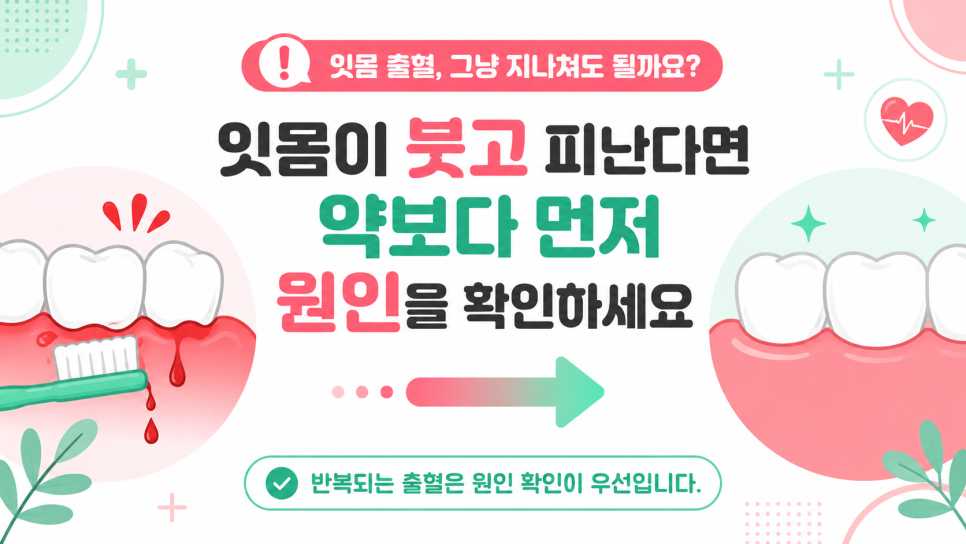
Today, we will explain the causes and management of gum inflammation, as well as signs that require dental care.
Why do gums become swollen and bleed?
There is more than one cause
Plaque is a bacterial film made up of food debris and bacteria.
If it is not removed sufficiently and hardens, it becomes tartar.
Tartar is difficult to remove with brushing alone and may cause an inflammatory response in the surrounding gums.
However, not all swelling and pain begin for the same reason.
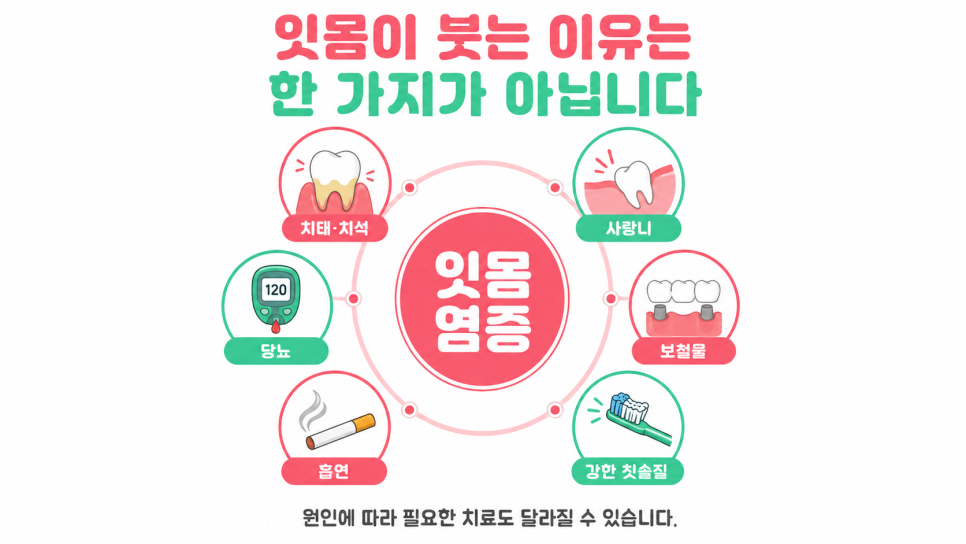
Food debris and bacteria may accumulate around a wisdom tooth
A specific tooth or dental restoration may irritate the gums
Brushing may be excessively forceful
There may be contributing conditions such as smoking or diabetes
The cause may vary depending on where the swelling occurs and how long it persists, so it is difficult to diagnose yourself based only on visible swelling.


Previous image
Next image

What can you do at home right now?
Stopping brushing because your gums hurt may allow more plaque to accumulate.
On the other hand, scrubbing forcefully because your gums are bleeding may cause additional irritation.
While your symptoms are mild, try the following measures.
Gently brush along the gumline with a soft-bristled toothbrush
Rinse with water after meals and avoid irritating foods
Reduce smoking and alcohol consumption
Record when the symptoms began and how long they have lasted
Do not force dental floss or an interdental brush deeply into the spaces between your teeth; check the proper method for you.
Also avoid rubbing irritating substances directly onto your gums.

Can gum medication or functional toothpaste
solve the problem?
Pain relievers and anti-inflammatory medications may be used as an adjunct to reduce discomfort, and a healthcare professional may prescribe medication depending on your condition.
However, medication or toothpaste cannot physically remove tartar that is firmly attached to the teeth.

Even if the symptoms temporarily improve, it is difficult to conclude that the underlying cause has been resolved.
If swelling recurs, you should check for tartar or other dental problems.
If you are taking medication or have an underlying condition, do not take additional pain relievers or gum medication on your own. Consult a healthcare professional or pharmacist.
When should you see a dentist?
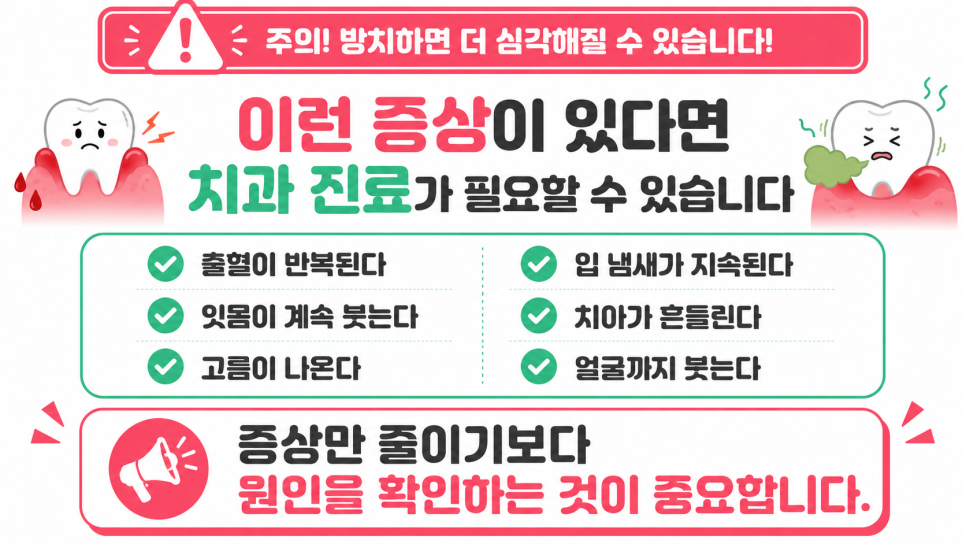
If any of the following changes occur, it is better to have the cause checked by a dentist rather than waiting.
Recurring or persistent gum bleeding and swelling
Pus discharge and an unpleasant taste when pressure is applied to the gums
Pain that continues to worsen and an inability to chew
Teeth appearing longer because of gum recession
Gaps developing between teeth and loose teeth
Facial swelling accompanied by fever
Persistent bad breath
In particular, if your face becomes swollen, you develop a fever, or swallowing or breathing becomes difficult, seek evaluation at a medical institution without delay.
Because gum disease may not cause significant pain in its early stages, do not use the level of pain as your only 기준.


Previous image
Next image
What is the difference between
gingivitis and periodontitis?
Inflammation limited to the gums is called gingivitis.
When inflammation progresses to the tissues supporting the teeth and the jawbone, it is called periodontitis.
As periodontitis progresses, the gums may recede and the teeth may become loose.
The two conditions can be difficult to distinguish based on appearance alone.
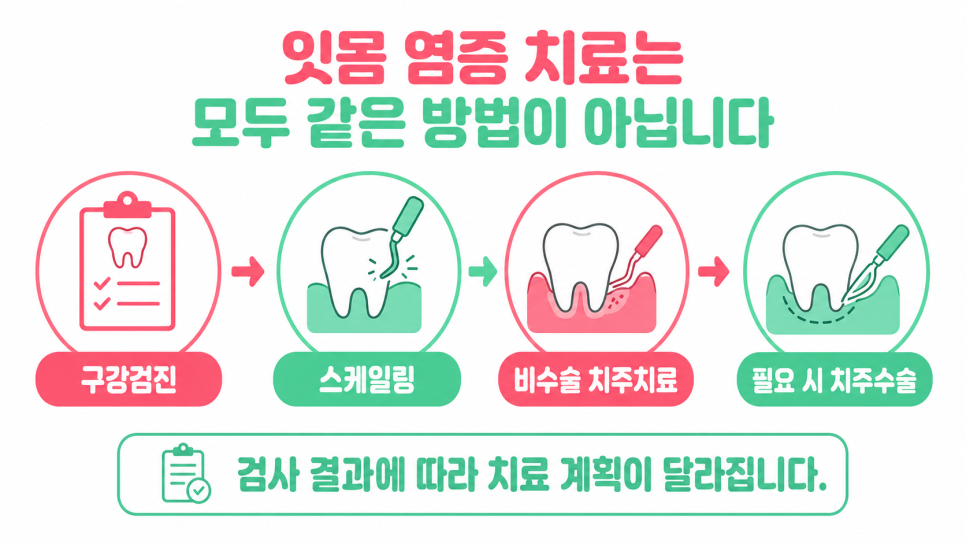
At the dental clinic, bleeding, swelling, and the depth of the periodontal pockets are examined. When necessary, X-rays are taken to check the bone around the teeth.

Gum inflammation treatment
is not the same in every case
When plaque and tartar are the main causes
-> Plaque and tartar are removed through scaling, and brushing and interdental cleaning methods are reviewed.
When tartar is present deep below the gums
-> If the periodontal pockets are deep and tartar is located below the gums, treatment to clean the deeper areas after administering anesthesia may be necessary.
When damage to the periodontal tissues has progressed
-> If deep periodontal pockets are present, additional treatment such as periodontal surgery may be considered.
If the teeth are very loose or bone loss is severe, the possibility of preserving the teeth is evaluated before determining the treatment plan.
Antibiotics are not used uniformly for all cases of gum inflammation. A healthcare professional determines whether they are necessary.

Sensitivity or pain may occur
after treatment
After gum treatment, temporary sensitivity, pain, or bleeding may occur because the tooth surface may become exposed or the surrounding tissues may be irritated.
However, the severity and duration of symptoms vary depending on the extent of treatment and the individual’s condition.
If the pain becomes worse over time or facial swelling, fever, or persistent bleeding occurs, contact the dental clinic where you received treatment for evaluation.
Take prescription medication according to the instructed directions. For care after treatment, follow the individual instructions provided by your healthcare professional.

Pay attention to the signals from bleeding
before focusing on pain
The biggest question when searching for information about gum inflammation is likely:
“Do I need to go to the dentist now?”
A single episode of bleeding alone does not establish a diagnosis, but if swelling and bleeding recur, have the cause checked.
The necessary steps vary depending on whether the condition is gingivitis, periodontitis, or another dental problem.

Brushing, interdental care, quitting smoking, and regular checkups are important for gum care.
Because the cause and stage of progression vary from person to person, the details should be confirmed through an examination by a healthcare professional.
Thank you.
This was 스마일디치과의원.