Hello,
I’m Dr. Yeo Sang-ho from Maggok Dental Clinic.
Everyone has probably experienced bumping their front teeth at least once.
When you fall or accidentally bite down on something hard,
the edge of a front tooth can chip or fracture
more easily than expected.
At times like this, people often think
it can simply be patched with resin,
but in fact, not every front tooth fracture
can be solved with resin treatment.
In particular, if there is a history of previous resin treatment,
or if you have an incisal occlusion where the front teeth meet edge to edge,
you may need to consider a different treatment approach.
Today, I’ll show example photos of veneer treatment
and explain step by step how we handle these cases.
- A chipped front tooth,
can’t it just be filled again with resin?
If only the tip of the front tooth is slightly chipped,
most cases can be sufficiently restored with resin.
But caution is needed in the following cases.
✔ When an area that had previously been restored with resin
fractures again
✔ When the upper and lower front teeth
meet horizontally edge to edge (incisal occlusion)
✔ When the anterior teeth, where aesthetics matter,
are involved
When these conditions overlap,
simple resin restoration has limitations
in terms of durability and retention.
In such cases,
it is better to restore with a prosthetic restoration or
arrange the occlusion appropriately.
At Maggok Dental Clinic,
first I will explain veneer treatment.
- What is a veneer?
It is a prosthetic treatment that
adheres a thin ceramic layer to the front surface of a tooth,
naturally complementing the shape and shade
of the existing tooth.
At Maggok Dental Clinic, this treatment is considered
a good option especially in the following cases.
- When the front tooth edge chips often
or resin keeps falling off
- When tooth size or alignment is asymmetrical
- For people whose work or daily life
places importance on aesthetics
Rather than being simply a procedure “to make teeth look pretty,”
it can be seen as a treatment that addresses functional issues
and improves appearance at the same time.
- Treatment process, step by step 👀
✅ Step 1. Diagnosis and occlusion check
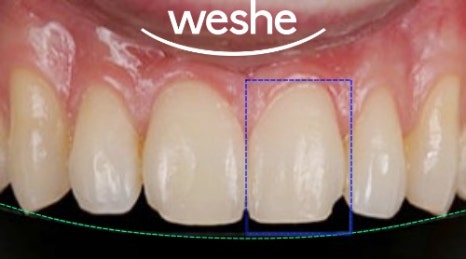
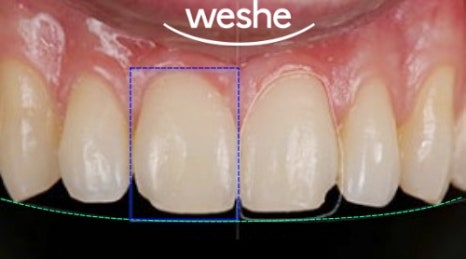
First, we check the chipped area and the condition of the surrounding teeth,
and examine how the bite is formed.
As mentioned earlier at Maggok Dental Clinic,
if there is an incisal occlusion,
a stronger prosthetic restoration is needed.
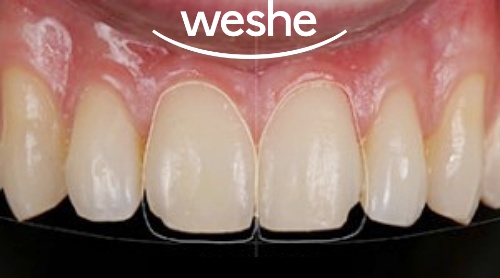
We also need to consider the gum condition, adjacent teeth, and shade.
✅ Step 2. Tooth preparation and impression taking
To ensure the prosthetic can bond well,
the natural tooth surface is minimally reshaped.
After that, the shape of the natural tooth is precisely
captured to fabricate a custom prosthetic.
These days, many cases are carried out digitally
using an intraoral scanner.
✅ Step 3. Try-in test
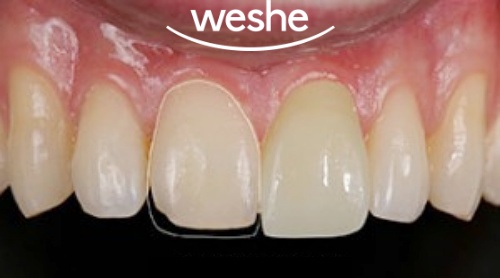
Once the prosthetic is fabricated,
a try-in process is performed before bonding.
At this stage,
you can also check how it feels when actually worn.
✅ Step 4. Pre-treatment
The inner surface of the prosthetic is sandblasted
to create fine roughness,
and bond strength is maximized through hydrofluoric acid treatment
and silane application.
✅ Step 5. Bonding and completion
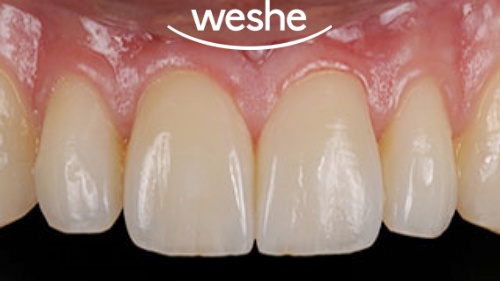
The veneer is bonded to the natural tooth
using selected resin cement,
and then firmly set with light curing.
At Maggok Dental Clinic,
after bonding, it is important to carefully remove
any remaining cement to complete the procedure.
- After treatment, what should you watch out for?
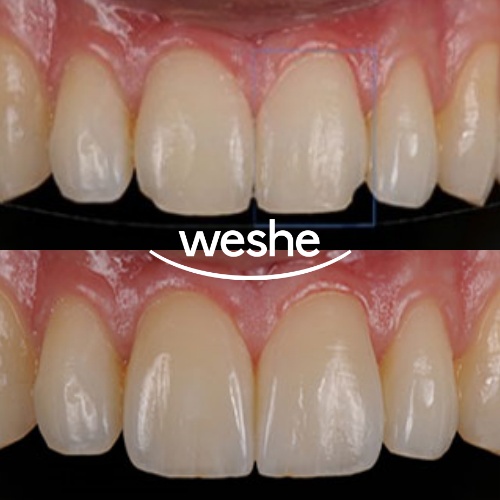
About one week after treatment,
a fit check is performed.
What is a fit check?
After the prosthetic has been permanently bonded to the natural tooth,
you return to the clinic after a certain period of time
to check the following details.
✔️ Whether there is any gum irritation or lifting
✔️ Whether any cement residue remains
✔️ Whether the bite fits well
And above all, what matters most is the habit of using it.
✔️ Actions such as biting hard with the front teeth,
including cracking nuts, chewing jerky, or tearing packaging,
should be avoided as much as possible.
Veneers are strong, but
it is important to remember that they are
“thin, precise ceramics” and use them accordinglyㅎㅎ
Teeth are a visible part of the body,
and they are an important organ that directly affects
food intake and speech.
Especially when a front tooth is chipped,
simply “filling it in” may not be the only answer.
If repeated resin restoration is difficult,
veneer treatment may be an option.
I hope this post has been helpful
to those who are worried about a chipped front tooth.
I’ll continue to share easy-to-understand and useful dental information.
Thank you for reading! 😊
Treatment period: 2024.10.25~2024.11.12