Hello,
This is dentist Yeo Sang-ho from Balsan Dental Clinic.
Have you ever noticed a tooth that somehow looks small when you smile?
This is the phenomenon known as
“microdontia (microdontia, microdontia).”
Today, I will explain the characteristics of this natural tooth shape,
the laminate treatment process,
and how it differs from resin restoration
in an easy-to-understand way.
- What Is Microdontia?
This article has been written by Balsan Dental Clinic
for the purpose of providing medical information.
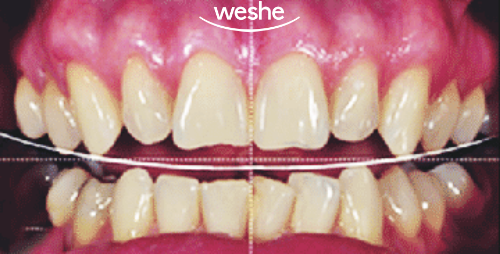
Microdontia literally means
“small teeth.”
It is especially common in the lateral incisors
right next to the central incisors,
which is why they are also called
“microdontic lateral incisors.”
If a normal tooth has a square shape,
this one is narrow and cone-shaped like the tip of a nose,
so gaps often appear between natural teeth.
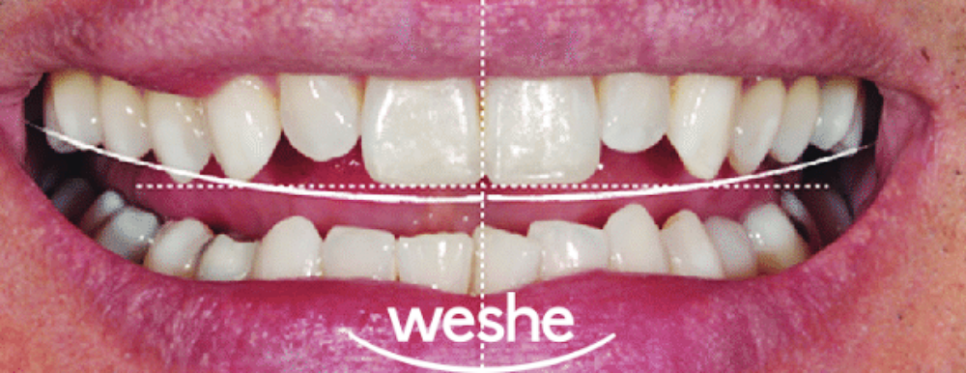
When the area around the front teeth that shows while smiling is small,
the balance of the smile becomes less even
and it can look visually awkward.
In the case above,
there was no space between the teeth,
but the line of the anterior teeth was not aligned.
When this kind of issue is present,
Balsan Dental Clinic would plan treatment as follows.
- Planning
A laminate treatment method
removes only about 0.3 to 0.7 mm from the front surface of the natural tooth,
then bonds a very thin ceramic veneer on top.
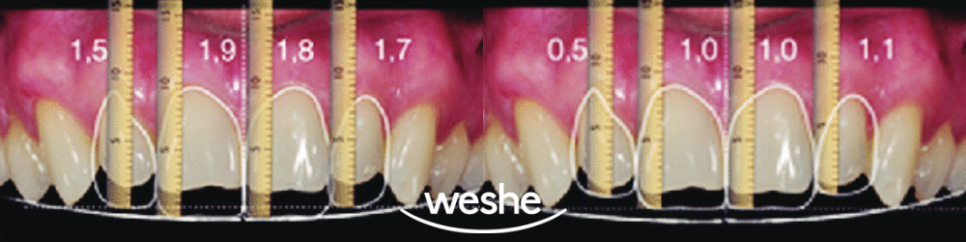
It is important to check the size of each natural tooth,
find a natural proportion,
and design accordingly.
In this case,
it seems best to restore the prosthesis in the proportion shown in the image on the right
so that the size can be improved without creating a large difference from the existing teeth.
Once this proportion has been planned,
treatment can proceed.
Balsan Dental Clinic will explain the process.
- Process
Before treatment,
we use various shade guides to try them against the teeth and select a tone that harmonizes with the adjacent teeth.
Through this process,
we can choose a color that matches the patient’s gum color,
the color of the neighboring teeth,
and the overall facial impression.
Temporary teeth are attached so that the patient can maintain a neat appearance
until the final prosthesis is fitted after preparation.
This allows the patient to maintain a natural look
without discomfort.
The completed laminate is checked with an oral scanner
through CAD/CAM modeling
and then manufactured with milling equipment.
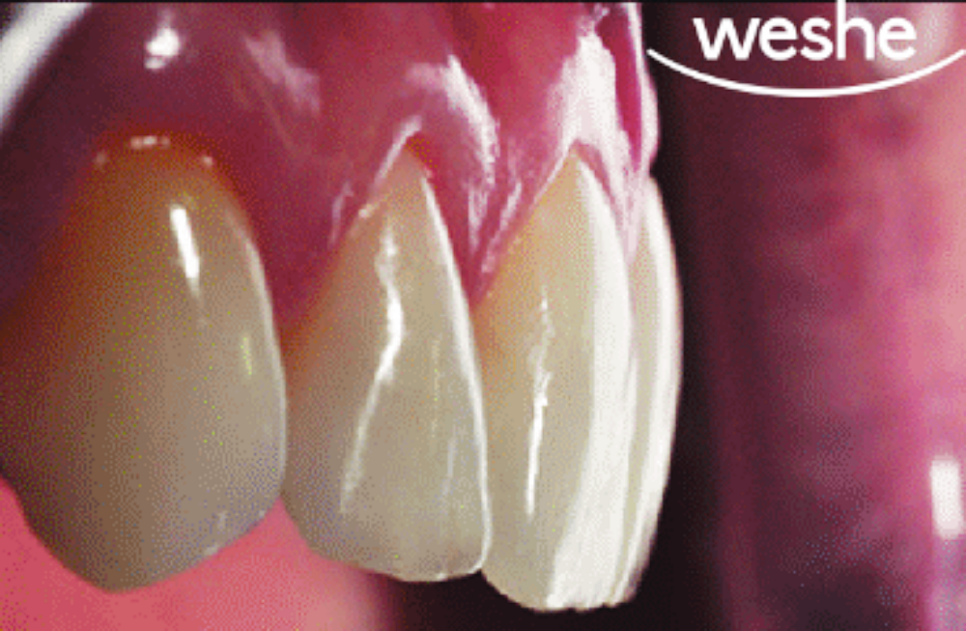
Finally, the surface that contacts the natural tooth is slightly roughened
and firmly fixed with a dedicated material.
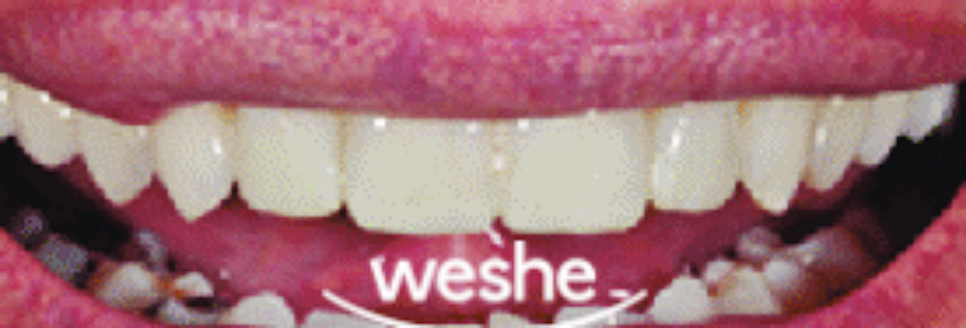
You can see that the size, shape, and angle have been matched to the adjacent teeth,
and you can also observe that the translucency of the ceramic has been finely adjusted.
From here, Balsan Dental Clinic will explain the difference between this treatment method and resin restoration.
- What Is the Difference from Resin?
| - No-Prep Laminate - |
No removal of natural tooth structure is required,
so the original shape is preserved as it is.
However, if the thickness is not properly checked,
the tooth may appear protruded,
and the seams may become noticeable because of the thickness.
| - Resin Restoration - |
Completed immediately with same-day treatment,
and the cost burden is relatively low.
However, due to slight color differences,
it may be difficult to achieve harmony with adjacent teeth,
and discoloration or detachment may occur over time,
leading to a higher frequency of retreatment.
Today, I explained the characteristics of microdontia,
the laminate treatment process,
and the differences from resin restoration
in an easy-to-understand way.
I hope this was helpful to those who need this kind of information,
and I will conclude here.
This was dentist Yeo Sang-ho from Balsan Dental Clinic.
Thank you for reading this long post.
Treatment period: 2025.04.05.~2025.04.30