Hello.
I am Yoo Jin Won, director of Smile Surgeon,
rebuilding your healthy smile at Magok-dong Dental Clinic.
Gingival inflammation is not just about bleeding;
it can cause teeth to separate,
and in severe cases, the tooth may need to be extracted
and a new fixture inserted.
Today, I will explain in simple terms
teeth spacing caused by periodontal disease and
the treatment process for front tooth implants (Implant).
Teeth spacing caused by periodontal disease,
explained by Magok-dong Dental Clinic
Why do teeth separate?
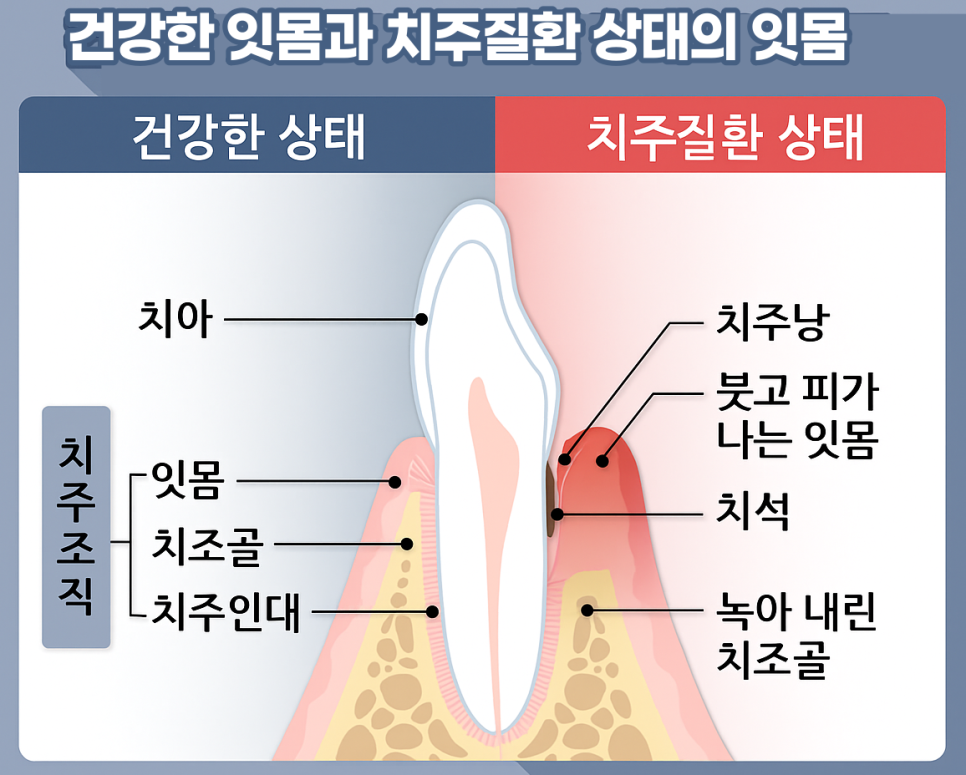
<The jawbone is melting away>
If gingival inflammation continues for a long time,
the bone holding the teeth gradually melts away,
causing the teeth to become loose and move.
<The periodontal ligament inside the gums widens>
If a lesion forms in the area connecting the teeth and gums,
it pushes the teeth apart,
widening the space between natural teeth.
<The gums recede>
As people age, the gums recede,
and when combined with previous inflammation,
the spacing becomes more severe.
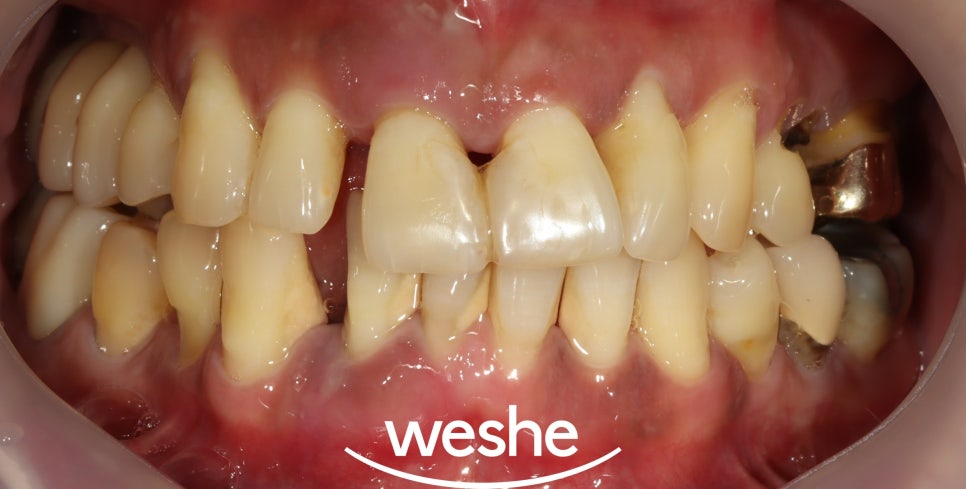
In the early stages, the spaces between natural teeth widen little by little,
food frequently gets stuck,
and the gums may bleed or swell,
but when it becomes severe,
the teeth become very loose, bad breath develops,
and cavities or other periodontal diseases also occur.
Therefore, in mild cases,
scaling can remove tartar
and help keep the gums healthy,
but
if a lot of alveolar bone has been lost,
the tooth must be extracted and an implant inserted.
Front tooth implant treatment process,
explained by Magok-dong Dental Clinic
If it is difficult to preserve the tooth because of periodontal disease,
the following process is carried out.
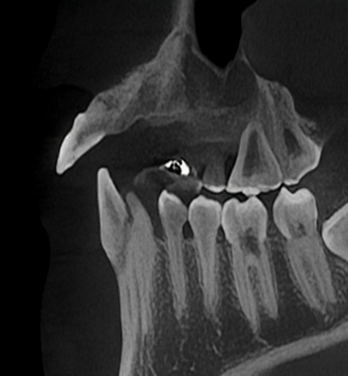
A CT scan is used to accurately check
the condition of the bone and
the gums.
The gum inflammation is addressed first,
and if necessary, a bone graft plan
is also established.
At Magok-dong Dental Clinic, the front teeth are a visible area,
so I believe more careful diagnosis and planning are needed.
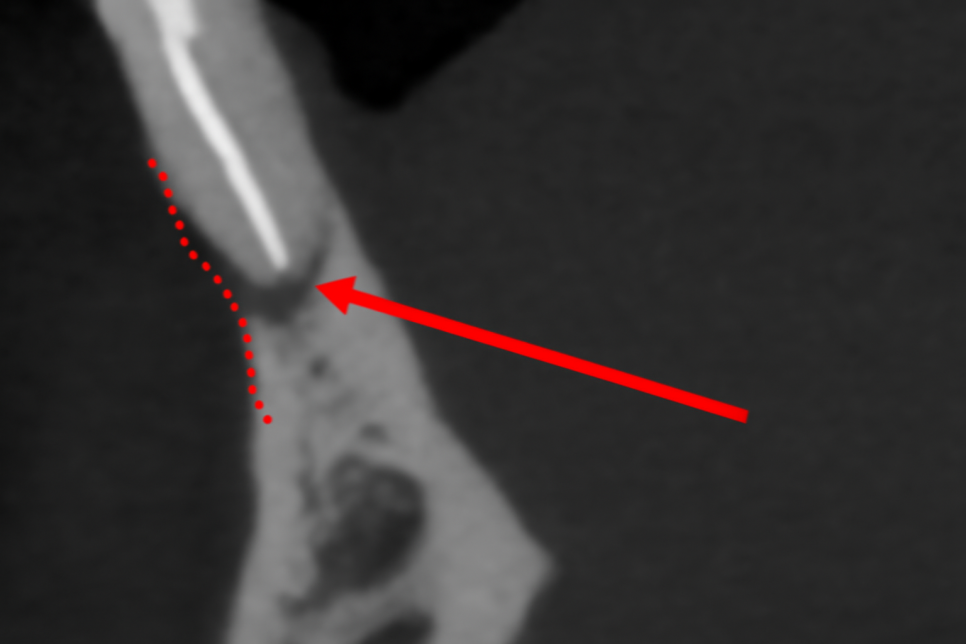
If a lot of bone has been lost,
a bone graft is performed either when the tooth is extracted
or after a certain period of time.
Sufficient bone is necessary
to place an implant,
and for front teeth, it is important to create
a natural-looking shape.
When placing the implant,
accurate positioning is important,
so the angle, location, and depth
must be adjusted precisely.
Because this is a visible area,
in some cases a temporary prosthesis is made
immediately after the fixture is placed.
This helps maintain the gum shape,
keeps it looking natural,
and prevents inconvenience in daily life.
We wait about 3 to 6 months
until the implant and bone are firmly integrated.
During this time, regular checkups are performed,
the healing process is monitored,
and if necessary, the temporary tooth is adjusted.
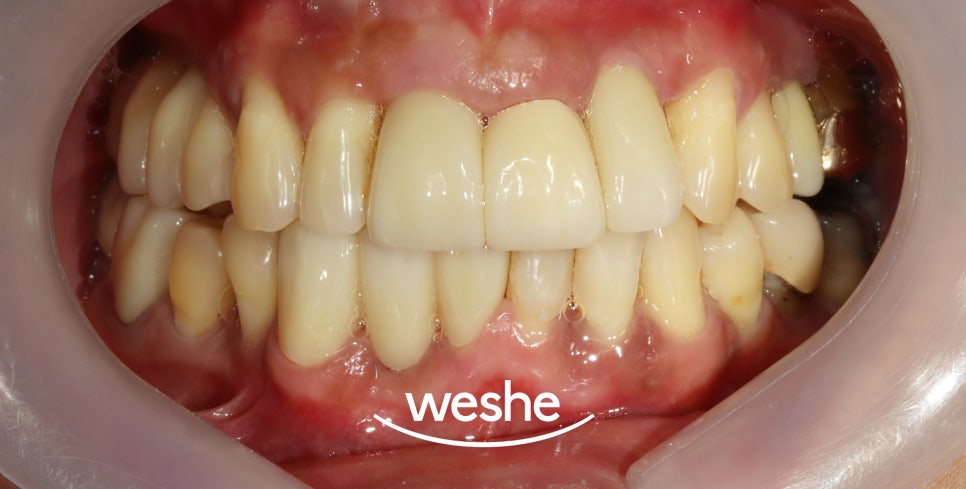
Once the bone and implant are sufficiently integrated,
the final prosthesis is custom-made.
It is made to match the color and shape of natural teeth,
so it looks natural
and functions well.
The benefits and care methods of implants,
explained by Magok-dong Dental Clinic
The advantages of this treatment are that
it functions similarly to natural teeth,
reduces discomfort in daily life,
and does not require grinding down adjacent teeth,
thus protecting other natural teeth.
It helps you chew food well,
improves speech,
and can be used for a long time.
After treatment,
you should keep the area around the implant clean
with toothbrushing and flossing
to prevent inflammation.
Every 6 months,
receive scaling and regular checkups
to prevent problems from developing.
If you smoke
or have diabetes,
the success rate may decrease,
so consult in advance
and be especially careful even after the procedure.
Today, I explained
teeth spacing caused by periodontal disease and
the front tooth implant treatment.
Gingival inflammation is not just simple bleeding,
but a serious disease that can cause tooth loss,
so prompt diagnosis and treatment,
as well as consistent care, are necessary.
This has been Yoo Jin Won, director of Smile Surgeon Magok-dong Dental Clinic,
rebuilding your healthy smile.
Thank you for reading this long post.
Treatment period: 2025.03.24~2025.07.01