Hello.
The smile designer who can turn your wishes into a beautiful smile,
I am Yang Sang-ho, a dentist at Songjeong Station Dental Clinic.
Today, I would like to talk about the space between the front teeth,
which many people worry about.
This condition, called diastema,
often widens gradually with age,
so many people hesitate over how to address it.
This kind of space is
not just an aesthetic issue.
It can also affect pronunciation,
and sometimes cause discomfort when food gets stuck.
However, many people worry,
"Would I need major surgery or a complicated treatment?"
Why do the front teeth become spaced apart?
In fact, there are many cases where it is simply due to congenital factors,
but there are also several other reasons.
At Songjeong Station Dental Clinic,
we explain that the following factors
can work together.
First,
small teeth, missing teeth
Second,
natural tooth movement due to gum disease
Third,
tongue pressure or bad habits
Fourth,
when the jawbone is large compared to the natural teeth
When these problems are present,
I will introduce how treatment can be provided.
How can the bothersome diastema
explained by Songjeong Station Dental Clinic
be resolved?
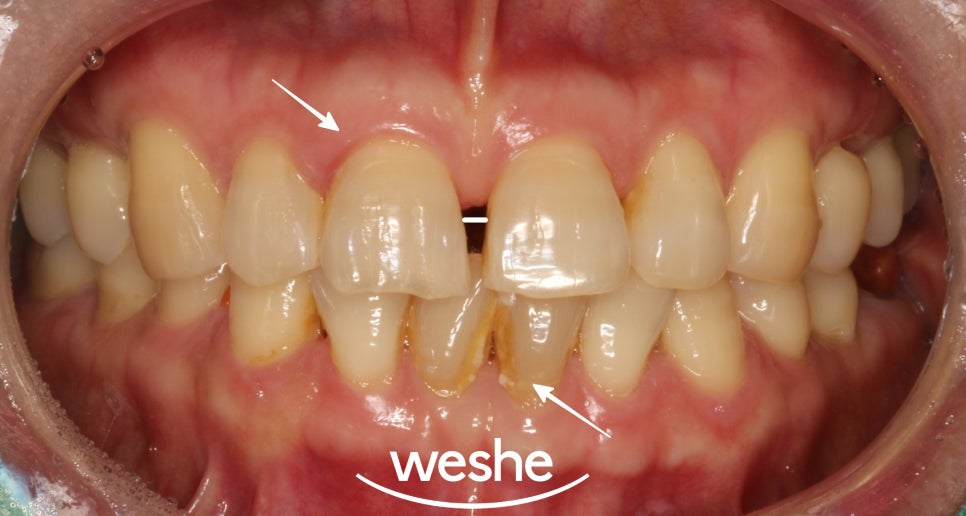
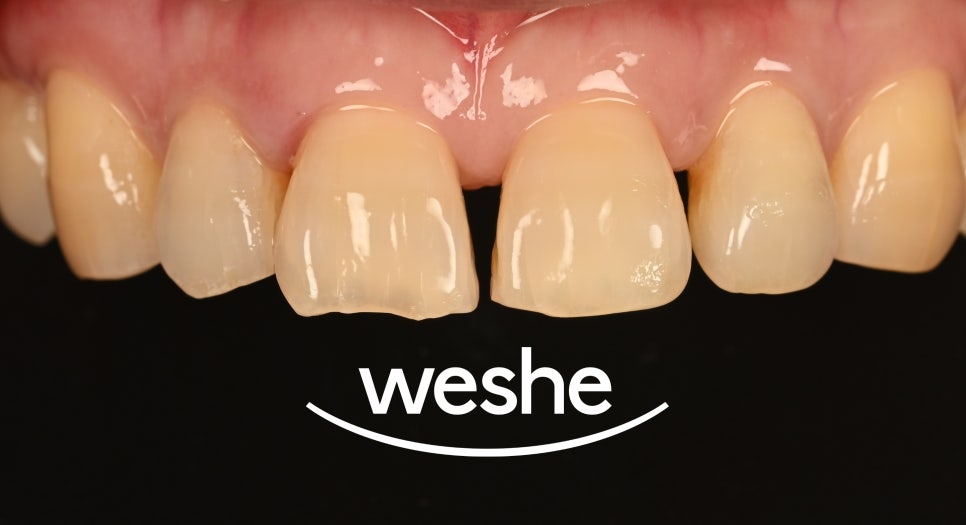
Looking inside the mouth,
you can see that the front teeth are spaced apart.
In addition, the lower front teeth
can be observed to have poor alignment.
When looking at the oral condition in this case,
the problem is that the teeth are arranged in a way that is not well maintained,
which makes periodontal disease more likely to progress.
If the alignment is crooked,
food tends to accumulate in those spaces,
but it is difficult to clean.
As a result,
tartar buildup causes gum disease,
and the gums gradually recede.
Therefore, at Songjeong Station Dental Clinic,
when this pattern is present,
if the upper and lower front teeth are treated comprehensively,
we believe good results can be achieved
in terms of bite and aesthetics.
Even so,
if a patient wants only a specific treatment due to treatment time, cost, or other reasons,
it is best to manage it carefully.
The method of management is
as follows.
First, what can be done at home is
to brush thoroughly and use oral hygiene products.
This is one of the things that medical institutions always emphasize.
As I always say,
the reason management does not go well is probably because
-
it is not the right method for the person
-
the habits have not been improved
and this has not been checked.
To improve habits,
it is important to find a method that you can continue consistently
among the methods available to you.
I believe this can be resolved through consultation with a medical institution.
For those who find it difficult to consult a medical institution,
I recommend managing it in the following ways.
With every meal,
it is good to manage it using brushing, floss, interdental brushes, and the like.
If doing these things makes habit improvement difficult,
then first of all, be sure to use a toothbrush and oral hygiene products
before going to bed to manage it.
The reason is as follows.
In general, after eating,
after 40 minutes, food debris and bacteria meet to form plaque,
and after 4 to 8 hours,
calcification begins.
After 24 hours,
about 50% becomes calcified,
and after 12 days, it becomes tartar.
That is why medical institutions tell patients to brush within 30 minutes after meals,
and before going to bed,
to carefully clean the spaces between natural teeth
with oral hygiene products such as interdental brushes.
Plan
From the perspective of Songjeong Station Dental Clinic,
what patients often consider a lot when treating diastema in the front teeth is
the following.
First, resolving only the maxillary front-teeth spaces
Second, natural-looking results
Third, treatment without a heavy burden
Considering these conditions,
laminate seems to be the appropriate treatment method.
This method can fill the spaced-apart area
after minimizing tooth reduction.
In particular, because it can create a natural shape and color while minimizing damage to the natural teeth,
it is a method that can be chosen without much burden even by middle-aged and older patients.
If laminate is restored on the four upper front teeth, 12, 11, 21, and 22,
it can naturally fill the spaced area
while also creating overall harmony.
Test results,
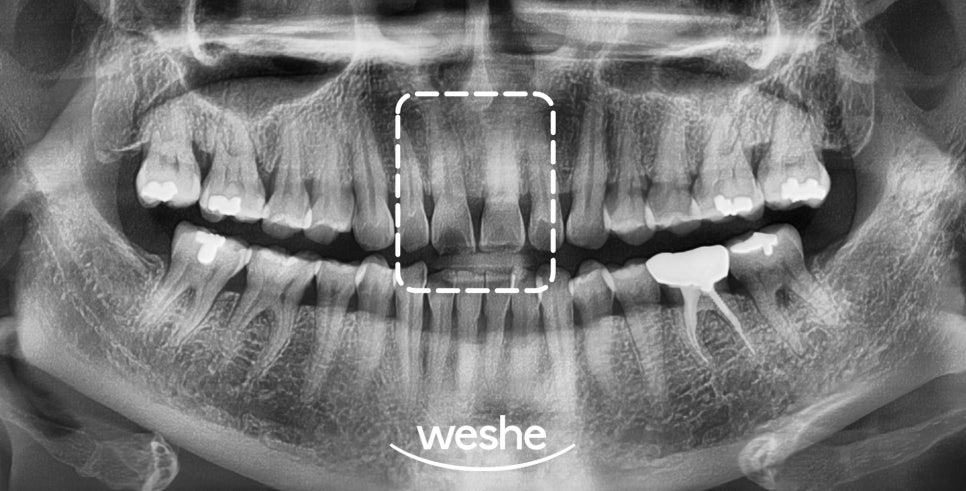
There was only space in the maxillary front teeth,
and there were no special problems in other areas.
However, because tartar and plaque had accumulated overall,
it is important to clean them thoroughly first.
This is because plaque cannot be removed by brushing alone,
and early tartar can also be a main cause of gum inflammation.
What helps at this time
is Airflow scaling.
Unlike regular scaling,
it is a method that can be performed with low irritation
without damaging the teeth.
What matters most is the preparation process before treatment
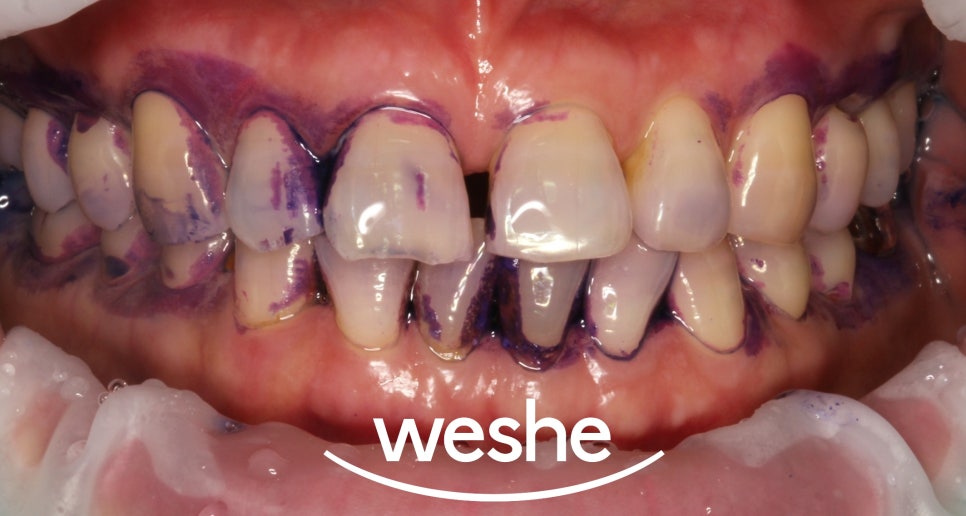
Before scaling,
a plaque staining test is used
to check the areas that have not been cleaned well overall,
and patients are taught ways to clean those areas.
After that, the already hard tartar is removed with Airflow.
Airflow is a device that sprays water and fine powder,
allowing teeth to be cleaned thoroughly
without pain or sensitivity.
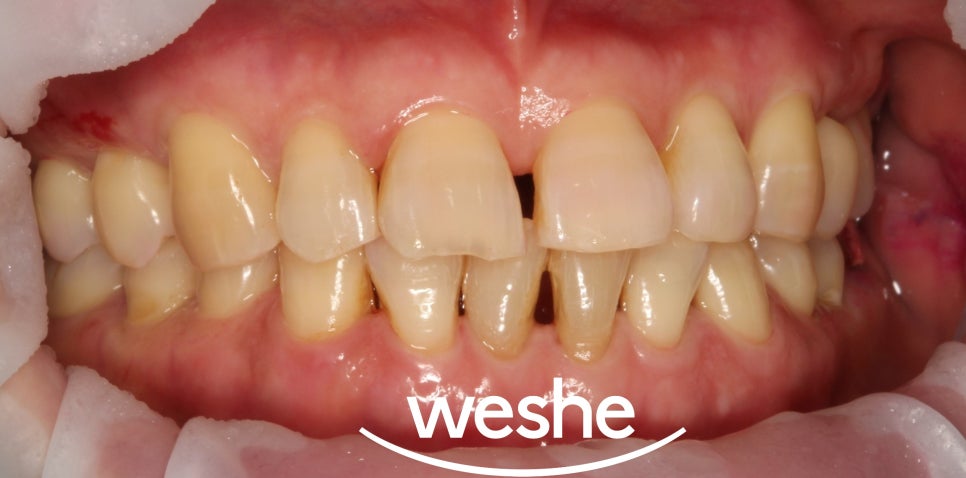
It helps prevent gum disease and cavities,
and above all,
it creates a foundation for laminate treatment.
Starting from a clean condition
improves the adhesion of the laminate
and increases long-term success rates.^^
Once the preparation is complete,
laminate fabrication can begin in earnest.
First, a precise impression is taken,
and the shape and color are decided together with the patient.
If the patient wants it to feel similar to the existing teeth,
it is important to design it with a natural shape.
While preserving the healthy parts of the existing teeth,
it is best to resolve only the spaced area.
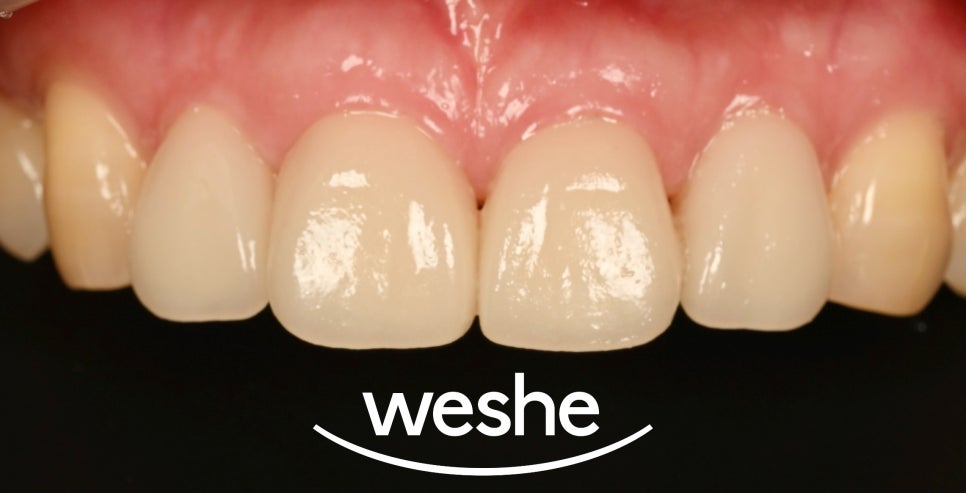
12, 11, 21, 22
When custom laminates are made for each of the four teeth,
they are bonded.
The spaced area has been naturally filled,
and you can see that the harmony with the adjacent teeth is also natural.
What I wanted to introduce today is that,
in the end, the space between the front teeth is complicated,
but it can be resolved naturally enough
even without major treatment.
I hope this was helpful to those reading,
and I will end the post here.
This was dentist Yang Sang-ho of Songjeong Station Dental Clinic.
Thank you for reading this long post.

20250625~20250829