
Hello~
Wishing you a beautiful smile,
this is Magok Dental Clinic.
Do you enjoy hard foods like peanuts or walnuts,
or foods like ribs that you tear off with your front teeth?
Or if you have had cavities before,
it may be a good idea to pay close attention to today’s topic.
In fact, the chance of tooth fracture increases
in situations like the ones above.
This small chip, which may seem minor at first,
can lead over time not only to aesthetic concerns
but also to sensitivity and various kinds of pain,
so prompt care is needed.
In particular, among people in their 40s and 50s,
teeth can become damaged for reasons such as aging
and the lifespan of restorations placed in the past.
So you may be wondering what to do
when this happens.
From here on, we’ll introduce ways to restore a broken tooth
so it looks natural, just like a natural tooth.
Why do front teeth and molars break?
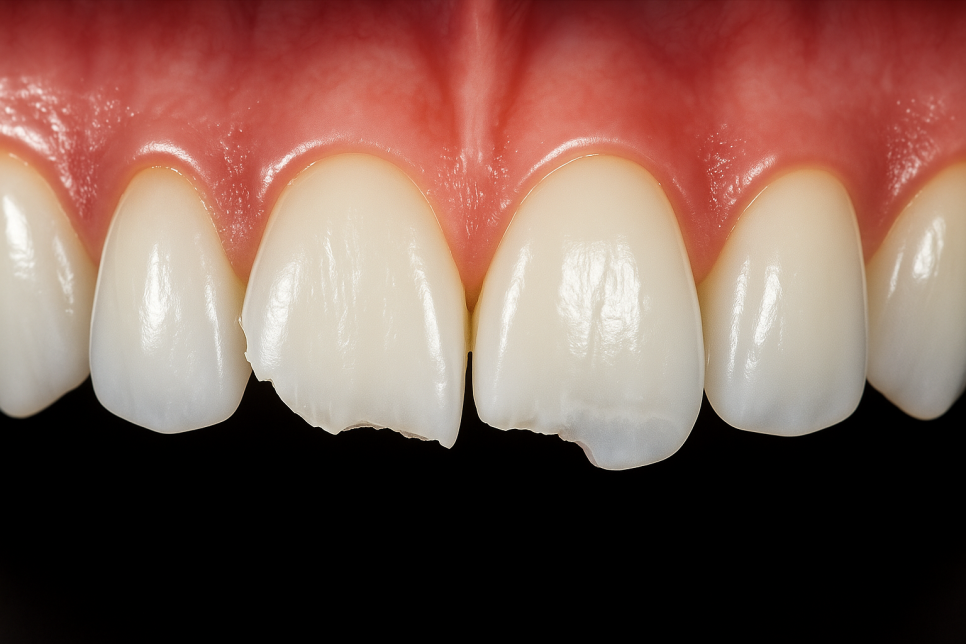
First, let Magok Dental Clinic explain
why fractures occur.
There can be many causes,
but common factors include cavities (dental caries),
natural wear and tear over time,
and habits such as grinding teeth at night.
When an already weakened tooth experiences external impact,
a fracture can occur.
Here, external impact may mean an accident,
and as mentioned earlier, eating hard foods
can also be one of the causes.
Is prosthetic treatment really necessary?
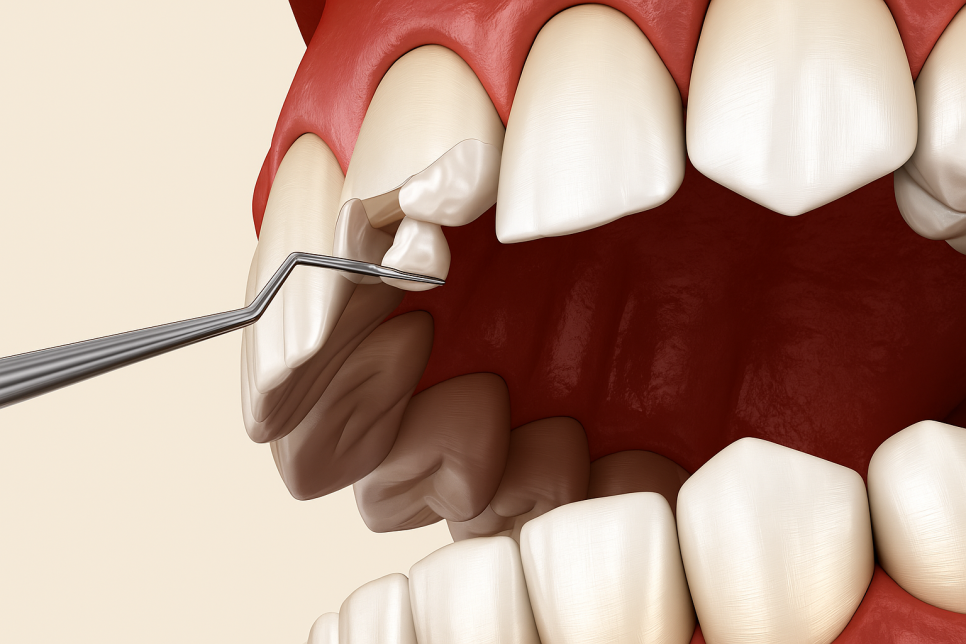
When a tooth breaks like this,
Magok Dental Clinic explains why it should not be left untreated.
First, if the broken area is left as is,
the inner nerve becomes exposed to the outside.
When that happens, infection and tissue loss
can occur in that area.
Prosthetic treatment, including resin,
can protect the broken area
and help prevent any additional loss that may occur.
Also, since the front teeth are located in a place
that is easily visible to others,
if they break, they can significantly affect appearance.
If the damage occurs in a molar, it can reduce chewing function
and cause various inconveniences,
and crumbs or debris can get trapped in the crack,
which also increases the likelihood of bacterial infection.
For these reasons, tooth fractures
require prosthetic treatment.
What process will you go through?
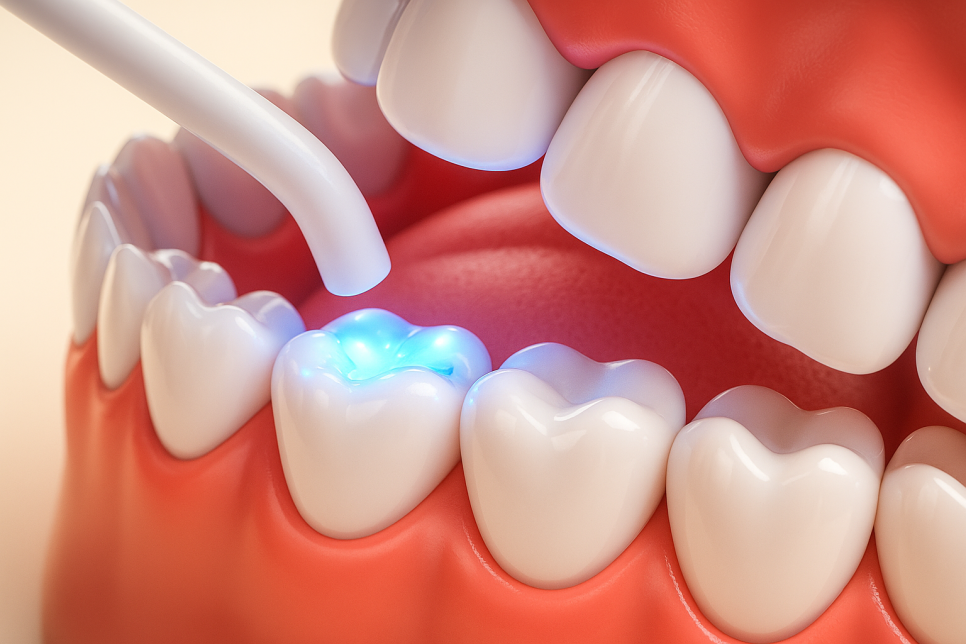
Now, let’s look at the course of treatment
for this procedure at Magok Dental Clinic.
1️⃣
First, we check the location and size of the fracture,
as well as the health of the affected tooth.
If necessary, an X-ray is taken
to examine the internal nerve and structure,
allowing for a more careful and accurate assessment
of the situation.
2️⃣
If the defect area is relatively small,
or if it is a cavity on the chewing surface of a posterior molar,
a direct filling using composite resin
with a color similar to a natural tooth is recommended.
Depending on the person, the process may begin with
minimal preparation.
3️⃣
The resin prepared in this way is filled into the broken area.
Then, after carefully shaping it to match the original form and function,
it proceeds to the ‘curing’ stage,
where the resin is hardened using a special light-curing device.
4️⃣
Finally, the bite is checked
and the surface is smoothed to help prevent
any discomfort during chewing.
Afterward, depending on the person,
polishing can be performed to give it a natural shine.
📍
There are cases where the defect area is large,
or where a more precise shape and high durability
are required.
In such cases, indirect restorations such as inlays,
onlays, and laminate veneers can be bonded
to rebuild shape and function.
If the fracture is in a highly visible area like a front tooth,
laminate veneers can be a good alternative.
It’s said to look natural aesthetically, so how does this material match the color of a natural tooth?
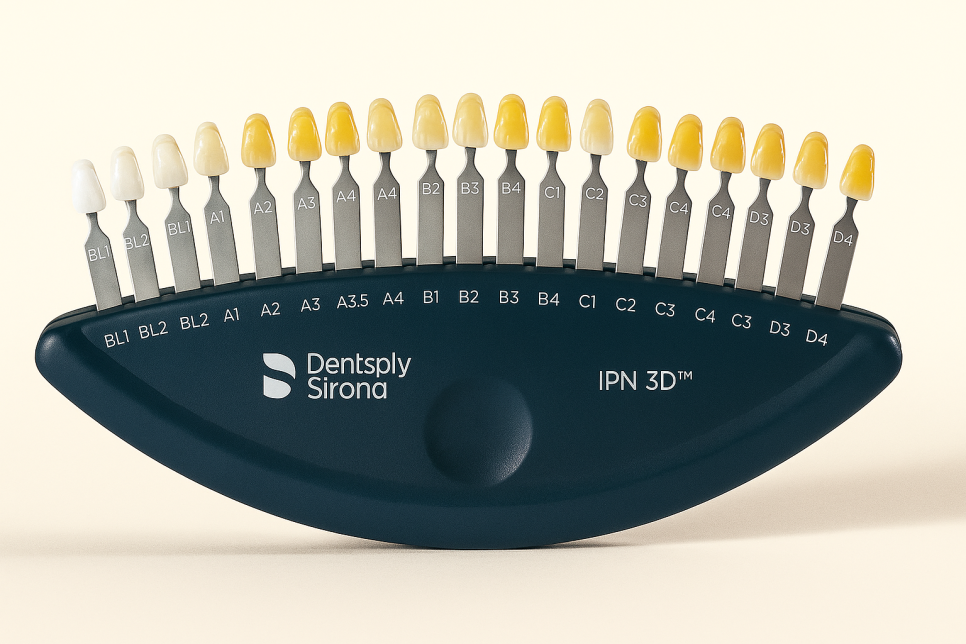
Many people may be curious about this principle,
so Magok Dental Clinic would like to introduce it.
First, let’s take a look at a specialized tool
called a Shade Guide.
This tool is a standardized device that can accurately determine
the shade of the adjacent teeth (lightness and saturation),
and it can be considered the starting point
for seamless aesthetic treatment.
Based on the VITA system used in international dentistry,
it is broadly divided into four basic shade groups—A, B, C, and D—
and lightness levels from 1 to 4.
A represents reddish-brown, B yellow,
C gray, and D a reddish-gray tone.
The lower the number, the brighter the color,
and the process proceeds by comparing it with the natural tooth
to select a similar shade.
This series of steps is called shade taking,
and it is carried out by carefully comparing and analyzing
transparency, light reflection and transmission, gloss,
surface structure, and even the subtle differences
between dentin and enamel.
To meet the above conditions,
shade taking is verified under strict conditions like those below.
It is measured with all dental chair lights turned off
or under natural light or standardized lighting,
and lipstick, cosmetics, and the color of the clothes being worn
are also factors to consider,
so all possible cases in which optical illusions may occur
are taken into account.
Important notes
Regarding this, Magok Dental Clinic has prepared
frequently asked questions from patients in FAQ form.
Q. Will resin be used in every case?
👨⚕️ It can be used when the defect area is small or the cavity is not deep. If the area is large and wide or the crack is deep, inlay, onlay, laminate veneer, or even a crown may be performed.
Q. How long does it last (durability)?
👩⚕️ It is no exaggeration to say that this depends on each person’s oral hygiene habits, daily diet, and whether they receive regular checkups.
It can generally be used for about 5 to 10 years, and there are cases where it has lasted even longer with consistent care and examinations, so please take good care of it.
Q. What kind of care is needed?
👨⚕️ First, it is best to pay attention to your diet.
For a certain period after treatment, a soft liquid diet is recommended,
and hard or chewy foods should be avoided.
Brushing is also a key point, and using dental floss, interdental brushes,
and mouthwash together helps remove tartar and food debris remaining in the mouth.
In addition, habits such as biting nails or grinding teeth during sleep are recommended to be corrected.
Q. What is the usual interval for regular checkups?
👩⚕️ First, we recommend visiting again 1 to 2 weeks after restoration.
At that time, we check whether the resin is well bonded and whether the bite feels natural,
and minor adjustments may be made if necessary.
After that, regular checkups are guided at 6-month to 1-year intervals.
This is not simply upselling, but is meant to help prevent pain before it happens,
or to detect problems early and respond quickly when they do occur,
so please keep this in mind.

If your front tooth or molar has broken
and you are feeling distressed about it,
we sincerely sympathize.
We imagine you were very surprised
by the sudden situation.
We may not be able to fill your heartache,
but at least the broken tooth can be filled again.
Through this, we sincerely hope you can regain
a healthy smile and a peaceful day.
That concludes what I prepared for today.
Thank you to everyone who read this long post.
Wishing everyone here
a beautiful smile,
this was Magok Dental Clinic, Yonsei Wish.
Thank you.