
Hello :D
Many people’s beautiful smiles
We are here at Magok Dental Clinic, working to Weshe them.
Unlike last year, the heat has eased earlier,
and autumn has arrived, bringing cool breezes
in the mornings and evenings.
We hope you always stay healthy.
Among people in their 30s and older in Korea,
there is a high chance of experiencing
periodontal disease at least once.
Unhealthy oral hygiene habits that have built up since the teens and twenties eventually lead to the continuous accumulation of plaque and tartar,
and these can cause caries that make teeth decay,
commonly known as cavities, as well as periodontitis that destroys the alveolar bone,
causing gums to become red and swollen,
along with pain and bad breath.
If you are experiencing the symptoms above,
it is likely a stage that requires prompt treatment.
Today, in relation to this,
we will answer some of the questions
that many people have been curious about.
After gum treatment, alcohol
When can you drink again?

This is especially one of the most frequently asked concerns,
and also one that many people struggle with,
so let’s start with the topic of abstaining from alcohol.
To give you the conclusion first,
we recommend avoiding alcohol for about 2 to 3 days, and safely for about 1 week.
We also ask that you continue to abstain from alcohol
or at least drink in moderation after that.
Let Magok Dental Clinic briefly explain why.
🍺 Alcohol increases blood flow
and can worsen inflammatory responses, which may cause bleeding and swelling
in the treated area.
It can also reduce the effectiveness of prescribed antibiotics and anti-inflammatory pain relievers,
place a burden on the liver,
and cause pain.
For the reasons above, we advise you to avoid alcohol,
and if you do not follow this guidance,
the risk of infection increases and the recovery period may become longer and longer.
What is gum treatment?
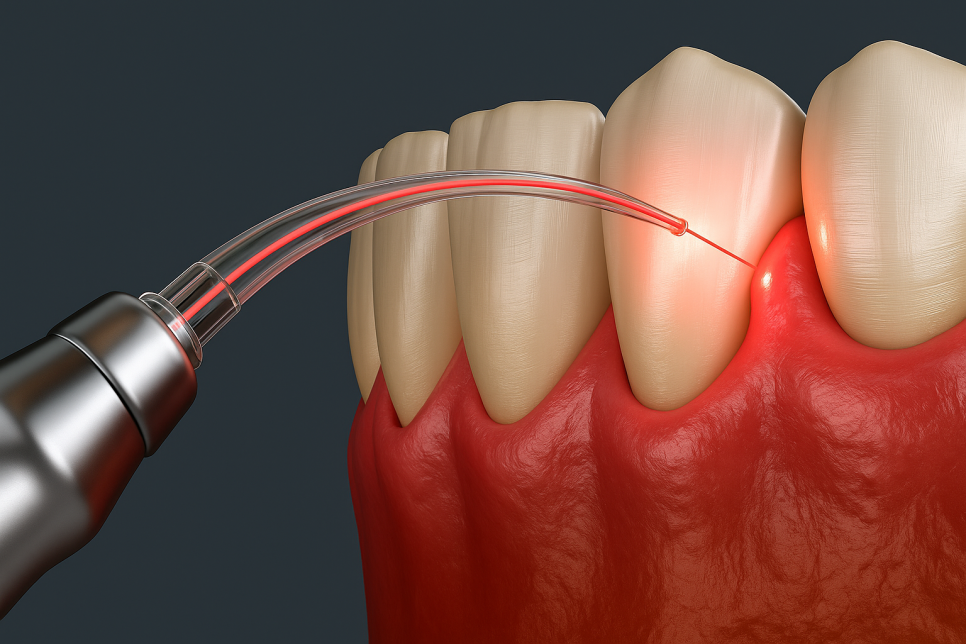
Then let us explain what this solution fundamentally is.
First, let’s look at gum disease, that is, chronic periodontitis.
This condition refers to inflammation of the gums surrounding the teeth
and the alveolar bone that supports them,
leading to destruction of the soft tissue.
It is commonly also called pyorrhea.
In the early stage, gingivitis occurs first,
with slight swelling or bleeding when brushing.
At this stage, natural healing may be expected through personal hygiene management,
but if it is not properly cared for and symptoms worsen,
periodontitis (Periodontitis) develops.
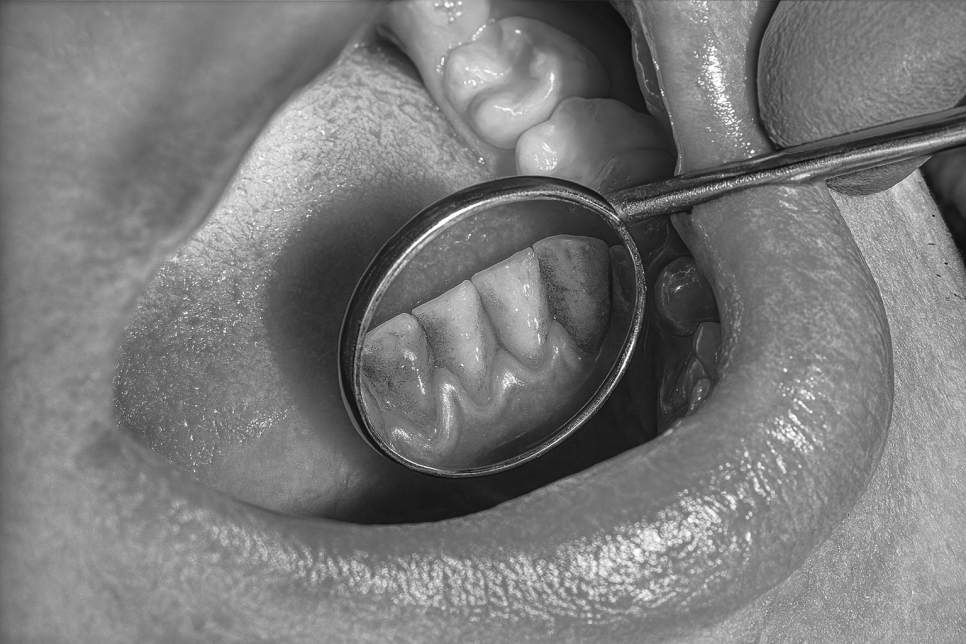
The main causes of these diseases are plaque,
and tartar, which forms when plaque accumulates and hardens over time.
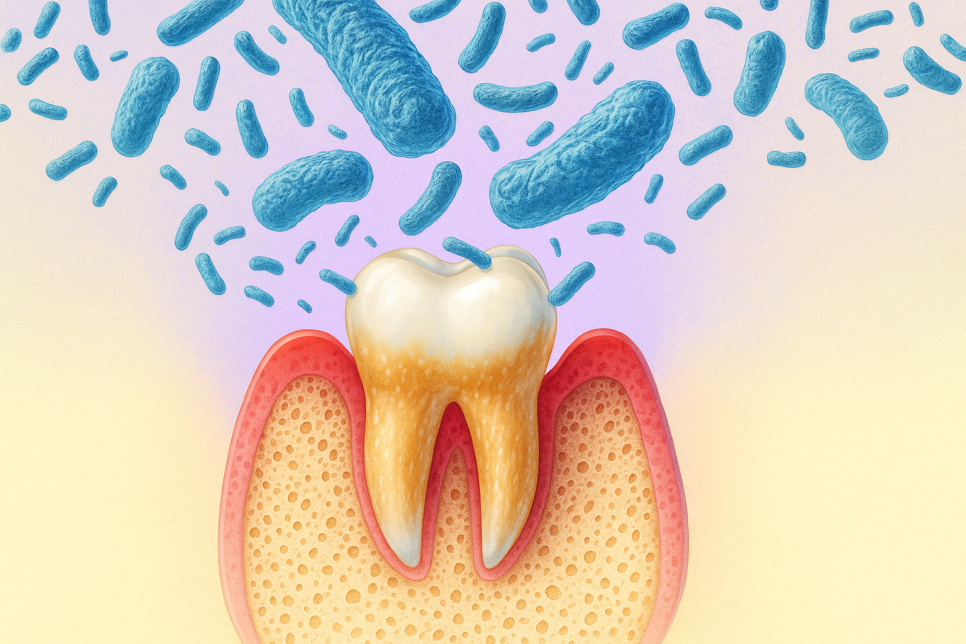
The bacteria contained in these deposits infect the soft tissue
and can also invade the area around the bone surrounding the roots,
and when this happens, the teeth may become loose
or shift position,
making chewing more difficult.
Bad breath also worsens, oral discomfort may continue,
and brushing can become painful and often cause bleeding.
In severe cases, pus may come out or periodontal pockets may deepen,
damaging the bone and even leading to tooth extraction,
so it is best to receive treatment quickly.
It is also common in people who have worn prosthetic appliances for a long time,
or those with habits such as smoking, teeth grinding, or clenching.
However,
the reason this disease is frightening
is not only that.
Because bacteria can spread throughout the body through the bloodstream,
it can become a factor that worsens the condition for people with diabetes,
and it may also act as a cause of cardiovascular diseases such as myocardial infarction or stroke,
or illnesses such as rheumatoid arthritis
and dementia.
Step-by-step process
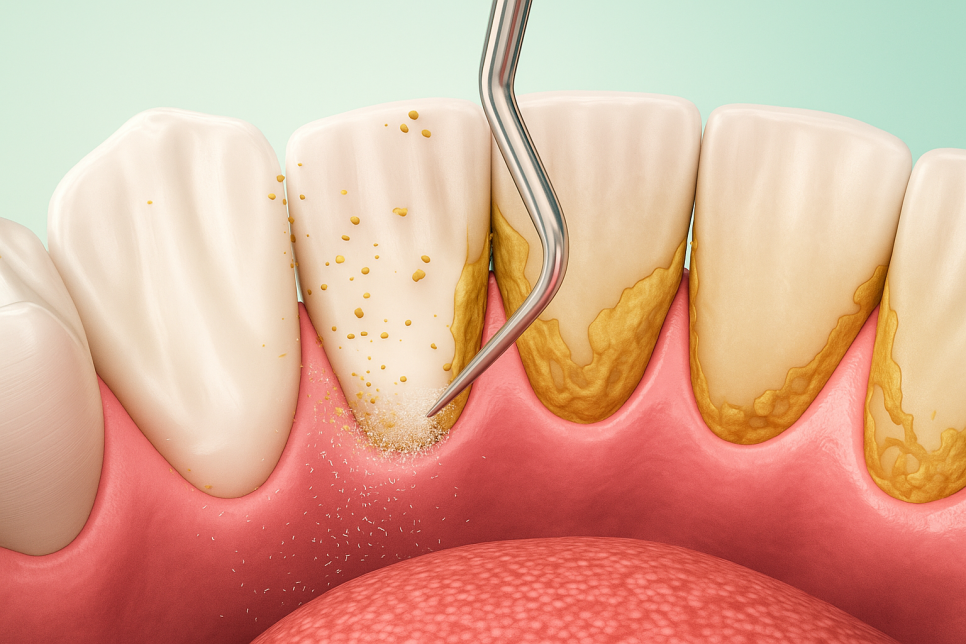
Now let’s organize the stages through which this disease is treated.
First, a detailed examination is performed for an accurate diagnosis.
Among these, a test called probing measures the depth by inserting a probe,
and based on that depth and bleeding,
the degree of inflammation can be classified as mild, moderate, or severe.
Then, based on these results,
a treatment plan is established.
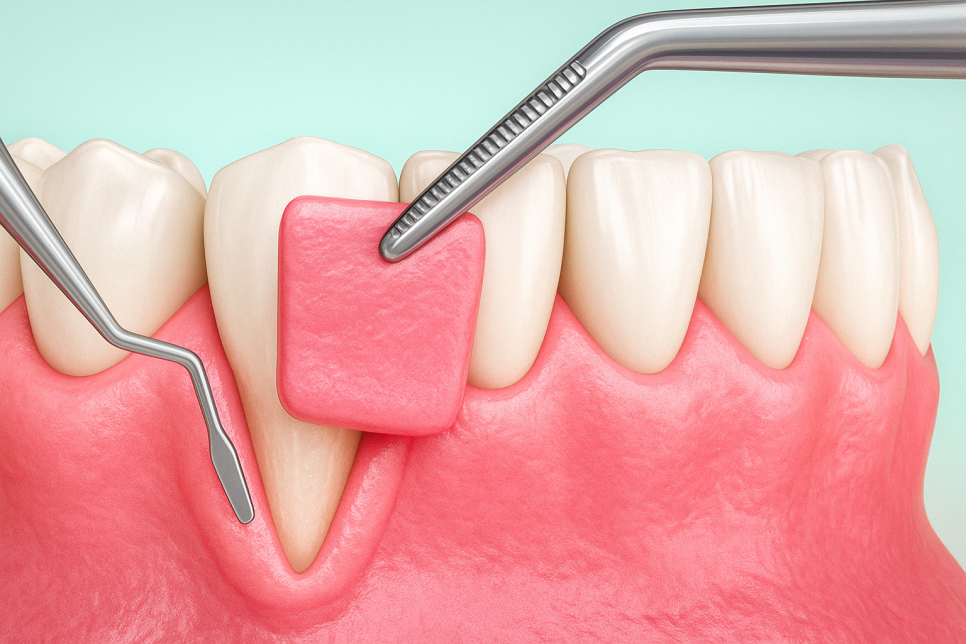
If it is a mild stage,
the plaque and tartar are removed through scaling,
which many people already know,
and the focus can then shift to better personal hygiene management.
However, if the disease has progressed deeper,
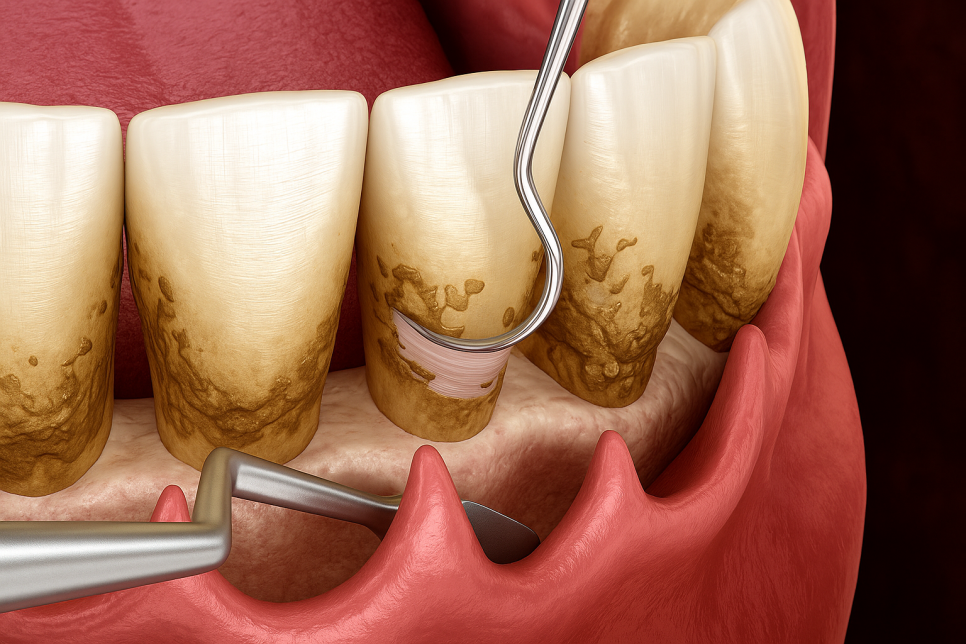
subgingival curettage (Subgingival Curettage)
may be considered.
This method uses special instruments such as curettes to scrape away tartar and inflammation hidden beneath the gums (subgingival area) that are not easily visible,
and while scaling treats exposed surface areas,
this can cover areas deep inside that are difficult to check from the outside.
In addition, root planing (Root Planing) may be performed,
which refers to smoothing the roughened and altered tissue on the root surface.
If this area becomes rough, bacteria and plaque can easily reattach and recur,
so this smoothing process is necessary.
Because these procedures are performed with anesthesia,
you do not need to worry about pain.
However, if the problem is not resolved even after the above methods,
surgical procedures such as flap surgery (Flap Surgery) are performed.
This method involves making an incision and lifting the tissue under local anesthesia
to directly remove tartar, inflammatory tissue, and granulation tissue in areas of bone loss,
and, if necessary, alveolar bone reshaping can also be performed.
After receiving treatment in the above manner,
it is good to observe the progress at 1- to 2-week intervals
to check for any unusual findings.
During this period, sensitivity, bleeding, and discomfort may occur,
but these are natural during the healing period
and will disappear after some time as if nothing had happened.
If the pain seems severe or lasts a long time,
please contact the clinic you visited promptly.
Tips for maintaining oral health and prevention

Next, Magok Dental Clinic will share some useful prevention tips
so that situations like this do not happen in the first place.
1️⃣
First, we recommend adjusting your brushing habits.
Brush thoroughly with up-and-down sweeping motions,
and be sure to clean not only the visible areas
but also the inner surfaces carefully.
Pay special attention to the molars and border areas,
which are located in deep places that a toothbrush cannot easily reach,
and it is good to use interdental brushes and floss as well.
2️⃣
Improving your diet can also be a good direction.
It is better to avoid snacks and carbonated drinks that are high in sugar,
as the acidity they contain is harmful to bacterial growth
and does not have a positive effect on health.
Also, it is best to refrain from hard or chewy foods
that may put strain on the teeth.
3️⃣
Also, as mentioned earlier,
it is advisable to refrain from alcohol as much as possible
and avoid it.
Smoking is even worse for oral health.
That is why
we strongly recommend cutting back on drinking and quitting smoking.
We do not think this can be emphasized too much.
These are factors with such a major influence,
so we urge you to manage them before they cause more pain.
4️⃣
Next, for those who grind their teeth while sleeping,
or those who have a habit of clenching their teeth,
it is important to correct this.
Of course, it may not be done consciously,
but these behaviors ultimately place a heavy burden on the teeth
and can cause cracks.
5️⃣
Regular checkups are also important.
We usually recommend visits every 6 months to 1 year,
and if you get examined during that period,
even if bacteria are multiplying and the disease is progressing,
there is a higher chance of catching it early.

That concludes everything I prepared for today.
I hope this helped resolve some of the questions you had.
I would like to greet you with the hope that the rest of your day will be a good one.
This has been Magok Dental Clinic.
Thank you to everyone who read this long post.