Hello.
This is Yonsei Wish, Magok Dental Clinic.
I hope everyone is having a peaceful day.
The weather these days is really hard to read.
If it feels chilly, you put on thicker clothes,
but then it somehow feels warm,
and if you choose thinner clothes,
after the sun goes down it gets too cold.
Since you never know when or where it will rain,
it’s easy to find people around you who keep a small folding umbrella
in their bag all the time.
Then, if you get caught in a sudden shower without any preparation...
you would be stuck,
unable to do anything,
just stamping your feet in place,
feeling completely lost.
Accidents like this always
come and go without following our predictions.
They arrive unexpectedly and, in an instant,
totally shake a person’s thoughts and feelings.
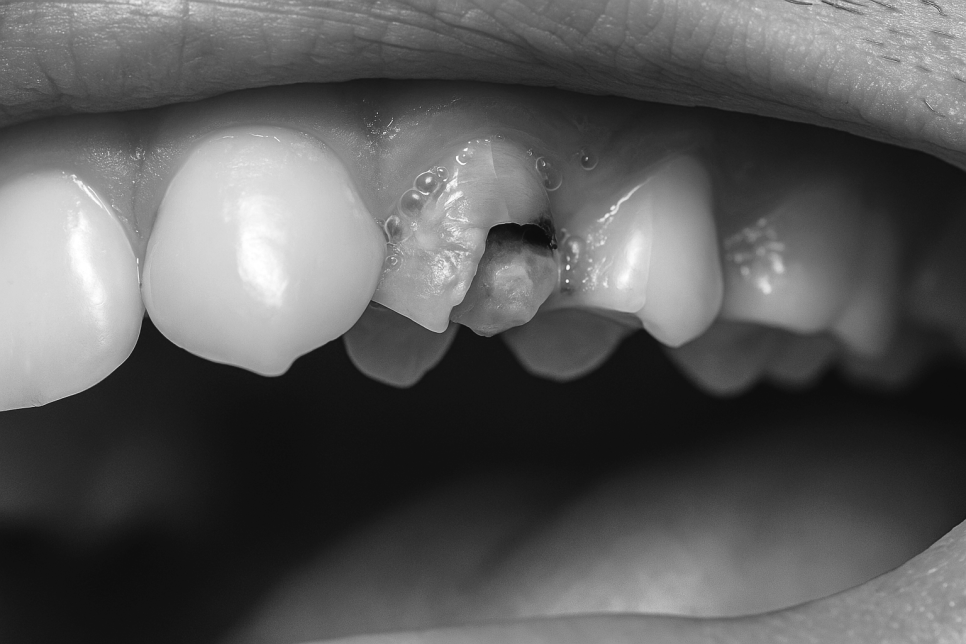
A broken tooth is the same.
There may be various reasons for it,
but whatever the cause, a sudden fracture
can leave many people flustered.
So today, we’ll look at what is best to do
when a case like this happens,
and what appropriate treatment options there are.
Causes of Tooth Fracture and Initial Response

At Magok Dental Clinic, we’ll explain why teeth break,
and what you should do at that moment.
First, if we analyze the causes,
falls during exercise or collisions with objects,
as well as external impacts such as traffic accidents,
can cause teeth to crack, chip, or break.
If you have severe cavities,
the internal structure may already have weakened.
In that case, even a small impact
can cause the tooth to break easily because the inside
has already deteriorated.
In particular, if the tooth has undergone root canal treatment,
the supply of nutrients has already decreased,
so it can break even more easily.
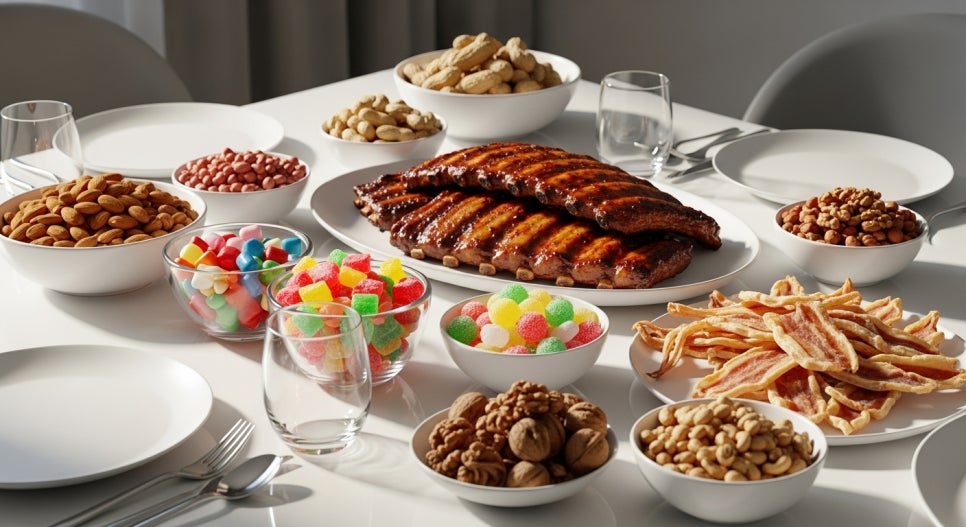
At times like this, eating hard nuts such as almonds, peanuts, and walnuts,
or chewy foods like cartilage, jelly, gum, squid, or ribs,
can strain the jaw and teeth and increase the risk of breaking them.
As we age, enamel wears down
and dentin becomes exposed,
which can also be a factor.
A habit of chewing only on one side
can also cause imbalance and excessive stimulation.
Grinding your teeth unconsciously while sleeping,
or clenching them tightly when stressed,
can also be conditions that lead to cracks.
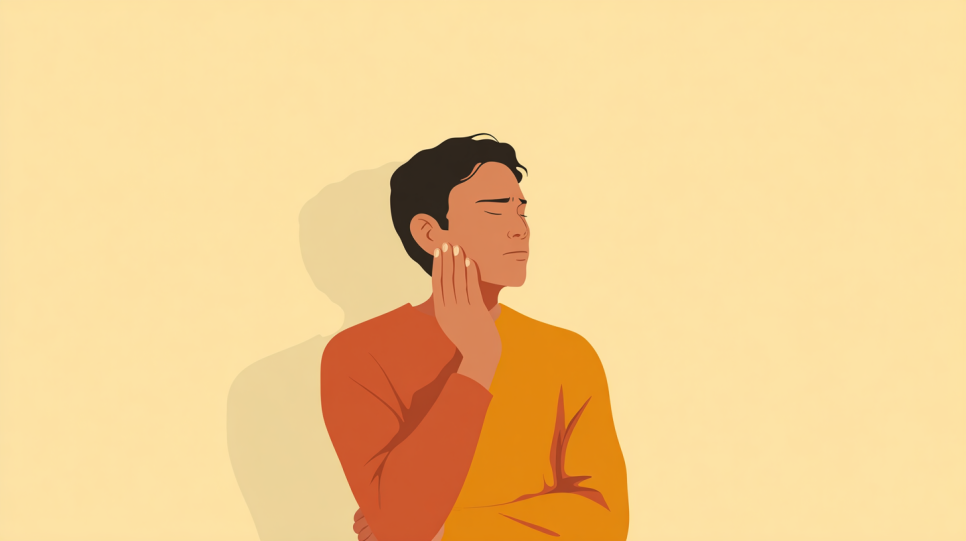
So when this happens,
how should you respond?
Let Magok Dental Clinic briefly
summarize it for you.
First, when a tooth breaks,
it is best to quickly find the broken piece
and store it cleanly.
If possible, it is even better to bring it soaked in milk.
However, if it is difficult to find the fragment,
rather than wasting time, it is better to quickly
visit the nearest clinic.
Also, gently press the fractured area with clean gauze
to stop bleeding and keep the mouth clean
while receiving treatment.
In some cases, it may not just be a crack or break,
but a loose tooth.
In this case, do not force it back in
or keep shaking it; instead, bite on clean gauze,
and visit a nearby medical institution.
If it has broken apart and been completely knocked out by the root,
do not touch the root if possible;
do not wash or rub it with water, and as quickly as possible
visit a clinic to be evaluated for whether reimplantation is possible,
so it can be saved.
What Is Orthodontic Extrusion?
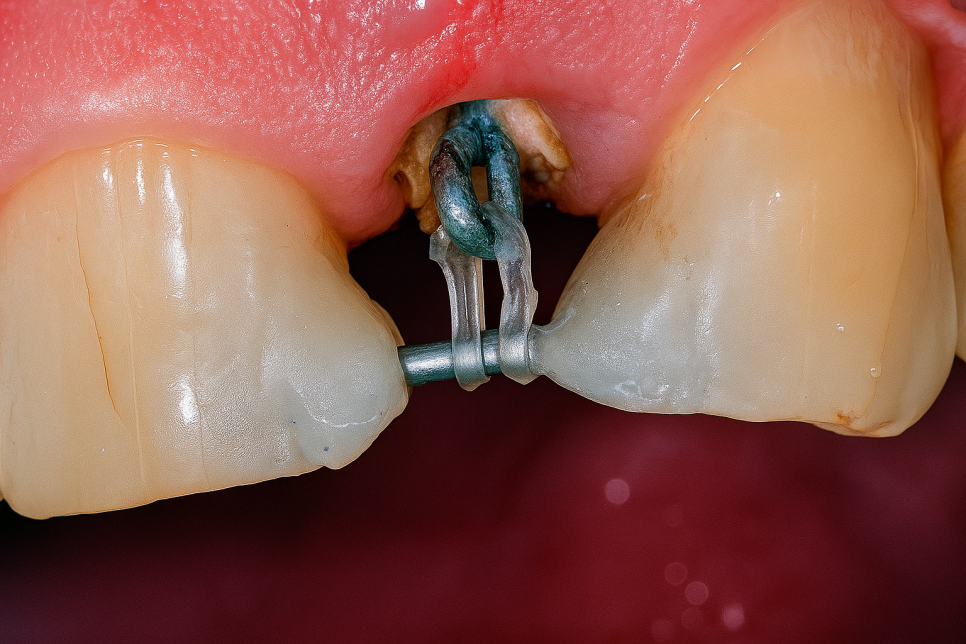
This solution is used when the crown portion of a tooth
has broken below the gum line and been lost,
making it difficult to secure enough length for prosthetic treatment
such as a crown.
If you simply place a post and cover it with a crown,
the same area is highly likely to break again.
Therefore, in prosthetic treatment,
it is important to pull up and secure about 2 mm of healthy natural tooth tissue
around the tooth.
This is called the Ferrule Effect,
and this must be reflected in order to improve structural stability.
For that reason, the tooth must be artificially pulled upward
to make treatment possible, and this is called extrusion.
There are two types: extrusion induced through orthodontics,
and extrusion performed surgically.
Which Method Is Better?
At Magok Dental Clinic, we will compare
the strengths of the two solutions.
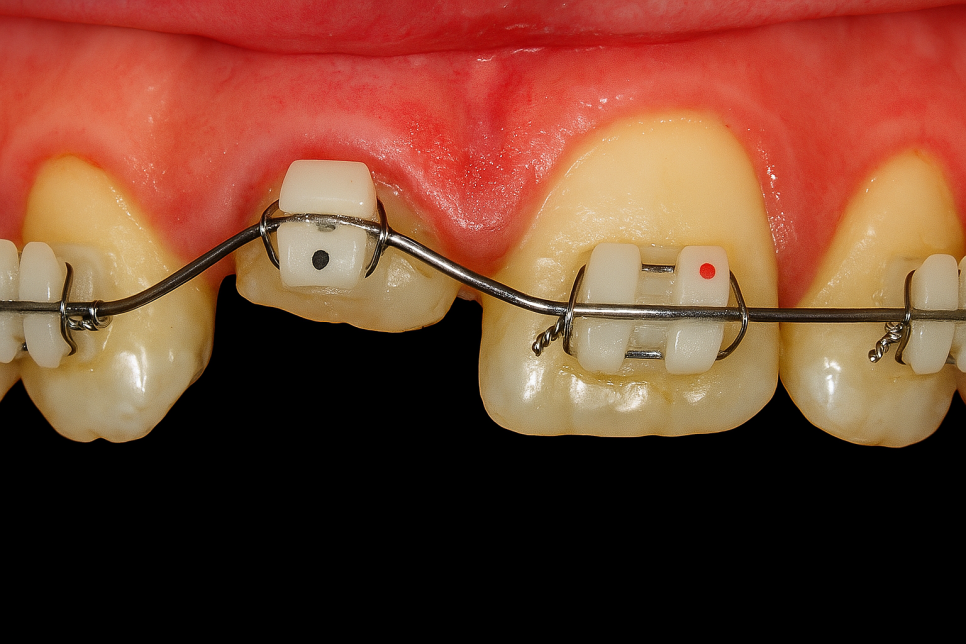
✅ Orthodontics
This refers to attaching orthodontic devices such as brackets or wires
to gradually move the tooth
and pull it out beyond the gum line.
As the tooth moves, the surrounding alveolar bone
and attached gingiva also move upward,
which is beneficial for the regeneration and remodeling of bone and gingiva.
It is usually performed at the same time as root canal treatment
and takes about 1 to 2 months.
Because it is a natural movement method,
it has the advantage of causing less damage to surrounding tissues.
During this period, temporary support devices or temporary teeth
can be used, helping reduce concerns about appearance
and daily life.
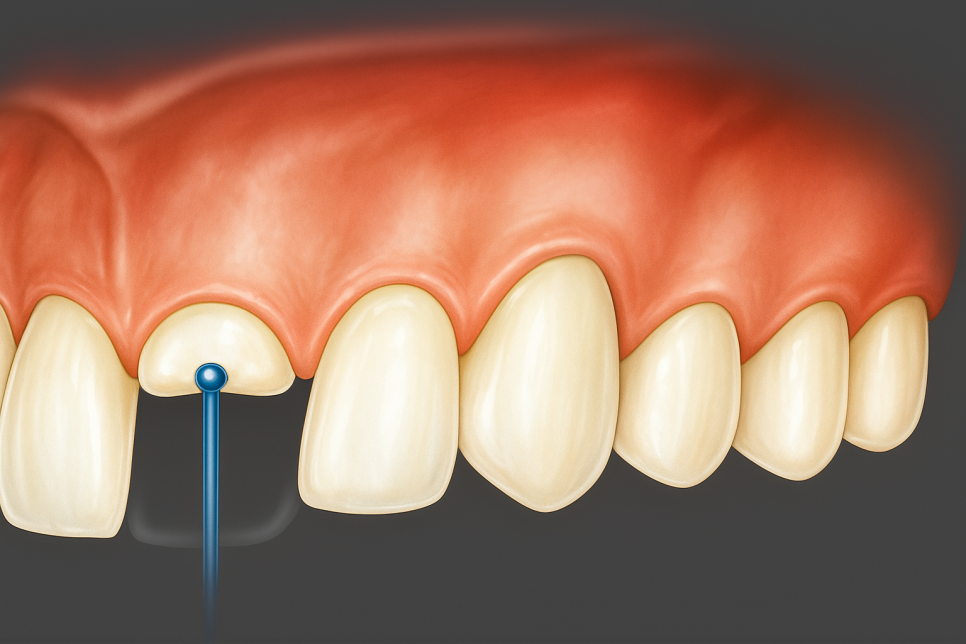
✅ Surgical procedure
This refers to a method in which, under local anesthesia,
the tooth is partially dislocated and moved
to a position where a prosthesis can be placed.
Afterward, it is fixed in the appropriate position
so that healing can take place.
Compared with orthodontics,
the treatment period is shorter,
and there is an advantage in that additional auxiliary devices
do not need to be used.
However, it is more invasive,
can injure surrounding tissues,
and there is also the possibility of complications such as root resorption.
Also, the surrounding bone tissue must be sufficiently healthy
for it to be performed, so it can be considered an option
for people who have maintained good oral hygiene.
Oral Hygiene and Regular Checkups
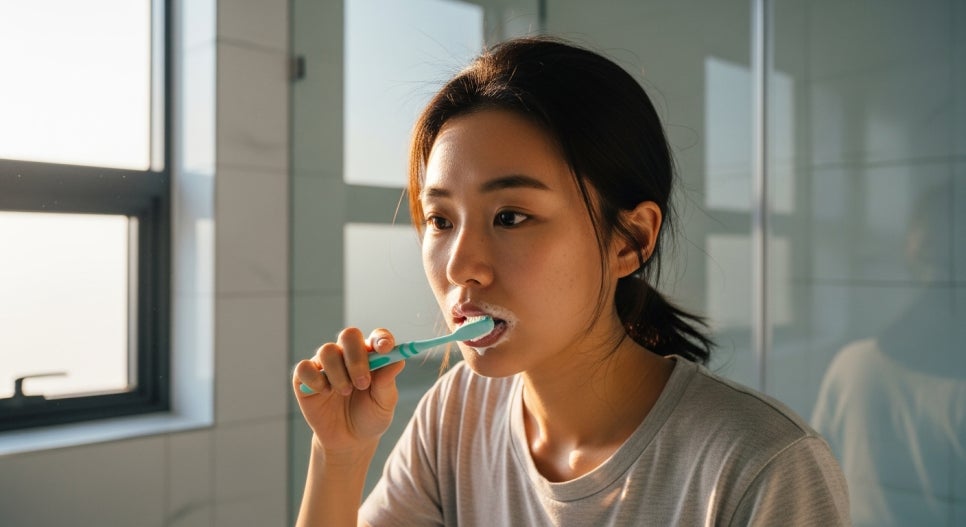
With that in mind, this time at Magok Dental Clinic,
we’ll explain the proper way to maintain oral hygiene.
Unless the situation was caused by an accident,
it is often the case that oral health has already worsened
due to diseases such as cavities.
Therefore, it is important to develop good brushing habits.
When brushing, don’t just scrub back and forth for a long time;
brush the upper teeth from top to bottom
and the lower teeth from bottom to top in a sweeping motion,
and it is good to thoroughly brush from the gums
to the tongue and the roof of the mouth.
We also recommend using dental floss or interdental brushes
together to remove tartar in deep molars or adjacent areas
that the toothbrush cannot reach well.
A toothbrush with densely packed bristles
and a small head allows for more thorough cleaning.
Also, if you usually react sensitively when eating hot or cold foods,
or hard snacks,
keep in mind that you may have gum disease,
wear, or cracks,
and we recommend receiving an accurate diagnosis and treatment.
For this, it is best to receive regular checkups,
including scaling, every 6 months to 1 year.
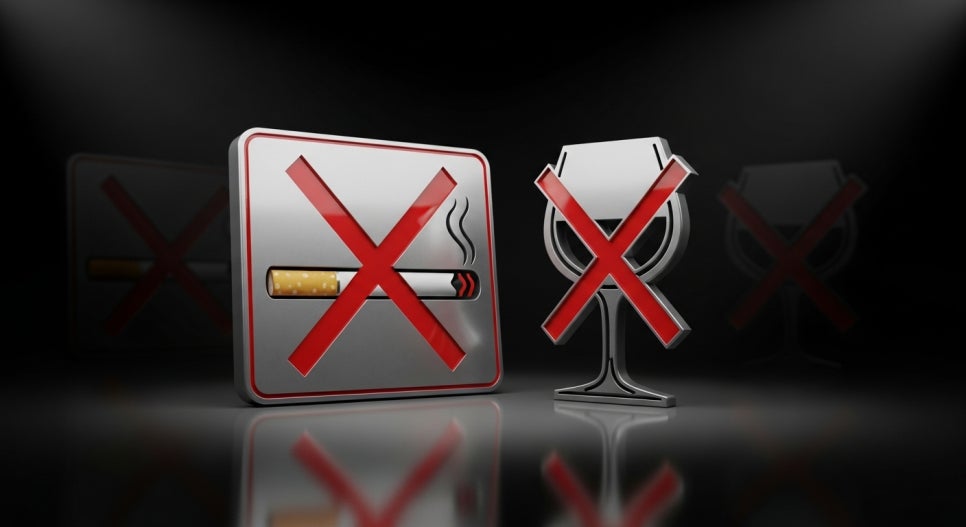
In addition, we ask that you consistently practice quitting smoking and limiting alcohol,
and also keep up steady water intake so your mouth does not become dry.
In particular, alcohol and tobacco themselves contain ingredients
that dry out the mouth.
If you have periodontal disease on top of that,
it can make the condition even worse,
and there is also concern that it may lead to various systemic diseases
through the bloodstream,
so it is best to avoid them as much as possible.
If bleeding occurs when brushing,
or if the area around the gingiva appears swollen,
even if it is not yet time for a regular checkup,
getting examined can help with early response.
Lastly, habits such as biting your nails,
sucking your fingers after eating snacks,
grinding your teeth, and clenching them tightly
should also be improved as part of oral hygiene management,
so please pay attention to them.
Many people have these habits,
but many overlook the fact that infection can occur there.
That concludes everything I prepared today.
I hope this was helpful for those who were looking for
emergency first aid methods or solutions
for the kinds of issues described above,
and
as always, we at WISH from Wongrove
hope that you can regain your beautiful smile.
Until now,
this has been Yonsei Wish, Magok Dental Clinic.
Thank you sincerely to everyone who read this long post.
I hope the rest of your day goes well!