Hello.
I am Yeo Sang-ho, a dentist at Magok-dong Dental Clinic and a smile designer who can turn your wishes into a beautiful smile.
Today, I’d like to explain why laminate veneers were performed on the maxillary anterior teeth 11, 12, and 21, and analyze why front teeth change as shown in the photos, in a more clinical and easier-to-understand way.
Front teeth are the first area people notice when speaking or smiling, so even small changes can have a big impact on the overall impression.
Also, because of their position, they are directly affected by external impact and occlusal force, making changes such as wear, discoloration, fracture, and twisting more likely to appear than in natural teeth.
Initial examination: Why do front teeth change like this?
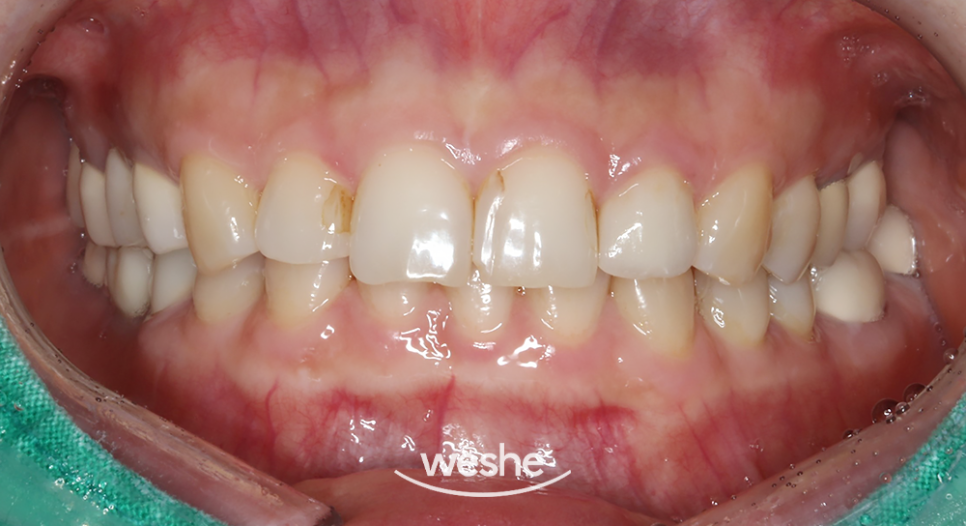
The anterior teeth are an area that handles both esthetics and function at the same time.
Accordingly, various factors can cause changes in shape, and I will organize the factors observed in this case step by step.
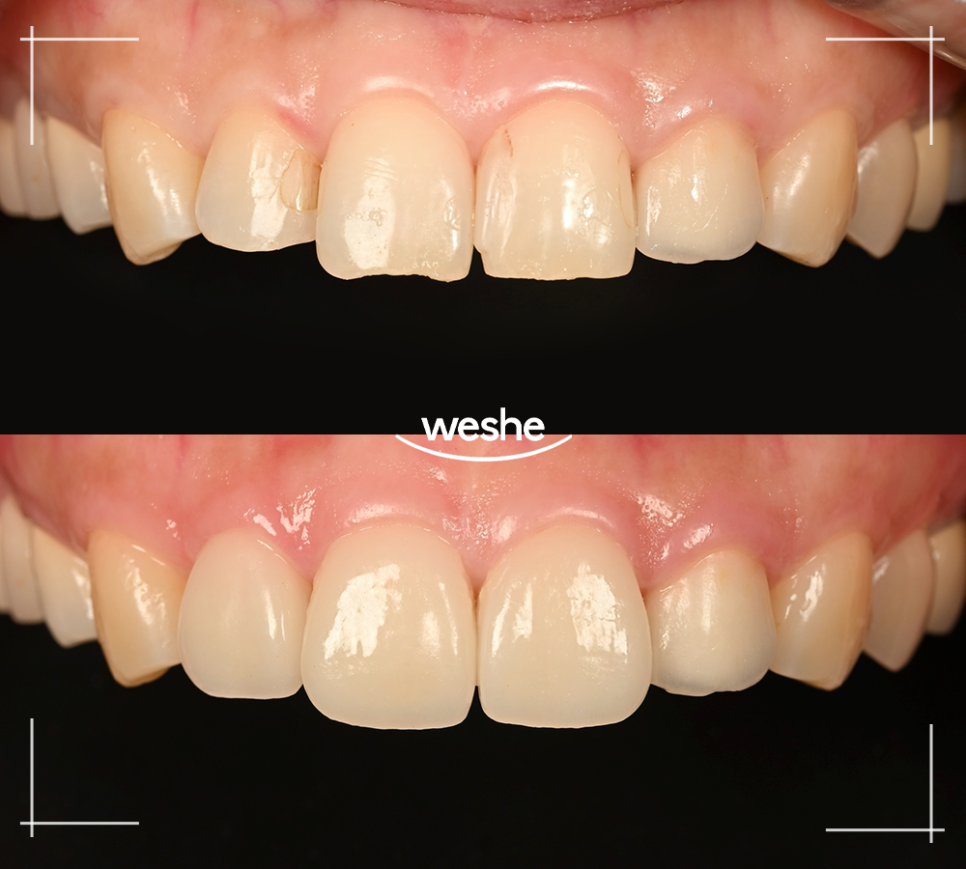
Length reduction and irregular incisal edges due to wear
Front teeth repeatedly wear down at the edges as they cut food.
If there is nighttime teeth grinding (bruxism) or a habit of biting down hard, incisal wear progresses more quickly. In this photo as well,
• the edges were uneven
• the surface was rough
• the teeth looked shorter to different degrees
These were noticeable.
This is a typical pattern in which, over time,
loss of the natural translucent layer → shape change → surface weakening occurs.
Discoloration and marginal leakage of previous resin restorations
Teeth 11 and 12 had traces of previous resin treatment.
Resin tends to change color over time and develop tiny gaps at the margins,
and if pigments or bacteria enter those gaps,
changes like the yellowish appearance or chipped-looking surface shown in the photo can occur.
In cases like this, Magok-dong Dental Clinic explains that it can be difficult to achieve overall uniformity with simple polishing or a small amount of additional filling.
So why were laminate veneers needed?
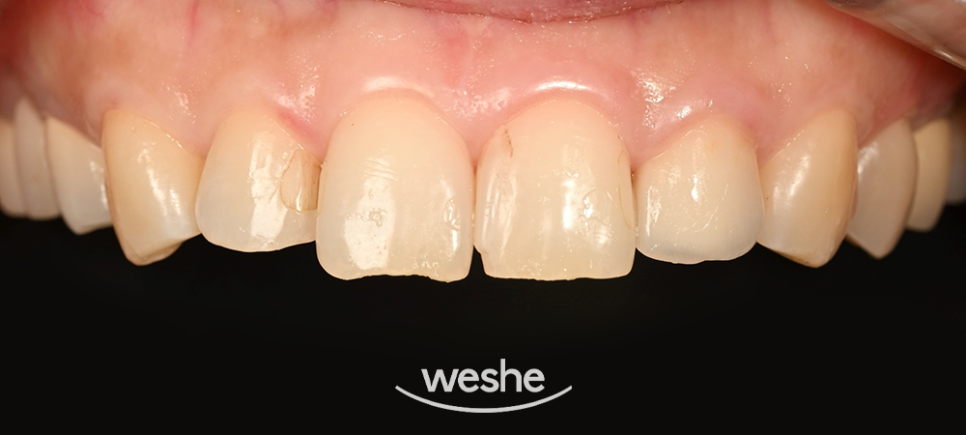
Because a structural and morphological imbalance that could not be resolved with simple whitening or resin filling had already accumulated.
Laminate veneers allow improvement in color, shape, length, and alignment at the same time while minimizing tooth reduction, so for anterior teeth with complex issues like this case, they are a conservative and stable approach.
Treatment completion
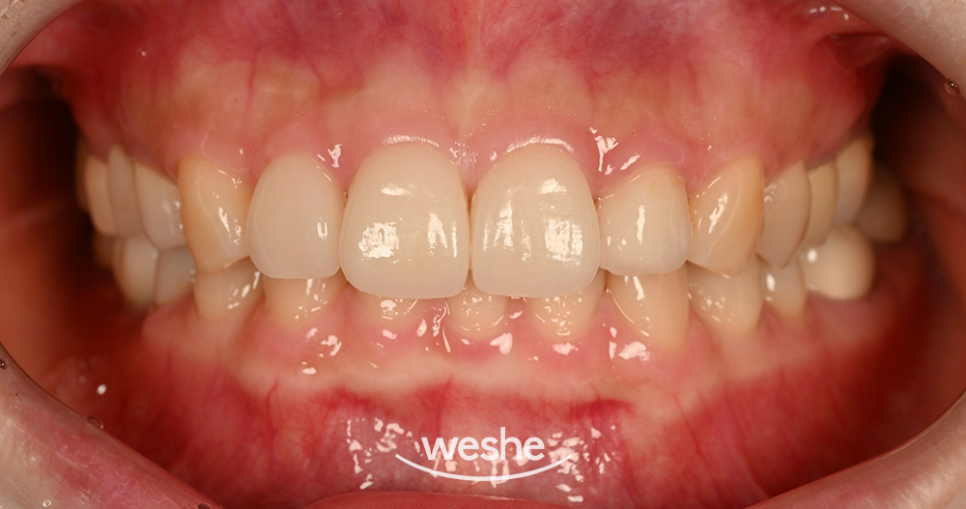
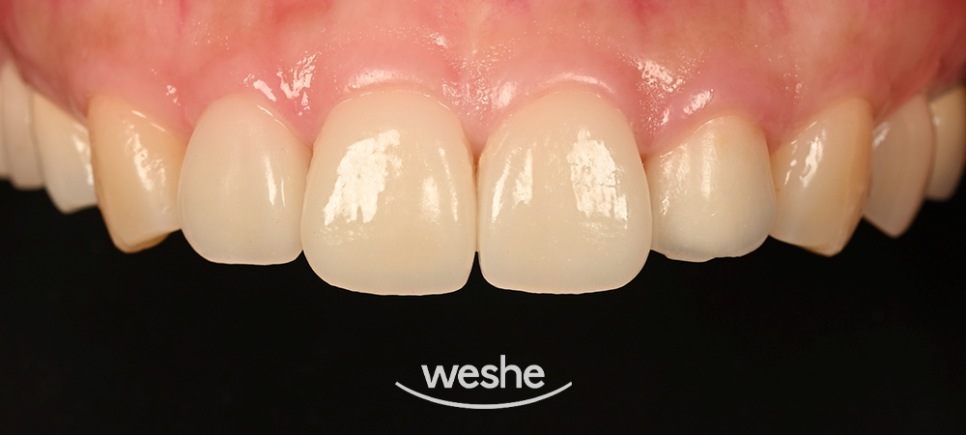
Looking at the completed treatment photos,
• the three teeth were restored naturally
• natural translucency and gloss were recovered
• the tiny fractures at the edges were filled in
• a uniform color without discoloration was achieved
• the smile line shown when smiling was improved
Even treating just these three anterior teeth can make the overall facial impression much brighter and improve harmony around the mouth.
Points to keep in mind when considering laminate veneers for the front teeth
- When front tooth color changes are severe
- When resin discoloration, fracture, or marginal leakage keeps recurring
- When the teeth have become shorter due to incisal wear
- When the alignment of the front teeth is slightly off and esthetic dissatisfaction exists
- When natural light reflection and translucency are not uniform
If two or more of these factors overlap,
laminate veneers can be the most balanced solution in terms of both function and esthetics.
Front teeth are structurally characterized by changes that look bigger than they are, even when the change is small.
In cases where wear, discoloration, fracture, and alignment issues are present together like this case, laminate veneers can be a treatment that does not simply improve esthetics but also stably restores the overall tooth environment.
Because each patient has different tooth shape and occlusal condition,
it is important to find a conservative and safe method through an accurate diagnosis.
This has been Yeo Sang-ho, the director of Magok-dong Dental Clinic.
Thank you for reading this long post.
2025.09.19 ~ 2025.10.10