The moment a dental instrument enters the mouth,
some people start to gag.
For these individuals, even a simple scaling can be difficult,
and even after being diagnosed as needing implants,
they often keep postponing treatment.
The procedure introduced today at Magok Dental Clinic
using conscious sedation (sedation anesthesia)
is also a realistically consider-able option.
Table of Contents
-
Why do some people have a strong gag reflex?
-
Consider conscious sedation
-
Is it possible to place multiple implants?
-
What happens on the day of surgery?
-
Frequently asked questions before treatment
-
Why do some people have a strong gag reflex?
When brushing your teeth, gagging
is something most people have probably experienced at least once.
This protective response that prevents foreign objects from entering the airway
is called the gag reflex.
When the sensory nerves distributed in the back of the tongue,
the uvula, and the posterior pharyngeal wall are stimulated,
signals are transmitted through the vagus nerve,
and the muscles then contract reflexively.

As explained at Magok Dental Clinic,
this reflex itself exists in everyone.
However, the level of stimulation that triggers it
varies from person to person.
For those who are particularly sensitive,
even a slight touch to the back of the tongue
can trigger gagging.
In treatment, this becomes
a bigger problem.
It not only limits the treatment process itself,
but also affects the patient's psychological state.
The greater the anxiety,
the more threatening oral stimulation feels,
and the more sensitive a person becomes to the same stimulus.
As this vicious cycle repeats,
it is not uncommon for it to lead to treatment phobia.
- Consider conscious sedation
For those with these concerns,
sedation anesthesia (conscious sedation)
may be a good option to consider.
It is not a state of complete unconsciousness like general anesthesia,
but is similar to a light sleep-like, deeply relaxed state.
It is usually achieved with benzodiazepine-based medications,
which act on inhibitory receptors in the central nervous system
to reduce overall brain excitability.
In this process, gag reflex control is also improved,
and even with the same stimulus, the response is significantly reduced
while psychological tension also decreases.
What about safety?
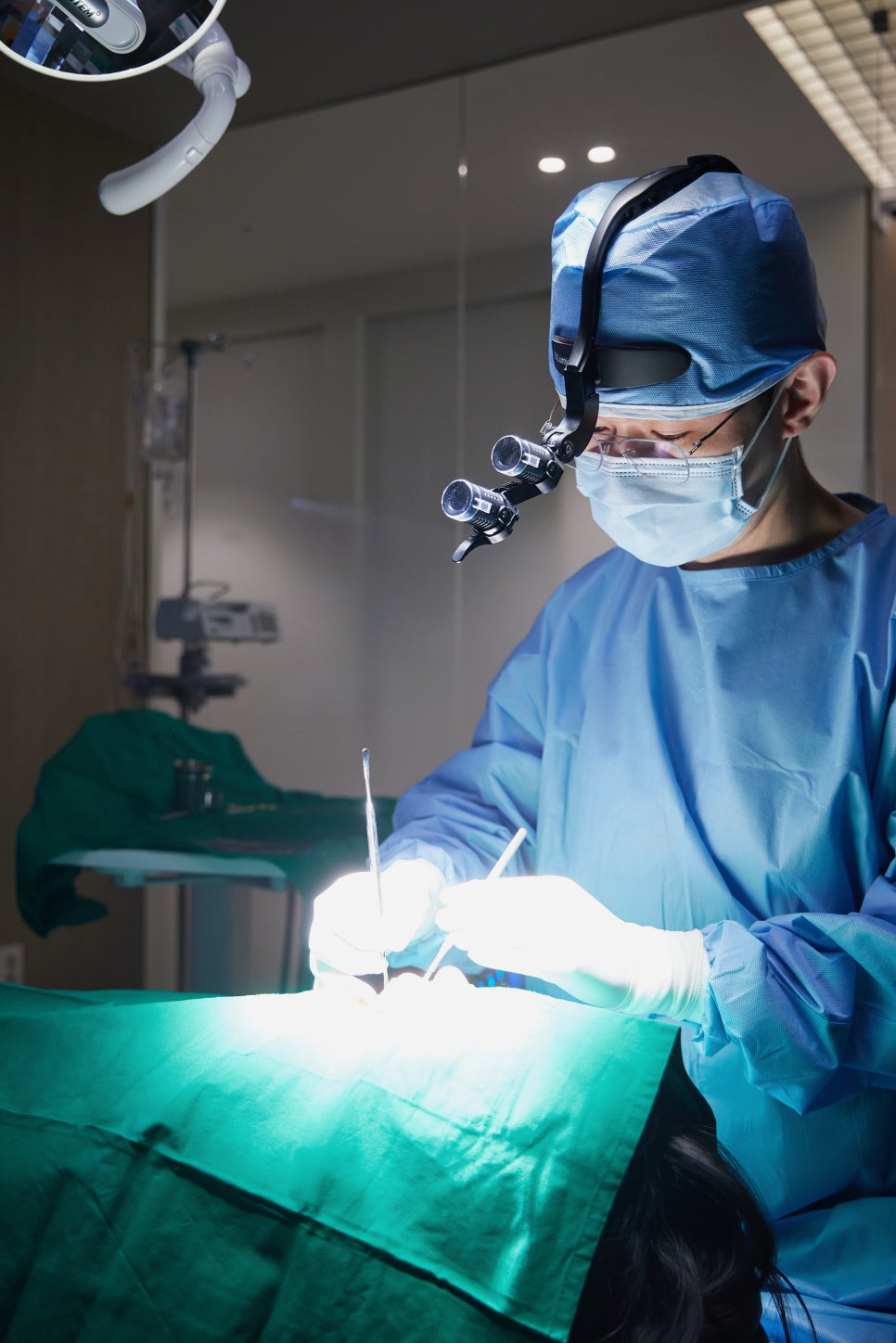
Throughout conscious sedation,
oxygen saturation, blood pressure, and electrocardiogram readings
are continuously monitored.
Because the medication dosage is adjusted
while checking the patient's condition in real time,
the procedure is carried out in a safe environment.
However, the point emphasized at Magok Dental Clinic is that
patients with underlying conditions such as hypertension,
diabetes, or heart disease
must disclose them in advance.
Also, if you are currently taking any medication,
it is important to confirm this during the consultation as well.
- Is it possible to place multiple implants?
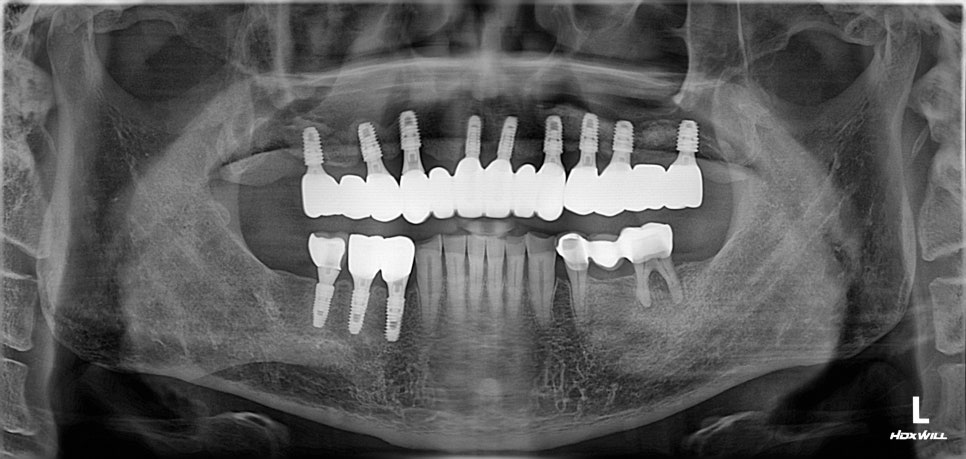
If implants are needed in multiple areas,
having to repeat tension and gagging every time you visit
can be extremely difficult.
However, using sedation anesthesia (conscious sedation),
it can of course be done in a single session.
That said, what we would like to point out at Magok Dental Clinic is that
not all cases are suitable.
For example, if the range of bone grafting is large
or if a procedure such as sinus lift surgery is needed,
or if the treatment time must be adjusted depending on the patient's overall condition,
it may be safer to proceed in multiple sessions.
In other words, whether to do it all at once or divide it into several sessions
is decided through a detailed examination and consultation.
- What happens on the day of surgery?
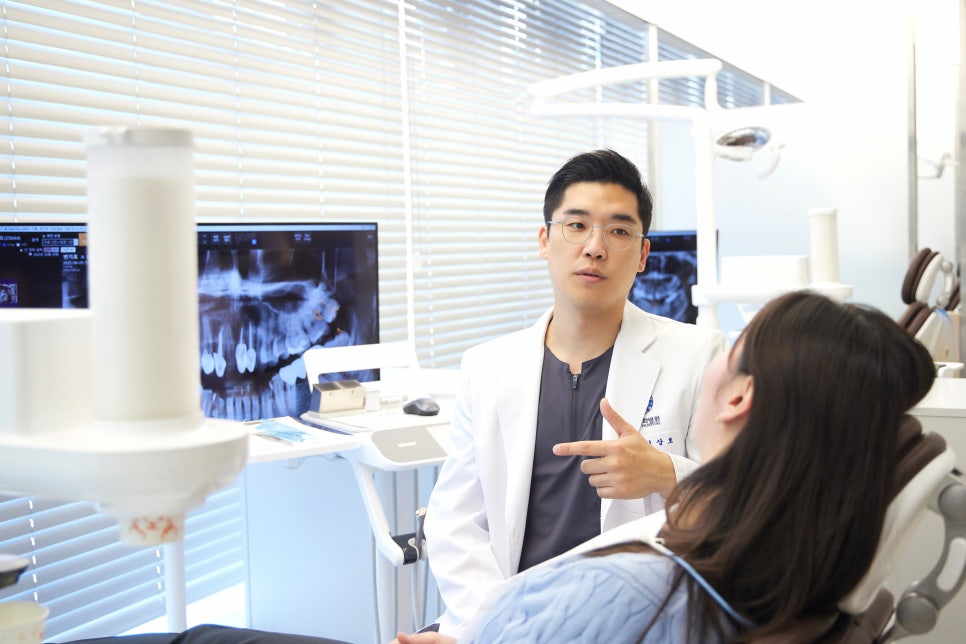
Before surgery, fasting is required for a certain period,
and on the day of the procedure, you must come with a guardian.
After checking your basic vital signs,
if you move to the operating room and receive the medication,
a deep relaxed state is induced within about 10 minutes.
After the treatment is completed,
you rest for about 30 minutes to 1 hour,
and then go home with your guardian.
At Magok Dental Clinic, we recommend avoiding driving on the day of the procedure
and refraining from important work.
- Frequently asked questions before treatment
Q1. Will I remember anything during the procedure?
Most people do not remember.
Of course, depending on the depth of sedation,
some memories may remain,
but pain or discomfort is barely felt.
Q2. Is the recovery process different from a regular implant procedure?
The recovery process of the implant itself is the same.
However, because of the effects of the sedative,
you may feel more tired than usual on the day,
so enough rest is recommended.
Q3. Can I go to work or return to work the next day?
In most cases, light work is possible.
Most of the sedative is metabolized on the same day,
and many people return to normal the next day.
However, if the treatment area is extensive,
fatigue and swelling may continue into the next day.
Also, if it involves physically demanding work
or tasks requiring long periods of concentration,
it is better to allow a little more time.
Q4. Can I receive conscious sedation if I have hypertension or diabetes?
It is not necessarily impossible,
but certain conditions are required.
If the underlying condition is well controlled,
there are often no major issues.
On the other hand, if blood pressure or blood sugar is not well managed,
risk factors such as blood pressure fluctuations during surgery,
bleeding, and delayed recovery may increase.
In other words, after a consultation in advance,
we recommend adjusting the timing to a stable period
before receiving treatment.
This has been Magok Dental Clinic.
Thank you.