Wisdom teeth are easy to think
can just be left alone
if they do not hurt.
But in fact, the problem is not the wisdom tooth itself,
but sometimes the molar next to it.
Only when you end up needing treatment for the molar later on
do many people realize the impact.
Why does this happen?
How can it be prevented?
This time, at Songjeong Station Dental Clinic,
we will answer your questions.
Table of Contents
-
Teeth with not enough space: wisdom teeth
-
Three types of damage that are easy to overlook
-
When is the right time to decide on extraction?
-
If you are afraid - conscious sedation
-
Q&A about wisdom teeth
-
Teeth with not enough space: wisdom teeth
Wisdom teeth are teeth that have not been able to settle into the right position
as the oral structure of modern people has changed.
In the distant past, they often functioned as molars
for chewing rough foods,
but now, since most foods are soft,
the jaw itself has become smaller than before.
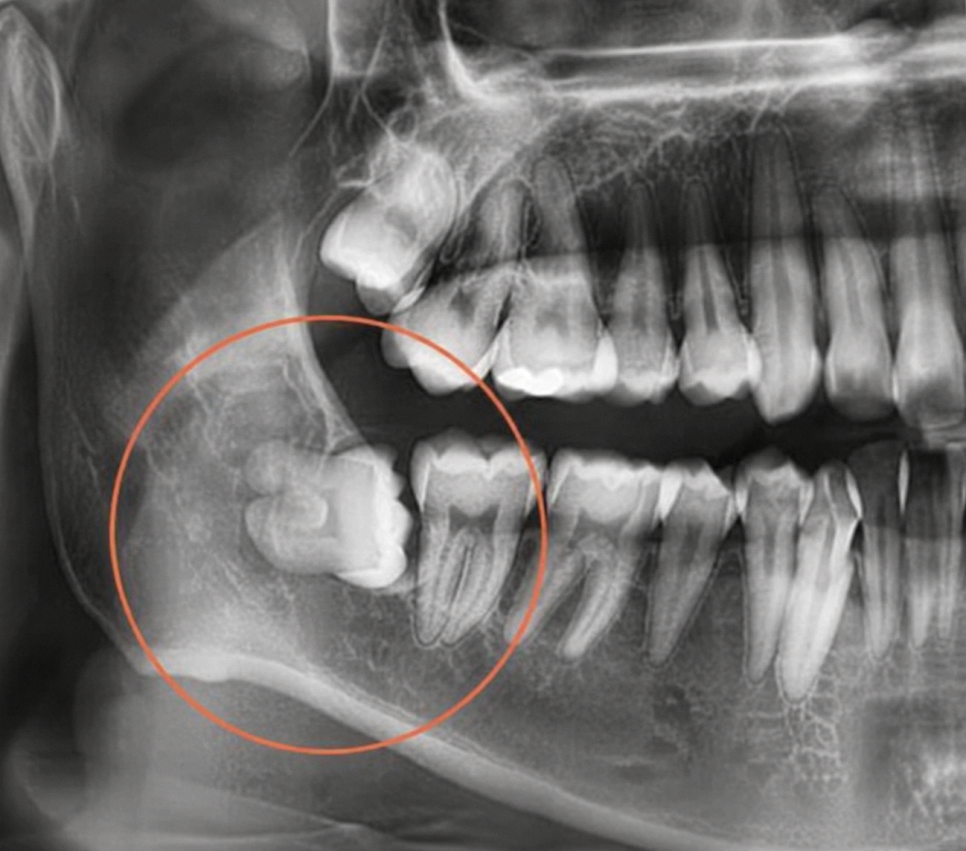
As a result, there is not enough space for wisdom teeth to grow,
and they may fail to erupt straight,
instead tilting toward the front or remaining impacted in the gums.
A tilted tooth like this applies pressure toward
the root area of the molar in front.
Even though teeth are hard tissue,
prolonged pressure can have negative effects.
In addition, where the tilted tooth contacts the tooth in front,
a narrow gap forms that is difficult for toothbrush bristles to reach.
Food debris and bacteria easily build up in this gap,
and no matter how carefully you brush,
it is impossible to manage on your own.
- Three types of damage that are easy to overlook
The problems that can arise for this reason
typically appear in three forms.
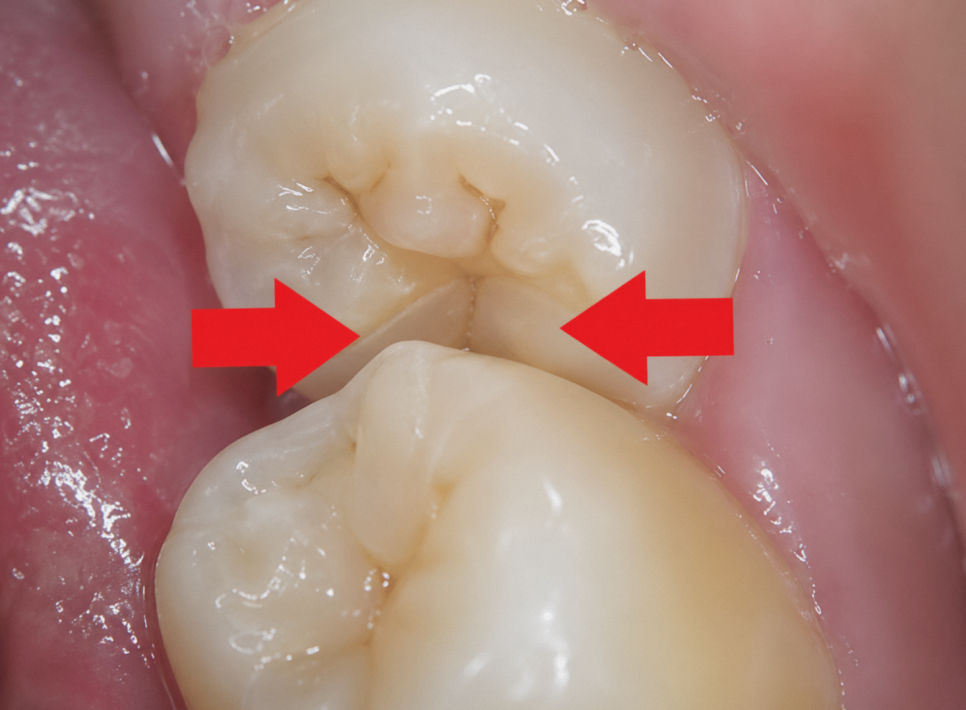
The first is interproximal decay.
As mentioned earlier at Songjeong Station Dental Clinic,
the contact area between the wisdom tooth and the molar
is a place that is difficult to keep clean.
Decay that starts in this gap can progress without pain,
and is often found only after it has reached close to the nerve,
at which point root canal treatment is often unavoidable.
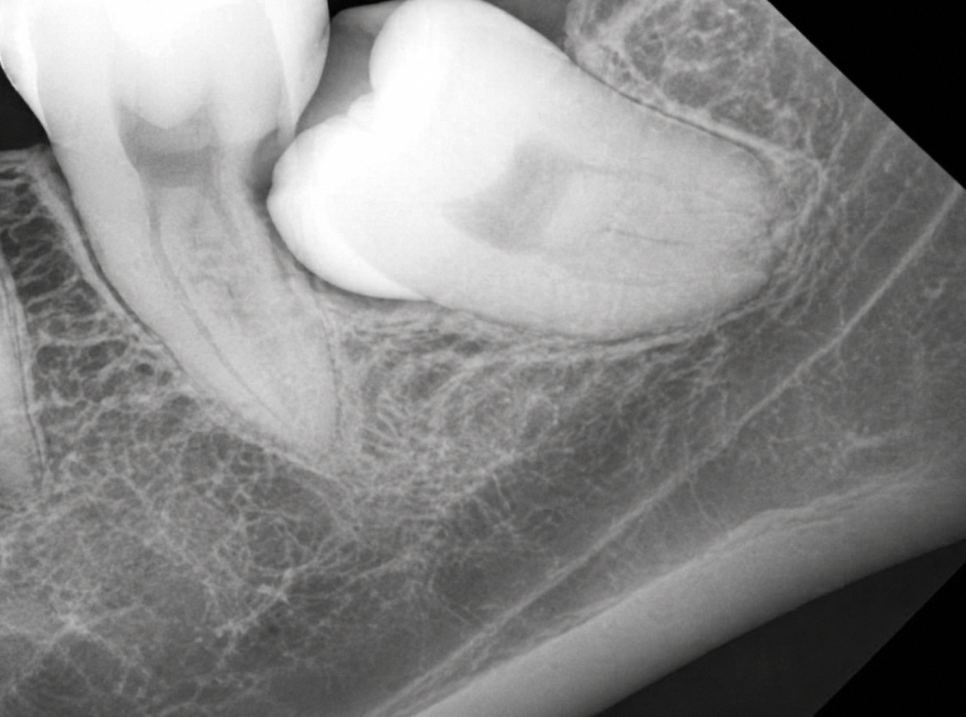
The second is root resorption.
This is a phenomenon in which the root of the molar
slowly dissolves due to the continuous pressure of the wisdom tooth.
Once root resorption begins, support is lost,
and in severe cases, it can lead to extraction.
The third is alveolar bone loss.
If inflammation repeatedly occurs in the gum around the wisdom tooth,
the bone supporting the molar gradually disappears.
Once bone is lost, it does not naturally recover,
and this can lead to loosening or loss of the molar.
The three points explained at Songjeong Station Dental Clinic
have one thing in common.
In the early stages, there are no symptoms,
so it is easy to leave them untreated.
In other words, it is wise to check,
through an accurate diagnosis,
whether extraction is needed.
- When is the right time to decide on extraction?
The ideal time for wisdom tooth extraction
is not after symptoms appear,
but before then.
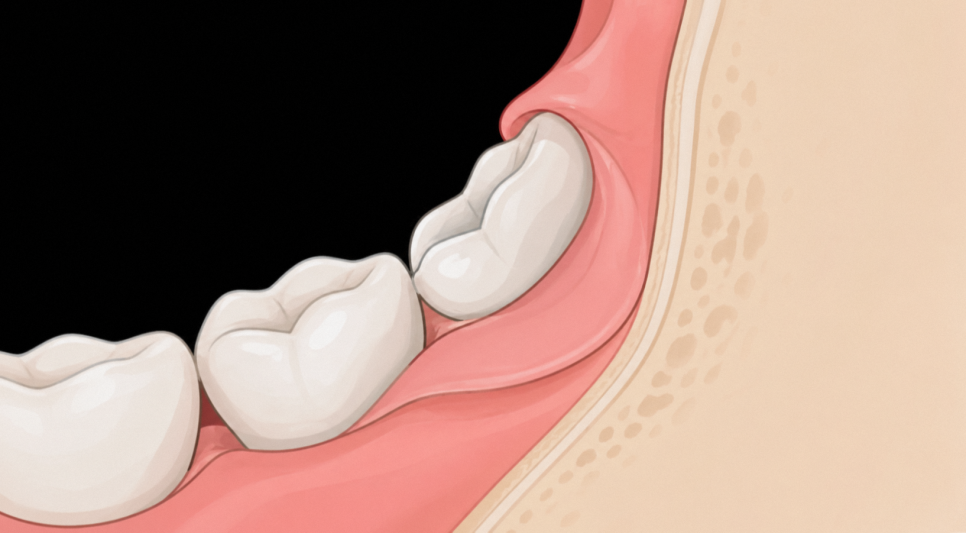
Thinking, "It does not hurt, so why remove it?"
is actually a natural reaction.
However, by the time symptoms appear,
changes have often already begun,
and extraction becomes more likely.
Of course, extraction is not always necessary.
If the tooth has erupted vertically and correctly,
and hygiene can be maintained sufficiently,
it may be preserved as is.
Even for the same tooth, each person’s situation is different,
so it is best to receive a thorough evaluation.
- If you are afraid - conscious sedation
Even so, many people hesitate to visit
because they are afraid of the extraction itself.
There are also many cases where that fear causes them to miss the right treatment time,
leading to more extensive treatment.

For people like this, Songjeong Station Dental Clinic
introduces conscious sedation (sleep anesthesia).
Unlike general sleep anesthesia,
you do not completely lose consciousness,
but it is a method that induces a light sleep state,
reducing anxiety and tension while keeping you conscious.
You can respond to simple instructions from the medical team,
and safety mechanisms such as the airway reflex remain intact,
so the overall risk is relatively low.
If you have trauma from past treatment,
or if a strong gag reflex makes treatment difficult,
this is an option worth considering.
- Q&A about wisdom teeth
Q1. Can everyone receive conscious sedation (sleep anesthesia)?
It is an option that everyone can consider,
but it does not apply equally to everyone.
If you have systemic conditions such as high blood pressure or diabetes,
or are taking certain medications,
prior evaluation is necessary.
Depending on the results,
whether it can be used and how the procedure is carried out
may vary.
Q2. If I remove the wisdom tooth,
will the damage to the molar recover too?
Existing damage requires treatment.
If decay has developed, restorative treatment or
root canal treatment may be needed,
and if there is gum disease, additional treatment may also be considered.
Q3 How long is the recovery period
after extraction?
In general, it takes about
1 to 2 weeks for the gums to heal.
However, if an incision is involved, as in impacted cases,
it may take a little longer.
On the day of extraction, avoid alcohol and smoking,
and it is best to refrain from actions that may irritate the area.
Q4. Is there a reason why it is better to remove them when you are younger?
In the early 20s, the roots are not yet fully formed,
so the procedure is relatively easier.
However, as you get older, the roots become deeper,
and the bond with the surrounding bone becomes stronger,
which can increase the difficulty.
Also, as mentioned at Songjeong Station Dental Clinic,
the degree of molar damage also accumulates,
so it is better to make the decision early.
Thank you for reading this long post.