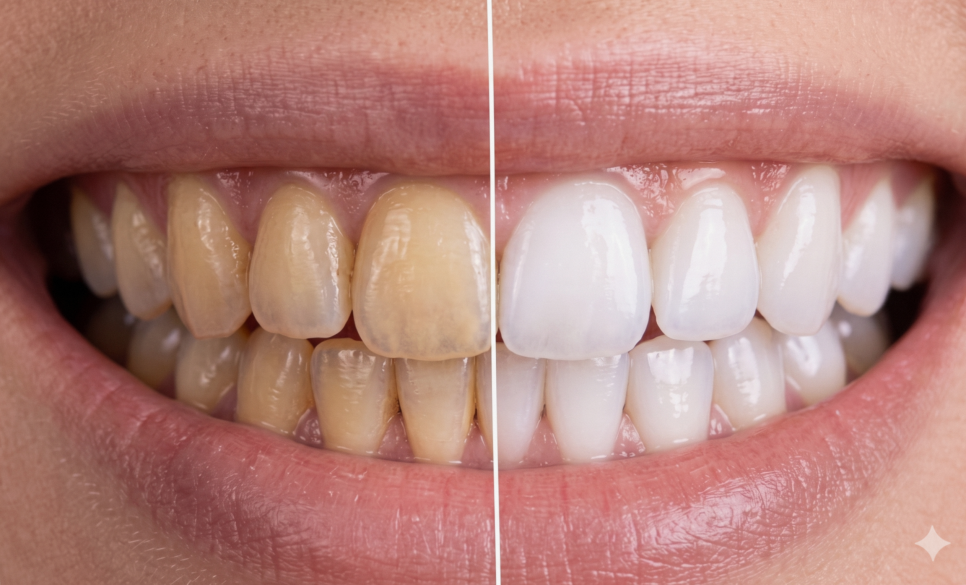
With the desire to have white, clean teeth,
many people come in for whitening consultations.
But when they hear that scaling is also needed,
they sometimes pause for a moment.
They thought whitening alone would be enough,
so they may wonder why scaling is necessary too
or why additional treatment is being recommended.
In fact, there is a clear reason for this order.
Today, Magok Station Dental Clinic will explain the reasons for scaling before whitening
and the things you should check in advance.
- Why scaling is recommended
Even though teeth may look smooth to the eye,
they actually have tiny irregularities.
Between these areas, pigments, bacterial film, and tartar build up,
and over time, discoloration becomes deeper.
This process progresses even faster,
especially for people who often drink coffee, tea, or wine,
and it is difficult to remove with brushing alone.
Whitening agents work by breaking down pigment molecules
within the enamel on the tooth surface.
For this process to work properly,
the agent must come into direct contact with the enamel.
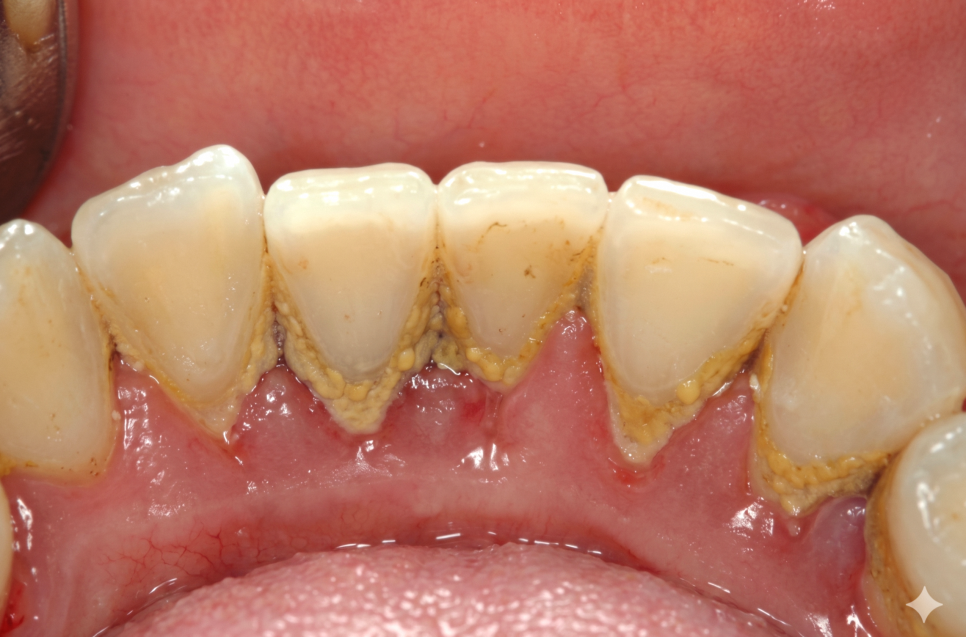
However, if tartar is covering the surface,
the agent cannot penetrate beneath it.
To explain it in an easy-to-understand way at Magok Station Dental Clinic,
it is similar to spraying a waterproof spray on shoes covered in dirt.
If foreign substances remain on the surface,
they do not soak in properly and instead just sit on top.
Only when the tooth surface has been cleaned
can the agent fully act on the enamel.
- When should whitening begin after scaling?
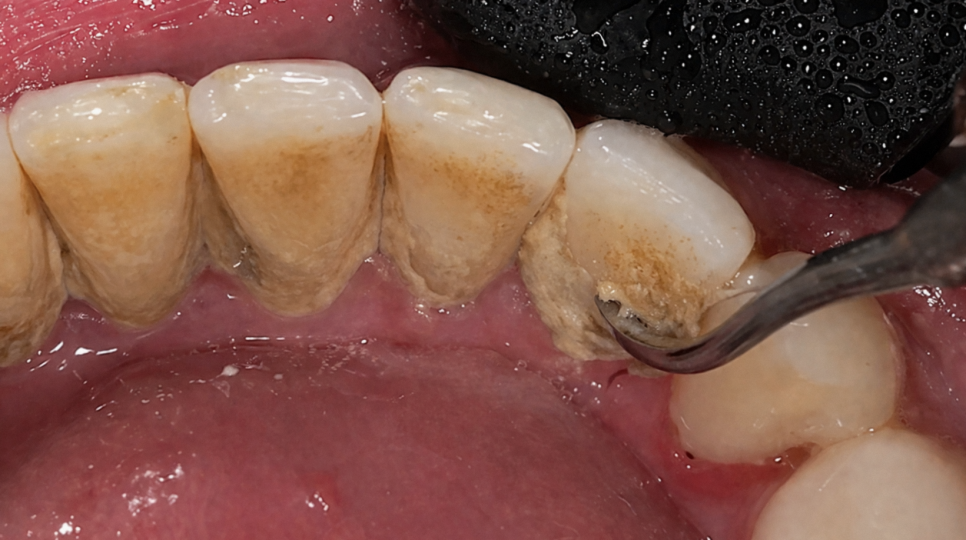
Even after scaling is finished,
whitening does not start on the same day.
This is because during tartar removal,
the gums are temporarily irritated
and the teeth also become more sensitive.
If the agent is applied right away at this point,
sensitivity or gum discomfort
can appear much more strongly than usual.
In general, whitening begins after allowing about 1 to 2 weeks
after scaling for things to settle down.
In particular, if there was gum disease
or if the scaling area was extensive,
the recovery period may be longer.
Once the swelling has gone down, there is no bleeding,
and the sensitivity has eased,
it becomes the right time to start whitening.
- The important thing is checking oral health
Before starting whitening, there are things that must be checked
in addition to scaling.
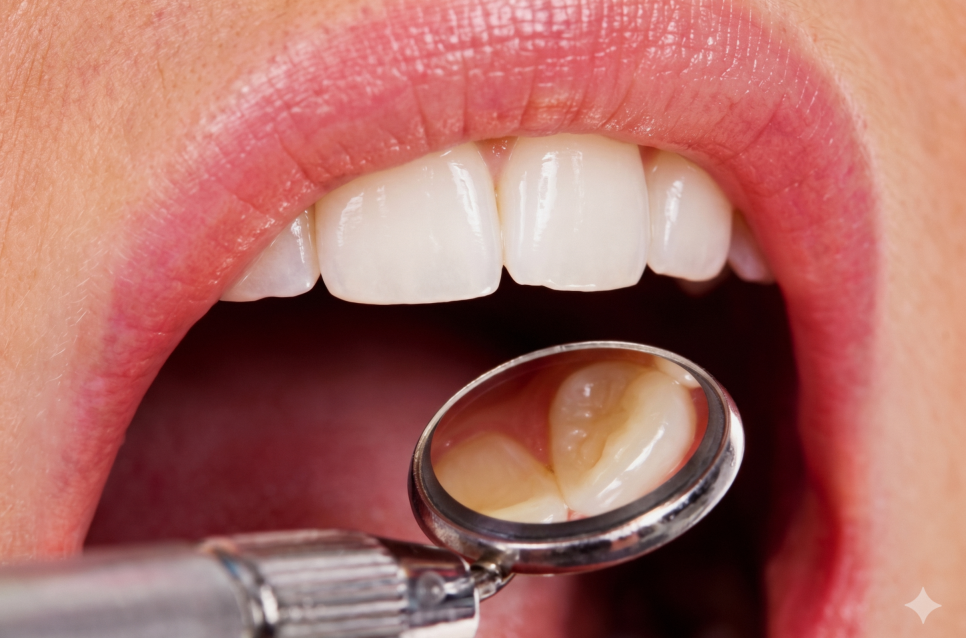
The first thing to look at is
the current condition of the mouth.
If the agent comes into contact with a tooth that has a cavity,
it can strongly irritate the damaged area
and lead to severe pain.
The same applies when gum inflammation remains;
as explained earlier by Magok Station Dental Clinic,
it can also lead to pain.
Because whitening is a procedure that should begin
when the oral cavity is healthy,
addressing these issues first is the correct order.
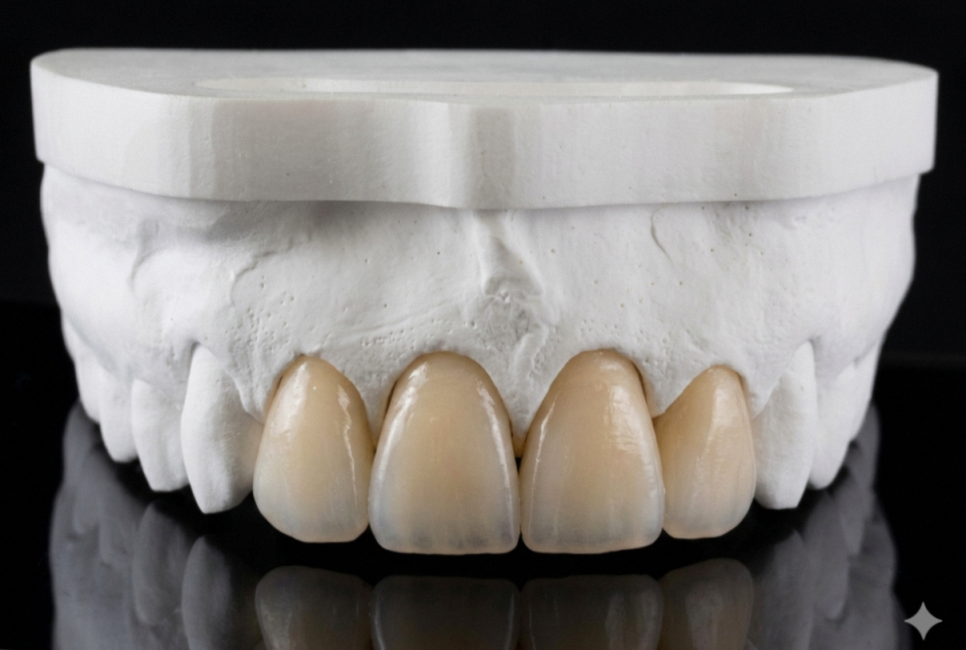
Prosthetics or resin filling areas
should also be identified in advance.
These materials do not react to the whitening agent,
so only the natural teeth become brighter while they remain the same.
In particular, if there is resin or a prosthetic on the front teeth,
the color difference from the surrounding teeth may become more noticeable,
which can actually make it look more awkward.
In such cases, along with whitening,
a plan for prosthetic replacement and resin refill should be made together
in order to achieve a natural result.
- Questions you couldn’t ask in the treatment room
Even after deciding to proceed with the procedure,
it is natural to have questions
before actually starting.
Magok Station Dental Clinic will organize the questions
that may have felt awkward to ask directly in the treatment room.
Q1. Are there any precautions after whitening?
Right after whitening, the enamel surface
is temporarily in an open state,
so pigments can settle in easily.
For about 48 hours after treatment,
foods and drinks with strong color,
such as coffee, wine, and curry, should be avoided.
Q2. Is tooth sensitivity okay?
In most cases, it naturally subsides within 24 to 48 hours.
Because it is a temporary reaction that occurs during the process
of acting on the enamel,
for most people, discomfort decreases
within a day or two after treatment, which is normal.
However, if the symptoms continue for a long time,
it is best to visit the clinic and get checked.
Q3. How long does whitening last?
It varies depending on each person’s eating habits and care methods.
Usually it lasts about 1 to 2 years,
but for people who drink coffee or wine or smoke,
discoloration may progress quickly.
Managing it along with regular scaling
can help maintain the result for a longer time.
This has been Magok Station Dental Clinic.
Thank you.