Hello, this is Magok Station Dental Clinic.
Among those preparing for implant treatment, many people have only a vague idea of how the treatment process will proceed and how long it will take.
In particular, patients in their 50s, 60s, 70s, and 80s may feel anxious after hearing that the treatment period is long.
However, knowing in advance what each step involves allows you to make practical preparations rather than simply worrying about the unknown.
Based on the information organized below, let us take a step-by-step look at the overall implant process.
Step 1 – Examination and Diagnosis

Let us take a step-by-step look at the overall process together with the medical staff at Magok Station Dental Clinic.
Implant treatment begins with a detailed examination.
A CT scan is used to check the condition of the jawbone, the location of the nerves, and the thickness of the bone. Your overall health is also assessed.
If you have chronic conditions such as diabetes or high blood pressure, your medication may need to be adjusted. Therefore, it is advisable to inform the clinic in advance about any medications you are currently taking when you come for a consultation.
There is no pain at this stage, and a treatment plan is established based on the examination results.
Step 2 – Tooth Extraction and Bone Grafting
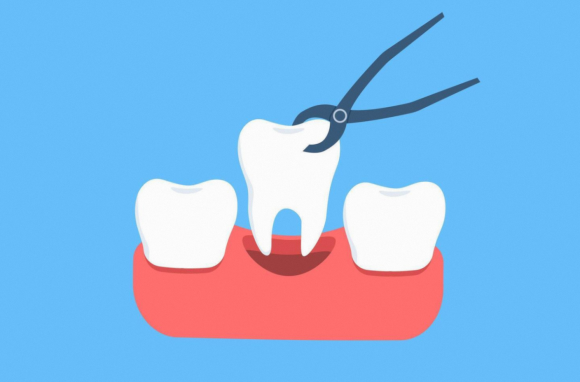
If a tooth is already damaged but remains in place, it is extracted first.
After extraction, the jawbone tends to be resorbed. This is especially common among older patients, who often have lower bone density.
You may wonder whether an implant is impossible when bone density is low.
At Magok Station Dental Clinic, we will explain how such cases can be addressed.
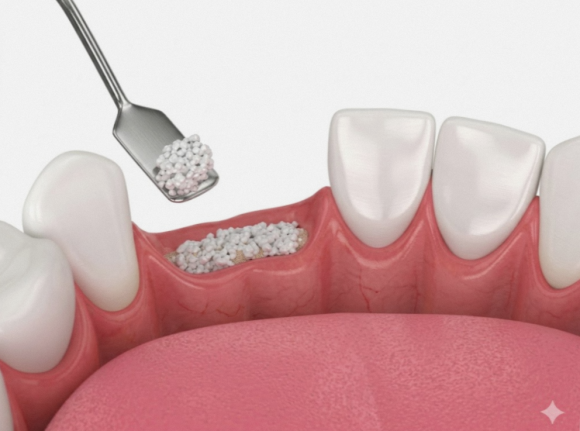
In these cases, bone grafting may be performed at the same time to reinforce the bone.
Bone grafting is a procedure that fills areas of insufficient bone using artificial bone or the patient’s own bone. It creates a foundation where the fixture can become securely established.
In some cases, extraction and bone grafting are performed at the same time. In other cases, bone grafting is performed after the bone has recovered for approximately three months following extraction.
Local anesthesia is used at this stage. Swelling and mild discomfort may occur for two to three days after the procedure.
Applying ice packs and taking the prescribed anti-inflammatory medication as directed can help speed recovery.
Step 3 – Fixture Placement
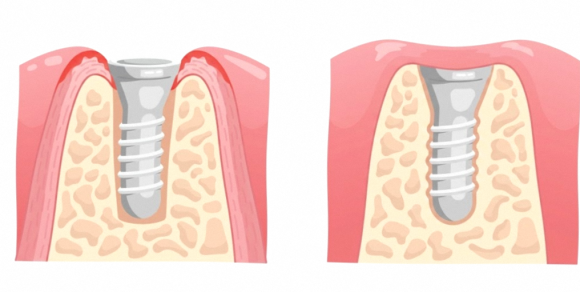
Once the bone has recovered sufficiently, the fixture—the main body of the implant—is placed in the jawbone.
This procedure is performed under local anesthesia and takes approximately 30 minutes to one hour per fixture.
Immediately after the fixture is placed, the gums are sutured, and time is allowed for the bone and fixture to fuse firmly.
Here are a few precautions from Magok Station Dental Clinic.
On the day of the procedure, it is advisable to eat soft foods, such as porridge or thin rice porridge.
Brush your teeth carefully while avoiding the treatment area. Using mouthwash can also help with hygiene management.
Step 4 – Osseointegration Period
The process in which the fixture firmly fuses with the jawbone is called osseointegration.
This period usually takes approximately three to six months and varies depending on the condition of the bone and the patient’s recovery rate.
For osseointegration to proceed properly, you should avoid placing excessive force on the treatment area.
Avoid chewing hard foods or engaging in activities that irritate the treatment area. It is also important to visit the clinic regularly for checkups.
There is usually no particular pain during this period. However, if you notice any unusual symptoms in your gums, you should visit the clinic immediately for an examination.
Step 5 – Crown Placement
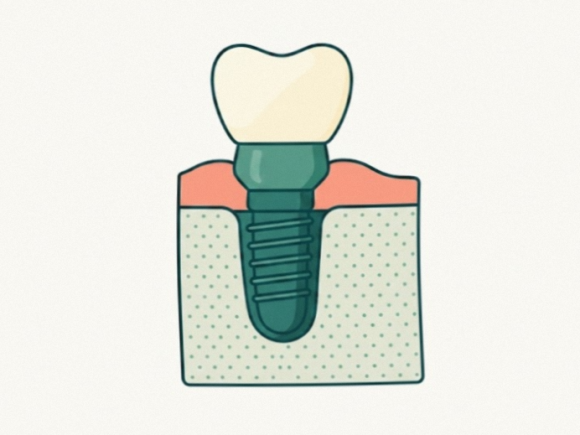
Once osseointegration is complete, the gums are reopened, the abutment is connected, and the crown is placed as the final step.
Because the crown is custom-made from a dental impression, production takes approximately one to two weeks.
After the crown is placed, it can be used like a natural tooth. However, it is advisable to avoid very hard foods at first and gradually become accustomed to it.
Even after crown placement, regular checkups are necessary to ensure that there is no loosening of the screw or gum inflammation.
Overall Treatment Period and Practical Advice

According to the information provided by Magok Station Dental Clinic, the total implant treatment period can be as short as three months. If bone grafting or additional treatment is required, it may take six months or longer.
Knowing these steps in advance before your consultation can help you prepare more specific questions and understand the treatment plan more easily.
Implants are a way to replace teeth that have already been damaged, but the best option is to keep your natural teeth for as long as possible.
To maintain healthy natural teeth, it is important to detect and treat cavities or gum disease early through regular checkups.
By addressing small problems in advance through regular checkups, you may be able to avoid extraction and ultimately maintain a condition in which implants are not needed.
Prevention is the most reliable treatment.
That concludes this information from Magok Station Dental Clinic.
Thank you for reading this lengthy post.