Hello,
This is Songjeong Station Dental Clinic.
Many people wonder
what kind of treatment they should receive
when their teeth are damaged.
When cavities or fractures occur,
it can be difficult to determine
whether the problem can be resolved
simply by filling the tooth,
or whether a prosthetic restoration
such as a crown or implant is needed.
Dental treatments are broadly divided into
preservation treatment and prosthetic treatment,
with different purposes
and areas of application.
What Is Preservation Treatment?
Preservation treatment is performed
with the goal of saving a damaged tooth
as much as possible.
The key is to restore function
while preserving as much
of the natural tooth structure as possible.
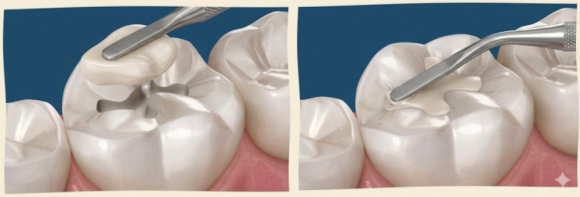
Typical examples include removing the decayed area
and filling it with composite resin or an inlay.
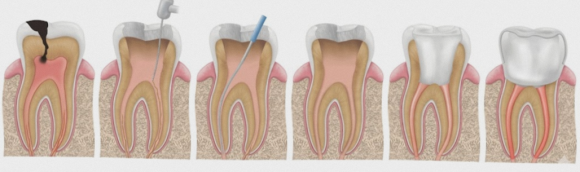
Root canal treatment is also a type of preservation treatment.
When the dental pulp is infected,
the nerve is removed, the root canal is disinfected,
and the tooth is filled with a filling material
to preserve it.
Preservation treatment is used
when tooth damage is relatively minor.
If the cavity remains in the enamel or
dentin layer and has not progressed to the pulp,
it can be treated with a simple filling.
Preservation treatment may also be used
when a fracture is limited to a small area
or tooth wear is not severe.
The advantages of preservation treatment
explained by Songjeong Station Dental Clinic
include saving time and cost
while maintaining the natural tooth.
What Is Prosthetic Treatment?
Prosthetic treatment uses artificial structures
when tooth damage is severe
and restoring function with the natural tooth structure alone
is difficult.
Crowns, bridges, implants, and dentures
are typical examples.
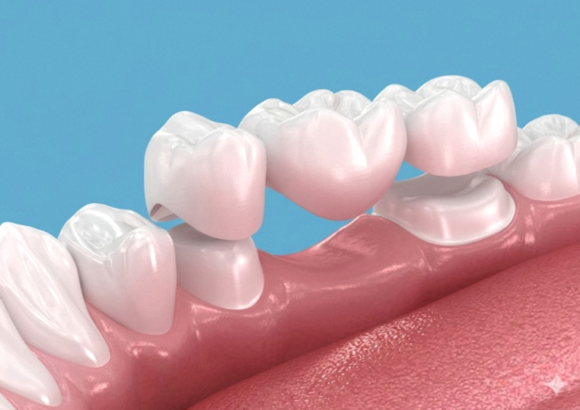
A crown covers the entire tooth
with an artificial material,
while a bridge uses the healthy teeth
on both sides of a missing tooth
as supports to connect an artificial tooth.
An implant is a treatment in which,
when the tooth root has also been lost,
an artificial root is placed
and a prosthetic restoration is attached to it.
Prosthetic treatment is needed
when the area of tooth damage is extensive
or the tooth itself is missing.
If a cavity has progressed deeply into the pulp
and there is not enough remaining tooth structure
even after root canal treatment,
the tooth is reinforced with a crown.
If the tooth has fractured down to the root,
or has already been lost and left an empty space,
a bridge or implant may be considered.
Looking at the prosthetic treatment cases
at Songjeong Station Dental Clinic,
they primarily involve patients
for whom it is difficult to maintain chewing function
with only their natural teeth.
Preservation treatment and prosthetic treatment
differ in their purposes and procedures.
Preservation treatment focuses on
preserving the natural tooth as much as possible,
and generally involves a shorter treatment period
and a lower financial burden.
Prosthetic treatment, on the other hand,
replaces the damaged area with an artificial material,
so the treatment period is longer
and the cost is relatively higher.
However, prosthetic treatment has the advantage
of restoring chewing function and appearance
even in cases of severe damage.
There are also differences
in care after treatment.
Because teeth treated with preservation treatment
retain natural tooth structure,
they can be maintained for a long time
with regular checkups and proper brushing.
For prosthetic treatment, hygiene care
around the boundary between the restoration
and the natural tooth is important.
For implants, the condition of the surrounding gums
should be checked regularly.
At Songjeong Station Dental Clinic,
we believe that follow-up care after either treatment
has a significant effect on the treatment outcome.
Selection Criteria by Condition
The appropriate treatment varies
depending on the extent of tooth damage.
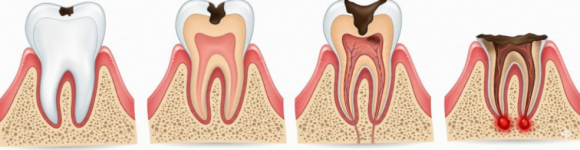
If a cavity is in its early stages
or limited to the tooth surface,
preservation treatment such as
a composite resin filling
is sufficient.
If the cavity has progressed close to the pulp
but has not yet caused an infection,
it may be treated with an inlay or onlay
without root canal treatment.
When the pulp is infected,
root canal treatment is performed first.
If enough tooth structure remains,
the treatment is completed with a filling material;
if not, a crown is placed.
When a tooth is fractured,
the decision is based on the extent of the fracture.
-
If only part of the tooth is broken
and the pulp is not exposed,
it is restored with composite resin.
-
If the fracture has progressed to the pulp
or the damage extends close to the tooth root,
a crown is needed after root canal treatment.
If the tooth is completely broken down to the root
or has already been lost,
an implant or bridge may be considered.
One point emphasized by Songjeong Station Dental Clinic
is that selection criteria include not only
the condition of the tooth,
but also the patient's overall health
and lifestyle habits.
If you have diabetes or osteoporosis,
sufficient testing is needed before implant placement.
If you smoke or grind your teeth,
these habits may affect the lifespan of a restoration,
so you should receive guidance in advance
on ways to manage them.
Maintaining Natural Teeth Is the Top Priority
Both preservation treatment and prosthetic treatment
are important ways to restore damaged teeth,
but the best approach is
to keep your natural teeth healthy.
Natural teeth provide sensations and functions
that cannot be fully replaced by artificial restorations,
and they also have a positive effect
on the health of the surrounding teeth and gums.
Once a tooth is damaged,
it cannot be completely restored to its original condition,
so prevention before treatment becomes necessary
is essential.
Regular checkups are one of the most effective ways
to protect your oral health.
Visiting a dental clinic once every six months
can help detect early cavities or gum disease
at an early stage.
Problems detected early
can be resolved with simple treatment,
but if left untreated, they may progress
to root canal treatment or even extraction.
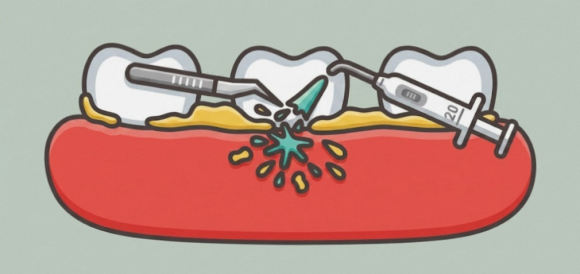
Receiving preventive procedures such as scaling
and fluoride application during regular checkups
can also help strengthen the tooth surface
and inhibit bacterial growth.
Daily oral care is also important.
Brush your teeth at least twice a day,
and remove food particles between the teeth
with dental floss or an interdental brush.
Reducing your intake of sugary foods and carbonated drinks,
and making a habit of rinsing your mouth with water
after meals,
can help lower the risk of cavities.
The key point summarized today is that
maintaining your natural teeth for a long time
through consistent care
is the most economical and effective approach.
That concludes this post
from Songjeong Station Dental Clinic.
Thank you for taking the time to read this lengthy post.