
Hello.
When I speak with patients about dental implants,
there is one question I hear more often than expected.
“Doctor, is bone grafting really necessary?”
“ I thought I only needed to have the implant placed.”
“I’m worried because you said I might need bone grafting as well.”
When people hear the term “bone grafting” for the first time,
many immediately begin to worry:
“Could my condition be more serious than I thought?”
In fact, not long ago,
one patient visited us
with a similar concern.
She was a woman in her 60s.
She said that after having a molar extracted several years earlier,
she had been eating only on the opposite side.
Recently, chewing had gradually become more uncomfortable,
so she visited the dental clinic for an implant consultation.
After conducting the examination,
I explained the findings while looking at the CT images together.
The jawbone at the extraction site
had decreased more than expected.
As she looked at the screen,
she carefully asked,
“I thought only the tooth was gone.
Does the bone decrease as well?”
Let me give you the conclusion first.
Bone grafting is not necessary
for every dental implant procedure.
However, if there is not enough jawbone,
it may be planned together with implant treatment
so that the implant can be used stably for a long time.
Changes Also Occur in the Bone When a Tooth Is Extracted

Teeth are firmly fixed
in the jawbone.
Therefore, when a tooth is extracted,
changes may occur over time
in the bone that supported it.
Although there may not appear to be
much change from the outside,
CT imaging can reveal
that the height or thickness of the bone
has decreased more than expected.
In particular, if it has been a long time since the extraction,
we may find that the jawbone has decreased
more than anticipated.
Why Is Bone Grafting Necessary?

An implant is a treatment
that is firmly secured
within the jawbone.
Therefore, if there is not enough bone,
it is important to first assess the foundation
before placing the implant.
For an implant to function
stably over a long period,
there must be enough jawbone
to support it.
For this reason, depending on the examination results,
bone grafting may be planned together with the implant procedure.
Why Is a CT Examination Important?
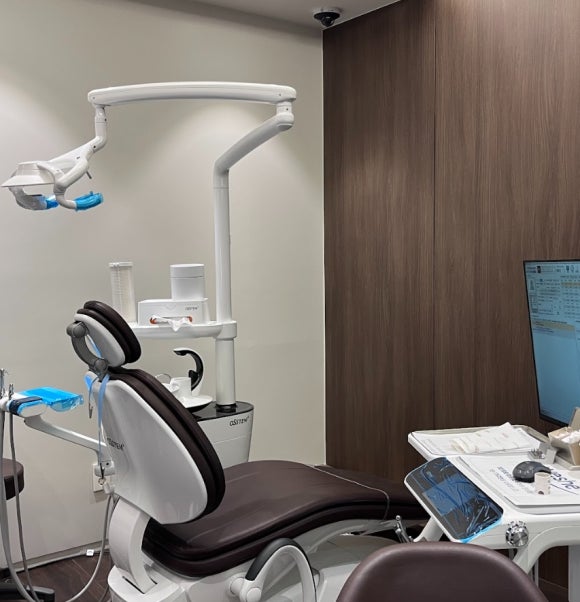
During consultations,
some patients ask,
“Can’t you find out
just by taking an X-ray?”
However, some aspects of the jawbone
are difficult to assess from the outside alone.
A treatment plan can be established only after checking
the height and width of the bone,
as well as the location of the surrounding nerves,
through CT imaging.
That is why a CT examination
is one of the important steps
in an implant consultation.
When I explain the findings
while looking at the CT images together,
many patients find it much easier to understand
why bone grafting may be necessary
and why treatment plans differ.
Not Everyone Needs Bone Grafting

This is what patients are most curious about.
Not everyone needs bone grafting.
If the extraction was recent
and there is sufficient jawbone,
implant treatment alone may be performed.
On the other hand,
if a tooth has been missing for a long time
or the bone has decreased because of gum disease,
bone grafting may be considered as well.
The important thing is not to compare yourself with someone else,
but to assess the current condition of your own jawbone.
Check These Points
| What to check | Why it is examined |
|---|
| A long time has passed since the extraction | To check for changes in the jawbone |
| You have received treatment for gum disease | To assess the condition of the bone |
| You have undergone a CT scan | To check the height and width of the bone |
| You have been told about additional treatment | To understand the treatment plan |
| You have been informed of the implant location | To confirm an individualized plan |
It Is Important to Receive a Sufficient Explanation

After the explanation,
the patient smiled and said,
“I thought you were suggesting extra treatment for no reason,
but I understand now that I’ve heard the explanation.”
Rather than rushing into treatment in the consultation room,
I believe it is more important to understand
why bone grafting may be necessary
and what the current condition of the jawbone is.
In Closing
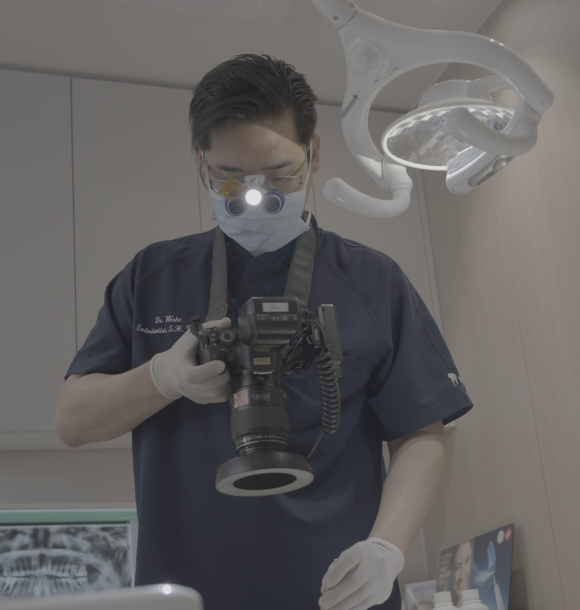
Bone-grafted implant treatment
is not something everyone receives.
It is a treatment planned together with the implant procedure
when necessary, after assessing the current condition of the jawbone.
If you are considering an implant,
before focusing on the cost or the name of the treatment,
please make sure you receive a sufficient explanation
about the condition of your own jawbone.
Implants intended for long-term use
begin with an accurate diagnosis
and a sufficient explanation.
Thank you.
WE build healthy smiles,
SHE finds confidence.
HE finds his smile.
Beauty built on a healthy foundation
Dr. Yeo Sang-ho, Director of Yonsei Wish Dental Clinic.
Recommended Reading











Previous image
Next image










Previous image
Next image