The cause may remain even after the pain disappears

Hello.
This is Yonsei Wish Dental Clinic.
Table of Contents
Wisdom Tooth Pain
-
Why does wisdom tooth pain suddenly stop?
-
Effects of an impacted wisdom tooth on the surrounding teeth
-
Problems that can occur if a wisdom tooth is left untreated for a long time
-
Do all wisdom teeth need to be extracted?
-
How is the decision to extract a wisdom tooth made?
“My wisdom tooth used to hurt, but it feels fine now.
Do I still need treatment?”
Wisdom tooth pain may continue severely for several days
and then lessen at some point.
It is easy to think that the problem has been resolved,
but the pain subsiding
is not the same as the cause disappearing.
The inflammation around the gums may have temporarily eased,
while a wisdom tooth growing at an angle or one buried under the gums
may still remain unchanged.
This is why the wisdom tooth’s position and direction
should be examined even after the pain has stopped.

Wisdom Tooth Pain
Why does wisdom tooth pain suddenly stop?
Wisdom Tooth Pain
Wisdom Tooth Pain
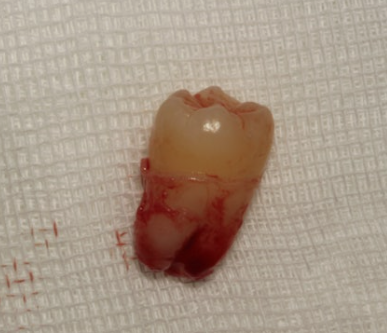
When food particles and bacteria
accumulate around a wisdom tooth,
the gums may swell and become painful,
causing pericoronitis.
As your condition improves
or the inflammatory response decreases,
the pain may also subside.
However, if the structure that makes the area difficult
to reach with a toothbrush remains unchanged,
the inflammation may recur.
If the same area repeatedly swells,
it is uncomfortable to open your mouth,
or you notice an unpleasant taste in your mouth,
an examination is necessary.
Effects of an impacted wisdom tooth on the surrounding teeth
Wisdom Tooth Pain
Wisdom Tooth Pain
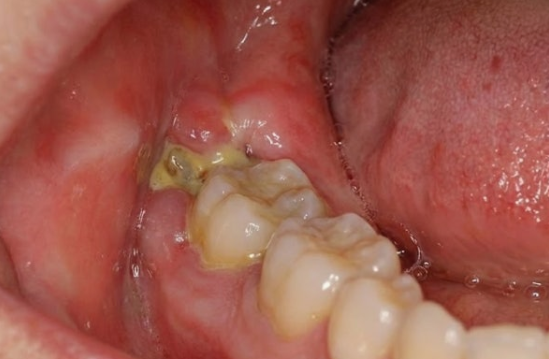
An impacted wisdom tooth
is one that remains under the gums because there is not enough space,
or one that is tilted sideways.
A wisdom tooth lying at an angle can come into contact with the molar directly in front of it,
creating a space where food can easily become trapped.
Because this area is difficult to brush,
not only the wisdom tooth but also the front molar
may develop cavities or gum inflammation.
The wisdom tooth itself
can be addressed through extraction,
but if the front molar is also damaged,
the scope of treatment may become more extensive.
That is why it is important to check the condition of the surrounding teeth
before focusing on the pain.
In particular, cavities that develop between the wisdom tooth
and the front molar are difficult to see with the naked eye,
so they may not be discovered until pain develops.
Even if the wisdom tooth pain has disappeared,
if food frequently becomes trapped or the gums have an odor,
the front molar should also be examined.
Even if everything looks fine on the outside,
the condition beneath the gums may be different.
Problems that can occur if a wisdom tooth is left untreated for a long time
Wisdom Tooth Pain

Wisdom Tooth Pain
If inflammation around a wisdom tooth recurs,
the gums may swell, pus may develop,
or it may become difficult to open your mouth.
As food continues to become trapped,
bad breath may also worsen.
In rare cases, a cyst may develop in the tissue surrounding
a wisdom tooth buried under the gums.
There may be few noticeable symptoms in the early stages,
so X-rays should be used to examine the tooth’s position
and changes in the surrounding bone.
Do all wisdom teeth need to be extracted?
Wisdom Tooth Pain
Wisdom Tooth Pain
If a wisdom tooth grows straight, can be brushed properly,
and does not cause problems for the surrounding teeth or gums,
it may be monitored through regular checkups.
On the other hand, if only part of the tooth has erupted and inflammation recurs,
or if it is causing cavities and gum damage to the front molar,
extraction may be considered.
Even if it is completely buried under the gums,
if a cyst or root damage is detected,
it is generally better not to postpone treatment.
Why regular checkups are necessary even when there is no pain
Wisdom Tooth Pain

Wisdom Tooth Pain
The absence of wisdom tooth pain
does not necessarily mean there is no problem.
A wisdom tooth buried under the gums
or growing at an angle
can affect the front molar and gums
without causing pain.
If you decide to monitor it without extraction,
it is advisable to check the wisdom tooth’s position
and changes in the surrounding teeth through regular checkups.
How is the decision to extract a wisdom tooth made?
Wisdom Tooth Pain
Wisdom Tooth Pain
It is difficult to determine whether a wisdom tooth should be extracted
based only on how it looks from the outside.
X-rays are needed to examine the wisdom tooth’s direction and root shape,
as well as its relationship with the front molar.
If a lower wisdom tooth is close to the nerve canal,
dental CT imaging can provide a closer examination of the distance
between the wisdom tooth roots and the nerve canal.
Based on the imaging results,
we determine the treatment approach after considering
your current discomfort and the condition of the surrounding teeth together.
Rather than leaving a wisdom tooth in place simply because the pain has stopped,
it is advisable to check whether the underlying cause remains.
After carefully examining the wisdom tooth’s position and the surrounding tissues,
we will advise you based on your current condition
whether extraction is necessary or whether it can be monitored regularly.
Thank you.
This has been Yonsei Wish Dental Clinic.
Recommended related articles