Check the Cause First If Your Dental Implant Feels Loose
Hello.
This is Yonsei Wish Dental Clinic.
Table of Contents
Causes of Loose Dental Implants in Magok
-
Why a dental implant may feel loose
-
A loose screw and a loose implant are different
-
Why does peri-implantitis occur?
-
Signs that revision surgery should be considered
-
How are loose dental implants treated?
-
How to care for dental implants for long-term use
After using a dental implant for a long time
“My dental implant feels a little loose.
Is it okay?”
is a question we hear frequently.
Even people who have received implant treatment
may worry about revision surgery first
when they suddenly feel movement.
However, in many cases,
the implant itself is not the problem.
The cause is more often found in
the prosthetic restoration or screw connected above it.
Today, we will explain the causes of loose dental implants,
signs that require treatment,
and care methods.
Why a Dental Implant May Feel Loose
Loose Implant Screw in Magok
Movement of the Implant Body in Magok
Just because a dental implant feels loose
does not mean that the implanted fixture is immediately coming out.
In the dental office,
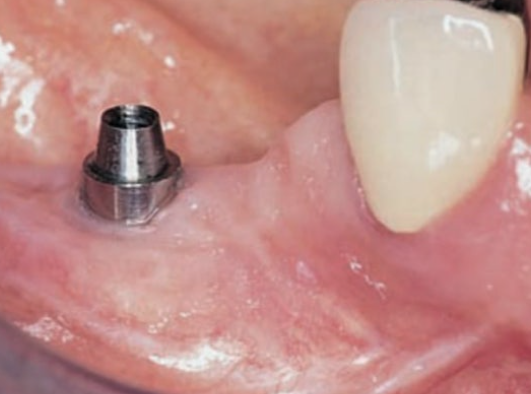
we more often first find that the screw
connecting the upper prosthetic restoration
has become slightly loose.
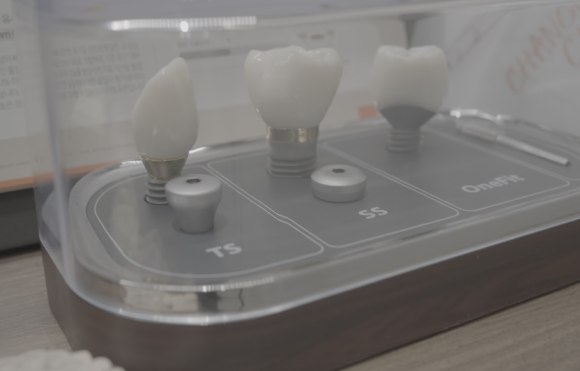
Dental implants consist of multiple components
connected with precision.
When chewing forces are repeated over a long period,
minute gaps may develop at the connection,
which can make the implant feel loose.
This condition does not mean
that implant surgery has failed.
It is closer to a loosened mechanical connection.
If it is identified early,
retightening the screw
or replacing only the necessary component
often resolves the discomfort.
Treatment for Loose Dental Implants in Magok
A Loose Screw and a Loose Implant Are Different
Movement of the Implant Body in Magok
Peri-implantitis in Magok
The most important thing
is to accurately determine
what is actually moving.
If only the prosthetic restoration is moving,
treatment can be completed relatively easily.
In contrast,
if the implant body placed in the jawbone
is moving,
the cause needs to be examined more closely.
The main causes include
failure of osseointegration and peri-implantitis.
Failure of osseointegration
refers to a condition in which
the bone and implant do not bond sufficiently
early after surgery.
Peri-implantitis, on the other hand,
is a condition in which the surrounding jawbone
is damaged by bacteria and inflammation
after a considerable amount of time has passed,
weakening the implant’s stability.
Because dental implants do not have nerves
connected to them like natural teeth,
problems may progress without pain
in the early stages.
Therefore, it is important not to dismiss
even minor changes such as movement,
gum bleeding, or odor.
Signs That Revision Surgery Should Be Considered
Regular Implant Checkups in Magok
Magok
Not every instance of movement
leads to revision surgery.
However, if you have symptoms such as those below,
you need an examination promptly.
If the implant body itself is actually moving,
or pus from the gums and severe bad breath recur,
you need a prompt examination.
If substantial loss of the surrounding jawbone
is confirmed on an X-ray,
the implant may be removed,
followed by consideration of bone grafting
and reimplantation.
Rather than waiting until symptoms worsen,
early diagnosis can help reduce
the burden of treatment.
Why Dental Implants Feel Loose at a Magok Dental Clinic
How Are Loose Dental Implants Treated?
Loose Implant Screws at Magok Yonsei Wish Dental Clinic
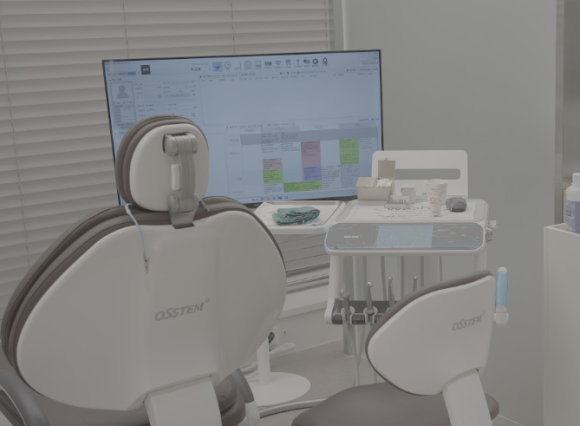
Gum Inflammation at a Magok Dental Clinic
At the dental clinic,
we first check the condition of the implant
and jawbone using a panoramic X-ray
and, when necessary, a 3D CT scan.
If the cause is a loose screw,
we secure it again with the appropriate force
or replace worn components.
If peri-implantitis is confirmed,
inflamed tissue is removed,
and cleaning, disinfection,
and any necessary treatment are performed together.
If jawbone damage is severe,
the implant may be removed,
bone grafting may be performed,
and reimplantation may be planned
after a recovery period.
Treatment methods are not the same for everyone.
After examining the current amount of jawbone,
the extent of inflammation,
and the condition of the prosthetic restoration together,
an appropriate treatment plan is determined.
How to Care for Dental Implants for Long-Term Use
Dental Implant Treatment Methods at Magok Yonsei Wish Dental Clinic
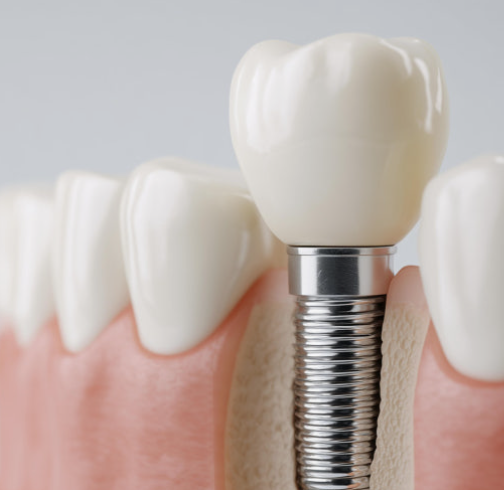
Implant Maintenance
The lifespan of a dental implant
is not determined by surgery alone.
Care after treatment also has
an important effect on the implant’s lifespan.
It is recommended to have regular checkups every six months
to check the screw and gum condition,
and to keep the area around the implant clean
with an interdental brush and dental floss.
In addition, habits such as cracking ice with your teeth,
repeatedly chewing hard foods,
clenching your teeth, or grinding your teeth
can place stress on the implant
and should be avoided.
In such cases,
we recommend consulting a dental professional
to determine whether wearing a mouthguard may be helpful.
In Closing
Regular Checkups in Magok
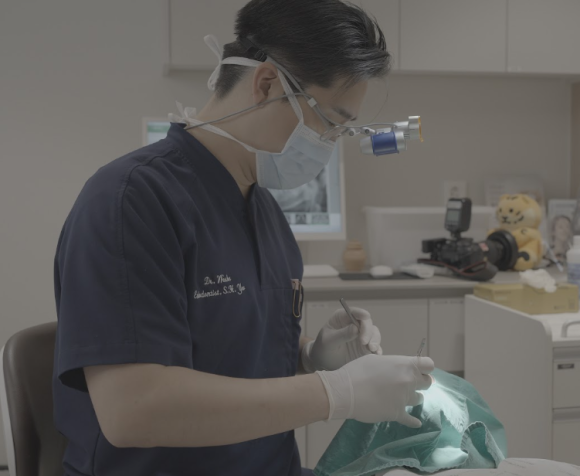
Implant Revision Surgery in Magok
If your dental implant feels loose,
revision surgery is not always necessary.
If it is simply a loose screw,
it can often be resolved with relatively simple treatment.
On the other hand, if peri-implantitis
or jawbone damage has begun,
early diagnosis can affect the treatment outcome.
If the feeling of movement recurs,
or is accompanied by gum bleeding, pus, or odor,
please do not delay.
Have an accurate examination
to check your current condition.
Thank you.
Recommended Reading