When you think of a “hospital,” what comes to mind first?
Most people probably think it’s scary.
Some people develop a fear of needles when they are young, or
feel fear due to trauma such as experiencing severe pain during treatment.
This is called dental phobia.
Because of this psychological anxiety, even though they know wisdom teeth need to be removed,
many people keep putting it off.
So today, at a dental clinic near Ujangsan Station, I’d like to share information about ways to reduce and control pain, as well as why preventive extraction should be performed.
Why do they need to be removed?
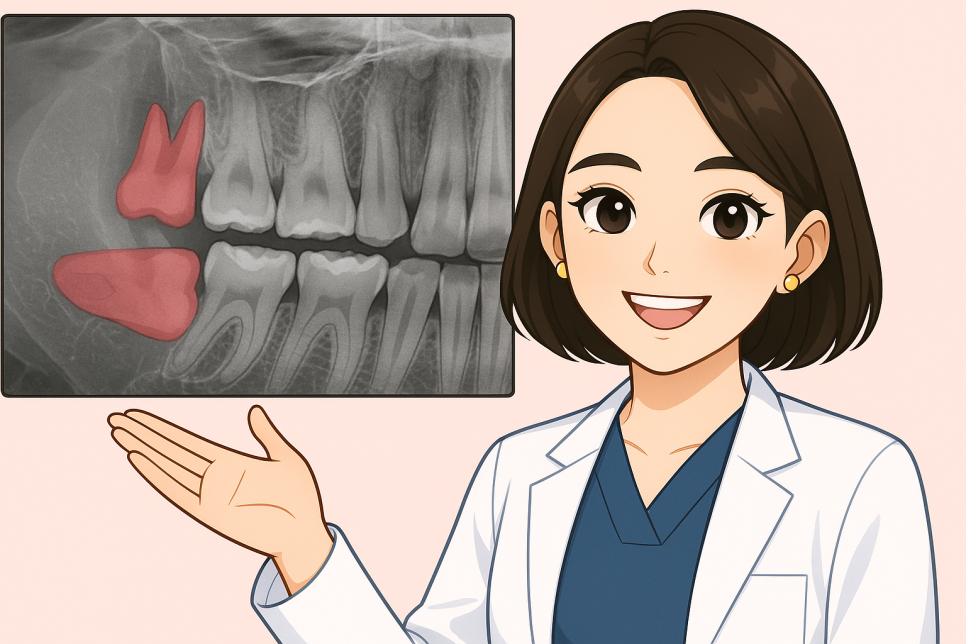
The third molars, which have many nicknames such as wisdom teeth because they are said to emerge when one gains wisdom.
Because they erupt at the very back of the mouth,
they are hard to clean since the bristles of a toothbrush cannot reach them well.
That makes cavities and inflammation very likely.
“Mine is still buried in the gums.”
You may think that because it is still impacted,
it is not yet at a stage that requires care.
However, even when it has only slightly emerged above the gum line,
wisdom teeth can still decay.
That is why you need to carefully observe whether it has erupted and manage it yourself.
Ujangsan Station Dental Clinic News
What should you do if cavities have already started
due to insufficient brushing?
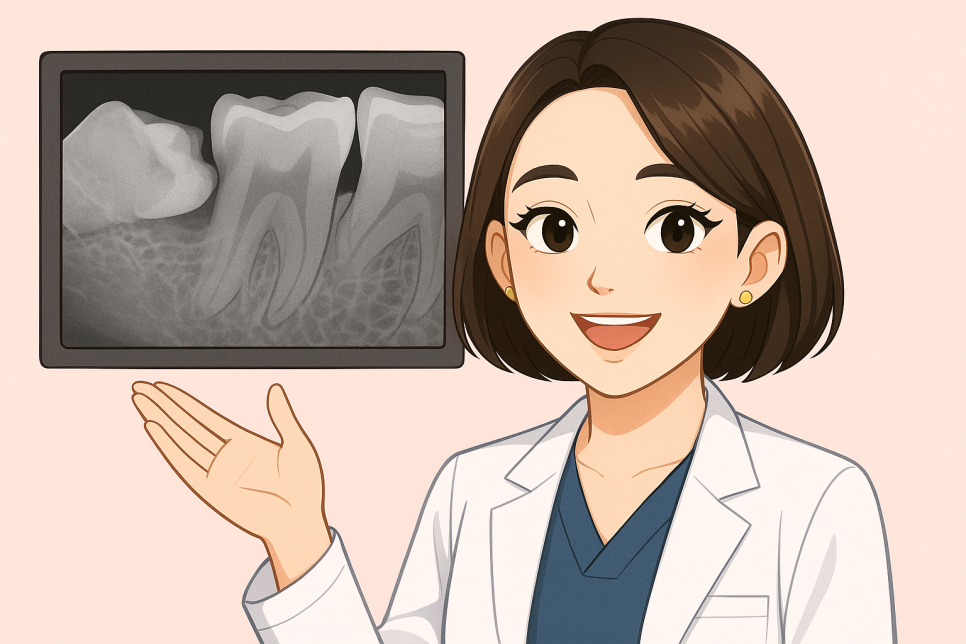
The third molars do not contribute much to the function of teeth,
such as eating or pronunciation.
Because of that, rather than performing conservative treatment,
there are many cases where extraction is done right away.
It is true that removing them when problems arise is a good option,
but cavities or inflammation are not limited to the wisdom tooth alone.
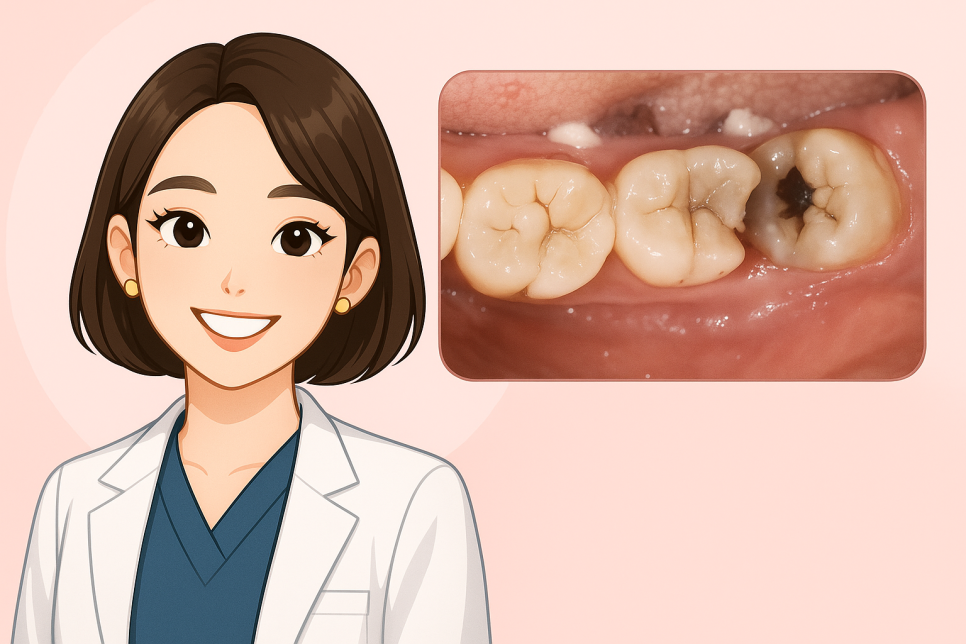
As shown in the photo prepared by the dental clinic near Ujangsan Station,
the molar in front of it can also develop problems.
The molars in the front play an important role in the chewing process, so
if they decay or become inflamed like this,
it can harm the preservation of the natural tooth.
That is why many specialists agree and say,
“It is better to remove them preventively.”
I know they need to be removed,
but I’m too scared.
People with dental phobia
can feel tense and break out in a cold sweat
even by simply entering a hospital.
So even though they know there is a problem because of pain,
they keep delaying treatment.
Wisdom tooth extraction is the same.
During the process of anesthesia and splitting or removing the tooth with instruments,
they may worry about the sounds they hear or the pain that may occur.
That is why, so that patients can regain a sense of calm during treatment,
two methods can be applied.
Ujangsan Station Dental Clinic News
First, a stepwise anesthesia system
When you go in for scaling,
you may have heard, “Please gargle for about 1 minute.”
This is to use a gargling anesthetic.
When you gargle with a solution containing about 3% lidocaine,
only the surface is lightly numbed.
That numb feeling lasts for about 30 minutes.
That is why gargling anesthetics are often used before scaling
or before endoscopy.
What if this is done before injection anesthesia?
It would be excellent at reducing the pain that occurs when the needle enters, right?!
By first using a gargle or an anesthetic in ointment/spray form,
and then applying injection anesthesia in stages,
pain reduction can be pursued.
Ujangsan Station Dental Clinic News
Second, using N2O gas
N2O gas refers to nitrous oxide.
It is commonly known as laughing gas.
It is a slightly sweet, colorless gas that is rapidly absorbed into the lungs when inhaled,
then moves to the brain.
When use is stopped, it is mostly expelled through breathing,
so it does not accumulate in the body.
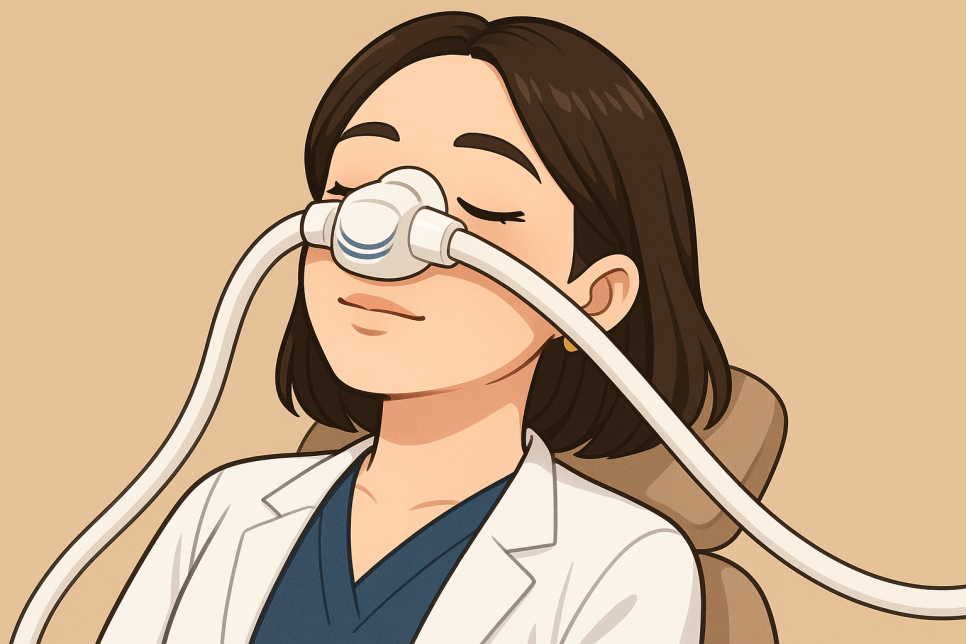
N2O gas has mild sedative and mild analgesic effects.
Because it relieves tension and fear and reduces the perception of pain,
it is useful in the treatment process for patients with phobias.
As shown in the photo prepared by the dental clinic near Ujangsan Station,
you inhale gas mixed with oxygen through a nasal mask.
While keeping the oxygen concentration high, N2O is slowly mixed in
to find the appropriate level of sedation.
Once a stable state is reached using the gas,
treatment begins.
After treatment is finished and inhalation of the agent is stopped,
the effect quickly wears off,
so the patient can go home by walking on their own.

Its safety has been established,
and because it hardly accumulates in the body,
even young children can use it with peace of mind.
However, temporary dizziness, nausea, or vomiting may occur,
and if it is used repeatedly at high concentrations for a long time,
vitamin B12 metabolic disorders and nerve-related problems may occur,
so it must be used only after consultation with a specialist.
Today, at the dental clinic near Ujangsan Station, we shared detailed information about
the need for wisdom tooth extraction and two ways to overcome dental phobia.
I hope this was useful information for you,
and I will wrap up the post here.
This has been Lee Soo-kyung. Thank you.