Hello, this is Lee Su-gyeong from Wojangsan Dental Clinic.
Many people catch colds in the cold weather and sniffle a lot.
But did you know that the reason for constantly sniffing may not be a cold?
There is an empty space inside the nose called the maxillary sinus.
It helps regulate the humidity of the air that comes in through breathing
and reduces the weight of the head.
When inflammation develops here,
it is called "sinusitis."
You may be familiar with the name sinusitis.
This area, where sinusitis occurs,
is also closely related to the teeth.
I will explain this in more detail.
Wojangsan Dental Clinic Dentist Lee Su-gyeong
What kind of connection is there?
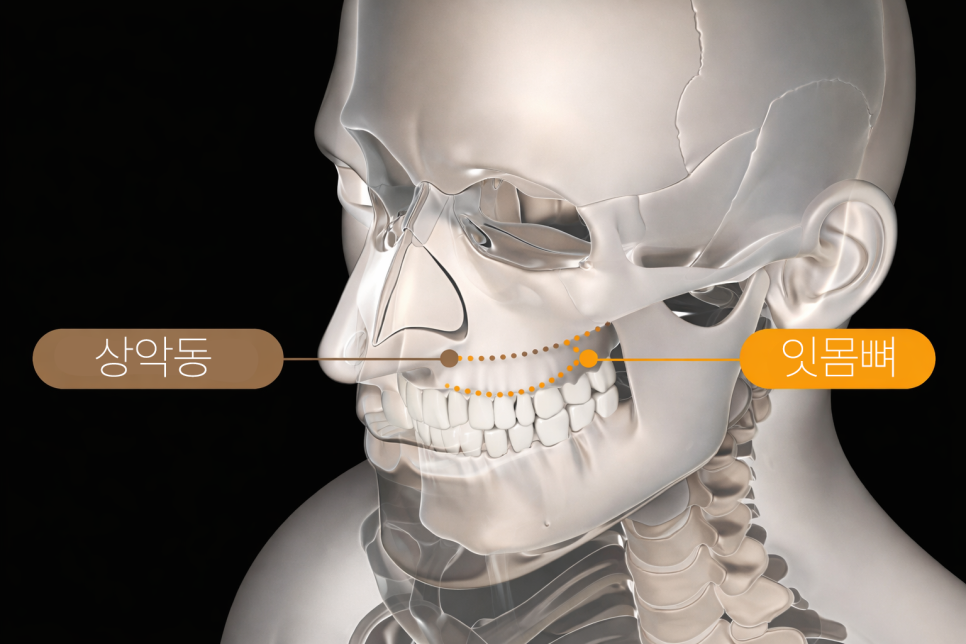
Anatomically, it is close in distance to the upper alveolar bone.
That is why it is a structure that must be carefully considered when placing implants.
If the bone tissue melts away due to inflammation caused by periodontitis or cavities,
the distance will become even shorter.
Also, if it becomes pneumatized for some reason and the membrane gradually descends,
the bone and tissue will gradually become closer.
Then the space for the implant screw will gradually decrease,
and if they get too close, there may be no room for the fixture to be inserted,
which can damage the structure.
In such cases, to secure enough space again,
a procedure called sinus lift must be performed additionally.
Wojangsan Dental Clinic will explain in detail what kind of treatment this is.
What is a sinus lift?
The maxillary sinus membrane is very thin.
That is why, during practical training in dental school, students practice using quail eggs or chicken eggs,
getting a feel for the process by lifting the very thin membrane inside the shell.
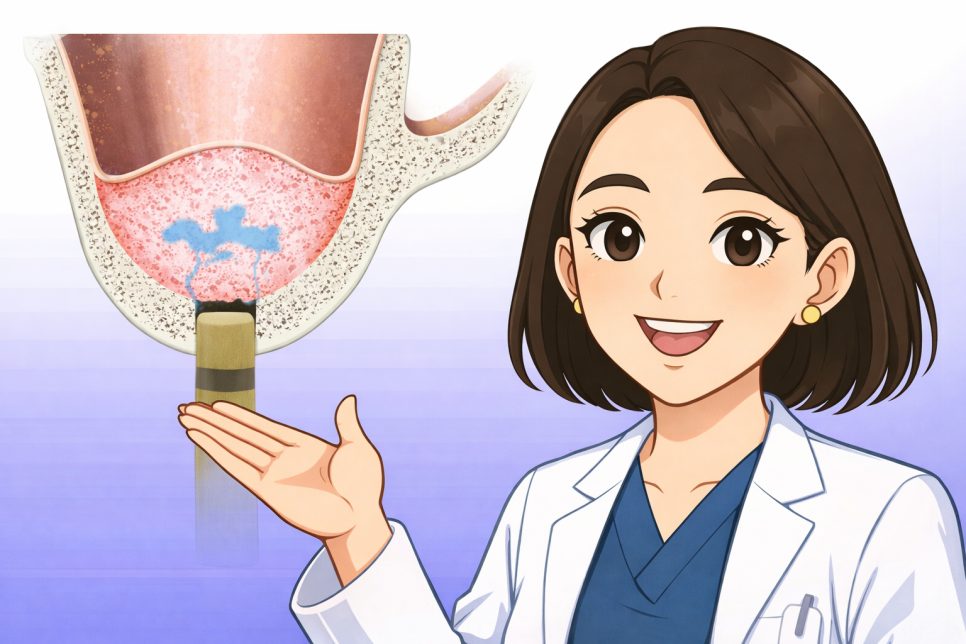
In reality, it is also very thin, like a quail egg or a chicken egg.
By slowly lifting the membrane and, if necessary, adding bone graft material,
we secure enough space for the implant.
This process is broadly divided into two methods,
depending on where the access is made.
Wojangsan Dental Clinic will explain in detail.
Wojangsan Dental Clinic Dentist Lee Su-gyeong
Crestal approach
Crestal approach
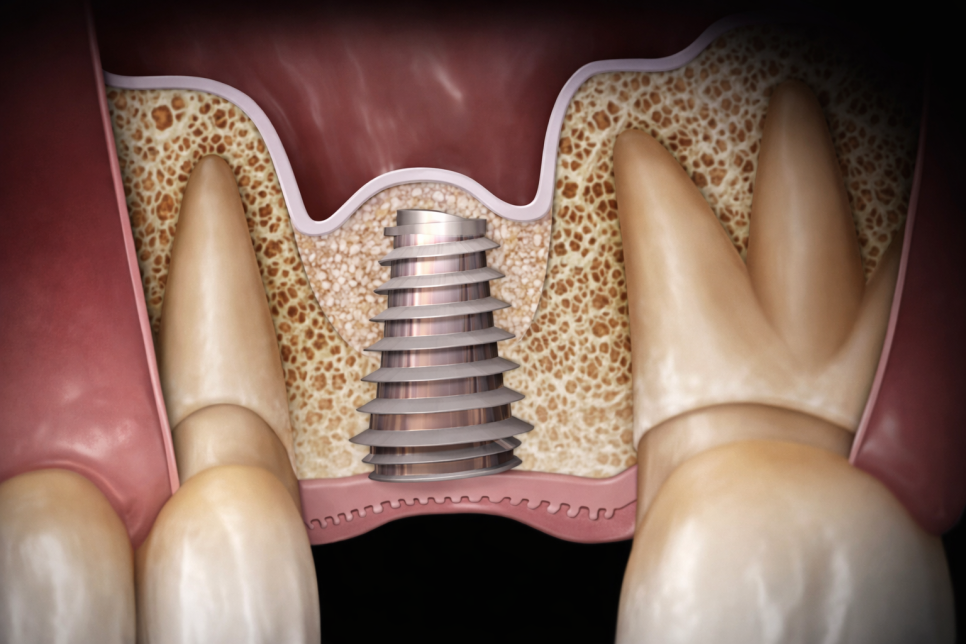
As the name suggests, this is a method performed from the top of the gum bone.
It is mainly chosen when some residual alveolar bone remains.
By entering through the channel created to place the implant screw
and lifting the membrane,
it has the characteristic of requiring only a small incision,
and the procedure is relatively simple,
making minimally invasive treatment possible.
However, if the bone height is not sufficient,
there is a risk that the membrane may be perforated because it is thin,
so it is not suitable for cases with inflammation or thin residual alveolar bone.
In addition, to minimize structural damage,
a very cautious approach is required,
and this must be supported by the clinician’s skill.
Wojangsan Dental Clinic Dentist Lee Su-gyeong
Lateral approach
Lateral approach
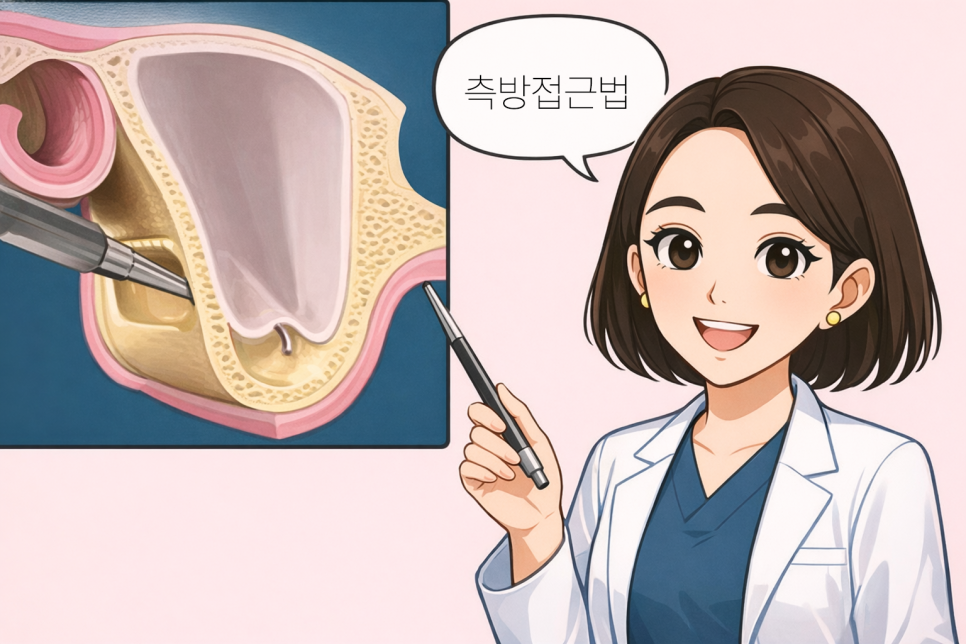
This method, as the name suggests, also approaches from the side of the gum bone,
and is suitable for cases with very thin alveolar bone where the gum bone height is less than 5 mm.
In addition, it can be applied when a large amount of bone tissue has melted away due to inflammation
or when the maxillary sinus is anatomically close.
An incision is made on the side to safely lift the membrane,
and with lateral access, extensive bone grafting is possible,
with excellent visibility.
However, because the process is very complex and requires a large incision,
the surgery may take longer,
and swelling or pain may occur afterward.
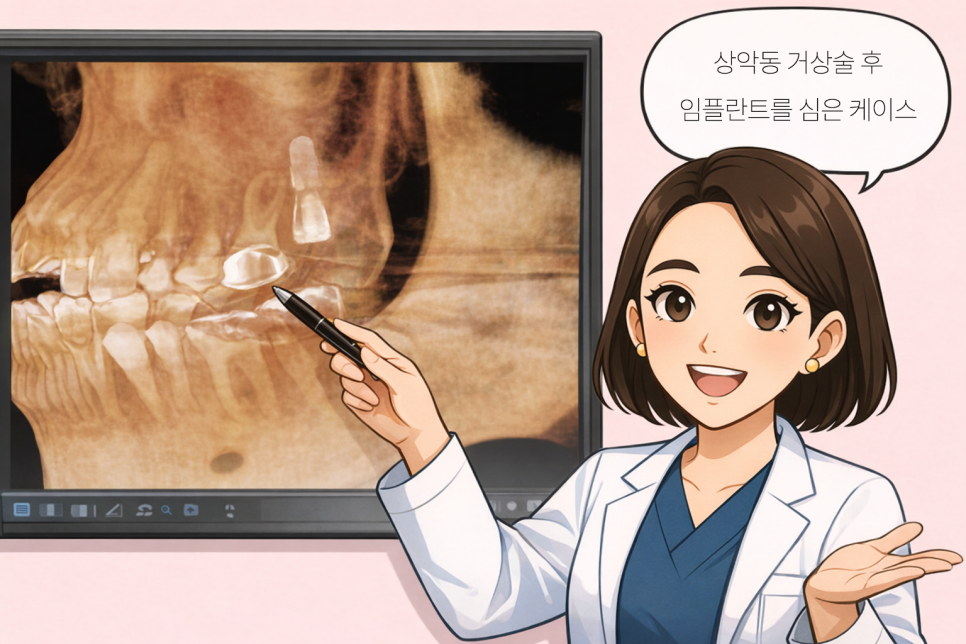
Today, I explained the sinus lift procedure,
which is performed to place implants safely.
How was this simple explanation of unfamiliar information?
I hope it was helpful, and I will end the post here.
This was Lee Su-gyeong from Wojangsan Dental Clinic.
Thank you.