Hello, I’m Lee Soo-kyung, a specialist in integrated dentistry at Balsandong Dental Clinic.
"My father has high blood pressure.
Can he get an implant?"
.
.
An elderly patient with a systemic disease.
"I have severe gum disease and my bone has deteriorated.
Can I still have surgery?"
.
.
A case with poor implant conditions due to disease.
If surgery becomes difficult because of a systemic disease or other condition,
its level of difficulty naturally increases.
At times like this, choosing a navigation-based method
can improve accuracy
and help complete the procedure safely.
Today, Balsandong Dental Clinic would like to share
information about this.
What Is a Navigation Implant?
You may have used navigation when traveling somewhere unfamiliar
or heading to a destination.
It gives detailed directions so you do not get lost
and shows the exact route.
This same advantage of navigation is applied inside the mouth as well.
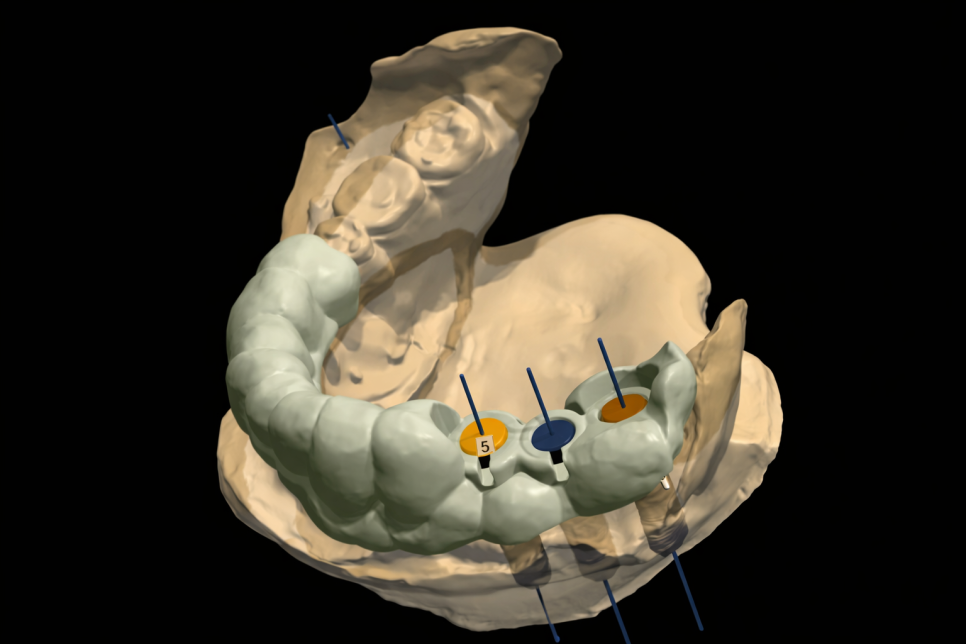
Even if you thoroughly plan where to place the screw using various data before surgery,
it is difficult to find the exact spot inside the mouth.
So, in many cases, multiple drilling attempts are made
in order to find the correct position.
If there is no systemic disease or the implant environment is relatively healthy,
this usually has little effect,
but if there are related issues, it can have an impact.
Let me give you an example from Balsandong Dental Clinic.
If a patient is taking medication such as aspirin,
hemostasis may not work well and problems can arise.
But if this patient undergoes repeated drilling to place an implant
and tissue damage occurs,
it is natural that the risk of bleeding increases
and hemostasis may become difficult.
So in such cases, by choosing a navigation-based method,
the implant path can be planned in advance,
and a guide can be made to show that path,
increasing accuracy.
I will explain the detailed process using materials prepared by Balsandong Dental Clinic.
The Following Steps Are Taken Before Treatment.
First, before planning implant treatment,
various data are collected.
Basically, Panorama, CBCT, and intraoral scan data are obtained
and merged to create the materials needed for the simulation stage.
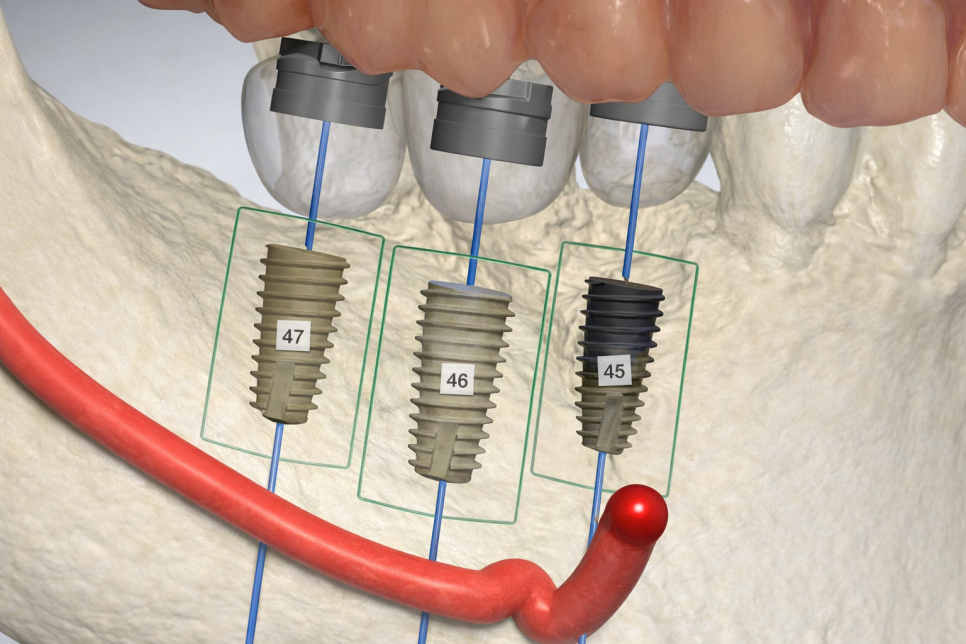
Through this, the amount of remaining alveolar bone, bone quality,
and anatomical structures can all be identified.
Based on this, the position and angle of the fixture that can secure sufficient fixation
without harming surrounding structures,
as well as the screw diameter and length,
are selected.
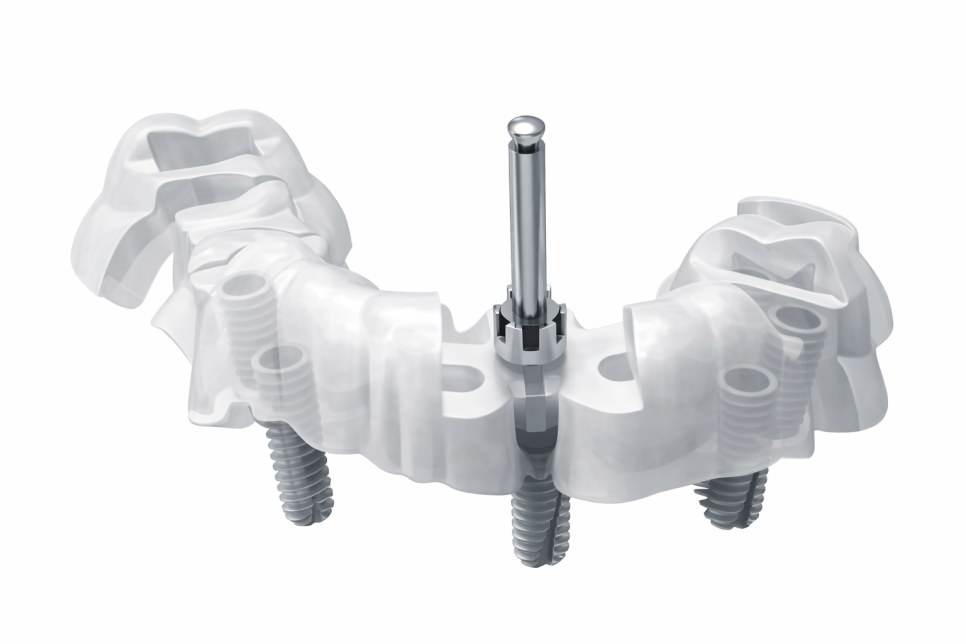
Then a guide is fabricated based on this.
In simple terms, you can think of this device as a flashlight.
It is a device that tells you where to drill
so that the screw can be placed in the position you want.
As explained earlier by Balsandong Dental Clinic,
a guide is fabricated so that the plan established through the simulation stage
can be carried out.
After that, the pre-made guide is tried in before surgery
to check once more whether it fits properly.
What Is the Surgical Process?
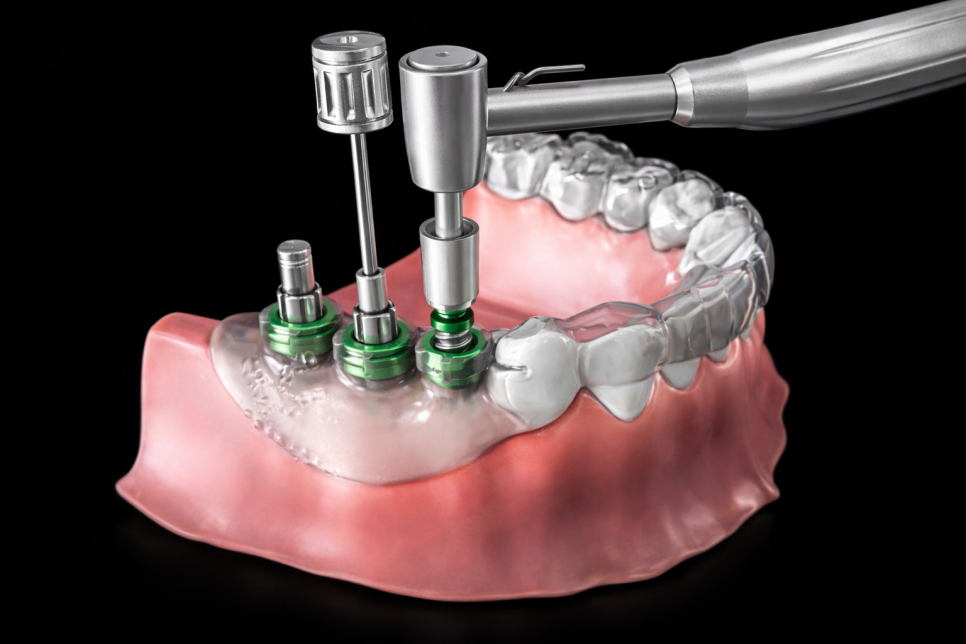
On the day of surgery, after the anesthesia process is completed,
when the implant placement stage begins,
the fabricated guide is fitted in place.
Placement is performed based on the guide,
and then radiographic data are obtained once again
to evaluate whether the fixture has been placed in the correct position.
Today, Balsandong Dental Clinic shared information about
navigation implants.
It is often used as a way to improve accuracy
in cases with systemic disease or poor implant conditions.
However, depending on the individual,
the analog method may be more advantageous.
That is why it is best to choose a treatment method
through 충분한 consultation with the attending medical team.
That is all for today’s content.
I hope this was helpful,
and I will end the post here.
This has been Lee Soo-kyung, specialist in integrated dentistry at Balsandong Dental Clinic. Thank you.