Hello, I’m Lee Su-gyeong, a specialist in integrated dentistry at a dental clinic in Magok-dong.
Have you ever had root canal treatment?
Because of cavities or gum inflammation,
it is often used as a last resort
to save a natural tooth.
So I think many of you
may have received treatment.
There are many people who complain of discomfort during the improvement process.
Because you have to visit multiple times and
receive anesthesia at each appointment, patient discomfort
is unavoidable,
but this issue can be eased to some extent
through a painless system or step-by-step anesthesia.
However, due to structural limitations,
there are cases where the treatment period becomes longer
or the success rate drops,
and in such cases difficulties arise,
so extraction may also need to be considered.
Today, I’d like to explain root abnormalities
that make root canal treatment more difficult.
What is the MB2 canal?
The roots of the upper first molar
usually number three.
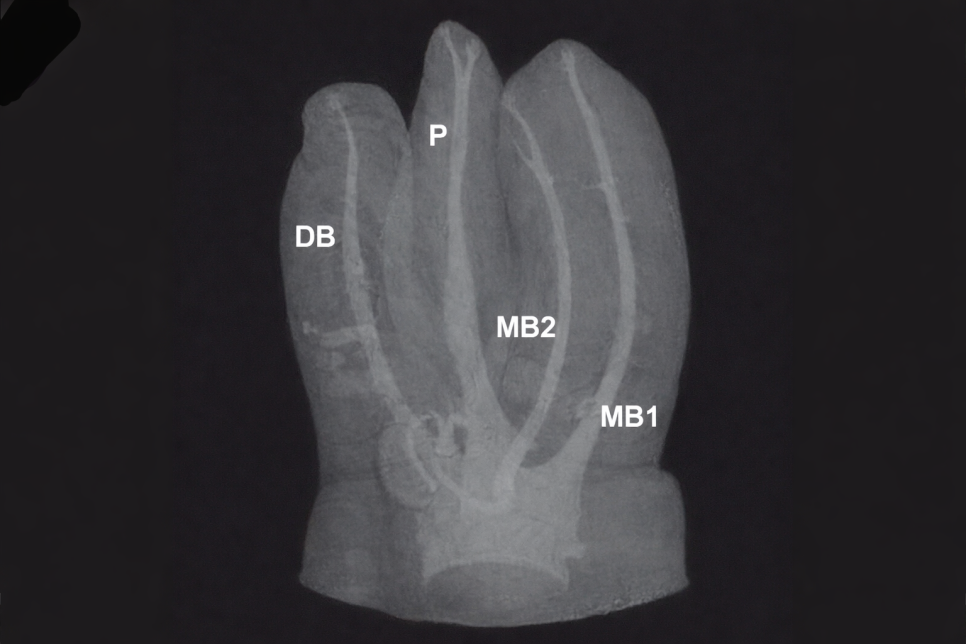
However, there are occasional cases where there are four.
In such cases, the part called the mesiobuccal root
splits into two branches, and as shown in the Magok-dong dental clinic
image, the MB2 canal can be observed.
Because it is difficult to observe, it is sometimes overlooked,
and then MB2 can become a route for reinfection.
But the problem with this canal does not end with the fact
that it is hard to observe.
In addition to being difficult to find,
it can also become calcified, making the opening hard to locate.
So even if the canal is found,
it may be difficult for instruments to enter the opening,
which can lengthen the treatment.
Also, when the mesiobuccal root splits into two branches,
they are called MB1 and MB2 respectively,
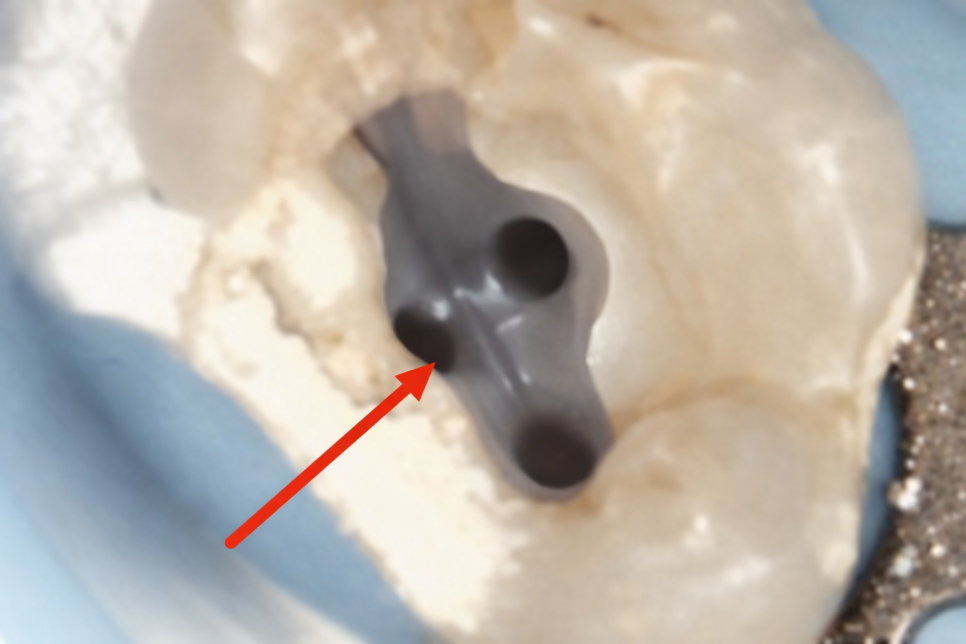
and while one side has a typical thickness,
MB2 is very thin.
That is why it is hard to see, and as shown in the Magok-dong dental clinic image,
finding the opening is difficult.
Even with these limitations, if it is missed,
it can become a future source of infection,
so it is better to address this part as well.
To find the opening, a little tooth structure is removed bit by bit,
and if the branched canal is located,
the passage is gradually widened with files.
When this process is carried out by a medical team
who has gained experience through repeated cases,
the process becomes a little smoother.
Radix Entomolaris?
The second type of abnormality is Radix Entomolaris.
It usually occurs frequently in lower molars,
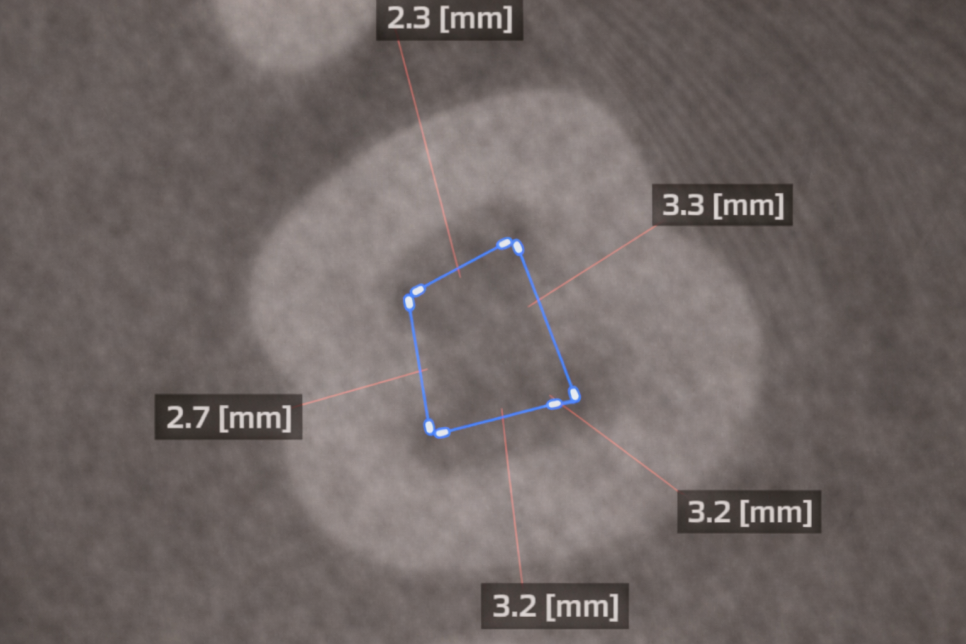
and while teeth generally have two to three roots,
Radix Entomolaris has one additional root
on the distolingual side, as shown in the Magok-dong dental clinic
image. It is severely curved,
and the canal opening is far away.
So it is difficult even to observe,
and the treatment process is also difficult.
Even if the opening is found, when an instrument is inserted,
there is also a risk that it may fracture, making the root canal treatment process somewhat
more complicated.
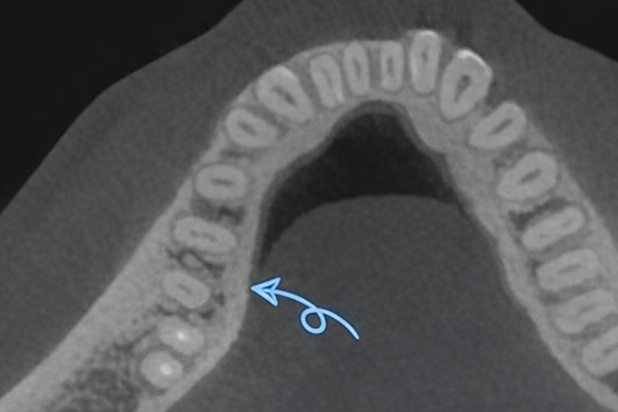
Even if it is observed in CT data as in the Magok-dong dental clinic image,
the root itself is severely curved,
so instrument fracture occurs frequently.
Therefore, it takes quite a long time because it is complicated to approach safely
without instrument fracture and promote internal cleanliness.
Shape abnormalities that increase the difficulty of root canal treatment
Today at the Magok-dong dental clinic, we shared that depending on the shape of the canal,
it may be difficult to secure a high success rate.
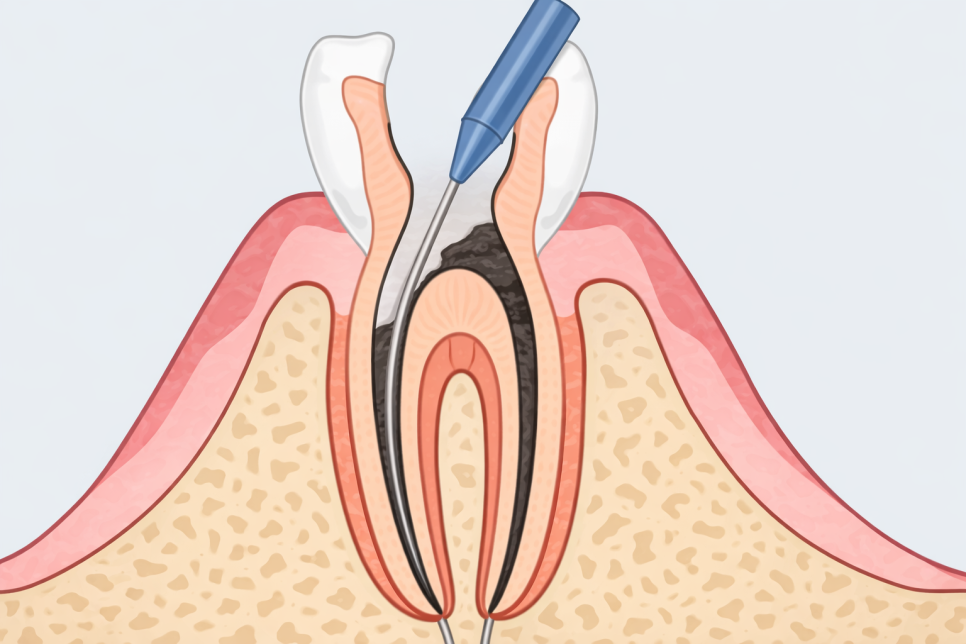
In fact, it is difficult to overcome the anatomical and structural limitations themselves,
but there are not no ways to address them.
If the medical team has abundant related experience
and has sufficiently developed skill through it,
improvement is certainly possible.
If careful procedures are performed under an accurate diagnosis,
even cases with structural limitations
can sometimes be overcome.
That is why, before choosing a clinic,
please be sure to check whether it has abundant
related clinical experience.
I hope the information I shared today has been useful to you,
and I will end here.
This has been Lee Su-gyeong, a specialist in integrated dentistry at a dental clinic in Magok-dong. Thank you.