Hello, I’m Lee Soo-kyung, a specialist in Integrated Dentistry at Balsan Station Dental Clinic.
An implant can replace my natural tooth,
and these days it is performed relatively commonly,
but until just a few years ago, it was unfamiliar.
It replaces the root in a way similar to a natural tooth,
with a screw called a fixture placed into the jawbone
to achieve fixation.
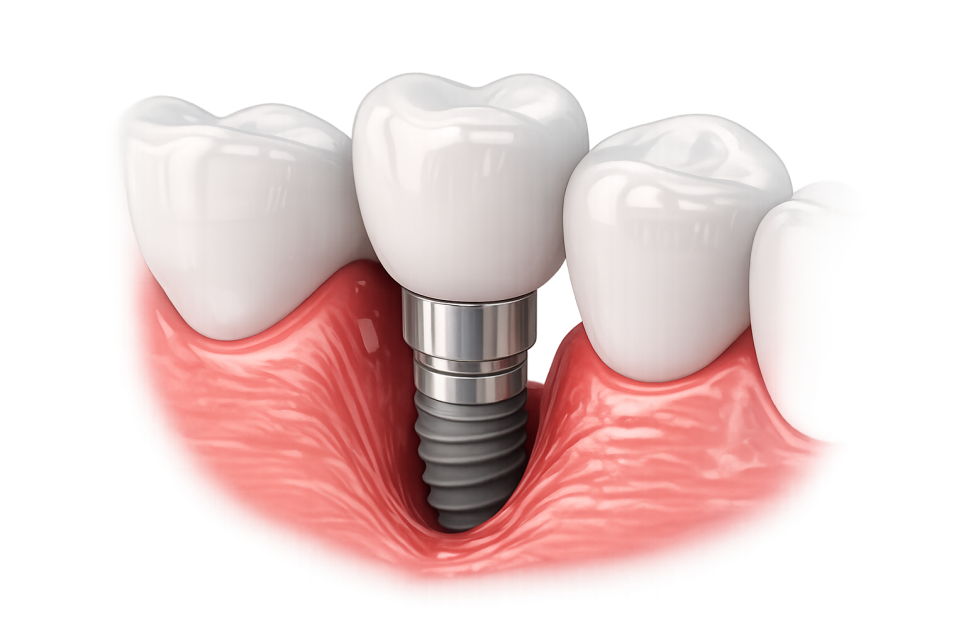
Even after treatment is successfully completed and the prosthetic
that will replace the function of the missing tooth is placed,
problems can occur if follow-up care is not done well.
Today, I have prepared information about [peri-implantitis].
Since this post covers maintenance and care,
if you have already had implants placed or are in the middle of treatment,
please be sure to read through to the end.
- What is peri-implantitis?
After implant placement, if care is neglected,
inflammation develops in the surrounding gum tissue,
which is called peri-implantitis.
At Balsan Station Dental Clinic, I will explain the causes.
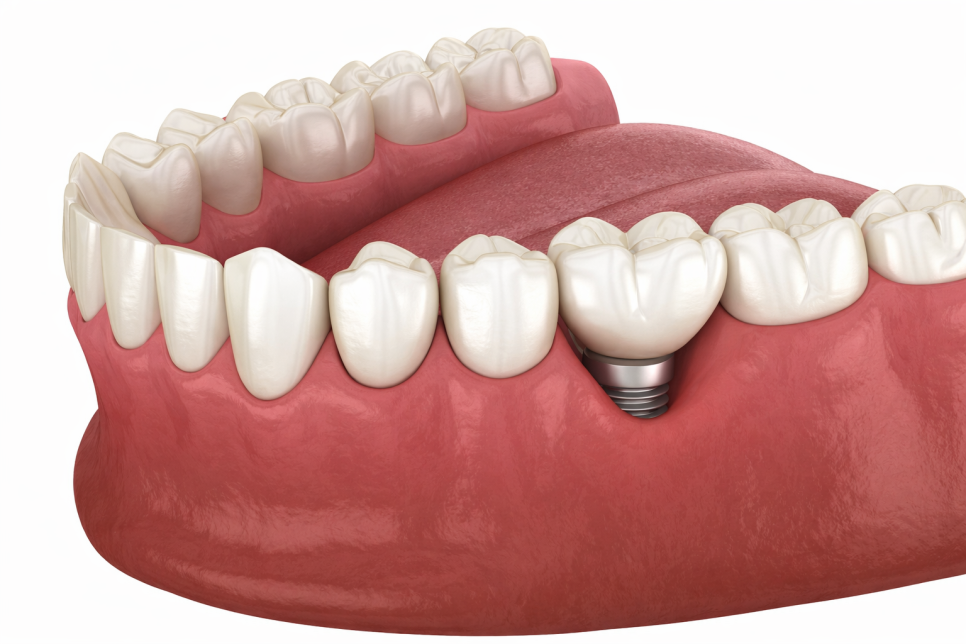
The biggest cause is periodontitis.
When brushing is not done well, plaque and tartar that form around the area
adhere to the surface.
As a result, bacteria can cause gum swelling or
bone resorption.
In particular, if you already have periodontitis,
the risk of peri-implantitis may be even higher.
That is why people who have had gum disease
should manage it even more thoroughly.
Another cause is when cement used to attach the crown is left behind.
I will explain this in more detail at Balsan Station Dental Clinic.
This is called excess cement.
The upper prosthesis, the crown, is usually bonded with cement to the abutment,
which connects the prosthesis to the fixture.
Although the cement that overflows during the bonding process is removed,
if it remains on the gums or in narrow gaps,
it can become a cause of bacterial buildup.
The third cause can be smoking.
When you smoke, blood circulation around the gums is suppressed,
and the immune response weakens.
In fact, smokers have a higher likelihood of developing peri-implantitis
than non-smokers.
There was also a study showing that while the risk is 23.7% if you do not smoke,
it rises to 72.2% when you do.
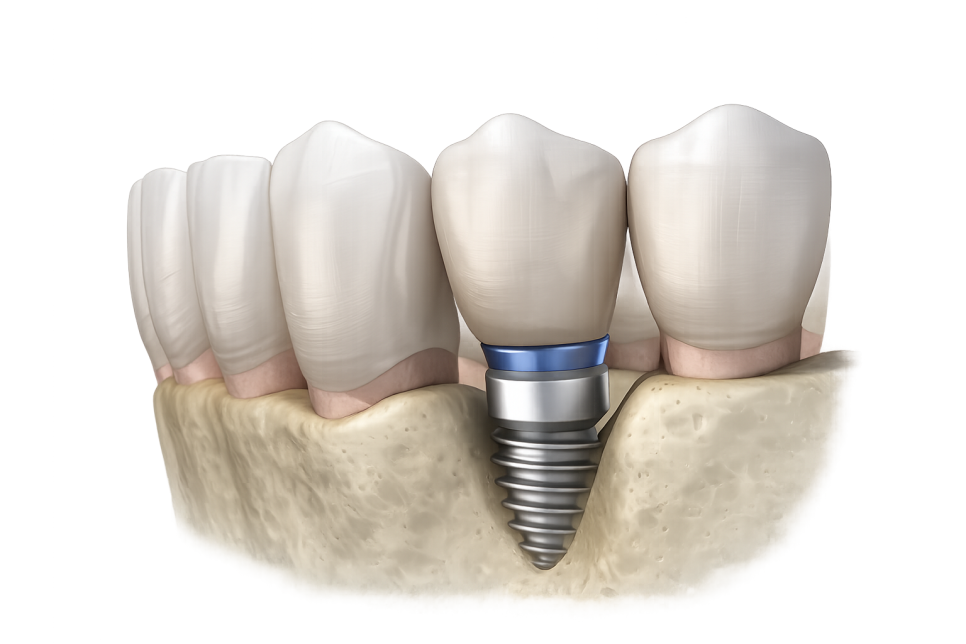
Peri-implantitis is not simply something that causes discomfort
because of swelling or pain.
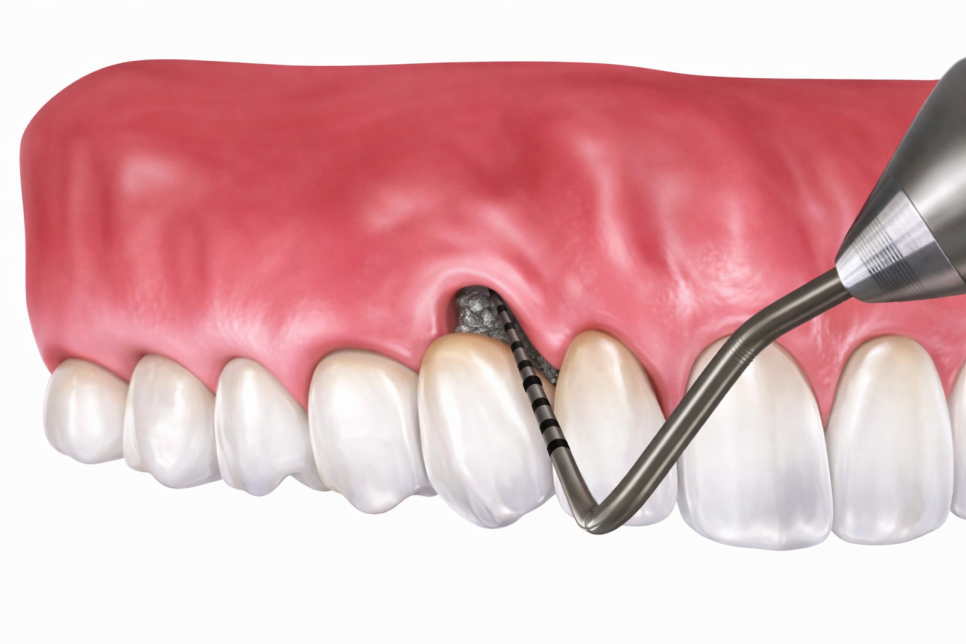
It can erode not only the surrounding soft tissue but also, as shown in the Balsan Station Dental Clinic photo,
the alveolar bone, that is, the jawbone.
Naturally, that makes fixation difficult to maintain.
So, it often leads to severe mobility, and in many cases
it is judged difficult to preserve, leading to re-implantation.
- What are the treatment methods?
In the early stages, there may be no particular symptoms,
but as it gradually progresses, various discomforts appear.
At first, you may only feel a slight redness,
but as peri-implantitis worsens, the symptoms become more distinct.
Bleeding may occur when brushing,
or yellow pus may come out.
Depending on how peri-implantitis improves,
the treatment method may differ,
but within the range where preservation is considered possible,
the core approach is the same.
That is, removing the inflammation that is causing the problem,
just as when gum disease develops.
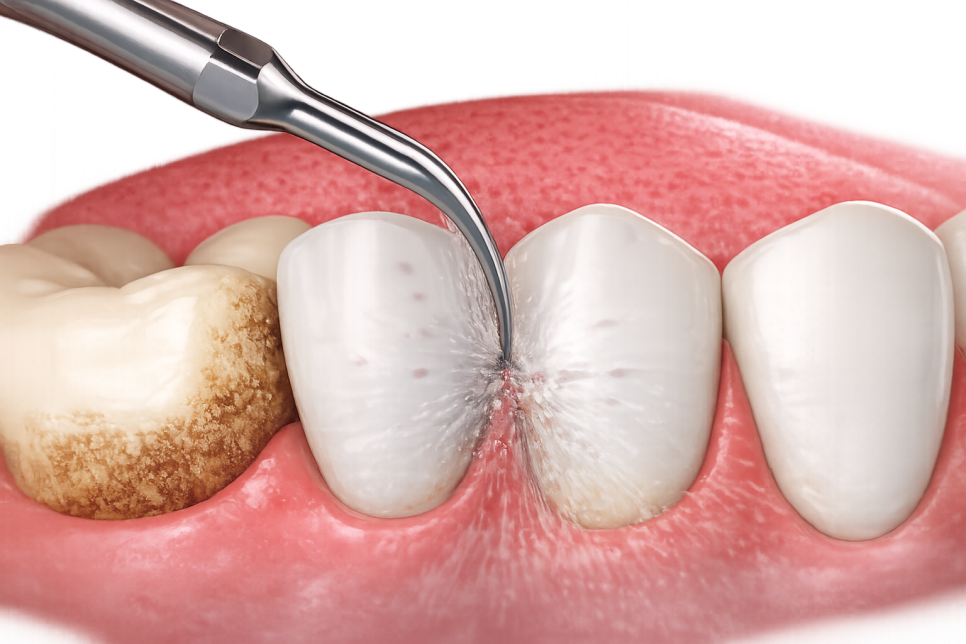
Plaque, tartar, inflammation,
and granulation tissue accumulated around the area are scraped away
to create a clean environment.
By repeating the process of creating a clean environment,
as shown in the Balsan Station Dental Clinic photo,
and controlling the inflammation,
a positive improvement can be achieved.
In fact, this kind of problem can be prevented relatively easily at home.
Because the lower boundary of the prosthesis in an implant is somewhat lower,
the space where bacteria can accumulate is relatively large.
Also, depending on how the prosthesis is designed,
care can be easy or difficult.
That is why more thorough care is needed.
To clean even the gaps between teeth carefully,
interdental brushes or dental floss should be used,
and if the spaces between the teeth are wide,
a specially designed Super floss can also be helpful.
In addition, do not forget your regular checkup appointments
and visit the clinic for consistent evaluations.
These efforts build up and help you use your implants
stably and for a long time.
That concludes the information prepared today by Balsan Station Dental Clinic.
I hope it was helpful to you.
January is already coming to an end.
Time is passing quickly this year as well.
I will come back in February with even more useful information.
This has been Lee Soo-kyung. Thank you.