Hello, this is Lee Su-gyeong, a specialist in integrated dentistry who works in collaboration with an orthodontic specialist at a dental clinic in Naebalsan-dong.
When people are considering orthodontic treatment
or are already undergoing it,
what they usually pay the most attention to is
'what type of appliance is used' or 'how long treatment will take.'
But there is one more key factor
that many people surprisingly overlook.
It is the 'position of the tongue,'
which applies force to the teeth 24 hours a day
inside the mouth.
Depending on where we usually place our tongue,
our facial silhouette may change slightly,
and it can even determine
how long the carefully completed treatment result lasts.
The recently popular
'Mewing' exercise online is also,
in the end, a process of finding
this 'correct tongue position.'
Today, we will take a closer look at
proper tongue position, known as a hidden helper in orthodontic treatment,
and the Mewing exercise that helps make it a habit.
Naebalsan-dong Dental Clinic Oral Information
- The correct tongue position: Remember the butterfly shape
Where should our tongue normally be?
The answer is the 'roof of the mouth (palate).'
The tip of the tongue should not touch the upper teeth,
and the whole tongue should rest broadly against the palate,
starting from behind the raised area of the palate (the incisive papilla).
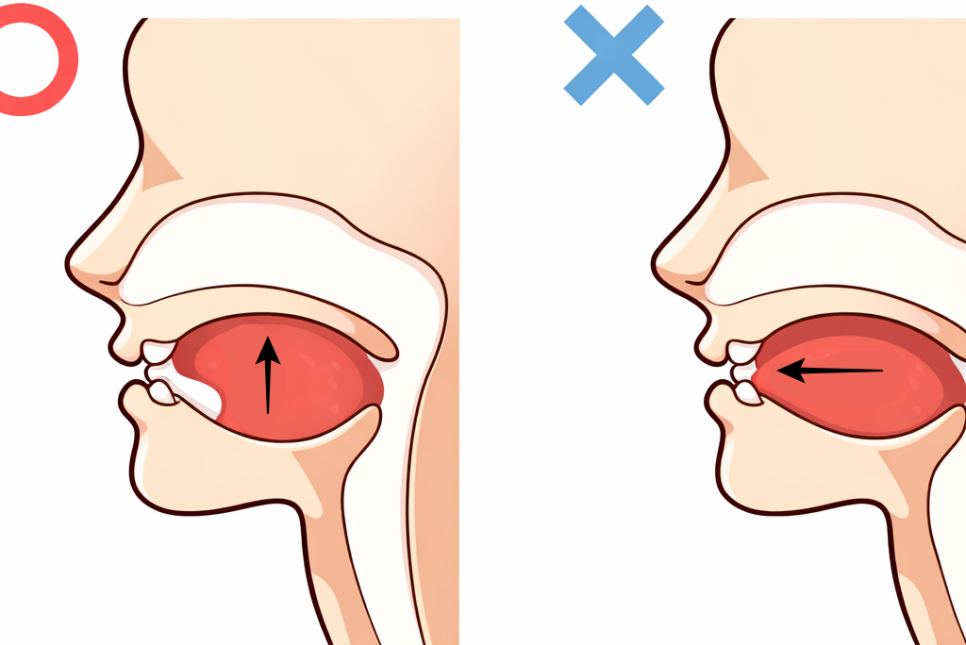
Unlike when the tongue hangs down low
or pushes against the front teeth,
in the correct position,
the entire tongue supports the roof of the mouth
without touching the teeth.
When the tongue drops downward,
it can lead to mouth breathing,
which may cause the face to look longer
or the jawline to become less defined.
On the other hand, when the tongue properly supports the palate,
it helps widen the maxilla, or upper jaw, sideways,
and especially in children and adolescents,
it helps secure space
for the teeth to align.
Naebalsan-dong Dental Clinic Oral Information
- Mewing exercise: Training for the tongue
This exercise, proposed by British orthodontist
Dr. Mike Mew,
is simple.
It is a way to make keeping the tongue in the correct position
a habit through 'conscious training.'
-
Close the lips lightly and keep the upper and lower teeth
slightly apart so they do not touch.
-
Place the tip of the tongue on the raised area
of the palate just behind the upper front teeth.
-
Lift the tongue so that not only the front part
but also the back part feels as if it is attached
to the entire palate.
-
While maintaining the above three conditions,
breathe naturally through the nose.
Naebalsan-dong Dental Clinic Oral Information
- Why Mewing is important for orthodontic patients
Mewing is an exercise that positions the tongue correctly
against the roof of the mouth,
and through this,
it naturally guides the oral muscles and jawbones
into the proper position.
During orthodontic treatment, the teeth move
and the jaw and facial structure change,
so the tongue and oral muscles must maintain the correct position
for the treatment results to remain stable and last longer.
If you practice Mewing consistently, as mentioned earlier, in the case of children and adolescents,
it can naturally expand the upper jaw
and help secure space for tooth alignment.
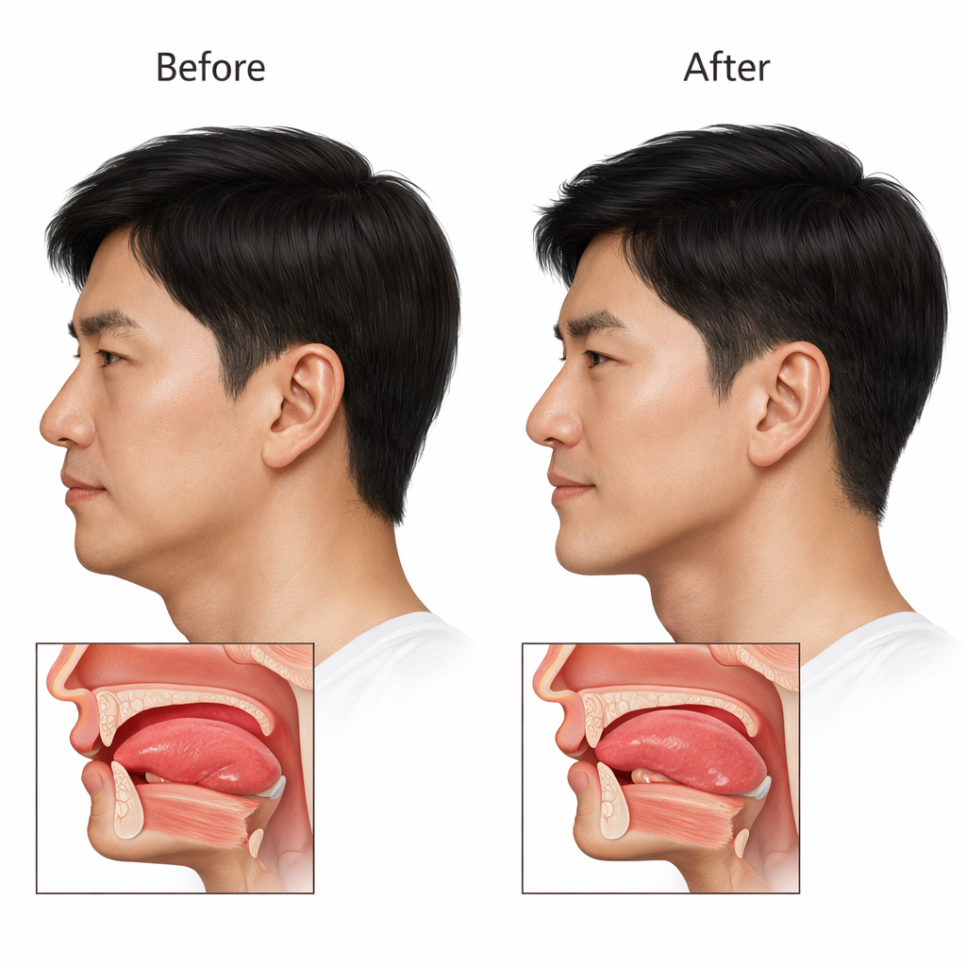
Also, even in adults, it helps prevent mouth breathing
and has a positive effect on maintaining balance
in the jawline and facial contour.
Therefore, orthodontic patients should not simply undergo tooth alignment alone,
but also combine oral muscle training such as Mewing
to achieve the best aesthetic and functional results.
Naebalsan-dong Dental Clinic Oral Information
- Important precautions that must be followed
The most important thing to be careful about
when doing Mewing is
'not pushing the teeth.'
If you become too eager and strongly push the front teeth with your tongue,
it may instead cause protruding teeth.
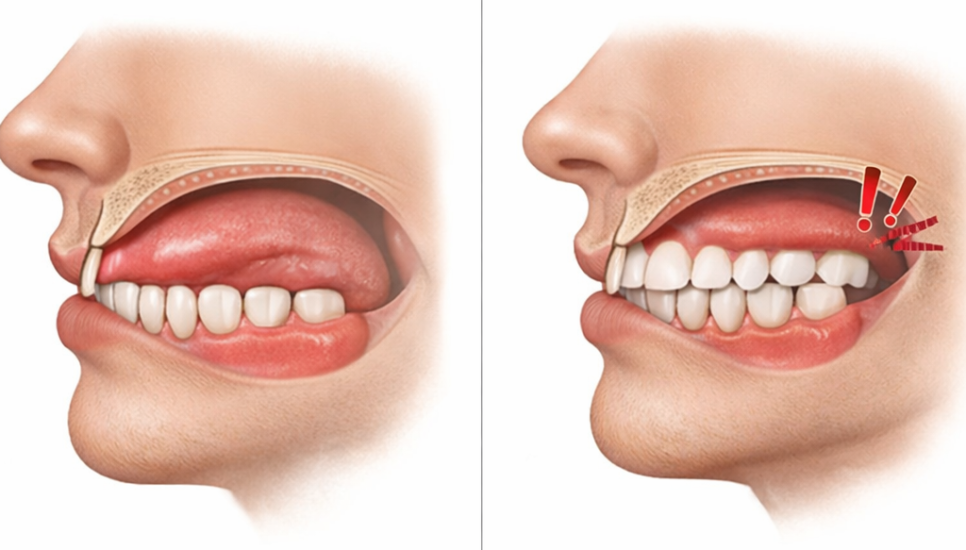
Also, be careful not to clench hard
by putting too much force on the temporomandibular joint.
The key to Mewing is not strong force,
but 'consistency in the correct position.'
A small habit can change your impression
and improve the quality of orthodontic treatment.
Starting today, why not check the inside of your mouth often
and begin practicing how to help the tongue find its proper place?
This has been Lee Su-gyeong from Naebalsan-dong Dental Clinic.
Thank you :)