Hello, this is Balsan Station Dental Clinic.
I’m Lee Soo-kyung, a specialist in integrated dentistry.
“Now I’ll place something that looks like a ring around the tooth.”
“I’ll cover the entire mouth with something like an umbrella.”
.
.
.
If you have been receiving treatment at a clinic,
you may have heard words like these at least once.
This is the process of placing an auxiliary device called a ‘rubber dam.’
Even if the name sounds familiar from somewhere,
it is not easy to know exactly what role it plays.
So today, at Balsan Station Dental Clinic,
let’s take a closer look at what a rubber dam is
and what it does.
Balsan Station Dental Clinic Oral Information
- What is a rubber dam?
Just as a structure that blocks the flow of water in a river is called a dam,
a rubber dam works on a similar principle.
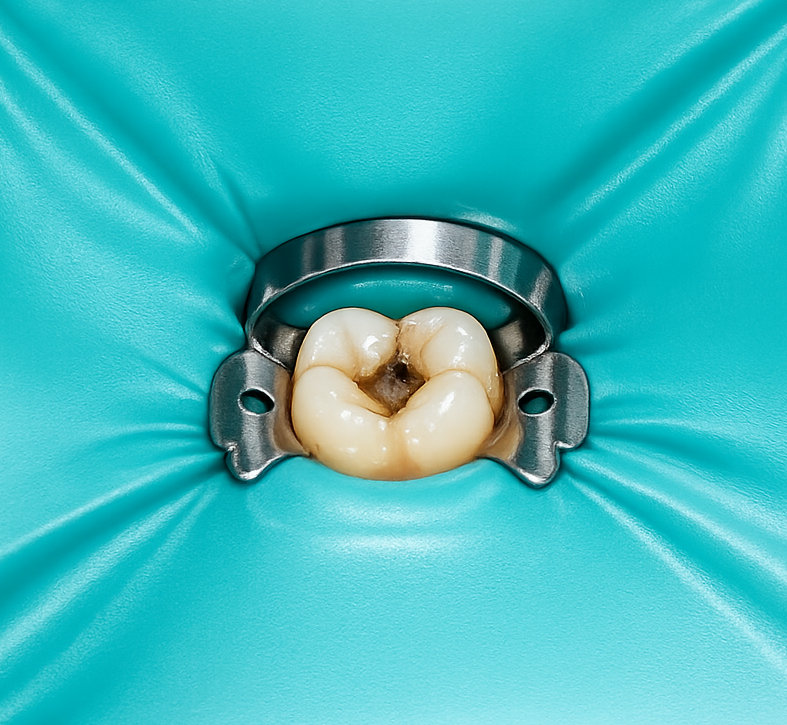
A thin rubber sheet
is attached to a retaining device
and placed on the teeth,
so that only the area being treated is exposed,
while the rest of the oral cavity is completely blocked off.
In other words, it acts as a small waterproof barrier
that protects only the necessary part of the mouth.
It helps prevent saliva, bacteria, disinfectant, and other substances
from entering the treatment area,
allowing treatment to proceed more safely and accurately.
Balsan Station Dental Clinic Oral Information
- Why is it necessary?
First, it is often used in pediatric care.
Compared with adults, children
have more difficulty controlling tongue movement,
and their saliva production is greater, so the treatment environment
can easily become unstable.
In such cases,
not only does the treatment time become longer,
but the bonding strength of restorative materials may also decrease,
and if a child who already feels strongly resistant to treatment
suddenly moves,
there is also a risk that small instruments or materials
may fall into the mouth.
Even in adults, it is used to prevent situations
where treatment materials may go down the throat,
especially when using small, sharp instruments like needles
or handling disinfectants.
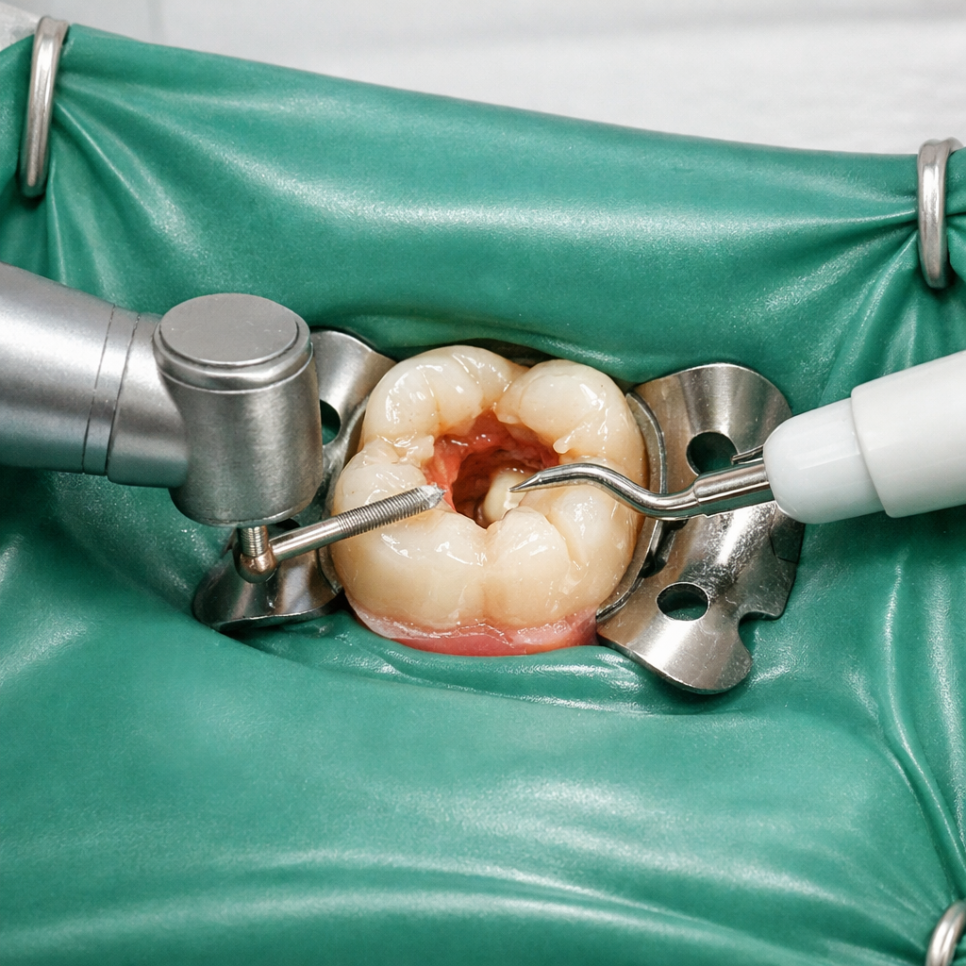
In other words, once a rubber dam is placed,
the treatment area is exposed in a clean and stable way,
which secures the field of view and stabilizes the procedure environment.
As a result, the quality of the restoration improves,
and the advantages of the materials can be fully utilized.
It also helps prevent unexpected accidents,
making treatment safer.
Balsan Station Dental Clinic Oral Information
- When should it be avoided?
To place a rubber dam, a clamp is used
to support the tooth.
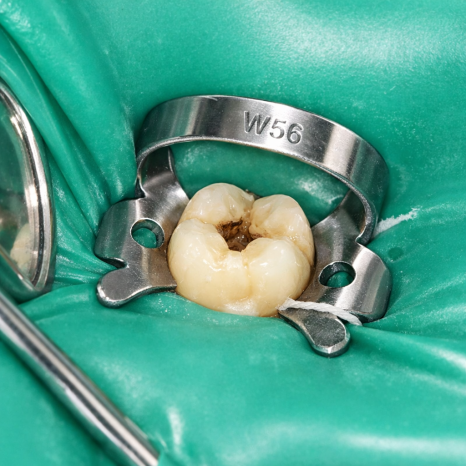
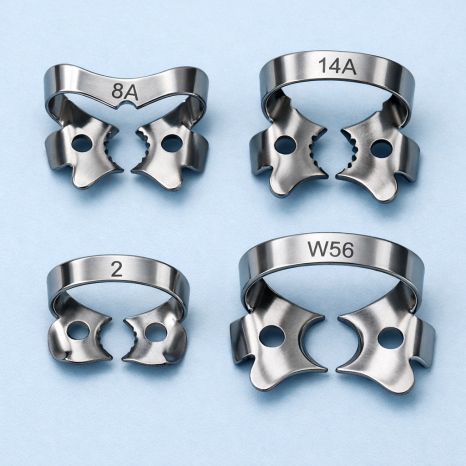
It is used in most cases,
but it is better to avoid it in the following situations.
◾ When the tooth structure is weak
If the outer wall of a natural tooth is too thin,
or if the tooth structure is significantly damaged,
the tooth may be at risk of breaking further
when the clamp is placed.
◾ Rubber allergy
If you have an allergic reaction to the rubber sheet,
be sure to inform the medical staff in advance.
If necessary, measures can be taken so that the soft tissue
and the rubber sheet do not come into contact,
or a latex-free product can be used.
◾ When certain health conditions are present
For patients with jaw joint problems, illness, a cold, asthma,
those who need to breathe through the mouth, or, in rare cases,
those with claustrophobia
In such cases, it is safest to discuss it in advance before the procedure
and decide whether to use it.
Balsan Station Dental Clinic Oral Information
- Is it really necessary?
As mentioned earlier, it plays an important role
in improving treatment accuracy and safety.
Because it blocks moisture in the mouth
and keeps the oral environment, especially the interior of the mouth
that is not easy to see, in a consistent state,
its greatest advantage is that it helps the medical team
carry out precise procedures with concentration.
This can ultimately lead to differences in the outcome,
and it also has a positive effect on reducing
the likelihood that materials will come loose.
It may feel restrictive at first,
but most people adapt within a short time,
and in many cases,
the procedure actually feels more comfortable.
If you understand the principles and advantages
of the rubber dam we looked at today,
it may feel more familiar.
It is more than just a tool for isolating teeth;
it is an important device that protects patient safety
and improves the quality of treatment.
At first, keeping your mouth open wide and maintaining the rubber sheet
may feel unfamiliar and uncomfortable,
but I hope you will remember that this is an essential step
for achieving healthier and longer-lasting treatment results.
This has been Lee Soo-kyung from Balsan Station Dental Clinic. Thank you.