Hello, at Woojangsan Dental Clinic,
I am Lee Soo-kyung, a specialist in integrated dentistry who works in collaboration with an orthodontic specialist.
When looking into orthodontic treatment,
you may sometimes hear the phrase,
"Your teeth need to be shaved."
Many people naturally feel a vague fear about this,
but once you understand exactly what the procedure is
and why it is needed,
you come to see that it is a much more reasonable
part of the orthodontic process than expected.
It is called IPR (Interproximal Reduction), and it is a procedure that creates space during orthodontic treatment by very slightly reducing the enamel between teeth.
It is commonly used in clear aligner (transparent orthodontic) treatment,
but it is also performed in metal braces treatment
when necessary.
Woojangsan Dental Clinic Oral Information
- Why is interproximal reduction necessary?
The key to orthodontic treatment is ultimately "space."
To properly align crooked teeth,
there must be space for the teeth to move, and there are two main ways to secure that space.
One is to extract teeth
to create space,
and the other is IPR.
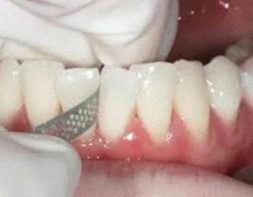
It creates space by gradually reducing the enamel
without extracting teeth,
and the total amount removed is only about
0.1 to 0.5 mm per tooth surface.
Even when performed on multiple teeth,
the total space that can usually be gained
is around 2 to 4 mm.
When crowding is not severe,
or when the goal is to straighten the teeth without extraction,
interproximal reduction can be a good alternative.
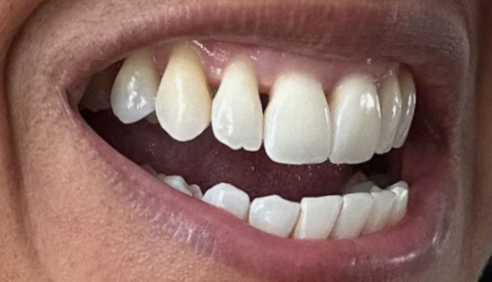
Beyond simply creating space,
it is also used for shaping purposes.
It is also used to adjust the shape of the tooth contact area
to reduce black triangles that appear after orthodontic treatment.
Woojangsan Dental Clinic Oral Information
- Isn’t it harmful to the teeth?
This is one of the most common questions.
To answer first,
when performed within an appropriate range,
it does not greatly affect tooth health.
The thickness of enamel varies depending on the tooth area,
but on average it is about 2 mm.
As mentioned earlier, the amount removed through IPR
is at most about 0.5 mm,
so the remaining amount of enamel is sufficient.
Just as a pencil still functions as a pencil
even after being sharpened a little,
a small amount of reduction does not have a practical effect on the tooth’s protective function.
However, the point I emphasize is that
it must be performed under a precise plan.
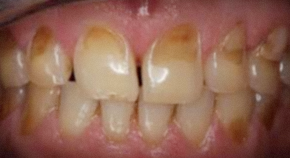
If too much is removed
or the reduction surface is uneven,
the surface of the natural tooth may become more vulnerable to cavities.
After the procedure, fluoride application and similar measures are commonly used
to protect the reduced enamel surface.
Woojangsan Dental Clinic Oral Information
- How should you care for teeth after interproximal reduction?
It is a good idea to pay a little more attention than usual
to cleaning between the teeth.
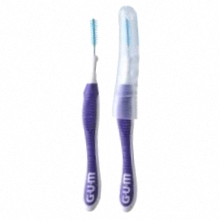
Because the tooth contact areas have been smoothed,
it is important to consistently use interdental brushes or dental floss
to prevent plaque from building up.
In addition, fluoride varnish may be applied to the area after IPR
to help with enamel remineralization.
You may temporarily feel sensitivity right after the procedure,
but in most cases it improves within a few days.
During orthodontic treatment, there are often areas that are hard to reach with a toothbrush because of the appliance,
and the surfaces that have undergone interproximal reduction
should be cleaned especially carefully.
Using a water flosser (oral irrigator) together can be effective for removing food debris.
Woojangsan Dental Clinic Oral Information
- In closing
Interproximal reduction is not a procedure that must always be avoided,
but rather a planned step
to improve the accuracy and outcome of orthodontic treatment.
What matters is not how much is removed,
but whether it is performed appropriately
under an accurate diagnosis and plan.
If you are considering orthodontic treatment,
I recommend discussing whether interproximal reduction is needed
and to what extent it should be done,
then making your decision.
Do not forget that daily tooth brushing and flossing,
along with regular oral examinations,
are the most basic ways to protect oral health during orthodontic treatment.
This has been Lee Soo-kyung from Woojangsan Dental Clinic.
Thank you.