Hello, I am Lee Su-gyeong,
a specialist in comprehensive dentistry
who works in collaboration with an orthodontic specialist
at a dental clinic in Balsan-dong.
There is one question that comes to mind first
before an orthodontic consultation.
“Am I a suitable case for clear aligners?”
.
.
.
In recent years, interest in clear aligners
has been increasing.
Even people beginning orthodontic treatment
for the first time
have started asking about
options without brackets first.
However, in actual clinical practice,
the more important question is not
‘Which method is better?’
but rather
‘Which method is right for which case?’
At a dental clinic in Balsan-dong, we believe that
understanding this distinction in advance
when receiving an orthodontic consultation
can be practically helpful
in understanding the treatment plan.
Balsan-dong Dental Information
- How the Two Methods Work,
Where Do They Differ?
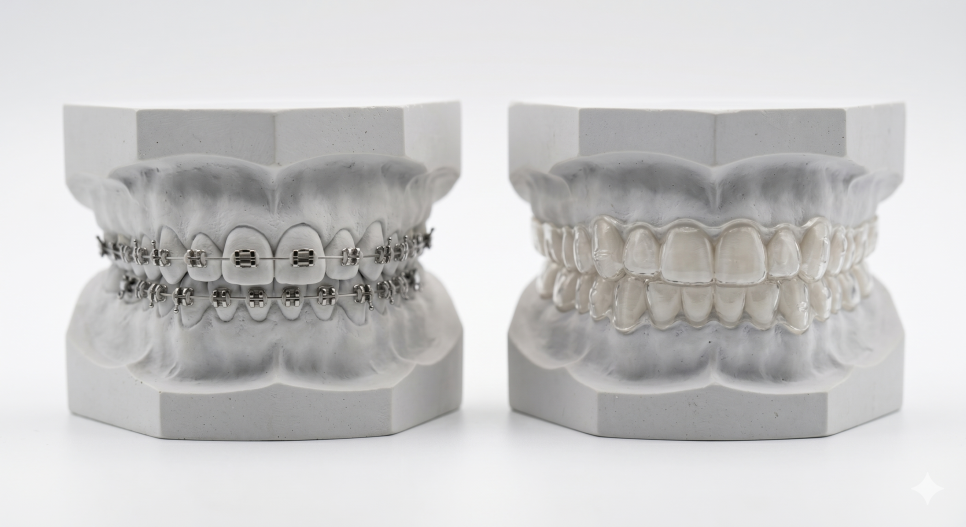
Bracket orthodontics
involves attaching brackets to the surface of the teeth,
connecting them with wires,
and applying continuous force.
Clear aligner treatment
uses transparent plastic appliances
made based on 3D oral scans,
which are replaced at set intervals
to move the teeth gradually.
The difference between these two methods
lies in the ‘way force is delivered.’
Through wires, brackets can
precisely control the inclination of the teeth,
that is, their torque,
in three dimensions.
Clear aligners, on the other hand,
cover the teeth.
They may be more limited than brackets
when it comes to vertical tooth movement,
rotation of the teeth,
or moving teeth inward toward the gums.
This does not mean that one method
is superior to the other.
Rather, it means that the appropriate method
depends on the type of movement required.
It is important to first understand
that different indications exist
within the same term, ‘orthodontic treatment.’
Balsan-dong Dental Information
- Cases Well Suited to Clear Aligners
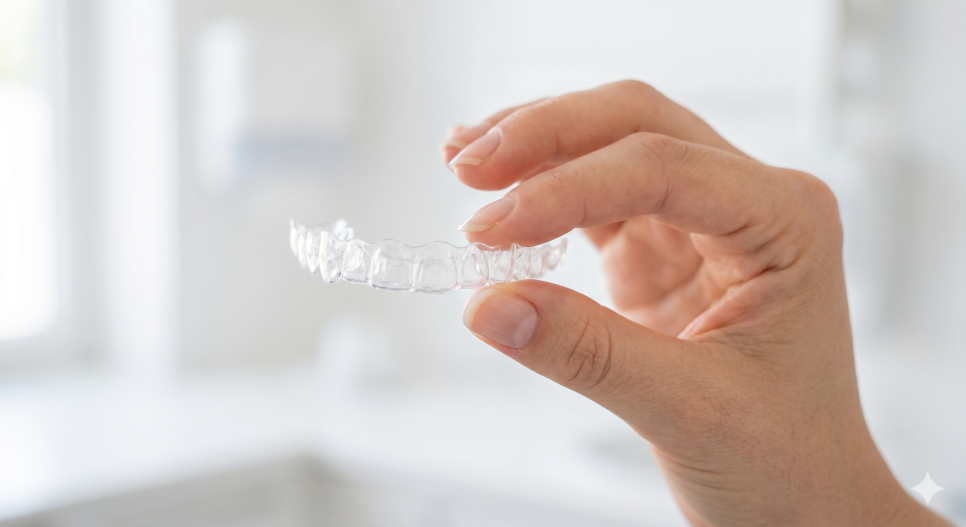
Clear aligners
can be effectively used in cases involving
mild to moderate crowding
or the correction of spaces between the teeth.
In particular, when spaces can be adjusted
without extraction,
and the main issue is tooth alignment,
predictable results can often be obtained
with aligners as well.
They also offer greater psychological accessibility
for adult patients who feel uncomfortable
with visible appliances during treatment,
especially those whose work involves
frequent face-to-face interactions.
However, clear aligners must generally be worn
for at least 20 to 22 hours a day.
If the required wearing time is not followed,
the planned tooth movement
may not take place,
so this method is better suited to patients
who can maintain good self-management
and consistent wearing habits.
This is why, during orthodontic consultations
at a dental clinic in Balsan-dong,
we consider patient compliance
along with the choice of appliance.
The freedom to remove clear aligners
is an advantage,
but that same freedom
can also become a variable that directly affects
the treatment outcome.
Balsan-dong Dental Information
- Cases That Require Bracket Orthodontics
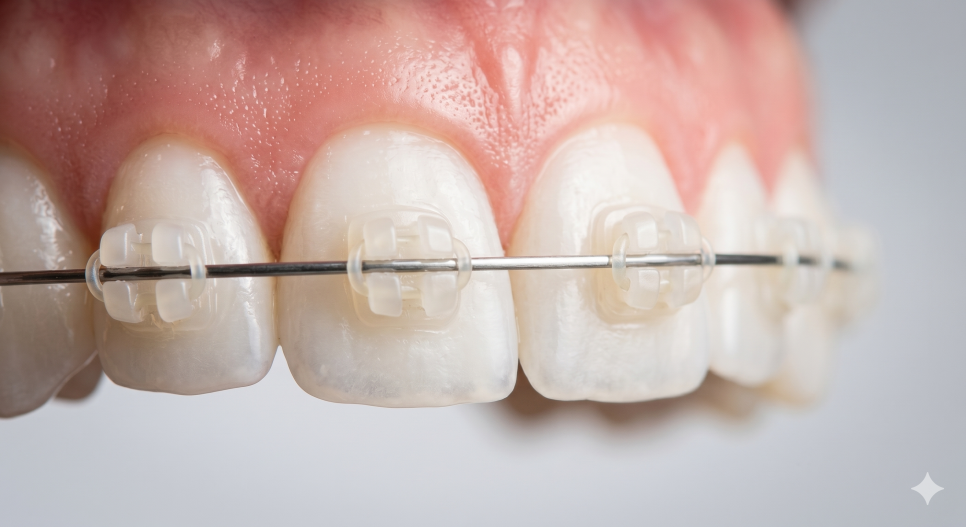
For orthodontic treatment involving extractions,
cases with complex skeletal issues,
or cases requiring substantial adjustment
of the vertical position of the teeth,
bracket orthodontics can provide more stable results.
For example,
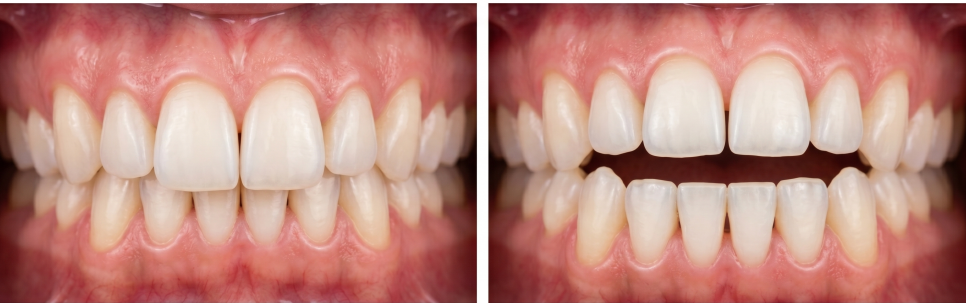
when the upper and lower front teeth overlap deeply,
or when the front teeth do not meet,
precise three-dimensional control
through wires is necessary
when vertical occlusal problems are also present.
In such cases,
if treatment is carried out using aligners alone,
the likelihood of results differing
from the prediction increases.
In orthodontic treatment performed alongside surgery
to surgically correct the position of the jawbones,
and in cases involving complex problems
between the teeth and jawbones,
brackets are also the standard choice.
The starting point of orthodontic treatment
is not simply the type of appliance.
First, it is necessary to determine
in which direction
and to what extent the teeth need to move.
Balsan-dong Dental Information
- Closing Remarks
Clear aligners and bracket orthodontics
are not a matter of superiority;
they are a matter of indications.
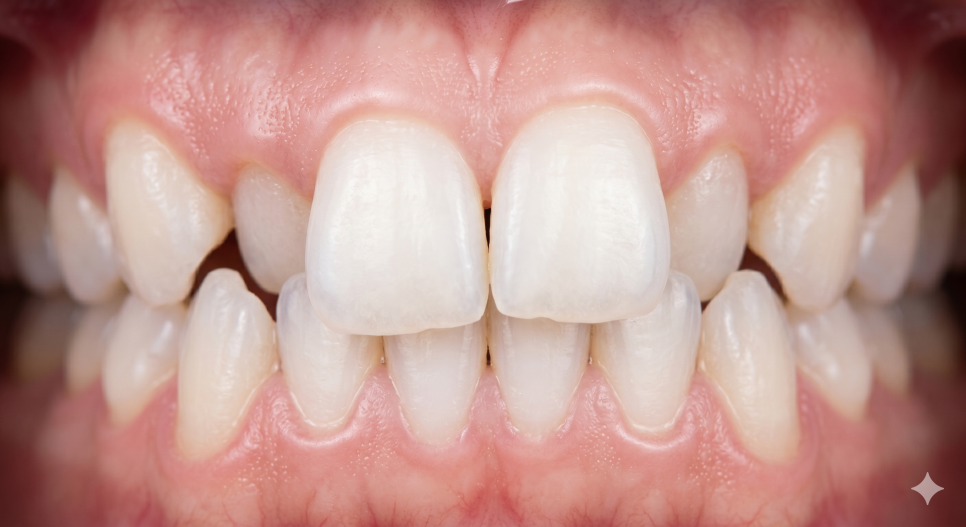
Even with the same ‘crooked teeth,’
the appropriate method varies depending on
the degree of crowding,
whether extractions are necessary,
and whether vertical occlusal problems are present.
If you are considering orthodontic treatment,
rather than deciding on the appliance first,
it is best to begin by assessing
the current condition of your teeth and skeletal structure
through a detailed examination,
including a panoramic X-ray
and a lateral cephalometric radiograph.
Only by determining what type of movement is needed
can you judge which method is appropriate.
This was Lee Su-gyeong
from a dental clinic in Balsan-dong.
Thank you.