Hello,
I’m Lee Su-gyeong,
Director of Every Dental Clinic and a specialist in Comprehensive Dentistry.
There is a surprisingly difficult part of dental treatment for many people.
It is the process of “taking an impression.”
A soft material is placed in the mouth and held there until it hardens.
For some people, it may not be a big deal.
However, for children and those with a sensitive gag reflex,
it can be a fairly difficult experience.
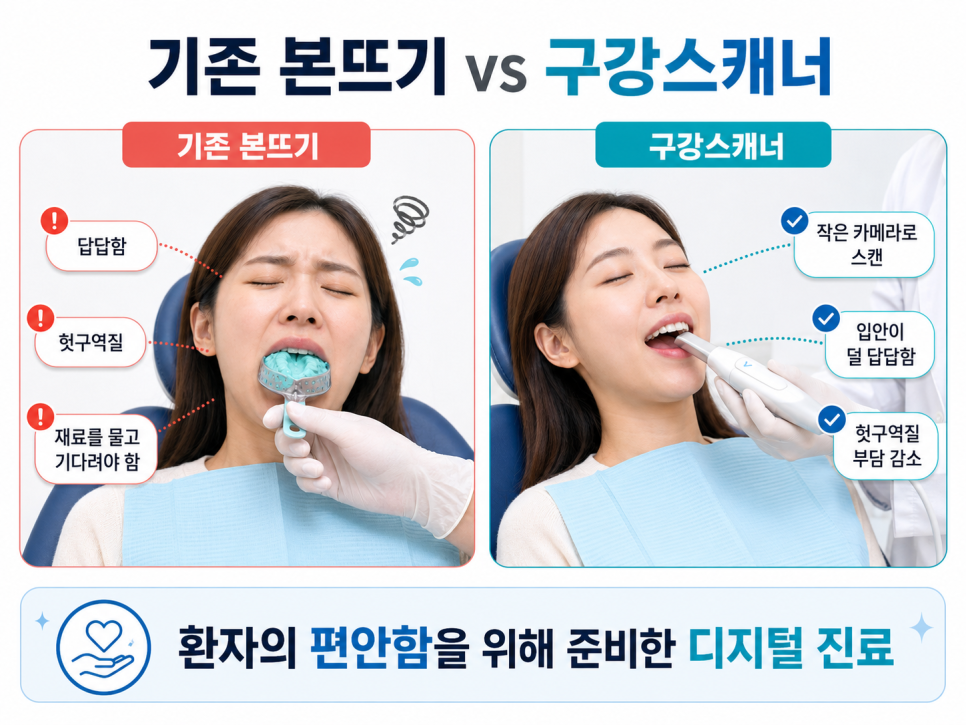
A feeling of having your mouth completely filled
A feeling of difficulty breathing
A feeling that something might slip down your throat
A feeling of retching or nausea.
Because of experiences like these, more people than you might expect feel anxious before crown or inlay treatment.
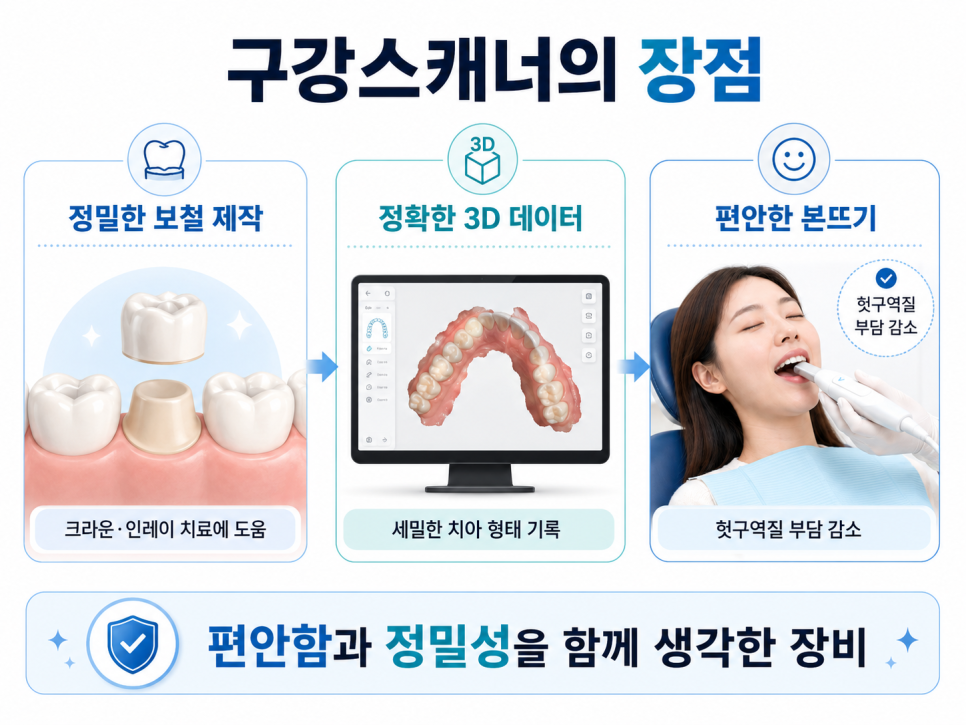
That is why Every Dental Clinic has introduced an intraoral scanner.
This was not because we wanted to show off our equipment,
but because we strongly hoped our patients could receive treatment a little more comfortably.
Dental treatment is already a stressful experience.
If unnecessary discomfort can be reduced during the process,
I believe it is right to reduce it.
What does an intraoral scanner do?
An intraoral scanner is a device that reads the three-dimensional shapes of the teeth and gums inside the mouth.
Simply put, it is a device that “takes a digital impression” of the teeth.
In the past, impression material resembling rubber was placed in the mouth to make impressions for dental restorations.
This method is still necessary in some cases and remains a good option.
However, from the patient’s perspective, it was often uncomfortable.
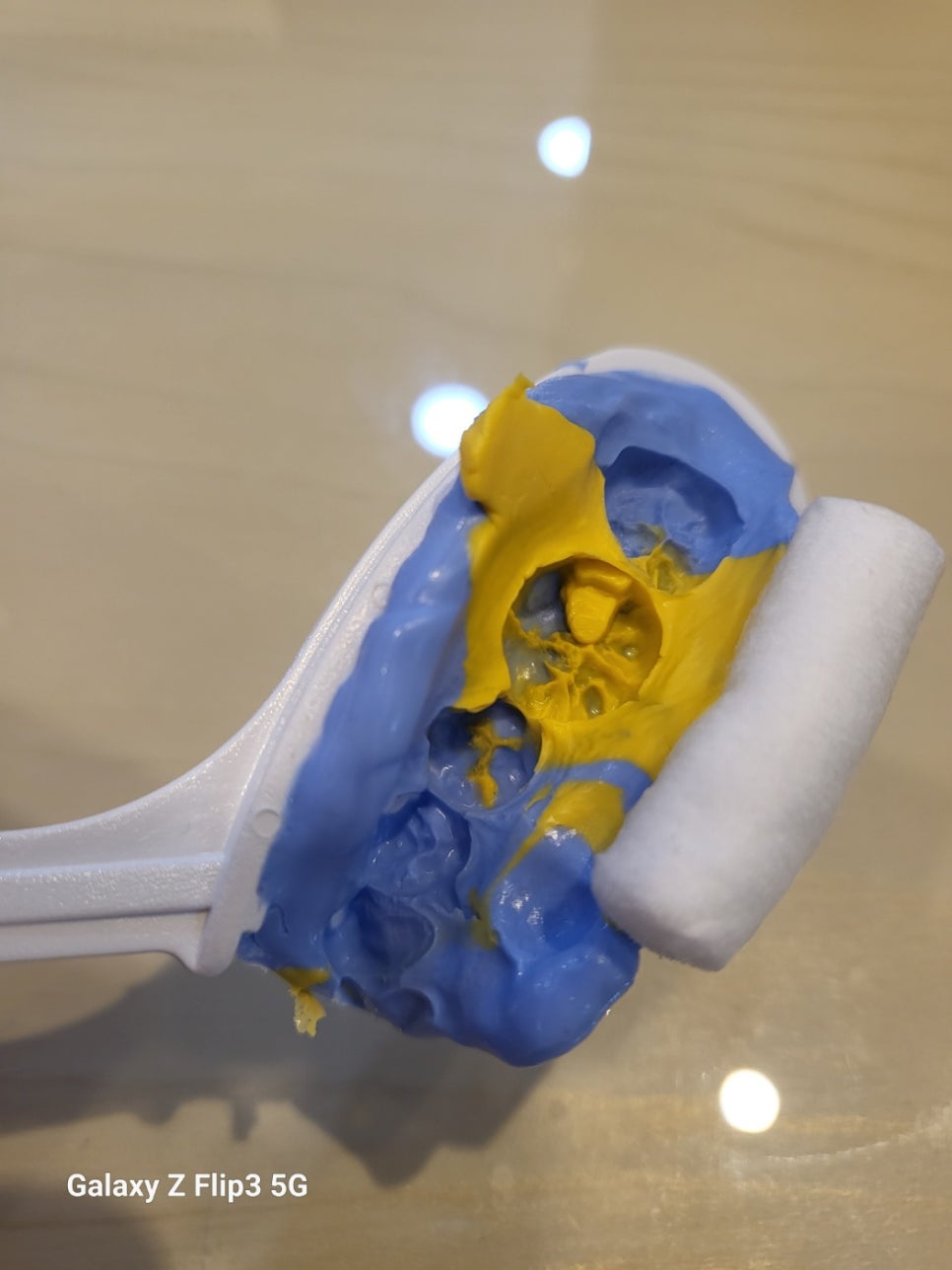
An intraoral scanner photographs the teeth using a device shaped like a small camera.
It displays the tooth surfaces, the shape of prepared teeth, their relationship with adjacent teeth, and the way they come together.
That information is then saved as 3D data.
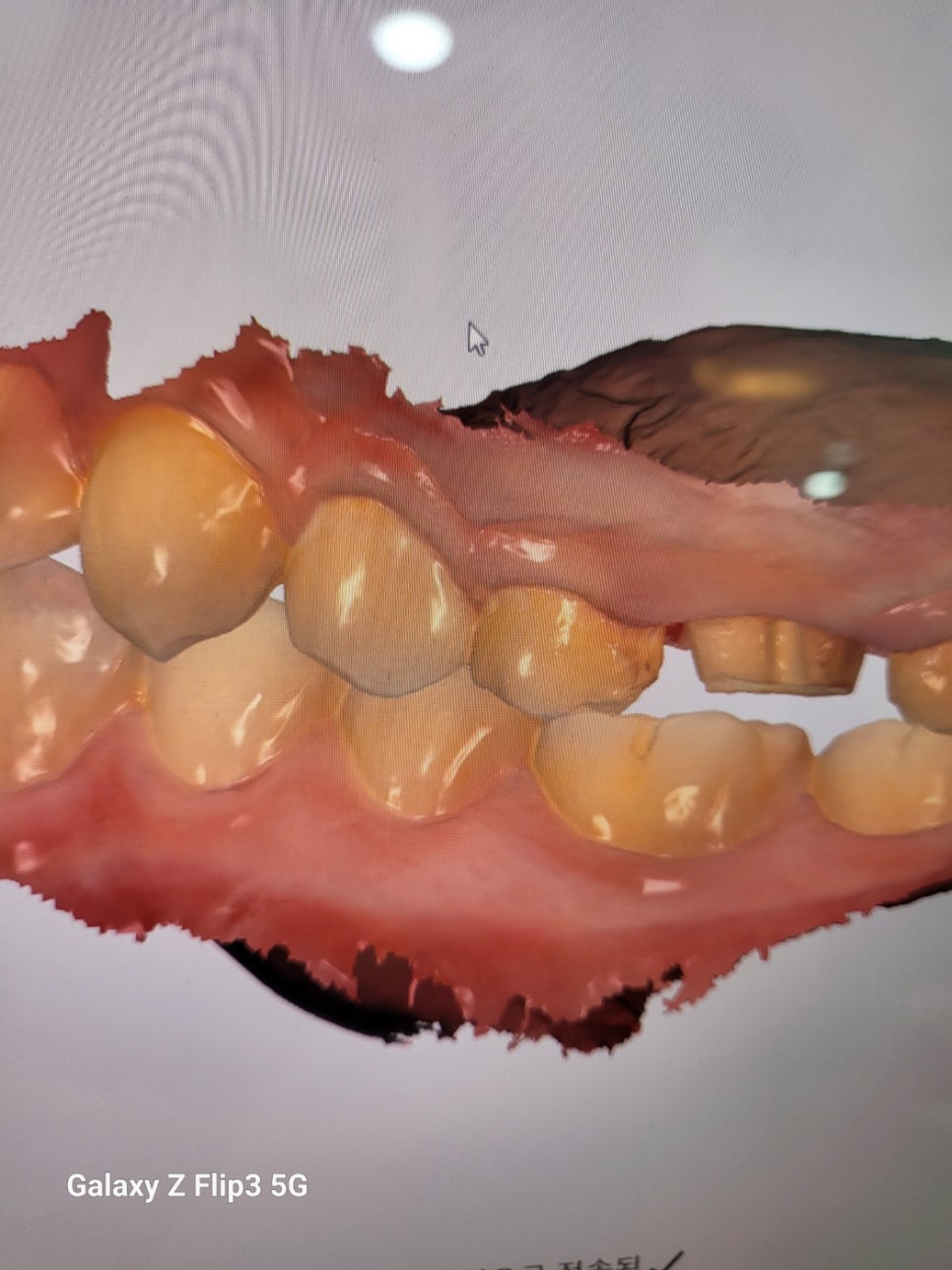
Patients spend less time holding impression material in their mouths and waiting.
The uncomfortable feeling of having something fill the mouth is also reduced.
It can be especially helpful for people who have experienced severe gagging.
Of course, not every treatment can be performed using only a scanner.
If there is significant bleeding from the gums, saliva is difficult to control, or the treatment area is very extensive,
the conventional method may be more appropriate.
That is why Every Dental Clinic selects the most accurate and comfortable method based on each patient’s condition.
Adding precision with an intraoral scanner
The advantages of an intraoral scanner do not end with simply being “comfortable.”
It can also contribute to precise treatment.
Recent dental studies have also actively examined intraoral scanners in various fields, including restorations, implants, and orthodontics.
Wu X. et al. Impact of crown and inlay size variations on the accuracy of various digital impression techniques.
Scientific Reports, 2025.
Dental restorations are affected by even very small differences.
If a restoration is even slightly loose or slightly too high, it can be uncomfortable.
It may cause food to become trapped or create a sensation of interference when chewing.
That is why, in restorative treatment, “how precisely the impression is taken” is important.
An intraoral scanner reproduces the shape of the teeth in 3D with precision, accuracy, and speed.
Why Every Dental Clinic introduced a scanner
The reason Every Dental Clinic introduced an intraoral scanner is simple.
It is because we want our patients to receive treatment more comfortably.
Dental treatment is not easy for anyone.
The sounds can be frightening, anesthesia can feel burdensome, and the treatment process can be unfamiliar.
If taking an impression is also difficult, treatment can feel even more challenging.
Faster
More comfortably
More accurately
I do not believe that good equipment automatically produces good treatment.
It is more important to carefully assess the patient’s condition, accurately determine what is needed,
and use the equipment in a way that benefits the patient.
Every Dental Clinic strives to provide treatment that patients can understand and feel reassured about.
If visiting the dentist is difficult for you,
if you are worried about upcoming crown or inlay treatment,
or if you would like to see your dental condition while listening to an explanation,
please feel comfortable telling us when you visit.
Every Dental Clinic will help provide the care you need to reduce your discomfort
and help you use your natural teeth for as long as possible.