Hello,
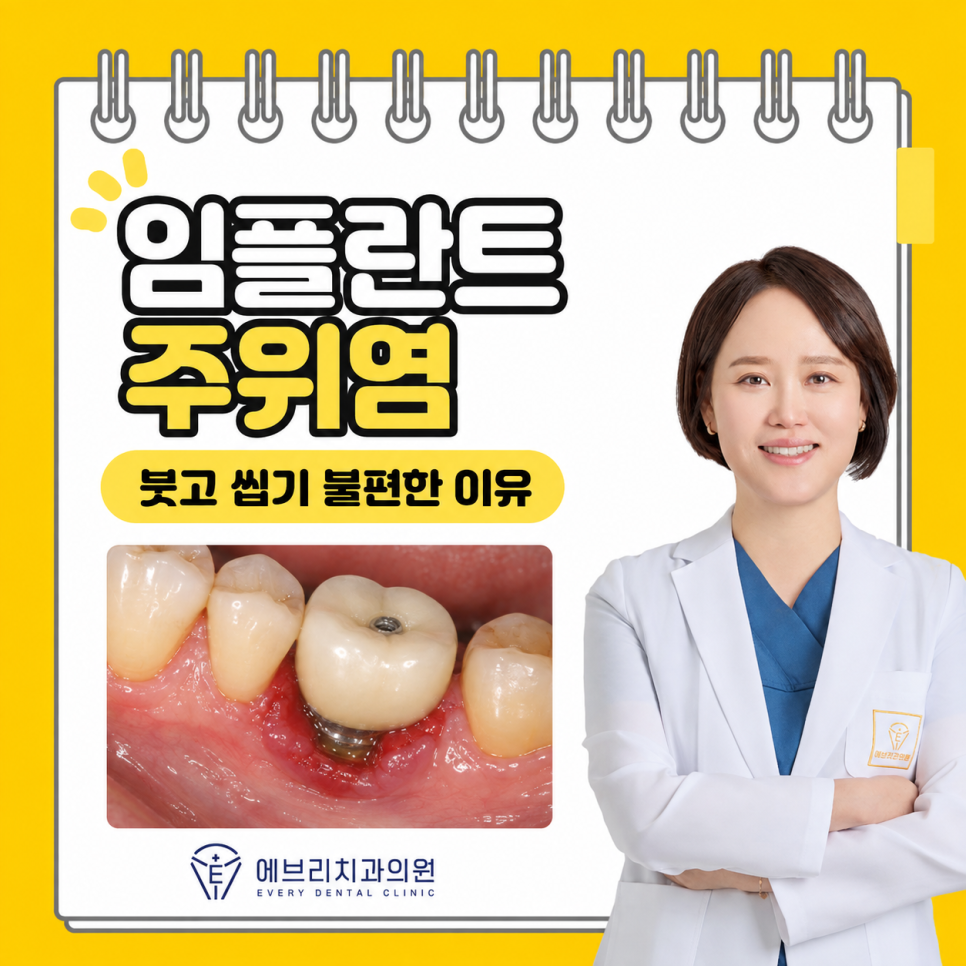
I am Director Lee Su-gyeong of Every Dental Clinic.
Among people who have received dental implants, many report symptoms such as:
“The gums around my implant keep swelling.”
“It feels sore and uncomfortable when I chew.”
“My gums bleed when I brush my teeth.”
“I feel like there is a bad smell.”
“It was fine at first, but it gradually started to feel strange over time.”
There are many people who complain of these symptoms.
Many people believe that once an implant is placed, it can be used for a long time without any problems.
Of course, implants are an excellent treatment that can last a long time when placed properly and well maintained.
However, implants can also develop problems if they are not properly maintained.
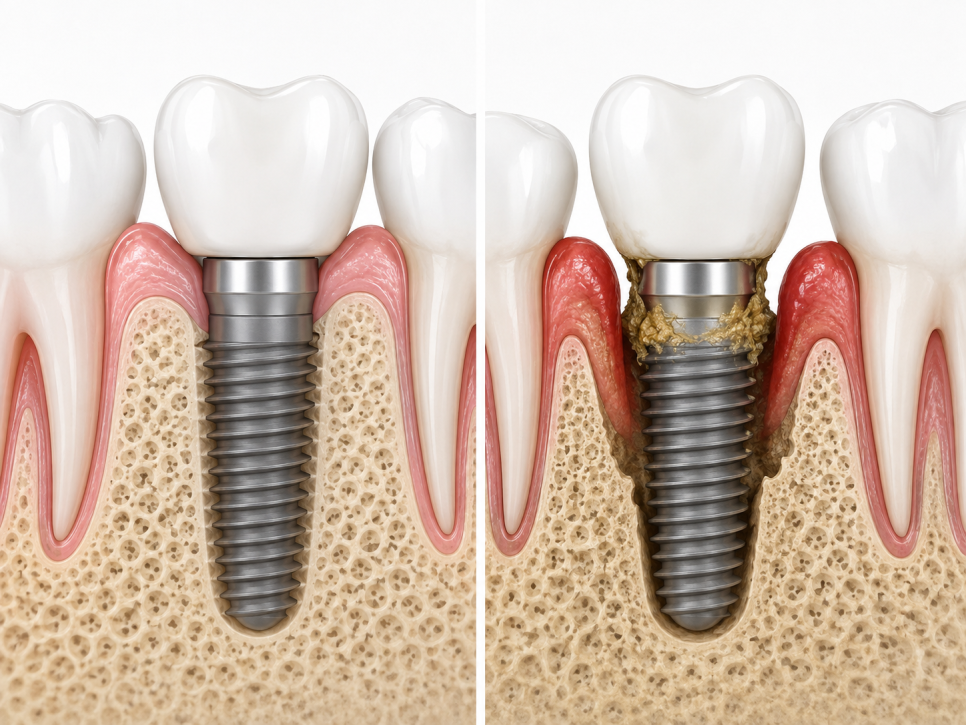
In particular, the gums and bone surrounding and supporting the implant can become inflamed.
This is called peri-implantitis.
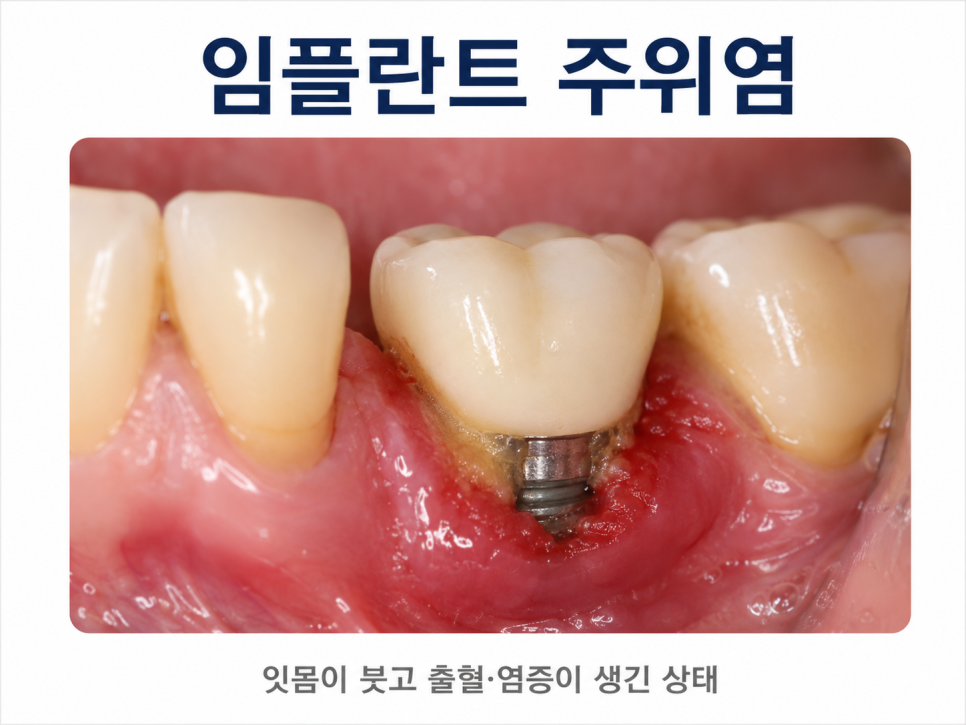
Just as gum disease can develop around natural teeth, inflammation can also occur around implants.
The problem is that peri-implantitis may not cause severe pain from the beginning.
At first, there may only be slight swelling.
There may only be a small amount of bleeding when brushing.
It may also begin with food frequently getting stuck or a feeling that there is a bad odor.
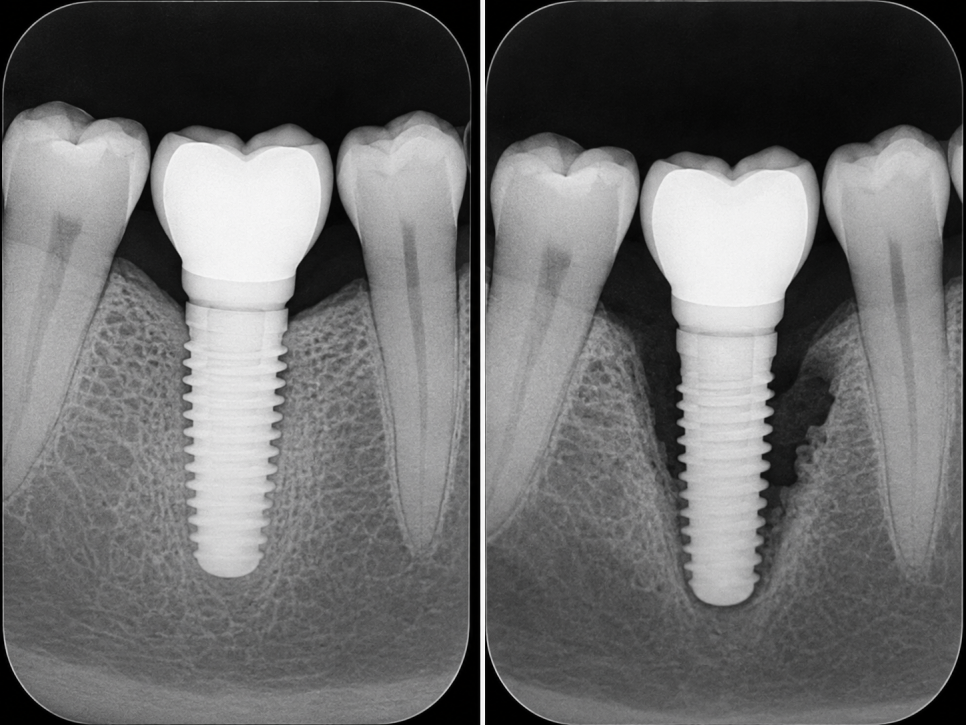
As the inflammation deepens, the bone around the implant can begin to deteriorate.
An implant is designed to be secured in the bone and withstand chewing forces.
When the surrounding bone decreases, chewing can become uncomfortable, the gums may swell repeatedly, and in severe cases, the implant may even become loose.
Today, based on what we frequently explain at Every Dental Clinic in Naebalsan-dong, I will discuss why implants may swell and feel uncomfortable when chewing.
1. Peri-implantitis: This Is How the First Pain Begins
Implants do not have the periodontal ligament structure found in natural teeth.
They receive chewing forces through direct attachment to the bone.
Therefore, the surrounding bone must be healthy for stable chewing.
However, when inflammation develops around an implant, the bone may gradually decrease over time.
Patients may not feel significant pain from the beginning.
“It’s a little swollen.”
“There’s a little bleeding.”
“It feels slightly uncomfortable when I chew.”
In many cases, it begins with symptoms at about this level.
However, when checked with X-rays or a 3D CT scan, the bone may sometimes have deteriorated more than expected.
At Every Dental Clinic, some patients come in for consultation about implant retreatment for this reason.
They had already received implants elsewhere and had experienced no major discomfort for the first few years.
But at some point, their gums began swelling repeatedly, and they said they could no longer apply chewing force properly.
They said they initially thought their gums had simply become weaker.
Whenever they felt uncomfortable, they took medication or ignored it, thinking it would settle down after a few days.
However, examination showed that the bone around the implant had decreased considerably.
Inflammation had progressed around the implant surface.
In such cases, it is difficult to resolve the problem simply by taking medication or having scaling treatment.
First, it is necessary to determine whether the implant can be preserved.
The extent to which the inflammation has progressed, how much surrounding bone remains, and whether the implant’s position and angulation allow it to be maintained all need to be assessed.
Depending on the condition, treatment for the inflammation may be attempted while keeping the implant in place.
However, if bone loss is severe or the implant is positioned poorly and cannot be adequately maintained, removal followed by retreatment may be necessary.
Implant retreatment is not simply a matter of placing another implant.
It is first necessary to determine why the existing implant caused problems.
The cause of the inflammation must be identified, the condition of the bone evaluated, and the position and angulation planned so that the replacement can be used for a long time.
Therefore, if an implant is swollen and uncomfortable when chewing, it is better to have it checked rather than wait.
Even if the discomfort seems minor, the bone may be quietly decreasing beneath the surface.
2. To Use an Implant for a Long Time, Care After Placement Is Important
Implant treatment does not end when the surgery is complete.
In fact, care after placement is important for using an implant for a long time.
Many people focus only on the implant surgery itself.
However, as time passes, there are more important considerations.
These include whether the implant was placed in a structure that can be maintained and whether it is being maintained regularly.
The area around an implant requires more meticulous care than natural teeth.
Brushing alone is often not enough.
Interdental brushes, dental floss, water flossers, and other tools should be used according to the individual situation.
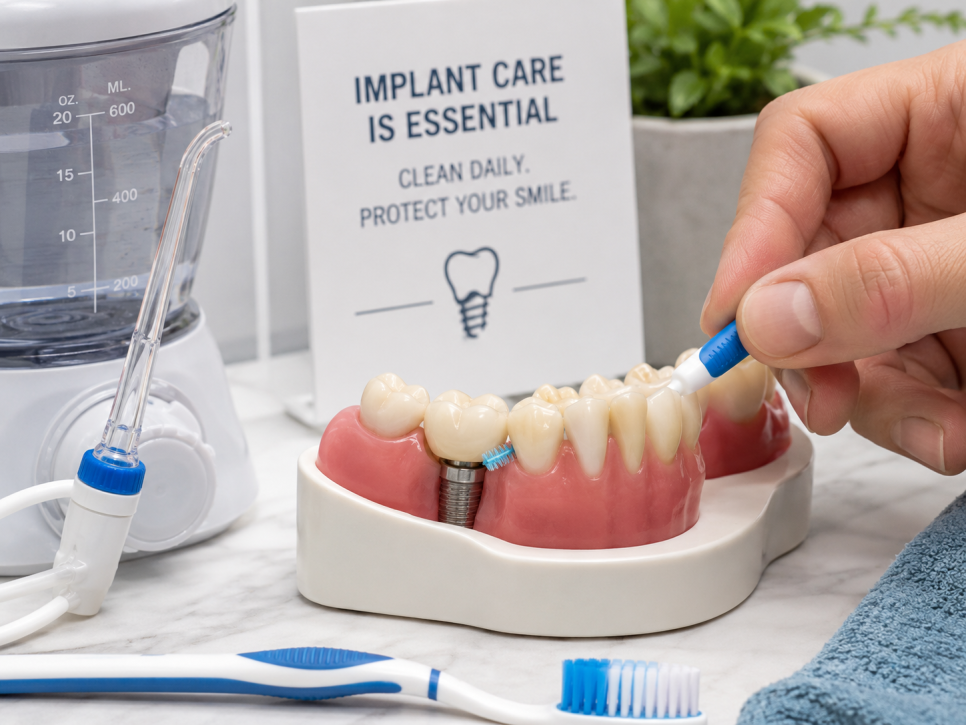
If food frequently gets stuck around an implant, the cause should be checked rather than simply tolerated.
Regular checkups are also important.
It is necessary to check whether the gums around the implant bleed, whether deep inflammatory pockets have formed, whether the bone is decreasing, and whether the prosthesis is loose or the screw has loosened.
People who smoke, have diabetes, or have a history of gum disease need to be especially careful.
This is because these factors may increase the risk of peri-implantitis.
At Every Dental Clinic, we consider it important to periodically check the condition of the gums and bone around an implant even after placement.
When necessary, scaling around the implant is performed.
We also check whether the area around the prosthesis can be cleaned properly.
We examine whether there are areas where the bite is making excessive contact.
Placing an implant properly is important, but being able to use it comfortably for a long time is even more important.
Even a well-placed implant can develop problems if it is not maintained.
Conversely, identifying and managing problems early may increase the possibility of using the implant for a longer time.
Swelling of the gums around an implant.
Discomfort when chewing.
Bleeding when brushing.
A feeling that there is a bad smell.
These symptoms may seem like minor inconveniences.
However, they may be signs of peri-implantitis.
Implants do not develop cavities in the same way as natural teeth.
However, the surrounding gums and bone must be healthy for the implant to be used for a long time.
If the inflammation deepens, the bone around the implant may deteriorate. In severe cases, the implant may need to be removed and retreatment may be necessary.
Therefore, if an implant is swollen and uncomfortable when chewing, it is advisable to have it checked rather than wait.
When patients experience discomfort from an implant, Every Dental Clinic does not look only at the symptoms.
We examine the condition of the surrounding bone with X-rays and, when necessary, a 3D CT scan.
We assess the shape of the prosthesis and the bite.
We carefully determine whether the implant can be preserved, whether treatment is needed, or whether the situation requires retreatment.
With implant retreatment, finding out why the problem occurred comes before placing another implant.
The cause must be identified to prevent the same problem from recurring.
If an implant is swollen and uncomfortable when chewing, it may be a signal from your body.
Checking it when the signal is still minor increases the possibility of preserving the implant.
If it is left untreated for too long, treatment may become more difficult.
At Every Dental Clinic in Naebalsan-dong, we do not consider our work finished once an implant has been placed.
We will also provide ongoing care so that you can use it comfortably for a long time.
Related article...