Facelift review, will it be dramatic?
Aging begins in the mid-20s, and as we enter the age of 100 and social activity among middle-aged and older adults becomes more active, interest in facelifts is steadily increasing. A facelift is one type of lifting surgery, and it is necessary to determine the range of correction each person wants and the degree of improvement expected after surgery. It would not be an exaggeration to call it the leading procedure in youthful appearance plastic surgery, and among youthful appearance procedures, a facelift can be considered one of the most advanced. That is why it requires the precise sense and skilled technique of a medical specialist.
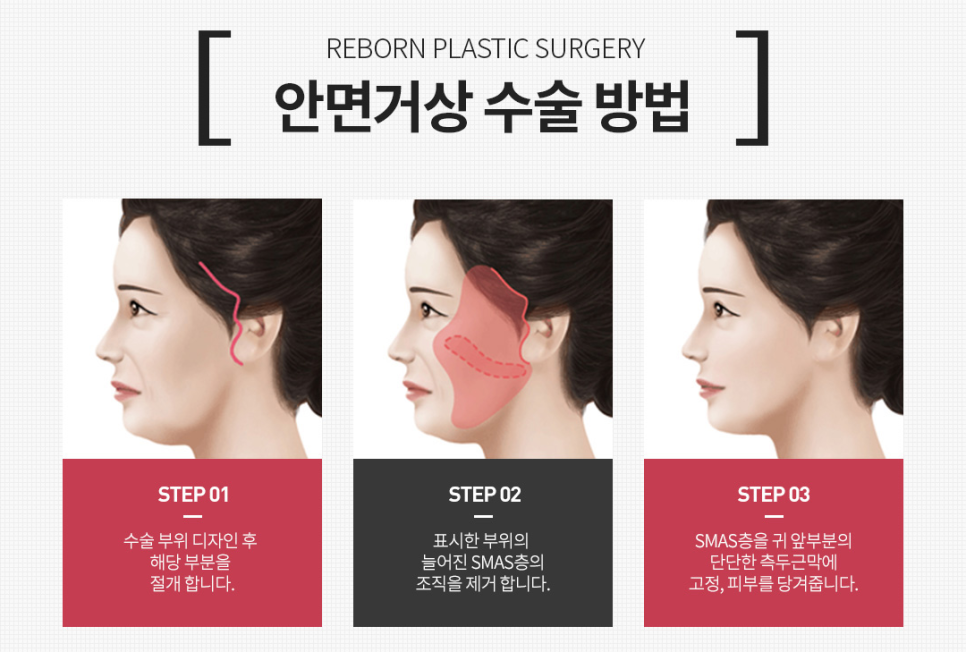
What is a facelift?
Depending on the degree of skin laxity and sagging, a customized incision range and correction area are needed. By separating the skin and SMAS layer by layer and releasing the connected tissues between each layer, the desired area should be lifted in order to expect effective wrinkle improvement. The SMAS layer here refers to the very thin subcutaneous muscle layer located directly beneath the skin that covers the entire surface of the face.
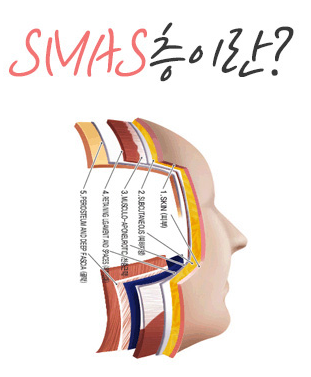

Why SMAS is important in a facelift
It is short for Superficial Muscular Aponeurotic System, and it exists between the skin and the facial expression muscles, functioning to transmit the movement of those muscles to the skin. Because of this, it has a very thin structure and covers almost the entire face.
However, because it is very thin and tightly attached to the skin, it is vulnerable to gravity and is one of the main causes of cheek sagging, which is one of the signs of aging.
Ultimately, correcting sagging SMAS is a very important factor in improving cheek sagging.
Precautions
A facelift is a surgical procedure involving incisions, so side effects such as scars or swelling may occur. In addition, beyond side effects such as scars or swelling that disappear over time, dissatisfaction with the results may also occur, so the decision to undergo surgery should be made carefully. If you are considering a facelift, it is necessary to look into the surgeon's long experience and know-how, such as whether they have performed the procedure for a long time, how many clinical cases they have, and what kinds of cases they have handled.

Who is it for?
Those who want to improve wrinkles across the entire face
Those who have not obtained the effects of other lifting procedures
Those who want a definite lifting effect
Those for whom wrinkles are difficult to improve with lifting threads alone
Those who need revision lifting surgery
If you are also torn between a procedure and a facelift, we recommend consulting with a medical specialist to find a clearer and wiser direction for improvement.

Postoperative care
A facelift is an anesthesia-based surgery involving incisions. Systematic aftercare is necessary from immediately after surgery, during the process of waking from anesthesia, through the recovery period. As with any surgery, there is no such thing as a minor surgery, and a facelift cannot be called a minor one either. However, it is important to check whether pain and swelling can be managed with greater focus immediately after surgery.

To achieve more satisfying results, you need a lot of cases and information. In the sea of information, do not decide on a youthful appearance surgery that will turn back the time of your life based on unclear medical knowledge and rumors; we recommend first seeking advice from a medical specialist.