"As I get older, my eyelids keep drooping, my field of vision seems to be getting narrower, and above all, I’m worried because I look tired and heavy.
Because of my age, there are quite a lot of people around me who have had ‘upper blepharoplasty’.
Some people look great after it, but there are also many who complain that their existing double eyelids became too thick and gave them a stronger, harsher impression.
I want a brighter, fresher look, but I’m worried this could end up being a case of better not to do it at all."
Hello. This is Ribbon Plastic Surgery near Sinsa Station. ^^

It seems that many of you are currently considering upper blepharoplasty because your upper eyelids keep sagging, your vision is being obscured, and your expression looks tired.
Compared with general double-eyelid surgery, there is a common perception that it is ‘more difficult,’ so you may be wondering how to reduce the risk of side effects and achieve stable results.
These concerns are understandable just by looking at the typical candidates for double-eyelid surgery and upper blepharoplasty.
Natural adhesion or incision-based double-eyelid surgery is usually performed mostly on people in their teens to 30s, so the skin has a certain level of elasticity and the drooping around the eyes is not severe.
However, upper blepharoplasty is mainly applied to patients in their 50s and older, so there are many cases where the eyelids are noticeably sagging, wrinkles around the eyes are severe, or the strength to open the eyes is insufficient.
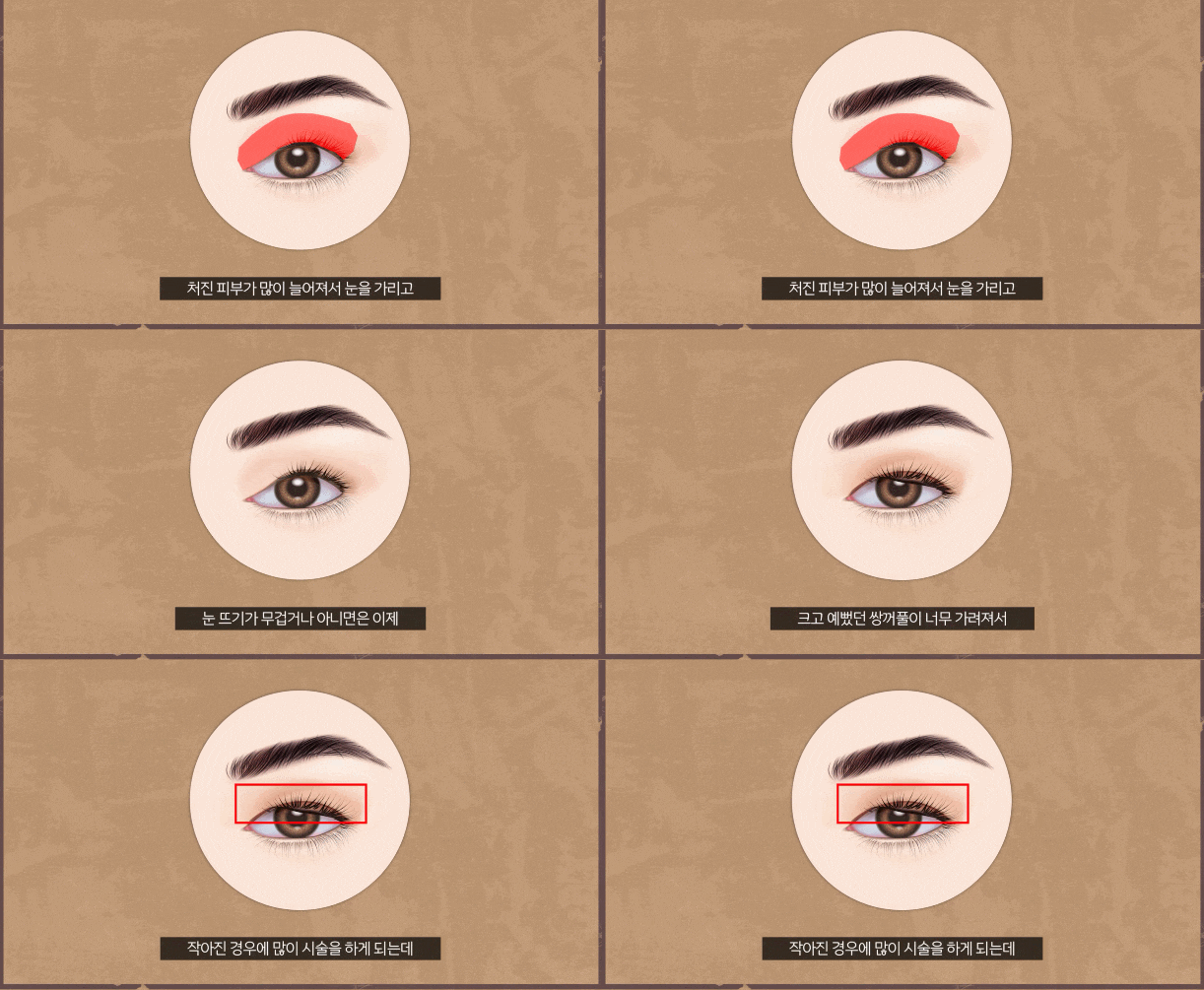
Since skin elasticity has decreased, the structural aspects of the tissue around the eyes must naturally be considered more carefully, which makes it an even more delicate procedure.
In particular, because it involves ‘excision’ of the upper eyelid, it can lead to side effects similar to the concerns mentioned at the beginning.
Today, I’ll take a close look at this ‘upper blepharoplasty.’
Please set aside 5 minutes and read to the end.
─
Upper blepharoplasty: understand its ‘core’.
The human eyelid is the thinnest among the skin tissues of the body.
So as aging progresses, eyelid elasticity declines first and the eyelids begin to sag downward easily.
What happens when the eyelids droop?
Drooping eyelids can cover the eyeball and create a tired, heavy impression, and they can also damage functional aspects such as causing irritation around the eyes, making it feel heavy to open the eyes, creating forehead wrinkles, and obstructing vision.
The surgery performed to correct these issues is called ‘upper blepharoplasty.’
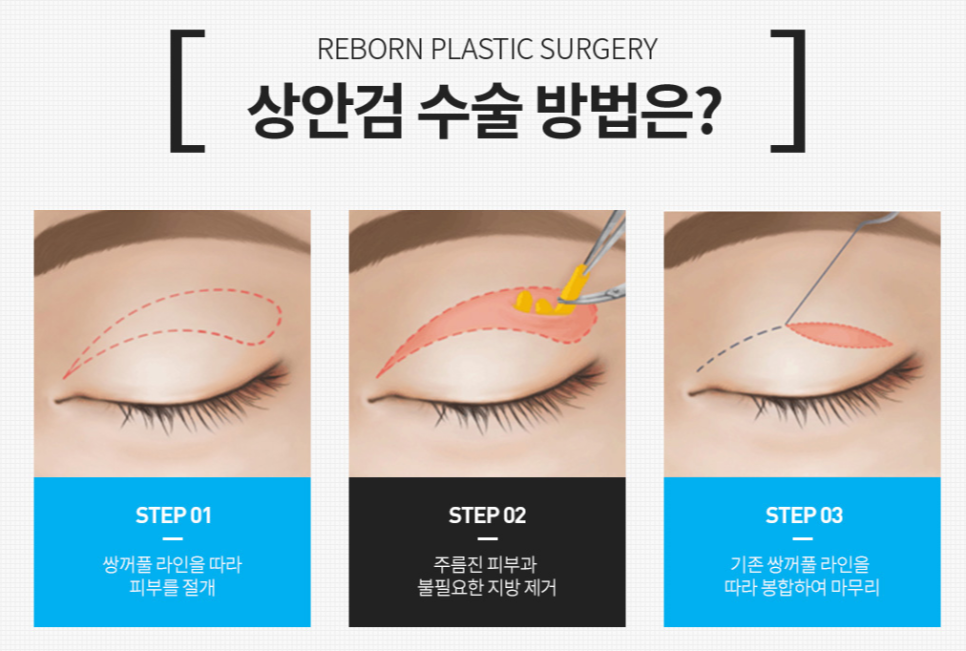
Upper blepharoplasty involves making an incision along the existing double-eyelid line, removing some of the wrinkled skin and unnecessary fat, and then finishing by suturing again along the existing double-eyelid line.
Then you may naturally wonder, ‘What happens for people without double eyelids?’
The basic method of upper blepharoplasty is exactly the same as incision-based double-eyelid surgery.
After designing the double-eyelid line and excising the sagging portion above it, people without a preexisting double eyelid will end up with a double-eyelid line as a result.
Because of this, people without double eyelids worry that they may end up with an overly prominent double eyelid after surgery, while those who already have double eyelids worry that theirs may become more pronounced.
In particular, the latter is one of the common side effects of upper blepharoplasty and occurs when too much incision is made.
Therefore, the key to upper blepharoplasty lies in how well tissue can be removed while preserving the existing eye shape.

─
What is the most important step before upper blepharoplasty?
Before performing upper blepharoplasty for the reasons above, a thorough consultation with the doctor is essential, and individualized ‘design’ must come first.
Even if the eyelids are significantly drooping, excessive removal can lead to various side effects.
Even for people in the same age group, the amount of sagging around the eyes, the presence of wrinkles, and the thickness all differ, so a customized approach is essential.
The medical team, who has been directly performing surgeries since 1999 and helping ease patients’ aesthetic concerns, carefully checks all conditions without missing details.
Also, because upper blepharoplasty is a well-known procedure, many patients visit with the idea that ‘drooping eyelids always mean upper blepharoplasty,’ but
there are many alternative procedures that can replace upper blepharoplasty.
A representative option is to combine buried double-eyelid surgery, which is mainly done by people in their 30s and 40s, with sub-brow excision.
I’ll explain that in more detail another time when there is a chance.
As mentioned earlier, upper blepharoplasty creates a double-eyelid line after surgery, so if you feel burdened by that aspect, it is true that you should also consider alternative procedures.
At our clinic, we keep various possibilities open to improve satisfaction with the results, so we believe it can be a suitable choice for patients who need a thorough consultation and clear understanding before deciding.
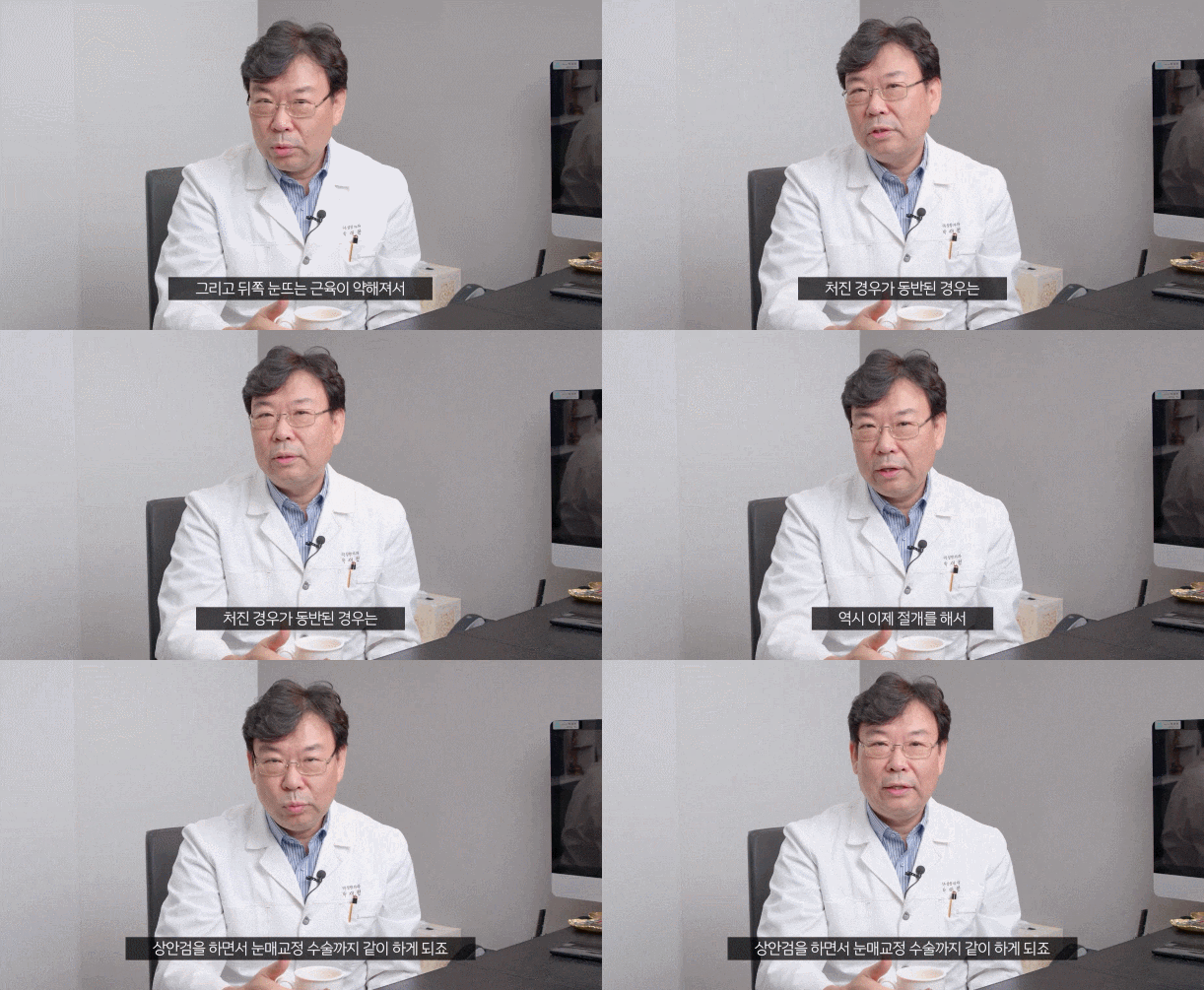
Today, we learned about ‘upper blepharoplasty.’
Based on our years of experience, we’ve shared this as honestly as possible, and I hope it has been helpful.
The important thing is to determine whether upper blepharoplasty is the right surgery for the patient’s current eye condition and to establish a detailed plan.
If you have any questions, please contact us at Ribbon Plastic Surgery near Sinsa Station, and we’ll be happy to help with a friendly answer.
Thank you for reading this long post. ^^