If the symptoms below are causing you concern, please take a moment to read the following text carefully.
| ▲ Wrinkles are all over the face.▲ The skin is sagging overall, making the facial line look untidy.▲ Deep nasolabial folds and neck wrinkles make you look much older.▲ You have tried threads and lasers, but did not feel any noticeable effect.▲ It feels burdensome to keep repeating non-surgical lifting treatments. |
Hello, this is Ribbon Plastic Surgery at Sinsa Station.

Aging is a natural phenomenon that everyone inevitably experiences.
In particular, the skin is located at the very front line to protect the body, so it is directly exposed to harmful environments, which causes aging to appear that much faster.
In an era like today, when life expectancy is high, many people continue social and professional activities into their 50s and 60s, and as a result, there are quite a few people who want to live each day looking younger.
In this case, there are broadly two anti-aging options we can choose from.
The first is non-surgical lifting, such as lasers and threads,
and the second is surgical lifting, such as facelift surgery.
Because non-surgical lifting does not involve surgery, it has the advantage of a relatively fast recovery.
However, it may require repeated procedures, and if the skin is severely sagging, there is also the possibility that you will not see a noticeable effect.
So it is generally recommended for people whose skin sagging is not too severe and for those who feel burdened by surgery.
On the other hand, facelift surgery can be expected to produce more satisfying results by pulling up the loosened skin tissue, fixing it in place, and then removing the excess tissue.
Because there are various lifting methods like this, it is important to proceed in a way that suits the patient’s skin condition.
Today, among them, we would like to introduce the surgical lifting procedure known as facelift surgery.
It is commonly known as a surgery that pulls the skin upward, but that is only a superficial explanation; if you look inside, it involves a very complex process.
If you focus only on pulling the skin, the effect may be minimal, so it is important to understand the core of the procedure correctly and approach it accordingly.
Understand the core of facelift surgery.
Facelift surgery is an operation that lifts the face as a whole.
It helps improve overall signs of facial aging at once, such as sagging cheeks, nasolabial folds, the area around the mouth, and neck wrinkles.
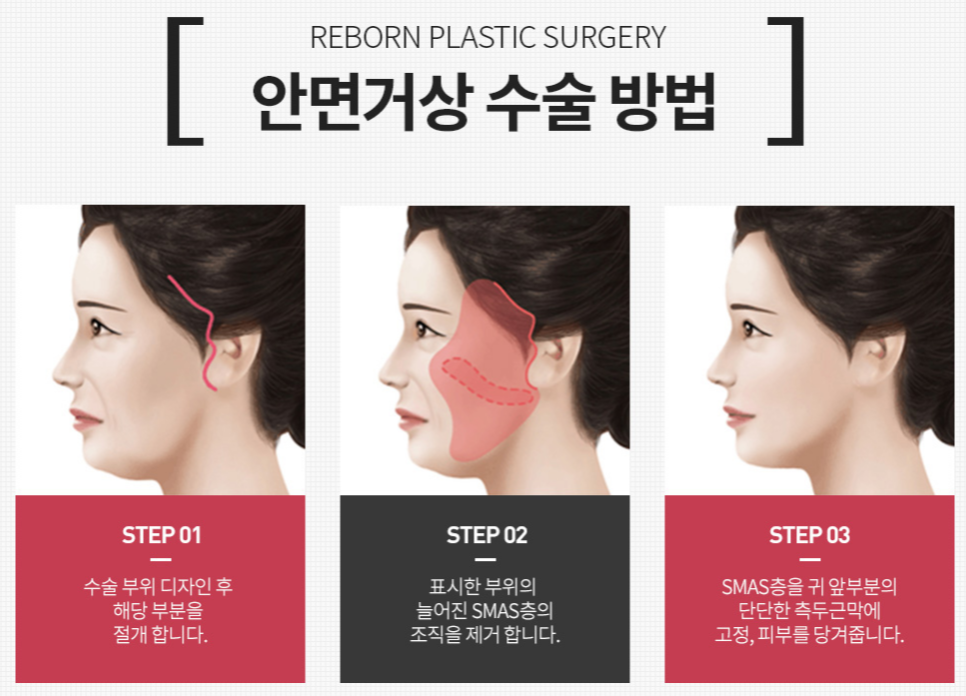
Facelift surgery is generally performed in the following three steps.
-
Design the surgical area and make an incision in the corresponding part
-
Partially remove the tissue of the loosened SMAS layer
-
Fix the SMAS layer to the firm temporal fascia in front of the ear to pull the skin upward
As mentioned earlier, the expression “pulling up the skin” is commonly used.
At our clinic, we use the expression “pulling up the SMAS layer.”
This is to clarify any possible misunderstanding and to explain the surgical method more clearly.
Then why do we pull the SMAS layer rather than the skin?
To understand this, we first need to know what the SMAS layer is.
#What is the SMAS layer?
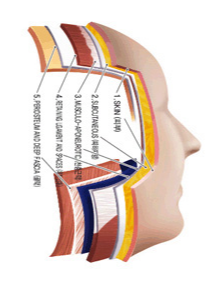 | It is the subcutaneous fat-muscle layer just beneath the skin and a supporting layer that covers the entire surface of the face. It is an abbreviation of the Superficial Musculo-Aponeurotic System, and because it exists between the skin and the facial expression muscles and functions to transmit the movement of the facial muscles to the skin, it has a very thin structure and is located across most of the face. However, because the SMAS layer is tightly attached to the skin, it is vulnerable to gravity and is one of the causes of sagging cheeks, a sign of aging. Sagging cheeks do not easily recover simply by pulling the skin, so correcting the underlying cause, the SMAS layer, is very important. |
At our clinic, we carefully lift not only the skin but also the SMAS layer, and we apply an appropriate degree of tension according to each individual’s degree of aging and the direction of wrinkles to induce natural yet ideal results.
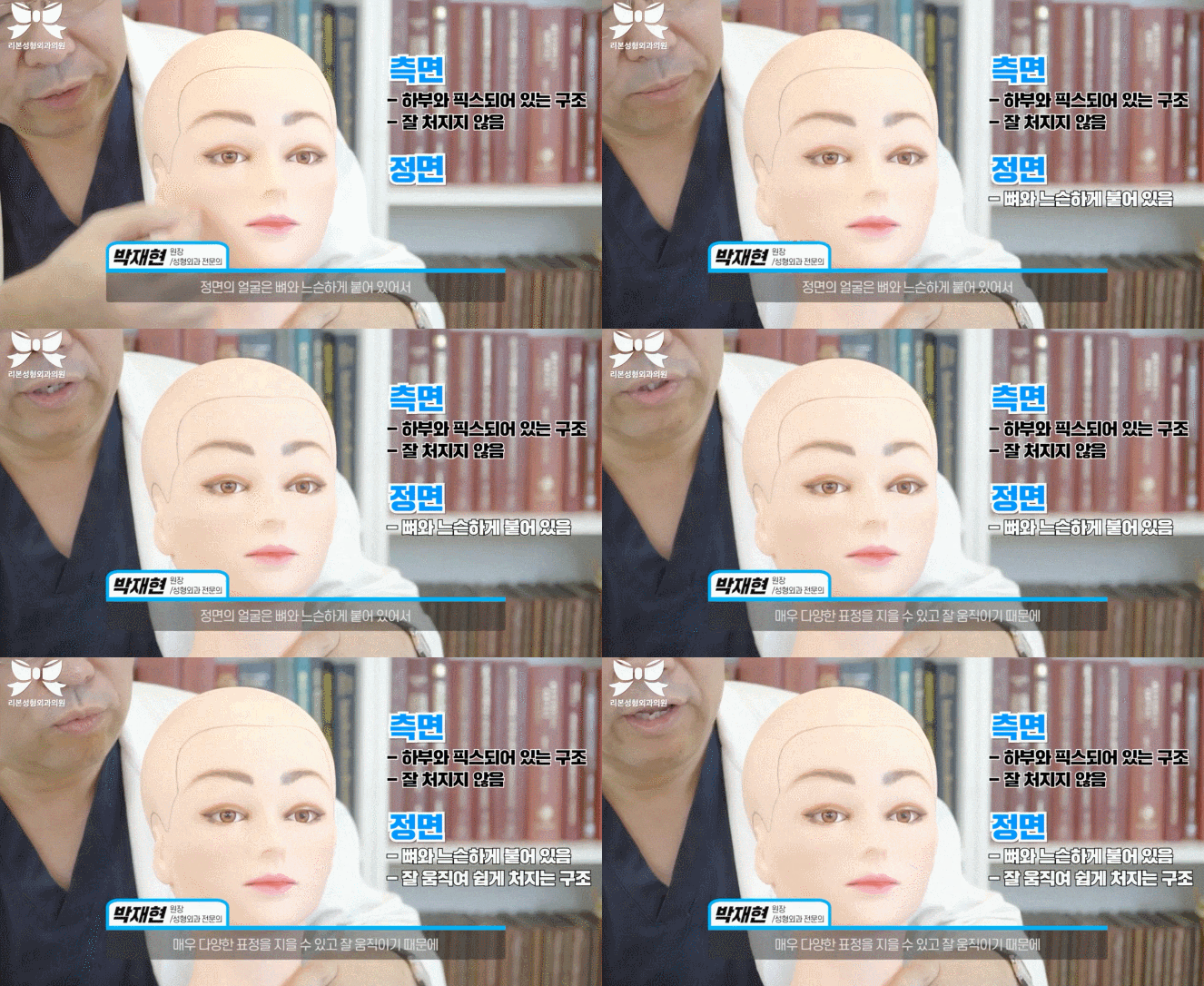
Facelift surgery is a surgery.
Facelift surgery is an operation that takes about 3 hours.
Because the tissue must be lifted while preserving the various nerves within the skin, it is one of the very demanding procedures.
In addition, one surgery can lift the entire face.
It must be performed only when truly necessary, after a thorough consultation with medical staff who have abundant experience and anatomical knowledge.
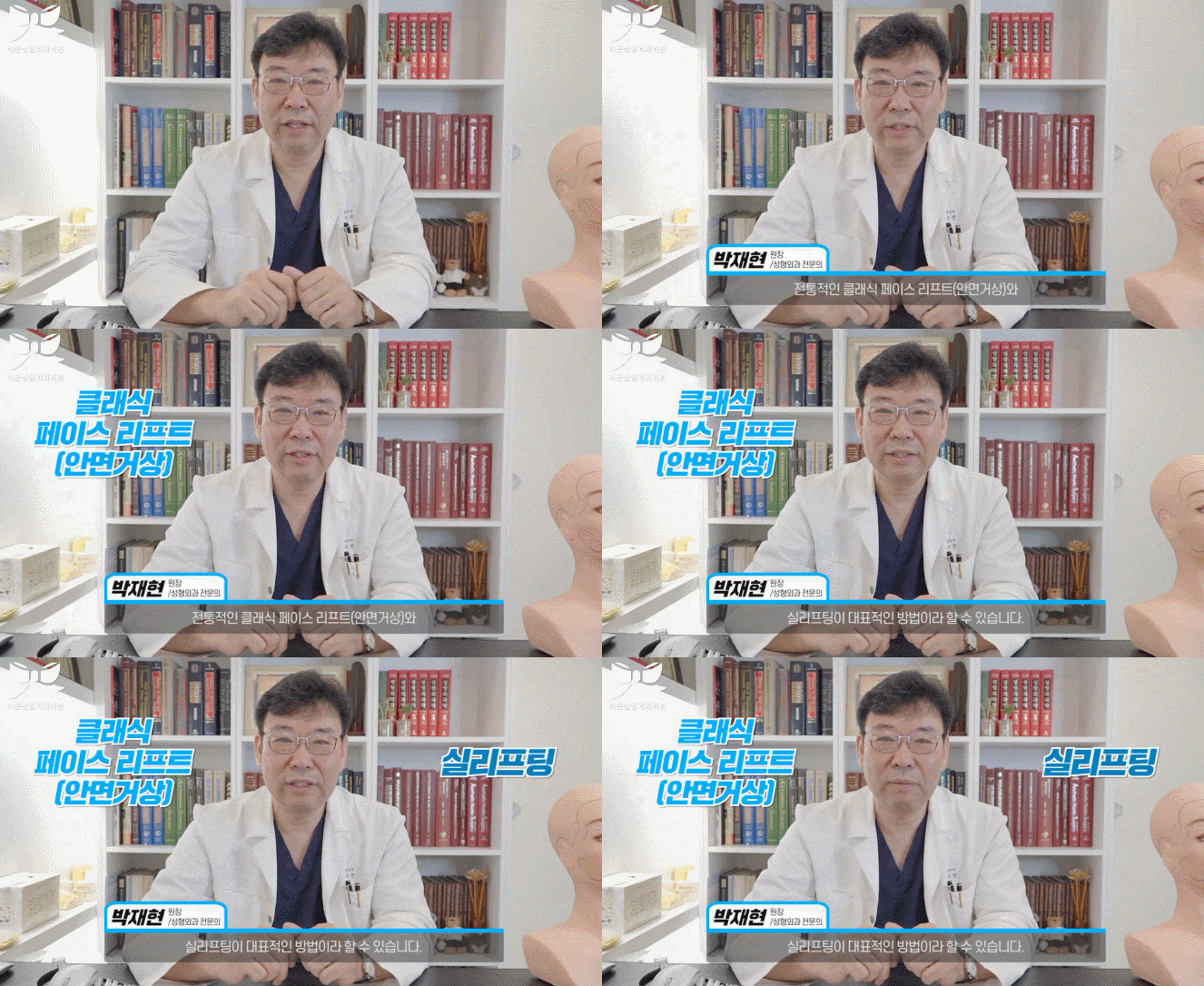
At our clinic, the head doctor, a board-certified plastic surgeon who has been seeing patients since 1999, personally handles the consultation and surgery, and we also predict the post-surgery results in advance through virtual plastic surgery.
You do not need to decide on surgery right away, so if you are curious about the results later, please consider having a consultation.
Thank you for reading this long post.