"I’m considering thread lifting at a plastic surgery clinic in Sinsa-dong because my nasolabial folds are severe and the area around my cheeks is sagging.
But I’ve noticed that many people say that after this procedure, the cheekbones become more prominent and the face looks bigger.
I’m wondering why this problem happens, and how the procedure should be done to prevent it."
Hello, this is Ribbon Plastic Surgery near Sinsa Station.

Because our clinic has been performing thread lifting procedures for many years, we have met patients with a truly wide variety of cases.
Recently, as demand for thread lifting has increased, related information has also been flooding in, so many patients ask about even the smallest details.
One of the most common concerns is side effects.
Since thread lifting is a procedure that inserts special threads into the skin and pulls it upward, it is natural to worry about foreign-body sensations and whether serious side effects could occur.
In particular, the issue of "prominent cheekbones" that often occurs during lifting of the nasolabial folds and buccal area, which most patients prefer, continues to be discussed.
Today, I would like to take some time to explain these "thread lifting side effects" and "prominent cheekbones."
I will guide you from the causes to the solutions, so please read comfortably and take away useful information. ^^
—
Thread lifting’s representative side effect
Why do the "cheekbones stand out"?
(* I will use nasolabial fold lifting as an example.)
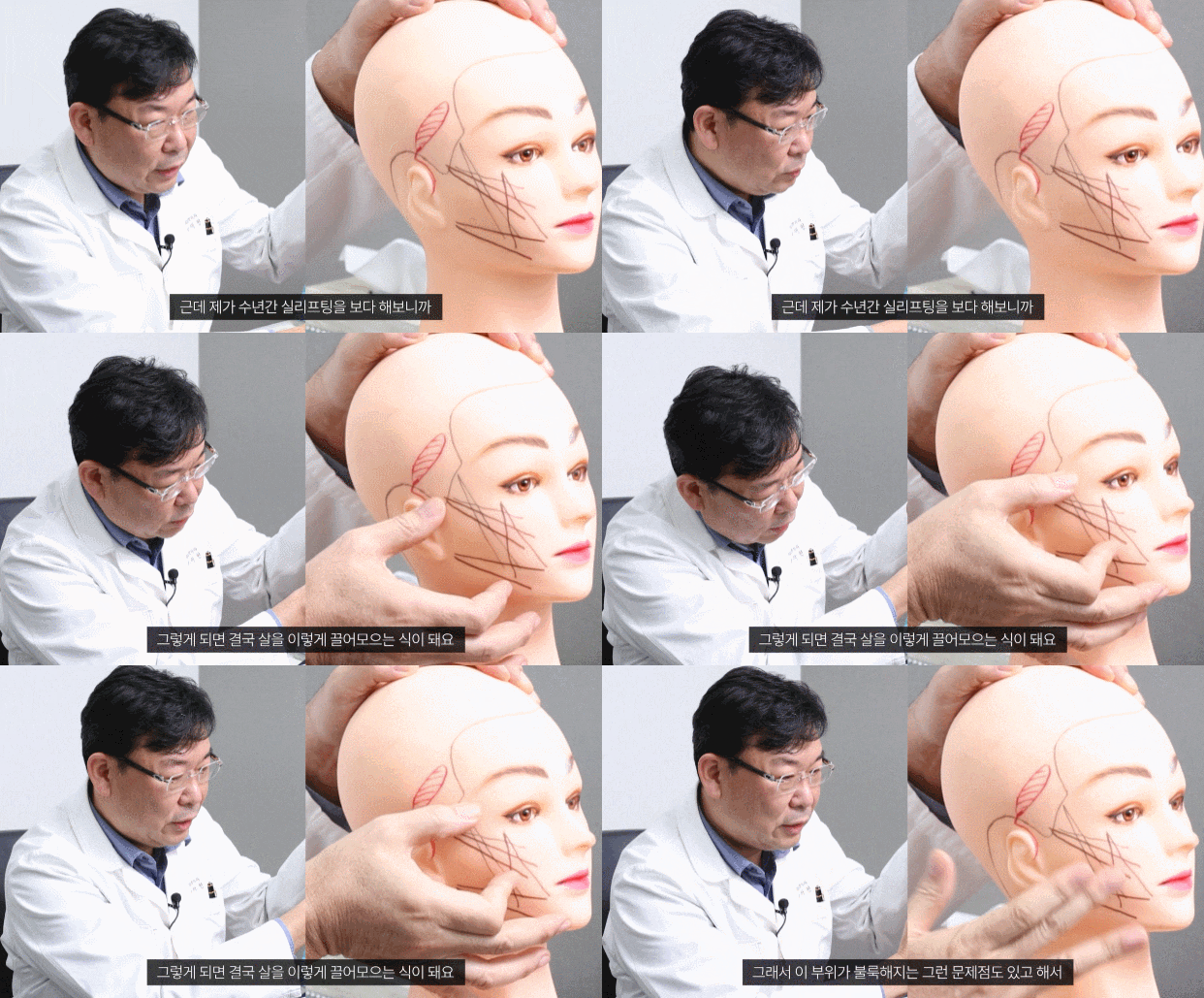
At this time, the thread is usually passed in from the hairline area in front of the ear and connected to the main target area, the nasolabial folds, then pulled in the correct direction and with the proper amount of force.
There are two major points to know here.
(1) Thread insertion location
The cog thread we commonly use has the cogs, that is, the raised "barbs," located about 7 to 8 cm from the insertion point, depending on the product.
This is shorter than you might think, so if strong lifting is needed, the thread should be passed through a point closer to the front, where the hairline has less influence, meaning right beside the cheekbones, and then hooked around the nasolabial fold area before being pulled.
So when the area needing lifting is in the lower part of the face, such as the nasolabial folds or buccal area, the tissue may be pushed toward the cheekbone area, making that area appear especially prominent.

(2) Use of custom-made threads
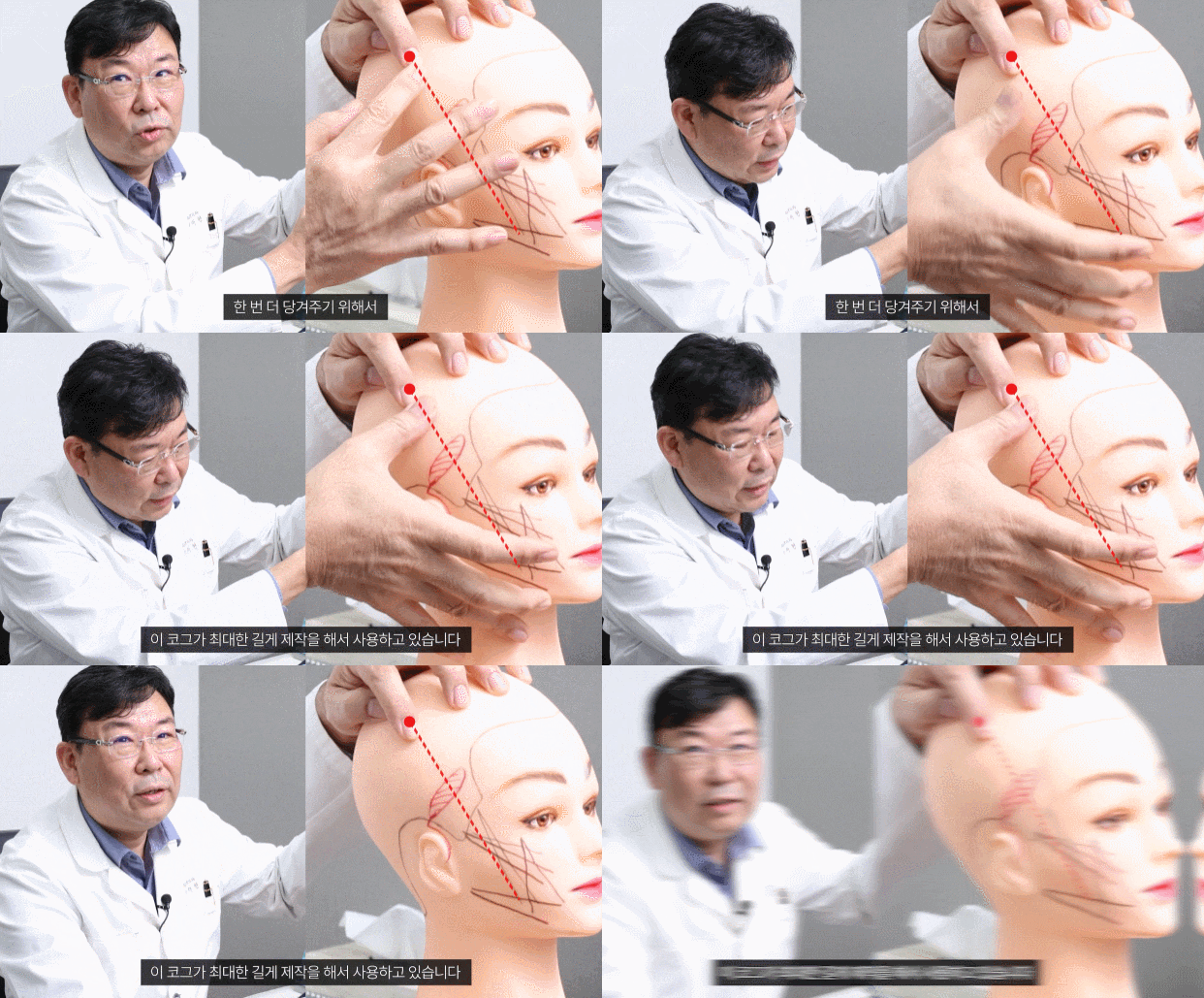
So the solution our clinic chose was to use threads with a much longer cog placement.
With this approach, the thread is pulled not just to the cheekbone area but up above the hairline, allowing for a much smoother and more stable overall result.
Among the products currently on the market, there are no products with this kind of length, so our clinic makes and uses them separately by hand.
—
Do the types of thread differ by lifting area?
Threads are made in various products depending on their ingredients.
Representative examples include PDO mono threads (no barbs), cog threads (with barbs), and volume threads such as Silhouette Soft.
Many people usually think that the procedure is done with the product the patient chooses for the desired area, but since the characteristics differ just as the types of threads differ, the recommended thread also differs by area.
(1) Mono thread
Mono threads have no barbs, so their pulling force is very weak.
Therefore, they are used not so much for lifting, but for collagen remodeling around the area where the thread is inserted.
Our skin has the ability to recover on its own when tissue is damaged, and especially when the dermis is damaged, it produces collagen, the elasticity cell.
By using this in reverse, mono threads are inserted into the dermal layer of the skin to physically stimulate the surrounding tissue and induce collagen.
Using mono threads, you can expect improvements in skin tone, some reduction in fine wrinkles, and increased skin elasticity.
(2) Cog thread
Cog threads can hook into the skin tissue and pull it, so they are usually used for lifting sagging skin.
The advantage of cog threads is that the strength of the lift can be controlled by adjusting the direction and shape of the cogs and the number of products used.
Many people think thread lifting is usually done after the age of 40 or 50, but because the lifting strength can be set in this way, it can also be applied to people in their 20s and 30s if needed.
(3) Volume thread
Volume threads are used not only for lifting, but also to improve volume by compensating for sunken areas of the skin.
Typical areas include sunken cheeks and the under-eye area.
In areas like these, even if collagen regeneration is induced, it is difficult to create visible change, so volume threads are inserted for collagen remodeling, wrinkle improvement, and volume enhancement.
—
What should you keep in mind with thread lifting?
Pre-procedure "design" is extremely important for thread lifting.
Simply pulling skin upward against gravity is not very meaningful.
The key is to gently lift the skin in a way that suits each person’s needs, taking into careful account the direction of the wrinkles and the degree of sagging.
Of course, to do that, the first priority should be a detailed consultation with medical staff who have long experience and have studied this in depth.

In that sense, our Ribbon Plastic Surgery near Sinsa Station hopes to reduce the burden of the procedure by working with a board-certified plastic surgeon who has personally designed and performed plastic surgery since 1999.
If you need help, please feel free to contact us directly.
We will meet with you in person and help predict the results.
Thank you for reading this long post.